Flamenco is among the most well-known dances worldwide, with its passion, rhythm, and vibrancy. That’s why today, we want to introduce you to some of the best and most famous flamenco dancers of history. Each contributing by embodying this art form, capturing its essence and spirit in their own ways.
Joaquín Cortés
Joaquín Pedraja Reyes, better known as Joaquín Cortés, born in Córdoba in 1969 into a gypsy family, is a dancer, choreographer, director and producer. He has been listed among the best ten dancers of the 20th century by numerous international rankings.
He was admitted as a member of the National Ballet of Spain at 14 years old. With this company, he travelled to many cities around the world and by the age of 16 he was promoted to the category of soloist. He performed as a principal dancer until he was 19.
In 1988, he decided to leave the Spanish National Ballet and began to be invited to numerous galas, events, theatres, and shows in places like Paris, New York, Russia, Italy, and Tokyo. Being acclaimed by the critics and the public, he made his own company: Joaquín Cortés Ballet Flamenco and, in 1992, he created his first work “Cibayí”.
His style: spectacular, dramatic, and avant-garde but with details and flashes of a pure beauty.
Shōji Kojima
Shōji Kojima is a world-renowned Japanese flamenco dancer who was born in Tokushima, Japan, in 1939. His art and his roots have brought him to the top of the international flamenco world.
This flamenco master with Japanese roots is a graduate of Musashino Academia Musicae, where he studied vocal music, piano, classical ballet, modern dance and got to know the world of flamenco. In 1966 he moved to Spain via the Trans Siberian Railway, determined not to return to Japan until he became the best flamenco dancer.
Once settled in Madrid, he began learning flamenco. In 1967, he was elected a member of the Spanish National Ballet Company and toured the Soviet Union on the Spanish-Soviet cultural mission. Just the following year he was recognized by the cantaor Rafael Farina and debuted as the first dancer of a full-length show of the cantaor’s company.
Farruquito
Juan Manuel Fernández Montoya, known worldwide as Farruquito, is the son of flamenco singer Juan Fernández Flores “El Moreno”, and flamenco dancer Rosario Montoya Manzano, “La Farruca”.
Farruquito is heir to a unique school founded by his grandfather, so he was born and raised in the purest Flamenco art. His debut on the international scene was at the early age of 5, on Broadway with the show Flamenco Puro.
At 11 years old, he first appeared on television in the video “Camarón Nuestro” and then appeared in the next year’s movie by Carlos Saura’s “Flamenco,” alongside with his grandfather-El Farruco. In 1992, he engaged in the Opening Ceremony of the Paralympics in Barcelona as a continuation of his artistic voyage. He also demonstrated his skills together with his grandfather at the Spanish Pavilion during the International Exhibition in Seville in a performance termed “Presente, pasado y futuro” (present, past and future).
The death of the patriarch in 1997 meant that Farruquito took over to perpetuate the lineage. Thus, when he was only 15 years old, he created his first show, Raíces Flamencas.
María Juncal
María Juncal is a leading flamenco dancer in Spain and around the world. She was born in 1981 in Palma de Gran Canaria.
She was born into a family of flamenco blood, the Borrull family, in Las Palmas de Gran Canaria. There she began her studies of Ballet and Classical Spanish Dance with the choreographer and prima ballerina of the Liceo de Barcelona; her great aunt Trini Borrull. She moved to Tenerife and worked with the Ballet de Cuba.
In Madrid, she studied with Flamenco masters El Güito, Ciro, Cristóbal Reyes, Merche Esmeralda, and La Tati and was part of El Güito’s company, touring Spain and France and finally moving to Manolete’s company. She is a soloist in the USA with the National Theatre of NY and performs in Boston, Chicago, Kansas, New York, and Minnesota, among others.
She starred in Musa Gitana, directed by Paco Peña in Europe and China, and worked as assistant director and soloist in the show España Baila Flamenco by Cristóbal Reyes.
Sara Baras
Sara Pereyra Baras, born in San Fernando, Cádiz, on April 1971, is known as Sara Baras; Spanish flamenco dancer and choreographer and director of her own dance company.
This great dancer began her artistic training in San Fernando in the school of Concha Baras, her mother and first flamenco teacher. It was precisely with the dance group directed by her mother and the work Los Niños de la tertulia with which she made her stage debut. It was a time when the artist from Cadiz shared the stage with greats such as Camarón de la Isla.
The company of Manuel Morao, and the television program Gente Joven in which she won the first prize at the age of 18 came later. But it was when she decided to complete her training in Madrid that Sara Baras began to perform regularly, surrounded by other outstanding dancers.
The National Dance Award 2003 and the Gold Medal of Andalusia 2004 are some of the many awards that figure in the career of this spectacular artist.
Antonio Canales
Born on December, 1961 in Seville, known as the birthplace of flamenco music, Antonio Gómez de los Reyes, better known as Antonio Canales, comes from a lineage of artists. He spent several years dedicated to dancing in the National Ballet before becoming a soloist. He left the National Ballet and went to Paris, where he became a member of Maguy Marín’s ballet. In addition, he served as a lead choreographer of the Versalia festival in the city of Italy during that time.
He is a world-renowned dancer who participated in about fifty creations as the main dancer and was present at various international galas. In the 80’s and 90’s, he won awards for his In 1992, Antonio took a pivotal step by establishing his own dance company. A debut in Bilbao featured mesmerizing choreography.
So there you are, some of our top picks on some of the best flamenco dancers, we hope you found them inspiring.
As a dancer, many times during class, my mind would start to wonder about the origins of that new bellydance step that the teacher was teaching. Where the flirtatious arm movements came from, the origins of instruments such as the veil and the saber, and why it is so mysterious and bewitching for viewers?
I have Arab heritage and given how Arab culture can sometimes be quite closed and traditionalist I have always found it amazing that belly dancing can be loaded with so much sensuality, More so than many other dances. Today I want to share with you, everything I found about it in my own research.
Enjoy this journey to ancient times!
The basis of Arabian Dance Movements
The center of the Arabian dance lies in the hip, which is adorned with movements of the head, shoulders, arms and, naturally, the belly.
The spectacular nature of this dance lies in the synchrony of the hips with the music and the emotion that the dancer conveys, while the variety of steps and the dramatic effects are what make it striking.
In oriental dance, the movements are sinuous and rhythmic, the legs never rise above the level of the hips.
To dance, our ear must become accustomed to the rhythms of Arabic music, which has very different from Western tempos, as it consist of series of irregular minor patterns that we dancers must learn to follow and even anticipate.
The Origins
The prehistoric origins of belly dance are a bit murky, but documented evidence takes us back to Egypt during the time period between 1200 and 1300 B.C., when this form was used by priestesses in the banks of Nile River
Fragment of Painting from Tomb of the Dancers. By Jon Bodsworth, Copyrighted free use, via Wikimedia Commons
Those were times in which life passed as an incessant becoming, in which eternity was bathed by the waters of the Nile. Surrounded by a fertile land, by multiple magical gods, by a civilization in which glory was expressed with magnificent pyramids that sought to touch the sky.
Egyptian women danced both to pay tribute to the gods, to accompany the funeral processions, to celebrate and honor the pharaohs and to entertain at feasts and banquets.
One of the key themes in the oldest form of Arabian dance is one of human fertility being thought to be directly related to the earth. Women were attributed magical powers.
For example, in Central Anatolia and the Mediterranean (Turkey), thousands of years ago women had ritual dances in honor of these magical powers. Men were excluded from these rites.
Also, there were many fertility dances in Ancient Rome and Greece were dancers performed movements based on the rotation of belly and hips, and many of said dances were made in honor to goddesses from Syria and Turkey.
In Cyprus, birthplace of Aphrodite, women performed ritual dances accompanied by songs and percussion through which they put themselves in a trance.
These same rites of honouring gods, seeking fertility, took place in Mesopotamia, Phoenicia, Egypt, Arabia and India. During the 4th century A.D., Christianity came to dominate the Middle East, establishing a patriarchal society based on a male God and prohibiting all such female dances.
The changes
The Copts, who are Christians from Egypt, preserved the continuity of this dance through clandestine performances, incorporating certain modifications to align it with their newly adopted religious practices.
Some time after, the slaves took the dance, the songs and the music out of the temples, although the performers have not been able to remove the stigma attached to their profession.
Later, at the beginning of the Middle Ages, Islam was established, which signified a new eradication of dance in the streets. Resurfacing in the 18th century within the context of slave communities, this dance underwent a revitalization.
Subsequently, the influx of Turkish people, primarily consisting of individuals with enslaved backgrounds, contributed to the enhancement of its technical intricacy.
These slaves, retained in the ancient medieval caliphates, represented their power, so the beauty and skills of the dancers (singing, poetry, recitation) were valued.
These dancers were called awalim, highly respected and influential among the caliphs; they performed in the houses of rich people accompanied by denay, oud, qanun and tabla, while they interacted with zagats and swords of some spectators. Their shows were even complemented with snake charmers and magicians sometimes.
There was also another type of dancers, the ghawazee or Egyptian gypsies, who danced in the open air for audiences of lower social class, accompanied by nay, oud and tabla. The ghawazee are characterized by their preservation of the aesthetic essence of the dance, as well as the spiritual aspect of it.
These dancers often shared stage with magicians, minstrels and fortune tellers (they themselves made coffee reading) and their belly dance costumes have a lot of bright colors, ornaments, cons, pendants and bracelets. Their origin is Phoenician.
Origins of moves
In its passage through different regions and epochs, the oriental dance was picking up steps and elements. For example, the cane used in oriental dance was taken from the tahtib dance, a kind of martial art of Egyptian men. The cane dance is known as raqs al asaya.
Tahtib. Adelbayoumi, CC BY-SA 4.0, via Wikimedia Commons
Egyptian Tahtib is said to be one of the oldest martial art in the world. Its full name is fann el Nazaha wal Tahtib, which means, “pursuit of righteousness through tahtib”. It consists of a combat between two or more opponents using a reed stick, tahtib, which measures between 1.30 and 6 meters long.
The tahtib dance is performed to the accompaniment of live music, to the Arabic rhythm of saidi, and includes jumps and gestures of blows, without contact with the body.
From the Persian dance, the delicate cadenced movements of the fingers and part of the coquetry with shoulders and arms were taken. In classical Persian dance, the dancer entered a state of higher consciousness in communion with the supreme being, to whom she dedicates the upward movements of her arms.
Likewise the shoulder shimmies when turning and the movements with the fingers apart are used in the Iranian dance known as bandary.
With respect to the saber, although it is believed that it was an element incorporated relatively recently to the dance, there are visual references of dancers with scimitars from the late nineteenth century, as this painting by the French orientalist painter Jean-Léon Gérôme entitled “Dance with saber in a cafe”:
Sabre Dance in a Cafe by Jean-Léon Gérôme, 1875. Source: PubHist.
The dance in which a tray with candles is balanced on the head was taken from the Moroccan dance known as raqs al seniyya, in which a tea tray is used.
This illustration by Charles Saalburg from the Chicago newspaper “The Inter Ocean” of 1893 shows different Midway Plaisance scenes from the Columbian Exposition held that year in Chicago. In the center appears a dancer balancing a tray with candles or a candelabra on her head, which could be raqs al shamadan but also raqs al seniyya.
Finally, the veil, one of the most magical elements, has been present in oriental dance since ancient times, as evidenced by this bronze statue from the Hellenistic period of a veiled dancer from the 2nd or 3rd century BC:
a veiled dancer, from Greece. 3rd–2nd century BCE. Source: MET Museum
I hope this article has served to bring some light about the many mysteries that belly dancing has to offer. Until next time!
Other articles about Bellydance and Arabian dance:
Christmas is around the corner, and if you are a Ballet enthusiast like me, you probably know that The Nutcracker recital has come to almost every city around the world.
If you need to become more familiar with it, then let us introduce you. The Nutcracker is an old but beautiful ballet performed each year and full of capturing stories about magic land. It was set on a Christmas Eve by Tchaikovsky, with legendary Marius Petipa and Lev Ivanov as the choreographers, and is an adaptation from E.T.A Hoffman’s story.
This classical ballet has many dance pieces from different cultures, like Spanish, Chinese, Russian, and Arabian. “The Arabian” dance in The Nutcracker is what this article will concentrate on today. It is an intriguing and elaborate scene inside this whole ballet and opens the audience up to different cultures, through the various the dance styles.
As someone experienced in both ballet and Arabian dance, today I hope to demystify this dance in the Nutcracker a little, as well as how all of these elements influence audiences and viewers.
A version of The Nutcracker dance by the City Ballet Academy. See an alternative interpretation here by the Boston Ballet. Both lack some of the elements originally true to the performances of years past.
The Westernization
The Nutcracker was first introduced in 1892 at the Maryinsky theatre in St Petersburg. Through the ages, this ballet experienced various choreographic transformations in response to the evolving audience’s taste. “Arabian” dance, a passage of the second act, is probably the most famous one.
The notion of orientalism in discussions regarding the dance is the Western view (specifically the British, French, and Americans) – a animated version of the Middle East:
“a place of romance, exotic beings, haunting memories and landscapes, remarkable experiences” (French Journalist 1975).
Its an image that originally held of the Middle East—a romanticized land inhabited by people who seem different to the typical Westerner in a seemingly eerie setting. Similar to the Orientalist dichotomies, this fictionalized Orient creates one homogeneous identity type characterized by its essence. “Arabian” dance comes as an interpretation of some exotic aspects of Middle Eastern culture but in the style of Western performance.
Editors note: It’s worth saying at this point that what is being described are ‘original views’ of a western society from around 130 years ago, at a time when the Nutcracker was first released and society was less global in its outlook. Today ballet companies are adjusting these particular Acts in the Nutcracker to reflect a more modern, inclusive audience.
Choreographic Variations
The Arabian dance has many variations, some of them have “Egyptians Marilyn Monroes” in pointé, some other focus on the “sultan and harem” scene, portraying a stereotype of lazy men and eager to please women. For example, the typical portrayal of the male forms the foundation of another comedic harem storyline of this ballet. This narrative was a recurring feature in the Louisville Ballet’s Nutcracker for many years.
It depicted a turbaned man adorned in harem pants and a sparkling vest, accompanied by a woman who, while potentially his wife, assumed the role of his servant. The man ostentatiously sipped coffee while the woman dutifully trailed him, replenishing his cup as necessary. She also engaged in acrobatic feats, such as supporting his cup on her extended foot as she lay on the floor or on her bare stomach during a backbend, effectively transforming herself into a makeshift table. We were trying to find a video of this somewhere but are struggling, if you come across one, please share with us.
Nonetheless, some other versions have a regal look, or an enigmatically cerebral air. The choreography of the Arabian dance has a “vocabulary” of difference, with movements that feature supine postures and angled limbs that have been part of the orientalization of ballet since the nineteenth-century Romanticism period, when the fantasies of fancy harems where the trend. Of course, much of what was originally featured is less inclusive for todays modern audiences and hence ballet companies moving their choreography on.
Interestingly, there is not a single form for what is called the Arabian dance. It has been reworked by different choreographers since it premiered and some of these do go against the normal conventions. Slow-moving and dreamy dances choreographed differently are typical for these sections. Balanchine decided to work it differently, with uncharacteristic briskness that challenges the norms of this specific dance piece.
The movements… are they really Arabian?
Photo by Vidal Balielo Jr. via Pexels
Even with the many differences, the traditional version usually comprises unique steps that have been persisted through various productions of The Nutcracker. These include distinctive “Egyptian” angled arms, resembling images painted on the old Egyptian vessels. Also, a deliberate slow walking style that has dipping or bobbing motions trace back to the bharata natyam, which roots to ritualistic ambiances.
The “prayer” gesture that involves palms being joined together on the chest or above the head seems more aligned with the dance forms from India other than those of Arabian origin. The lack of precision in the use of “Arabian” is evident within Clara’s dream world and, indeed, in the broader Western context.
Musical Accompaniment and Emotional Impact
Image via pexels by Valeria Boltneva
To craft the “sweet and enchanting” music requested by Petipa for the “Arabian” dance, Tchaikovsky initiated the composition by incorporating an aged Georgian lullaby, infusing it with a gentle yet persistent rhythmic motif. The outcome conveys an ambiance often described by musicologists, without apparent controversy, as “Eastern languor.”
However, the music’s background is quite intriguing. The lullabies of Georgian origin, which have been sung to cure sick children through history, give earthiness to the dance and create a magical mood. There is no doubt about the relationship between the music and the emotional effect of the dance, which has an additional depth to the overall experience.
This further reiterates that the Arabian Dance elicits emotions from audiences. In essence, for many, the dance represents the mystical world into which people are temporarily transported; hence the ability to mesmerize the audience. The link to healing traditions as well as the earthly aspects of the songs give another touch of interest for the audience interaction with the performance.
In short…
The Arabian dance in The Nutcracker is an intricate exploration of cultural performance and choreographic creativity within ballet. As an ever-changing art form, it goes beyond any set definition and contains different choreography that ranges from traditional representations to mysterious rituals. The evolving nature of this dance challenges conventional norms.
In essence, this dance piece serves as a poignant illustration of how artistic interpretations can shape and, at times, misrepresent cultural traditions. It compels one to think about the continuous Western practice of romanticism and Orientalizing the East, which is now requiring a more true to life representation of different cultural articulations in the realm of ballet. This of course all changes over time and so does ballet, to reflect new societal norms.
Allow me to share a personal moment that for me captures the essence of pole dancing. It was one day, quite a few years ago, during a dance routine that I attempted the layback move.
I freed one hand above my head.
At that precise moment, I felt an incredible sense of calm and weightlessness. The pole became more than just a piece of equipment.
The pole transformed into a trusted companion, a pillar of support, and ultimately a canvas for my emotions.
It feels strange to say it like this but, it felt as if the pole was there for me – not just during my dance routines but in every moment of my life, whether I was experiencing joy or sadness.
From then on, the pole became a symbol of resilience for me, a constant reminder to keep going, and a vehicle through which I learned to love myself and appreciate my body more deeply.
THIS is the magic of pole dancing — it goes way beyond the physical and touches the soul.
Here are just a few of the things I find beautiful about pole dancing:
More Than Meets the Eye
Pole dancing is not solely a physical accomplishment and what you wear to pole dance; rather, it is a means of self-expression and personal development.
Those fabulous moves serve as a crucial link between fundamental techniques and advanced artistic expressions. This is what provides dancers with an opportunity to fully explore what they’re capable of.
The dance style invites individuals to explore the captivating world of movement, where each action communicates a narrative,
every transition expresses emotion,
and every performance embodies strength, elegance, and self-expression.
Movement in Poetry
Transitions between movements allow dancers to build narratives, telling stories on the pole, express emotions, and appreciate the fluidity of motion.
For instance, the transition from a graceful Extended Butterfly to a Flatline Scorpio embodies both elegance and transformation.
The dancer’s mid-air suspension allows them to throw off the regular constraints of gravity and time, resulting in a narrative that inspires both the performer and the audience.
Expression
Pole dance moves serve as a medium for individuals to express their inner selves.
This extends beyond mere physical accomplishments. Each twist, extension, or inversion conveys a message, emotion, or narrative.
This expressive power is what sets pole dance apart as an art form.
Consider the Allegra.
The amount of strength and flexibility necessary to maintain this position on a pole is truly remarkable.
However, it is not solely focused on physical strength but also on the emotional intensity expressed through body movements and the resolute determination to overcome the force of gravity.
The Concept of Progression
Pole dancing, akin to other artistic endeavors, entails a process of personal development and exploration.
Poses are noteworthy milestones in the progression of this journey. They represent a shift from mastering the basics to embracing complexity.
As dancers advance, they not only develop proficiency in specific movements but also cultivate their distinctive artistic expression.
The jade split, for instance, is a move that combines a split with an intricate twist. The dancer’s commitment to achieving mastery over their body’s flexibility and control is commendable. However, in addition to the physical aspect, relocating provides a chance for individuals to incorporate their personal style, customize the experience, and showcase their uniqueness.
Experienced dancers frequently explore and create novel sequences by combining and modifying intermediate moves, resulting in captivating and unexpected variations.
This artistic exploration is mutually fulfilling for both the dancer and the audience, as it transports the latter into a realm of creativity and expression.
An Appreciation of Resilience
I see pole dance as being characterize by both physical and mental strength. The Inverted D, a dynamic dance move that showcases exceptional strength, is a striking demonstration of elevated performance. It requires strong and steady upper body strength, along with the confidence to rely on one’s own abilities and the pole.
Mentally it allows a dancer to surpass boundaries, challenge preconceived notions, and experience the gratifying sensation of accomplishment.
Inclusivity and Empowerment
Pole dance has inclusivity by the bucketload. It challenges stereotypes and embraces individuals from diverse ages, backgrounds, body types, and gender identities.
The dance floor is a venue that embraces diversity and provides equal opportunities for individuals to showcase their talents.
It serves as a reminder that beauty manifests in various ways and that strength is limitless.
Empowerment Beyond Boundaries
The benefits of pole dancing extend way beyond the studio (or the home for those who pole dance at home). Pole dancers frequently observe that the mental and physical strength cultivated through their practice contributes to heightened confidence and self-assurance in their daily lives.
Mastering pole poses requires discipline and cultivates qualities such as perseverance, patience, and determination. These qualities serve as valuable assets in navigating the challenges of life, thereby reinforcing the notion that pole dancing is more than a mere pastime; rather, it is a transformative voyage.
A Journey
I’m sure you get the picture by now, I truly believe pole dance moves encompass more than mere physical tricks; they embody strength, artistry and self-expression.
As dancers progress from beginners to intermediate and advanced pole dance moves, they engage in a process of self-exploration, artistic expression, and personal growth. Remember, as you soar above the pole, you are not just dancing; you are creating your own personal masterpiece. In this art form, the pole becomes your brush, and the stage is your canvas. With each graceful move and powerful hold, you are painting a picture of your inner self—a vibrant and ever-evolving portrait of your journey.
These moments of calm, strength, and self-love are more than just fleeting expressions of physical prowess; they are strokes of emotion, daubs of determination, and splashes of individuality. They linger in your memory long after the music fades, like the vivid colors of a cherished painting that you revisit in your mind, drawing inspiration and motivation from the beauty you’ve created.
Arabian dance, just like the many other dance styles, is not only about the movements. It has a wide range of costumes and accessories like the sword, the veil and tambourines. They fill the stage with glitter, and are laced with sequins to make an impact in front of the public.
These costumes have been created to make each movement stand out. The best known Belly dance costume is very sensual, with a pronounced neckline, but not all of them are like that. We have in other articles looked at what is belly dance and famous belly dancers – In this article we’ll give you a wider taste of the heritage and splendour of the many dance costumes styles used in Arabian dance.
According to the rhythm that is performed, the bodice changes. Sometimes a transparent vest is placed on top of the bodice. The dancer’s abdomen is always uncovered so that her movements can be shown off. There are thousands of designs around the world, usually with sequins to shine in conjunction with the stage lights.
Belts
In addition to being used in rehearsal classes, they are also used in dance or performance costumes. These as well as the bodice are designed in Egyptian fabric and sequins or lace according to the taste of each dancer.
The hips move quickly and with force in each movement. That is why the belt must have clothes fastenings in the back, so that it does not come loose while dancing. You have to be very careful about that.
Skirts
The skirt is the element that gives the softness and style to the dance costume, as it has lace at the bottom. It can have a short or long opening at one or both sides, but most of the time the skirt must show a part of the leg, and not precisely to show sensuality. It must be like that so the dancer can move with ease around the stage with greater confidence.
Turkish and Egyptian Arabian dance costumes
The most popular producers of Arabian dancing costumes are Egypt and Turkey. However, each has things that make them unique.
Turkish costumes exude an ethereal quality, characterized by their airiness, shimmering textures, and remarkable flexibility. Their construction is often minimalist, incorporating wired frames beneath delicate fabrics for both belts and bodices. This unique design enables costume artisans to craft shaving shapes along the edges of these essential components.
The artistry doesn’t stops there; sculptural effects adorn the body of these costume through intricate beadwork and sequins. Three-dimensional marvels come to life as row of sequins are meticulously sewn with bead spacers, forming captivating floral, butterfly or star patterns.
The pursuit of subtle iridescence is realized through the delicate overlay of sequins. The ensemble is further elevated by the inclusion of delicate fringes, varying in length, bead colors and sizes.
When compared to their Egyptian counterparts, Turkish costumes offer not only aesthetic appeal but practicality as well. They are renowned for their comfort and ease, and they often come in complete sets, with charming sequinned accessories like headbands, hand pieces and necklets.
But they do have a drawback. While many Turkish costume makers have transitioned away from using delicate, easily breakable threads, those who engage in vigorous or frequent dancing may find themselves perpetually engaged in maintenance.
As for the spectators, in order to really appreciate the full impact of the Turkish costumes, the dancer has to be in close proximity to them. The subtle nuances of the crafted beadwork and overlays can be easily looked over in a vast room. Actually, they leave a very significant impression when shown on a table or hung in a wall, as thought they were works of art deserving of admiration.
On the other hand, the Egyptian belly dancing costumes are an embodiment of retro glam and glitter. They are a complete spectacle, with their glimmer which can be seen from afar. They have an innate way of captivating the audience, and they showcase and enhance a dancer’s movements with marvellous precision.
The design and making of these costumes can be equal to that of an Egyptian monument. They are made to last: the bodices and belts are crafted from heavily stiffened, heavyweight buckram, which is decorated with sequins, stones, fabric, beads and and sometimes adorned with fringe and beaded fringes.
Egyptian costumes endure the rigours of performances, and maintain their form independently. This robustness extends to gowns, skirts, veils and all other professional-level accessories hailing from Egypt.
Nonetheless, this opulence comes with a price: altering an Egyptian costume can be very challenging. They are weighty, have a limited flexibility and can cause discomfort and scratching too. Also, finding a well-fitting outfit can be a difficult task. The basic bra is only available in few styles and 3 sizes, so there’s little room for adjustments.
Raks al shamadan
This dance is also known as “candelabra”. It is normally danced at weddings, and during the procession, the dancers and musicians follow the dancer with the candelabra, as in guiding the groom and bride and lightening their way.
This is danced with either the traditional belly dance costume, or with a full dress with no neckline with long sleeves. Sometimes, the dancers might wear a veil underneath the candelabra.
Ghawazee
The Ghawazee costumes evolved pragmatically, influenced by regional styles and fashion trends. Contrary to misconceptions, they resembled everyday Ottoman women’s attire, with added hip scarves for dance.
The Maazin sisters, renowned for their performances, crafted elaborate, heavy skirts to establish their unique identity. These costumes weighed over thirty pounds, with styles shifting over time. Ghawazi performers in Luxor, Quene, and Esna wore 1.5″ heels or wedgies. They also creatively used vintage 1950s jewellery in their crowns, adding charm to their performances.
Beledi
Beledi means “my home town”. This dance has a distinct dress. It is long, close-fitting and of floor-length. The Beledi dress is accompanied by a scarf on the hip and another on the head. Its usually made of natural fibres (like cotton), giving a very folkloric look. It also uses glittery fabric and or sheer, which is used for cabaret belly dance performances.
Khaleegy Dress
These dresses are also known as “Saudi Thobe”, and in arabic its called Thobe al Nasha’ar. It is used for folkloric dances from the Persian Gulf. It is a wide, rectangular tunic and the fabrics are usually transparent, and have heavy embroidery on the wrist, neck and chest areas, as well as bright embellishments and ornaments. It is accompanied with earrings, necklaces and bracelets.
Gallabiya
This dress is the traditional garment of Egypt, and its used daily by both women and men. It’s a full-length dress, and it’s not always used for dancing. Belly dancers use the Gallabiya to cover themselves up before or after dancing, whether to maintaining some mystery, or to differentiate their performing time to their downtime.
Belly Dance accessories:
Finger Cymbals: In belly dancing the cymbals are played by the dancer accompanied by the darbouka. Also called zils, a word derived from the Turkish “zilya”, which means cymbals or zagat, in the Arabic language. These were sacred instruments around 1000 B.C. Used in Turkey and from Arabia to Morocco
The Sword: this element is used in the dance known as Raks al Sayf. The sword dance uses a slow rhythm, such as the masmudi, to execute delicate turns and movements with the sword balanced on different parts of the body such as the head, hips, bust, belly or limbs, although faster rhythms can also be incorporated if desired. The sword is a symbol of male power and therefore this dance expresses strength, imposition, precision, and struggle, so although the dancer dances with grace and sensuality, her expression must accompany the symbolism of power and defiance.
The Veil: In the West the veil has had a great reception, however the importance given to it depends a lot on the country, in Egypt for example it is uncommon to see dancing with veil, since in some places in the East its use is interpreted as a kind of striptease and therefore or do not use it or do it very briefly, shedding it quickly to not discomfort the public. In Lebanon, on the contrary, it is given a lot of importance and many turns and movements are made with it, exploiting to the maximum the possibilities it offers.
Other known dance accessories:
Silk veil fans
Isis wings
Candelabra
Tambourines
Asayas (“canes”)
So hopefully that’s given you a little taste of the breadth of Arabian dance costumes out there.
Wondering what the difference between the West Coast and East Coast swing styles might be? Then let us tell you all about swing.
Swing dance is an energetic and bustling genre that has a rich history, rooted in the vibrant music and dance culture from the roaring 20’s to the 40’s. Swing is known because of its dynamic movements and infectious rhythms, and encompasses a very diverse range of styles, each on with its unique flair and cultural influence.
Of course, both West Coast and East Cost fall under the category of Swing Dance. Nonetheless, this dance has a myriad of distinct styles (over 10), and there’s four of them that had direct influences on West and East swing. Let’s take a closer look at each:
Lindy Hop: This dance originated during the 30’s, and is known due to its high-energy nature. It features very “athletic” and acrobatic fast steps, and generally leaves all spectators in awe. You won’t be indifferent to it, and that’s for sure!
Shag: It came around during the 20s, and became widespread during the 30’s. It has a Jazzy spirit and is danced to up-tempo.
Balboa: This dance is performed in a closed position and originated during a time with very strict social codes and limited dancing spaces. It doesn’t feature turns and spins, and there’s a constant connection maintained between the dancers’ chests.
Lindy Charleston: This style bears a resemblance to the Charleston dance of the 20’s. It encompasses various positions, including the jockey, side-by-side, hand-to-hand and tandem. All adding depth and versatility to this classic dance style.
Photo by stevecoleimages on iStockphoto
So… what’s the difference?
To differentiate them, we need to know each one. Let’s start with East Coast Swing, which is also known as Jitterbug.
East Coast Swing:
As its name implies, this swing has its origin mainly in the east coast, and is distinguished by its association with jazz music and big bands. Its also related to the vibrant New York City scene of the 40’s.
This style emerged from the Lindy Hop, which was the popular and predominant dance style of that moment. East Coast was a response to the huge demand of dance studios for a more mainstream, approachable, and structured version of Lindy Hop (because, as you might imagine, not everyone was able to perform such an acrobatic dance at almost inhuman speeds), so East Coast Swing was designed for beginners.
Here, the fast melodies of rock and big bands dominate. This swing uses rock steps and has a nice energy, which makes it a good bet for beginners, and, in a certain way, it positions it as a standard dance. Here’s some nice examples…
West Coast Swing:
Now for West Coast (or Western) Swing, which originated in California. It’s important to note that this style is performed in a groove, and is considered a slower dance than the East swing.
Musically, west coast prefers slow rock, as well as blues rhythms. It can also favor country music at times. This swing can be seen as more sensual when compared to its counterpart and emerged when the Lindy Hop dance started to decline.
In social dances, it’s common to find people fusing elements of both styles, making a mixture of East Coast and West Coast dance. This video showcases some really fun examples.
The tempo
As a general “rule”, East coast Swing is danced to a fast tempo (between a BPM of 136 and 144), as follows its energetic nature and musical preference. In the contemporaneous American Rhythm of this swing, dancers also perform to the gleeful and vivacious pop music.
As for West Coast Swing, its enchanting aspects include that it is very versatile when it comes to choosing music. This dance style adapts itself gracefully to a myriad of music genres that go from the sensual hug of slow blues to the contemporaneous vibes form hip-hop, the melodious harmonies of pop, music from the 40’s and even the twang of country.
The tempo for this style varies greatly, but it oscillates in a BPM of 90-120 range. One of the hallmarks of West Coast Swing is its strong emphasis on dancing in sync with the music, a quality that plays a key role in winning West Coast Swing dance competitions.
Achieving this synchrony involves embodying the lyrics of the songs, skillfully combining dance moves with musical pauses, and harmonizing body movements with rhythmic beats.
A West Coast dancer must prove a ‘dance chameleon’, adapting their style to the musical context and passing easily from sensual and slow, to energetic rhythms.
The Basic Steps
In essence, East Coast Swing revolves around a dynamic interplay of rock steps and triple steps. What really defines East Coast Swing is its inherent sense of rhythm, characterized by a lively bounce, graceful ups and downs, and a captivating cadence.
Dancers infuse this style with an infectious burst of energy, accentuated by energetic shakes and kicks of the legs and feet, along with the mesmerizing swaying of the hips in a pendulum motion. Lifting the knees between steps is a testament to the exuberance of the dance and synchronizes perfectly with the vibrant energy of the accompanying music.
The foundation of West Coast Swing is its fundamental footwork, characterized by a rhythmic sequence of walk, walk, triple step, and triple step. It is important to note that within this sequence, the final triple step has a special designation as the “Anchor Step”.
What distinguishes West Coast Swing is its fluid and sophisticated style, marked by a deep emphasis on partner connection, a keen sense of musicality, and precision footwork.
Wrapping it up…
Both East Coast Swing and West Coast Swing have carved out a niche as enjoyable and sociable dances, often gracing the dance floors of weddings, parties, and lively bars. I enthusiastically encourage anyone to venture into the world of both dance styles – do you have a preference between the two and, if so, what attracts you to them? We’d love to hear from you.
Intermediate pole dance moves is the natural step in our series from our popular article on beginners pole dance moves. We hope that being around halfway on you’re journey learning to pole dance you feel like you are going strength to strength!
Hi – I’m MiSs RiA, pole dance enthusiast and instructor. I’m delighted to share with you my 5 favorite intermediate pole dance poses.
The Double Cross Knee Release:
Now we build upon another well known move, the classic Cross Knee Release pose to give us an intermediate option. Achieving the Double Cross Knee Release with finesse and control requires mastering the nuances of technique. Each aspect of the move, from the chest opening to the precise hand placements, contributes to its intermediate-level challenge.
Performing the double cross knee-release:
Begin in a sitting position with the pole in the middle, between your legs.
Cross both of your legs to create the initial Cross Knee Release pose. In this variation, both knees should be bent.
Grab the foot of your front leg (the one closest to you) with the hand on the opposite side. Turn your chest toward the other foot to facilitate reaching it with your other hand. Ensure that the inside of your front leg has as much contact with the pole as possible.
Once your hands and legs are in the correct positions, open your chest and lay back. It is important to do this not only to keep pressure on the pole but also to make the pose look more elegant.
Throughout the pose, focus on squeezing your hips to keep them tight and to protect your lower back.
Here you can see me demonstrating the double cross knee-release move.
The Double Cross Knee Release. Photo by MiSs RiA
The Baby Dragon Tail
The Baby Dragon Tail is an elegant intermediate variation of a classic. It can be entered from the Flatline Scorpio pose. This makes it an ideal transition for pole dancers looking to build up to more complex movements.
How to perform the Baby Dragon Tail:
Begin from the Flatline Scorpio Pole Move, already in a horizontal position. You should have your inside leg securely hooked on the pole and your body extended parallel to the floor
Start by taking your free hand, which is extended straight into the air. Gently bend this upper hand, allowing it to reach behind your back to firmly grasp the pole. This hand placement is crucial. It provides both stability and support during the transition.
Move your lower hand further along the pole while maintaining a firm grip. This action allows you to control your resistance as you move into the Baby Dragon Tail position.
Begin to turn your chest toward the pole.
Once you’ve rotated your chest sufficiently and have a clear path, gently bend your free, straightened leg as if you were aiming to touch your head with your foot.
Throughout the transition, remember to engage your core and squeeze your hips.
Baby Dragon Tail. Photo by MiSs RiA
The Twisted Gemini:
If you don’t know the twisted gemini already, you’ll find it adds a lovely embellishment to the classic outside leg hang Gemini. The twisting motion challenges your core muscles, while the position of your leg adds an element of flexibility and grace.
How to perform the Twisted Gemini:
Begin in your original Gemini pose. Your outside leg should be hooked, with you hanging from the pole.
Grab the pole with both hands right above your hooked knee.
Position your outside leg to the side of the pole and in front of your face.
Keep one hand on the pole in front of you with the outside of your arm pushing against the outside of your hooked leg for stability.
Then finally twist your chest toward the side where your straightened leg is. This allows you to place your other hand behind your lower back.
And there you have it! It should look something like this:
Twisted Gemini. Photo by MiSs RiA
The Duchess:
Let’s next turn our attention to the Duchess, one of the intermediate pole moves I adore. It has a real flair, as the name suggests.
Performing the duchess:
As with the last pose, let’s start from the Gemini pose
Bring your free straight leg closer to your body, bending it tightly, and hugging it as close to your torso and the pole as possible. To achieve this, use the palm of your hand on the same side to apply gentle pressure against the pole. This action allows you to gracefully squeeze your leg and turn your knee toward the opposite direction.
Once your free leg is securely positioned and you’ve achieved the desired bend, it’s time to release your outside leg. This is the one which was initially hooked on the pole. In a single motion, straighten and lower this leg.
For an elegant final touch, extend your arm behind your head. This creates a stunning straight line with your body. A touch of extra sophistication to an already classy Duchess pose.
When I perform the duchess it looks like this:
The Duchess. Photo by MiSs RiA
The Chopsticks:
This can be a tough one! Being able to display a seamless transition from a seated position to a striking aerial splits pose requires developing some real pole dance expertise.
How to perform the chopsticks:
Be in your seated pose. Maintain a strong grip with one hand firmly holding the pole and slightly lower it, allowing your torso to lean towards the opposite side of the upper hand.
As you lean towards the opposite side, swiftly bring your opposite leg close to the opposite chest, positioning it in front of the pole. Ensure the knee of this leg is oriented towards your chest, and grab onto it with your free hand.
Simultaneously extend your other leg towards the opposite side, creating a front splits position. Maintain strong, tight legs to support this aerial splits position. If you need extra flexibility, you can choose to bend the front leg you are holding to make the position more accessible.
Why not add a little extra artistic expression into the Chopsticks through exploring various arm and hand positions, creating captivating shapes and sequences.
And what it looks like when I perform the pose:
Chopsticks. Photo by MiSs RiA
Top tip for all the intermediate pole moves:
One of the most crucial aspects of performing the intermediate pole dance moves successfully, is controlled breathing. While your body needs to remain tight and engaged, your breath should stay relaxed and slow. Deep and intentional breathing will help you maintain focus and composure throughout the move.
If you’ve enjoyed this article, why not check-out our other pole dance articles:
Intermediate pole dance moves is the natural step in our series from our popular article on beginners pole dance moves. We hope that being around halfway on you’re journey learning to pole dance you feel ...
Pole dancing for weight loss is quickly becoming popular. Even when people are starting with beginner pole moves and work up to the more challenging routines. Many people are interested in pole dancing for weight ...
When some people think of pole dancing, they may think of a sleazy strip club. However, pole dancing is becoming increasingly popular as a sport in it's own right, a great form of exercise and ...
Interested to learn how to pole dance?! Please read this first so as not to make the same mistakes I did... Let me start by saying that I wasn't a professional dancer and 'pole' was ...
Can kids do pole dance? Absolutely! There are many reasons why a child might want to do pole as there's so many benefits to pole dancing. Pole dancing is all about strength, flexibility, and technique ...
How to choose online pole dance classes Regardless of your reasons for preferring online pole dance lessons, you can do so with one of the online pole dancing schools we offer on this list. It's ...
Urban and street dances have always been able to go beyond traditional barriers and really connect people through movement. House dance does just this, hand in hand with the electronic music scene. In this article, I’m delighted to share with you the ins-and-outs of house dance.
So let’s dive in…
An Overview of House Dancing
It all started in the 1980’s in clubs of Chicago and NY City. Heavily linked to house music, a genre of electronic dance music known for its ‘contagious beats’ and ‘uplifting melodies’. So naturally, house dance style is known for its very expressive movements and fluidity. It’s all about individual creativity and improvisation.
House Dance Styles:
Within House Dance, there are several different styles. Each with its own unique characteristics and influences. Let’s take a closer look at some of the better known styles:
Jacking
Jacking was born in the Chicago. Known for its sharp and percussive footwork, it is not just a physical expression but also a cultural one. It reflects the vibrant energy of Chicago’s underground music scene.
Jacking incorporates elements of hip-hop and breakdance. This gives it a distinct urban flair. Jacking is all about rhythm, precision, and quick foot movements that sync with the beat.
Delivered well, there should be a synergy between the dancer and the DJ, each responding to the other’s cues. This creates a dynamic, immersive dance experience.
Lofting
Lofting goes back legendary ’70s and ’80s loft parties in the heart of New York City.
The Loft was not just a nightclub; it was a private dance party. David Mancuso, a DJ and party organizer, is credited with founding ‘The Loft’.
The Loft was known for its inclusive and diverse atmosphere, where people from various backgrounds and orientations came together through music. It played a significant role in the development of disco music, which in turn, laid the foundation for the House Dance movement. Parties at The Loft were often held in lofts, non-traditional spaces. Hence the name.
What sets Lofting apart is its focus on fluidity and finesse. Dancers emphasize fluid footwork, intricate leg movements and stylish spins. The level of precision then adds an extra layer of sophistication to the performance.
The short documentary “Come As You Are” explores the cultural and social impact of the legendary Loft era in NYC . It discusses how the ritual of club dancing and radical self-expression ignited unity and healing within the Latino and African-American communities of New York. “The Loft” laid the roots for the development of international House culture and music.
Waacking:
While not exclusive to House Dance, waacking is often incorporated into this style routine. Waacking is a style that focuses on arm movements and poses. It creates visually stunning and dramatic sequences. All of this adds a unique layer of expression to any House Dance performance.
Waacking, originating from the LGBTQ+ clubs of Los Angeles during the 1970s. It uses intricate arm movements, striking poses and visually stunning sequences. This serves as a dynamic contrast to the smooth footwork and spins.
Due to the influence of Latin dances, the movement reminds of the lady styling movement from traditional dances like salsa, samba and similar Latin styles. When you watch Wacking, look out for the circular movements of the dancers hands – giving off the appearance of a windmill.
Voguing
Voguing is another style that has influenced House Dance, also originating in the LGBTQ+ ballroom scene in New York City. Theatrical flair is the essence of the Vogue style, giving off vibes of femininity and female energy. It is a testament to the openness and inclusivity of the dance, how different styles can evolve and shape the art form in this way.
The difference between Voguing and Waacking, beyond those initial first impressions, is
in forming hands. While Waacking is mostly turning and spinning hands like a windmill, Vouging uses geometrical, straight lines with hands. If you remember Maddona’s video “Vogue” which made this style popular even more, you can see the hand work.
Signature Moves and Techniques
Here’s a few techniques and moves you will often see used across the various House Dance styles:
Shuffling: A classic move which involves sliding the feet from side to side while maintaining a low stance. It showcases a dancer’s connection to the music’s groove.
Footwork: Quick and intricate footwork makes House Dance. Dancers deliver fast steps, slides and pivots to the rhythm.
Spins and Turns: These add flair and dynamism to routines. Dancers execute spins with precision and control. Often using the momentum generated by the music.
Loops and Circles: Dancers moves their bodies in loops and arcs. These movements add a sense of flow and continuity across the dance floor.
Jacking Groove: Bouncing and grooving to the beat. Often isolating the chest and shoulders while keeping the lower body grounded.
The History of House Dance
Let’s go back in time to the clubs of Chicago, where DJs like Frankie Knuckles and Ron Hardy were spinning records and creating a new sound known as house music. As the music came to life, so did the dance.
House dance has always been about spontaneous and freeform expression of joy and liberation. In the ‘70s and early ‘80s, dancers in Chicago’s underground clubs developed the foundational movements of House Dance. It was a fusion of funk, disco and soul dance styles set to the 4/4 beats of music. Dancers gathered in dance circles, called Cyphers, taking turns to showcase their skills, creativity and individuality.
As House Dance evolved, it made its way to NY City, where it found a new home in the legendary loft parties and club scenes. Dancers in New York added their own flair to the style, incorporating influences from hip-hop and other street styles, jazz, contemporary, Latin dances and other dance forms.
Influences on This Dance Style
Image by Sarah Lötscher from Pixabay
House Dance styles have been influenced by a range of cultural and artistic elements both inside and outside of dance. Here’s a few of the less obvious ones:
Martial Arts – Particularly Capoeira with its fluidity of movement, balance, and acrobatics.
Fashion and Street Culture – Dancers often incorporate elements of streetwear, such as baggy pants, hoodies, and sneakers, into their attire. Visual arts, such as graffiti, with its vibrance and colors is also a source of inspiration.
African and Afro-Latin Influences – Influencing the footwork, body isolations, and music. Elements such as Cuban rumba and Congolese dance, have made their way into House Dance routines.
Performance Art – Mostly influencing Waacking and Voguing style as we have discussed.
Social and Cultural Movements – House Dance culture emerged in the midst of significant social and cultural evolution. This includes LGBTQ+ rights and civil rights. House dance is by nature inclusive, accepting, embraces solidarity and self-expression.
Who Pioneered House Dance?
Several individuals have acted as the pioneers to establish House Dance as a distinct and influential style:
Frankie Knuckles: Known as the “Godfather of House Music”. Frankie Knuckles was a DJ and producer who played a crucial role in the birth of both house music and House Dance. DJ sets at Chicago’s ‘Warehouse’ was instrumental in creating the sound and atmosphere for house dancing.
Larry Levan: Legendary DJ and the resident DJ at New York City’s ‘Paradise Garage’. His eclectic sets and deep connection to the music inspired many to house dance.
Brian Green: known as “Footwork”. Renowned House Dance innovator with a unique style.
Marshall Jefferson: Producer and DJ. Marshall Jefferson’s tracks like “Move Your Body” became anthems in the House Dance scene.
MopTop: A revered figure in the Chicago House Dance scene. Known for his incredible footwork and contributions to developing the dance style.
So there it is, house dancing.
The team and I love it and if you haven’t already, give it a try.
We’d love to hear how you get on.
Why not check out some of our other street dance articles:
Urban and street dances have always been able to go beyond traditional barriers and really connect people through movement. House dance does just this, hand in hand with the electronic ...
What is the popping dance technique and how do you 'Pop'? Popping is a style of street dance, where dancers quickly tense and release muscles (sometimes known as ‘hitting’ or ...
What is clowning dance? Clowning dance (also known as clown dancing) is a unique and entertaining form of dance expression in the early 1990’s. It was developed by Thomas Johnson, ...
Spanish Dances article by Tanya, a dancer who lives in Spain.
The warm, cheerful, and picturesque streets of Spain contain many wonders for anyone who wants to visit them. There is a very rich and diverse culture, and you can get to know so much of this by seeing these traditional Spanish dances – as we’ll introduce you to now.
List of top 10 Spanish dances:
If you have had the opportunity to walk through Seville, Madrid and Barcelona, you have surely seen the famous Tablaos that offer Flamenco shows. But there are so many other beautiful Spanish dances, as we’ll cover in this article, from the Gypsy communities of the south to the Celtic costumes of Galicia.
1. Sevillanas
Previously called “Seguidillas”, they are a dance (and a music style) that’s typical of Andalusia, mainly in Seville, Cadiz, and Huelva. Sevillanas are danced in pairs, and they have a very festive nature.
This Spanish dance originated from La Mancha, but when it came in contact with Andalusian music, it became ‘flamencoized’, and movements from the Bolero dance were added; so it’s not strictly a Flamenco branch but a proper, individual classical dance.
The Sevillanas are an emblem of the famous Feria de Sevilla and of the pilgrimages of Huelva, in festivities like Virgen de la Cabeza (in Jaén).
2. Sardana
The origins of this dance are still uncertain and not really traceable. Some say that Sardanas are as old as the ancient Roman times, but most seem to agree that it was spread in Catalan regions like Roselló and Empordà during the 19th century. This dance, as time passed, became a symbol of the Catalan identity, step by step.
It is a Spanish dance performed in alternating circles of dancing women and men who hold hands and dance to a Cobla, a live band of eleven musicians. This dance, like Sevillanas, is performed during celebrations and public gatherings.
Paso Doble is one of the most popular Spainish dances. At its true origin, even though is it is actually French, was a fast-paced march used by the infantry troops of the Spanish military, and goes by 120 steps per minute (which is the double of the standard unit, thus its name of “double step”). The pace is based on the movement and rhythm of a bullfight.
The military march was responsible for the origin of the modern Spanish dance that was used in 18th-century comedies and ballroom dances, often performed in pairs of one woman and one man, him symbolizing the bullfighter (el matador). In our modern times, it’s also a musical genre that has instruments and voices, as well as a version of instrumental music used during bullfights.
4. Fandango
If you are into dance, you have probably heard of this name at least once. Its origin is not actually as a Spanish dance, and according to the Diccionario de Autoridades of 1732, during that time, it was a “dance introduced by those who had visited the kingdoms of the Indias”, thus implying that its real origin is from Hispano-America.
By the 19th century, the Fandango embraced many aspects of the Andalusian Fandangos, and gave origin to the “fandango aflamencao” nowadays considered one the most elemental flamenco palos. This dance has more variations than any other flamenco dance. It’s a big part of the traditions of the Basque Country, Asturias, Valencia, Catalonia, and Portugal too.
This dance is fast-paced and is performed by couples. It has some similarities to boleros, and it’s usually danced with castanets, guitars, and hand-clapping, which makes it a very lively and festive performance.
5. Muñeira
Photo by Pieterjan Grobler Via Flikrr https://www.flickr.com/photos/krypty/
The Muñeira (Galician for “miller”) originates from Galicia and is often danced there and other Spanish autonomous communities like Asturias, and Castilla y León (which borders Galicia). In other regions of the country, this dance is called “Gallegada”.
The Muñeira is an example of the Celtic influence on the local culture of Spain, and the most evident parallel with Celtic music is a type of bagpipe called gaita, used to perform the accompanying music. The rest of the instruments are tamborils, bass drums, tambourines, conchas and charrascos.
Apparently, there is no documentation of this dance that goes prior to the 16th century, and nowadays it is an instrumental dance. The name makes reference to the working days in the mills and the spare time that went with the waiting for the milling.
6. Bolero
Marcelle Lender Dancing the Bolero in Chilpéric (1895-1896) painting in high resolution by Henri de Toulouse–Lautrec. Original from National Gallery of Art. Digitally enhanced by rawpixel.
The origin of Bolero traces back to Cuba, but it is also a very popular dance in Spain. It emerged from the Sevillana and La Contradanza during the crepuscule of the 18th and the early 19th century, more specifically during the years of 1750 and 1772, and became a very popular dance in Murcia, Madrid, Andalusia, and La Mancha.
It has a moderate slow tempo (thus, it is moderately paced) and it is usually performed as solo or with a partner, accompanied by castanets, guitars, and lyrics from the Seguidilla. It has somewhat fallen out of fashion but still holds a very important place in the history of Spanish dances.
7. Zambra
The Zambra (a word that comes from the Arabic Hispanic term “zámra” and “zamr” from classic Arabic and which means “tocata”) is a palo flamenco that originated from the gypsies of Granada in Andalusia, and it was performed at gypsy weddings. There’s the belief that Zambra is a continuation of Moorish dances, as it holds similarities with Arabian belly dance.
This is danced barefoot, with the dancer revealing her stomach by knotting her blouse under her chest. It was prohibited in Spain during the 16th century due to political reasons because Philip II wanted to wipe out traces of culture that didn’t belong to the Catholic religion. It was danced in clandestinity and taken back during the 20th and 21st centuries by known dancers such as Lola Flores.
Gypsies are still dancing it, for them and even for the tourists in the caves of Almeria and the Caves of the Sacromonte Hill in Granada.
8. Zarzuela
La Zarzuela is not precisely a dance style. It is a genre that mixes sung and spoken scenes while incorporating popular and opera-like songs, as well as dancing. A lyrical performance, if you’d like. The etymology of the word is said to come from the Palace of Zarzuela near Madrid, as the entertainment type presented to the court was of a similar fashion to that of the Zarzuela.
It’s traced back to the 17th century and became popular during the 19th century because of the Zarzuela Theatre (located in Madrid) and the work of Francisco Barbieri, a a Spanish composer and musicologist. The Zarzuela fell out of grace during the civil war and was retaken during the decade of the 50’s to the 60’s. It is still being performed nowadays across all of Spain.
The Jota is a music genre and a dance style as well. It originated in Aragon and has different versions according to the region it is performed like Asturias, La Rioja, Eastern Andalusia, León, and many others, reflecting the local culture of each place.
The Aragonese Jota can be dated back to the 18th century and became more popular during the 19th century, which gave laboriously choreographed versions for festivals, movies, zarzuelas, and contests.
In is purest forms, this dance is kind of complex, as it has small jumps and rapid foot movements. It also is a visual representation, thus accompanied by singers, castanets and the dancers usually wear regional costumes. The most original and pure form of this dance is still found in places like Zaragoza, Andorra, Calanda, and Albacete.
10. Flamenco
A Flamenco dancer Photo by Alexander Jawfox on Unsplash
And last but not least, we have Flamenco, the heart of the most famous cultural export of Spanish Heritage. This is more than a dance style, it’s actually more of an art form, to the point of being given recognition by the UNESCO as part of the Masterpieces of the Oral and Intangible Heritage.
Flamenco comes from a myriad of folkloric traditions from Southern Spain, and it was made and developed by the Gypsies of Andalusia, and was present in Murcia and Extremadura.
The Romani Gypsies made a significant contribution to the professionalization of Flamenco, but the unique Andalusian style has contributions by both non-gypsy and gypsy heritages. The oldest record of Flamenco music traces back to the book of Las Cartas Marruecas by José Cadalso in 1774.
Flamenco was originally a form of political protest, and that is the origin of the famous tablaos. Franco Spanishized it by taking it away from the gypsies, prohibiting its lyrics, dance form, and giving it a different tinge to the original. However, the indelible mark of the gypsies could never be eliminated, and although it is one of the best know Spanish dances, it is recognized and known today that it has gypsy and Arab origins.
Belly Dance, at its most basic can be traced back for centuries (and even possibly millennia). It is within the past century, roughly the last hundred years that this dance underwent a metamorphosis into the art currently identified as ‘raqs sharqi’ or more commonly known, as ‘belly dance’.
This fascinating evolution owes a considerable debt to the incredible women who etched their names as the stars of belly dance, and those who have continued their legacy.
That’s why today, we want to show you who a few of these women are. Get comfortable lets take a tour of, famous belly dancers, artistry and history!
Photo of belly dancer by vishnudeep-dixit on Pexels
The godmother of modern Belly Dance: Badia Masabni
Badia Masabni, unknown photographer, Public domain, via Wikimedia Commons
As always, one must start at the beginning. So the first place of this list goes to Badia Masabni. She is considered the creator of modern belly dancing. A vibrant Syrian/Lebanese actress and dancer, Badia embarked on a journey to Egypt where she established a pioneering music hall in Cairo during the 1920’s. This venue showcased an eclectic array of talents, spanning singing, rhythmic dancing, and number of captivating entertainment acts.
The indelible mark of Badia lies in the evolution of belly dance — a transition from its traditional origins to a vivacious stage performance tailored for larger audiences. This evolution introduced features like ballet-inspired arm movement and graceful lines and a dynamic utilization of space through intricate traveling steps. It was also an innovation to include the veil as a compelling prop. Unsurprisingly, she was named “The Godmother of Belly Dance” because of her profound influence.
Also, beyond these contributions, Badia played a pivotal role in shaping the careers of two prominent figures in belly dancing, Samia Gamal and Tahiya Carioca. Her legacy continues.
Famous Belly dancers from Egypt:
As Egypt is a spiritual home of Belly dance, it makes sense that 8 of our list of 19 originate from here (with several of the others being drawn to Egypt and other parts of the Middle East, Africa and Arab World at later points in their lives).
Dina Talaat
Dina is renowned in Egypt and beyond, not only for her belly dancing but also for her vast acting talents. She was born into affluence, then worked her way to a degree in philosophy. The roots of her dancing journey trace back to her involvement with a folk group at the tender age of nine. This was the outset of her artistic journey.
As the 1980s unfolded, Dina’s solo career grew, elevating her into fame. Dina’s pathway into belly dancing was unfortunately riddled with resistance from her family. Her passion for the dance style ignited arguments and ultimately distanced her from her parents. This persisted for a staggering three years, before reconciliation.
In stark contrast to some of the more traditional Egyptian belly dancers, Dina stands out for her own distinctive style. She has a very expressive aura, and uses unconventional attire, far removed from the established norms of Egyptian belly dance costume.
Dina’s resilience and audacity, are traits that, combined with her dance talents, position her as an avant-garde force in the world of belly dance. Her dance form is revered for its seamless beauty and graceful fluidity.
Amie Sultan
Growing up and working extensively across Egypt, Singapore and South Est Asia, Amie Sultan initially pursued a career as a ballerina, dancing key roles in ballets such as SwanLake and Don Quixote. Whilst on tour in 2014, she discovered the beauty of Raqs sharqi and there was no looking back.
Having danced across multiple countries and for some of the world’s elite, Amie confirms she is one of the most sought after and highest paid Egyptian dancers.
With a strong profile and following, Amie has appeared in for many of the world’s largest media outlets and uses this as an opportunity to raise awareness of both cultural and feminist issues associated with belly dance.
As with some of the other dancers in this list, she is keen to reduce the sexualized, more misogynistic interpretation and take it take to its roots as a basis for feminine empowerment. She will pick off tricky subjects like “How to treat a Belly dancer by a Bellydancer”. However, Amie prefers terms such as ‘Dance of the East’, Egyptian Dance’ or Baladi Dance’ as an alternative to the term to “Belly Dance” as a more accurate cultural descriptor.
Amie is an advocate of preserving the dance, one of the appeals to her, in her words: “dance and music is a heritage art and an expression of civilization” She is working on getting the Egyptian dance recognized by UNESCO to register the dance as a national intangible heritage to help safeguard this art form for future generations.
Soheir was born in Mansoura 1945, and moved to Alexandria, Egypt at the tender age of nine. Her initiation into the world of dance unfolded through the captivating allure of cinema.
As Soheir immersed herself in movies featuring renowned dancers like Taheyya Kariokka and Samia Gamal. Soheir drew inspiration from their performances.
Soheir Zaki started her journey initially through wedding performances. However, once spotted by a television producer called Mohammed Salem, it wasn’t long before the glimmer of TV and the silver screen beckoned her, with opportunities to grace over a hundred movies between the 1960’s and 1980’s.
A frequent dancer in Egyptian nightclubs and venues, Soheir has danced for a number of famous world leaders and politicians.
Soheir Zaki’s charisma and talent has made her one of the most celebrated and sought-after dancers of her time. Even after her ‘retirement’ as a dancer, Soheir taught belly dance in Cairo.
Samia Gamal
Samia_Gamal by alwafd.org, Public domain, via Wikimedia Commons
Samia Gamal, who earned the honour of being known as the “Queen of Oriental Dance was born 1924, growing up in Cairo, where she first became captivated by dancing. She trained professionally ballet and modern dance alongside her passion for belly dance
Samia’s career started at Badiaa Masabni’s Opera Casinoand eventually became a film actress during what was said to be ‘the golden era of Egyptian cinema’ in several musical films.
Also known for an ability to dance barefoot and making a large contribution to the evolution of belly dance costumes. Samia Gamal passed away in 1994 but leaves a legacy which continues to inspire.
Photo of Nagwa Fouad, Public domain, via Wikimedia Commons
Nagwa Fouad born 1936), is a belly dance celebrity who found fame in the 1960s. She is known for combined traditional oriental dance with more modern choreographed stage performances, to an enchanting result.
Like several others on this list, Nagwa Fouad’s career began in the Egyptian film industry, where she was an actress and dancer in several movies. Catching the attention of composer Mohammed Abdel Wahab, in 1976 he wrote an entire musical piece exclusively for her dance show, titled “Amar Arbatashar” (the Full Moon of the 14th). This marked a turning point from purely traditional dance to more elaborate stage performances.
Throughout her career, Nagwa performed for many famous people during their visits to Egypt. She starred in approximately one hundred television musicals. All of this meant her fame spread way beyond Egypt. She truly was one of the most famous dancers in the Arab world during the 1970s.
Nagwa has often been referred referred to as the ‘Queen of Raqs Sharqi’. Samia, Tahiya, and Naima provided a basis for her style, but she personalised it with her own unique flair.
Nagwa’s style included aspects of acrobatics and drama, creating a truly spectacular performance.
Taheyya Kariokka
Taheyya Kariokka (born 1915), is a belly dance legend. She became an Egyptian symbol of femininity and power. The famous club owner Badiaa Masabni launched her career and she went on to dance in most Arab states and star in many films. In these movies, Kariokka was acted alongside famous Arab movie stars such as as Farid Al Atrache and Mohamed Abdelwahab.
High points in her career included films like “Hubb Hatta Al-Ebada” and “Bint al Hawa”.
Beyond impressive dance skills, Taheyya Kariokka has been known for her influential personality, which led her to participate in various political activities and causes.
Naima Akef
Naima Akef (born 1929) was born in Tanta on the Nile Delta, to a family of acrobats who ran the famous Akef Circus. This upbringing shaped her career – she utilized a wide variety of talents in circus skills, acting, singing, and dancing – which made her relatively unique in her early career performing in nightclubs.
Naima was nominated as best dancer in a folklore contest at the Youth Festival in Moscow. Naima Akef’s exceptional skills meant a successful career in Egyptian film, with the first musical film being The first of such films was “Al-Eïch wal malh” (bread and salt).
Naima Akef’s life was tragically cut short, as she died of cancer aged 36, in 1966.
Fifi Abdou
Fifi Abdou (born 1953) added extra layers to her belly dance performances, with circus tricks and even rapping! She takes her presentation very seriously, with The Moroccan newspaper La Vie Eco reporting (2004) that she possessed over 5,000 costumes!
Fifi has experienced some difficulty along the way like many of the dancers. 1991, she was charged with ‘depraved movements’, being sentenced to jail for three months.
In addition to her success as a belly dancer, Fifi Abdou also was a model and actress in Egyptian films and television. With charm and charisma she is known as a well-rounded and versatile artist.
Fifi retired from belly dancing in the late 1990s, now one of the wealthiest women in Egypt and philanthropist.
A special mention for Mohamed El Hosseny, the only man on this list. He is a notable Arabic male belly dancer who carved his name into dance history. Aged just 9, his artistic journey began through music.
However, it was his stint as the accordion player for a youthful folk dance ensemble at eleven that ignited a dance passion within him. For Mohamed, dance isn’t merely a performance, it’s carries messages and energy, flowing through his entire being.
Mohamed has graced numerous television shows, securing his identity as Egypt’s trailblazing male dancer. His background in ballet has given him an unparalleled mastery over his dance technique, strength, and body.
Hosseny’s expertise transcends a numerous dance styles. These include the vibrant tapestry of Egyptian folk styles including Fellahi, Nubia, Saidi, and Simsimiyya (the dance of his hometown Suez) to the more contemporary strains of Oriental dance.
Today Mohamed El Hosseny runs a dance school which carries his name, contactable via www.elhossenydance.com/ giving classes primarily in Helsinki, Finland, as well as further around the world. As a teacher, he is known to be patient but demanding, giving his students a solid basis in techniques, as well as the choreography.
Famous belly dancers from elsewhere across the Middle East, Africa and Arab World
Sofinar Grigoryan (Safinaz)
Sofinar Grigoryan born 1983) known by the stage name Safinaz, is an Armenian belly dancer who has gained very popular across the Arab World. Initially a ballet dancer but she found fame in belly dance and moving into acting, appearing in several major films since 2013.
Safinaz hit the global news on more than one occasion, where she has danced with the Egyptian flag colours in her dress or the fans she was using as a prop, which was frowned upon by the Egyptian courts.
Didem
Born in 1986 into a Turkish Romani family, deeply ingrained in the traditions of live music and dance, Didem Kinali had family roots deeply embedded in the rhythm of performance.
Didem’s initial foray into the world of dance took place within the embrace of Avcilar, a suburban enclave that witnessed her earliest steps on the dancing stage. As her journey unfolded, she embarked on a transformative partnership with her mentor, Sema Yildiz, leading them to the illustrious heights of Takism.
This vibrant district, pulsating at the core of Istanbul’s nightlife, provided the backdrop for their performances to resonate with even greater intensity. It’s her captivating beauty and innate talent converged that leave audiences enchanted and enthralled.
European Belly Dancers: Dutch, French, Ukrainian, Greek
Mata Hari, born as Margaretha Geertruida Zelle. Mata was born in the Netherlands and graces the world as an exotic dancer. The alias by which she is known draws its origins from Indonesian roots, translating to ‘Sun’.
As her name implies, Mata commanded the stage with her enchanting dance performances. Her allure is magnetic, captivating audiences with a tantalizing interplay of flirtatiousness, sensuality and a kaleidoscope of body movements.
Amelia Zidane
Amelia was born in Grenoble France, initially studying to become a children’s psychologist, but followed her passion into dance. She notes:
“I have the music in my blood, the dance in my skin & the Art in my heart”
Since 1994 she’s choreographed a number of her own shows, often fusions with other dance styles such as hip-hop and flamenco.
With several European and world tours to her name, she’s performed in front of hundreds of thousands, if not millions of people, in major media outlets and alongside superstar musicians, DJ’s and dancers. Take a look at Amelia performing.
Lia Verra
Lia Verra is distinguished not only as a performer, but also as a choreographer, dance instructor, and the driving force behind the esteemed international LDB Greece festival.
Although born in Greece, she grew up in Germany, where she first began to dance. On the way she earned a dance diploma – studying Latin and Ballroom dance, as well as classical belly dance.
One of Europe’s most triumphant and exceptionally gifted Oriental dancers, Lia Verra captivates her audience with performances that are an embodiment of natural grace, elegance, and sheer breathtaking allure.
But the influence of Lia extends far beyond her enchanting performances. Lia Verra’s presence serves as a continued source of inspiration. Today she teaches students and teachers alike in person but also through her online dance classes. Find out more at her website: https://liaverra.com/
Alla Kushnir
Alla Kushnir (born 1985) is a renowned Ukrainian belly dancer and choreographer. She says “I was very lucky to become a performer of Oriental dance. He helped me achieve harmony in myself”.
Alla has been a finalist in the world championship over four times, as well as ‘Ukraine’s got Talent’Season 1. She Initiated a Ukrainiane Belly Dance Championship and has starred in several TV documentaries. Along with a solid teaching following, Alla is making a significant contribution to belly dance.
Famous belly dancers from elsewhere in the world (North America / USA, Cuba, Columbia)
Rachel Brice
Rachel Brice is a prominent figure within American belly dance. She not only graces the stage with the ‘Bellydance Superstars’ but also holds the roles of artistic director and choreographer within the Indigo Belly Dance Company.
The roots of Rachel’s deep-seated passion belly dance can be traced back to the early 1990’s. Her heart was captured by a performance of Hahbi Ru, an encounter which served as the catalyst for her lifelong love affair with the art.
The display presented by the performers left a permeant mark on Rachel Brice. The opulent fabrics, facial tattoos and tribal jewelry, featured throughout their presentation are said to have captivated her and from there, there’s been no looking back.
Amar Gamal
Amar Gamal (born 1975) is originally Cuban but grew up in Florida. Amar started to belly dance at the aged 13, next perform with the Mid-Eastern Dance Exchange company, Miami Beach. Amar also trained in various other dance styles, including tap, ballet, and flamenco. She has a captivating stage presence and exceptional talent.
Amar Gamal has been a high calibre teacher at dance institutes in the United States As a mentor, inspiring dancers of all ages and abilities in art of belly dancing worldwide.
She demonstrates well she can teach technique and choreography as a low-impact workout planning classes to also feature cardio, strength training and stretching.
The other thing that Amar achieves through her teaching and wider publicity is ‘reclaiming’ some of the roots of the dance, through weaving history and culture into her lessons and addressing some of the misconceptions. In this interview with Amar in the Boston Voyager, Amar shared:
“Teaching belly dance has helped me bring awareness of the beauty of this dance not just as a cultural dance but, also as a women’s empowering dance”, “and not for the sole purpose of the male gaze and seduction”.
Shakira
Shakira, yes that’s right, the Latin American recording artist, who has achieved global stardom. Born 1977, in Barranquilla, Colombia. As well as her singing, is known for her enchanting belly dance performances becoming a core part of her on-stage presence.
Shakira has blended belly dance with her own modern contemporary style but also a sheer dedication to belly dance as an art form over the expanse of her career.
Wrapping up:
All of our dancers on this list, whether from the golden age of Egyptian cinema or in todays social media fuelled world, have achieved extraordinary things. There are many others we would love to have covered, but we would have need ed a book!
Many hail from outside of the traditional homes of belly dance but all are making their own contributions to the promotion, heritage and evolution of this memorizing dance style.
Have you ever found yourself swaying to the rhythm of your favorite song, or to any song playing on the radio while doing chores around the house perhaps? Even if you are no dancer or if you are flat-out convinced that you were “born with two left feet”, chances are that you have danced your way through life more than you realize.
From those improvised home boogies to the masterfully choreographed moves on a grand stage, dance is an inherent part of human existence. That’s why in this article, we want to uncover the stories behind those rhythmic impulses. By doing so, we will travel many, many years back in time, and see the evolution of the histort of dance from ancient rituals to modern-day steps.
Lace-up your dance shoes and get ready to quickstep through some highlights on this historical tale.
The first dancers
It is not really possible to pinpoint exactly when dancing became part of human culture. However, archeology has revealed tombs decorated with dancers in Egypt and engraved rocks in Bhimetka, India with more than 10,000 years.
Shiva creating the world by dancing. Image by sabinevanerp on pixlebay
There are discoveries of caves with rock paintings across the world that date back to 4000 BC —one of the best known is the “Dancing Sorcerer” in Trois Frères in France.
Based on prehistory and what was found in these caves, it is shown that the ancient groups of humans danced to the beat of the sounds of nature, applauded and bumped the soles of their feet, among other noises. Dance appears to have had a highly spiritual character during that time of history, since it was used as part of different rituals, religions and traditions that were transmitted from generation to generation. Early circle dances have many of these attributes, many of which have carried on to some modern day practice.
Another example, is a long recorded history of Chinese dances. But some of the dances in the ancient texts mention that they were associated with shamanic rituals. On the other hand, the important dances of the ancient period are considered to be the ‘ceremonial yayue’, dating back to the Zhou Dynasty, 1st millennium BC.
In china, dance had its pinnacle during the Tang Dynasty, and during this period, dancers from many parts of the world performed at the imperial court and Chinese opera. With this came dragon dancing, lion dancing and practices such as foot binding, which can still be seen today.
The arrival of civilizations
Years later, with the arrival of ancient civilizations such as those in Iran, Rome, Egypt, and Greece began to use dance incorporating musical instruments and the voice in religious rituals, dances to divinities, weddings, deaths, and receptions.
It is said that the first in Europe to understand dance as an artistic form were the ancient Greeks, who linked it to the cult of Dionysus —god of fertility, wine, and leisure—, and it was part of the theatrical practices along with music and poetry.
More so, this art had greater importance in ancient Greece in 1200 since their movements represented various histrionic expressions and they named each dance according to the events or event. The slow and heavy dances conveyed a tragic feeling known as Gymnopedias, the fast and euphoric dances expressed a satirical feeling and became known as Pyrrhica and Sikinnis, the energetic and joyous dances combined with songs were Hiporquema and Cordace, to mention the outstanding ones.
As an interesting fact, if you have read Homer’s Iliad and Odyssey, they tell how they practiced these dances in a marriage ritual, describing a collective dance of men and women where they held hands in a circular fashion.
You might also be interest to know that Pole dance history also goes way back, with the earliest mention of Malahamba in the Indian classical Manasollas, written in 1135 AD.
Medieval dance
The Middle Ages were a very dark period for this beautiful art that is dance.
It is especially difficult to learn the history of dance in the time of the Middle Ages. For centuries, only the most learned (nobles and clergy) knew how to write and read. Therefore, there are not many writings about dance in the Middle Ages, since it was only practiced by the common people.
As in many times and events in history, repression appears and dance is also present right in the Middle Ages in the year 476. The Christian church did not approve such movements and saw it as an unscrupulous activity. The nocturnal dances gave rise to excesses condemned by the Church, which tried to simply prohibit this art, without ever succeeding.
Through history, there have been several religions that took a similar stance.
Little by little, religious dances began to disappear to give way to new forms of dance.
Beginning in the 6th century, the people of France invented cheerful dance styles, practiced in a group around a singer. Dance and music were two inseparable activities: the people repeated the singer’s refrain while they danced around him.
The rise of Europe in the history of dance
Dance and music increasingly merged, beginning to see groups of people around a singer while they danced around them —here an important focus for the new era of dance as the modern era begins to develop. It is in the 15th century that a well-known dance for professional dancers appeared: the ballet! It is also when the history of ballroom dance began.
Classical dancing was very popular in France and Italy. Jean Baptiste Lully contributed to this popularity, thanks to his compositions, performed at the royal court, as well as at the Paris Opera. Thanks to the enthusiasm that these shows aroused, the ballet became a means of communication during the political regime, to subtly convey a message.
Initially, masks were often used to favor the bodily expression of the dancers. The dancers’ costumes made the artists feel freer, a feeling that many are also looking for today. The footwear and clothing helped to accentuate the harmony of the body, then the tiptoe posture arose.
For centuries, ballerinas were an emblematic figure of ballet culture. At the same time, some dancers discovered cultured dances, made up of complex choreographies that are difficult to memorize. With a fast tempo, the artists had to demonstrate impeccable intelligence and concentration in order to execute the movements perfectly. The cultured dances were reserved for the elite; today they are accessible to all, thanks to private dance classes and the many annual festivals of cultured dances.
In the Baroque period, the history of dance continued to evolve mostly in France, where the ballet de cour allowed instrumental music to be developed to better suit the dance.
Louis XIV was in charge of turning dance into a great spectacle and even created the Royal Academy of Dance in 1661. The main academic dances that arose at that time were the following: polonaise, minuet, gigue, gavotte, passepied, rigaudon, etc. .
It is important to note that in Spain several popular or social dances also began to be developed, such as the seguidilla, the chaconne, or the fandango.
Romantic dance
Although romantic dance was characterized by a taste for folkloric dances, the history of classical dance was the one that had the greatest evolution: from the characteristic ballet costume, the tutu, to music purely composed for ballet.
The tutu appeared for the first time in Robert le Diable’s Ballet des Monks, in 1831. While the first music exclusively composed for ballet to stand out was Coppélia, in 1870.
During this time, the choreographer Carlo Blasis rose as the father of modern ballet, as he summarized all the technical aspects of the dance in his book The Terpsichore Code.
In addition, in the mid-19th century, the center of dance creation and innovation moved from Paris to Saint Petersburg, where Russian ballet would become a leader in expressions of this art in the following centuries.
The dance of the contemporary era
In the 20th century, dance began to appear much closer to how it is practiced today. After World War II, that was the time when contemporary dance became popular!
Some choreographers, eager to get away from ballet’s reputation for “intellectual” dance, helped popularize modern dance, as well as modern jazz. While classical dance was considered more of a variation of group gymnastics, modern dance favored the freedom of the dancer as such.
Incorporating new movements from different styles (jazz, modern dance, classical dance…), contemporary dance plays with the change of rhythm and dance improvisation. The contemporary dancer seeks above all to express independence and creativity through movements that are both fast and slow, which require great technique. We take a more in-depth look at contemporary dance history here.
Photo by Josh Blake on Istockphoto.
This has been a whistlestop door. The history of dance in the last 150+ years needs a much more in-depth look different forms of dance, as they evolved into new styles. Here’s a few we’ve covered:
So, in every foot tap, spontaneous swirl and rhythms, the history of dance pulses. From the ancient caves, passing through the modern stages, dance transcends every excuse, threading a great part of our existence. It once adorned rituals, and now evolves freely in many different expressions. As beats change, so does dance, eternally enchanting, mirroring our journey through time.
Improvisation and choreography are equal partners in a dance. Improvisation is the most important direction of choreographic thinking, it organizes ...
Contemporary dance is a popular dance direction characterized by plasticity, emotionality, variety of movements and techniques. Today, this dance has ...
In this article, we twist and twirl through everything majorette. Things like what makes a great majorette dance, core moves, how to get started as a majorette and how to join or form a dance team.
So without further ado, let’s kick-on…
Majorette dancers preparing with the band in 1970’s Sweden. Photo by Annie-Spratt on Unsplash
What is a majorette?
Simple question you’d think but actually there’s so much variation out there. We thought it might help to go back to this definition from the Cambridge English Dictionary:
What is a majorette?
a young woman or girl who wears a uniform and makes a pattern of movements with a baton (= stick) by turning it and throwing it into the air, as part of a group of girls who do this or as the leader of a musical group
Today, there are many styles of majorettes, as this type of dance has evolved. Many for instance will regularly not have batons, in performances for example, but we’ll dig into that later.
Majorette Characteristics, Moves and Techniques
Choreography
Majorette dancing has real flair.
Often the choreography is weaving a mixture of sharp synchronized moves, stunts and work with props (usually batons, flags and pom poms), to a background of upbeat music and bright outfits. Pulling this off takes extensive team training.
Marching & ‘high stepping’
Often accompanying marching bands during parades, majorettes entertain the crowds. So marching techniques are a cornerstone of many majorette performances.
The exact style of majorette marching followed rally depends on the style or origin of the routine. Generally, across all styles, the majorette will dancers maintain a solid upright posture. Each step will typically be to a consistent marching really emphasising the rhythm and co-ordination of the group, embellished by fast, energetic high kicks.
In this video AbbyTwirls provides an overview of a marching style and how to learn majorette marching – syncing leg and baton timing.
Baton twirling
As with marching, baton twirling can consist of lots of moves including:
Baton spins
Flourish
Baton throws
Finger twirls
Palm spins
Then you can add twirls, additional batons, juggling and even use fire batons, like this great fire baton routine.
In this video, you can learn a basic baton spin exercise to get started.
HBCU Style Moves
An exciting, versatile style of from Historically Black Colleges and Universities (HBCUs) in the United States, with a fresh take on majorette routines. A couple of the more common moves:
J-setting:
A high-stepping, energetic style set that utilizes call and response between dancers. This was made popular by the Jackson State University Prancing J-Settes. ‘Bucking’ is a signature J-setting move. These are powerful body and arm thrusts. It may be accompanies by J-Settes marching techniques known as the ‘J-Sette Walk’ ‘Salt and Pepper’ or ‘Tip Toe’ to name but a few.
Port de bras:
Another but more graceful arm movements. This time made famous in majorettes by the Southern University Dancing Dolls.
History of Majorette Dance
Pre-1800’s Germany:
Majorettes have been around even before 1800. Originally known as Tanzmariechen (translating as ‘Dance Marys’) in German or Dansmarietjes in Dutch.
Originally the Tanzmariechen were a group of ‘camp followers’ of the large German army, who would provide goods and services for the soldiers. This increasingly became more regulated over time but the wives of the soldiers did create entertainment for the soldiers. This included a parody of the battling forces, dressed in male, military attire. This video gives a more modern take on these traditions but keeps a taste of the military influences.
The 1900’s Europe:
With the increase of dance styles such as ballet and input of dance groups such as the revue girls and the Tiller girls the parades and postwar carnivals of the Tanzmariechen evolved. These dance troops had costumers closer to those we associate with majorettes today. There was more emphasis on the performance, femininity and athleticism than the parody the Tanzmariechen started with, and is still key to German and European carnivals today.
Majorettes in the USA:
Today, much of the world associates ‘Majorettes’ more instinctively to American parades and sports shows. In the 1960s, young majorettes and dance troupes in America began to embellish the majorette performances with their own culture and styles.
As an interesting side note on majorette dance history, we also came across this really interesting guide from 1953, a University thesis capturing many of the core majorette techniques and detailing how to complete each. Worth a little look if you’re curious and have a few minutes.
HBCU Majorettes:
A style of majorettes developed with the performance art of historically black colleges (HBCUs), blending in elements of gymnastics, jazz, hip-hop and African dance.
Majorettes continued to front marching bands but came instrumental to representing their colleges, universities and sports teams, similar to cheerleading squads.
Southern University (featured in Beyoncé’s 2018 Coachella performance )
Alcorn State University (incorporating elements of jazz-ballet and hip-hop dance)
The Dancing Dolls of Jackson, Mississippi (covered in the TV series “Bring It!” and known for their fierce call-out dance battles)
It is from this style that Tik-Tok dance challenges have brought mass attention to majorettes more recently, with challenges like the ‘No love challenge’, ‘let it whip challenge’ and ‘her way challenge’.
Majorette FAQ:
Do boys and men majorette dance?
Traditionally majorettes has been for girls and women but that could be slowly changing. A US show about a group of men ‘The Prancing Elites’, who pursue their love of majorette dance helped to highlight the issue. Today, it’s also much easier to find groups including boys into their majorettes. Eventually this may feed the higher tier groups and championships to a greater extent. I you love dance, we say go for it!
How do you become a majorette dancer?
To become a majorette dancer:
1. Give it a try: As we’ve seen in this article, in todays world of YouTube and online dance classes you don’t even need to have joined a majorette group to know if it’s something that appeals and to get the basics down. So test out those dance moves, marches and baton twirls.
2. Join a majorette team: It’s a group performance, so if you’re serious about becoming a majorette dancer, have a look what groups are near you. Go along and try them out.
3. Attend competitions and workshops. Like all sports, there our competitions right up to world championships for majorettes. Participating in these can give real focus to your group to help you improve and develop collectively, as well as individually as a dancer.
4. Continued practice and dedication to master both the moves and routines.
How to Start a Majorette Dance Team?
If accessing a majorette dance team isn’t easy in your area, for your age group, you can always start one up yourself.
1. Establish a vision for the team, the age range, skill level, what might be your style and how seriously will you take it.
2. Recruit members for your team. Advertise and hold auditions in partnership with local schools, dance studios or community groups.
3. Set a clear time and location for regular practice space. Possibly a local dance studio or hall. Have a ‘code of conduct’ emphasising the importance of prompt, regular training.
4. Find a qualified advisor or coach to guide your team who knows the Majorette dance rules and guidelines. They will help develop a practice schedule, routines, and give instruction on mastering the majorette techniques and routines.
If you found this article interesting, have a look at other dances from around the world:
Spanish Dances article by Tanya, a dancer who lives in Spain. The warm, cheerful, and picturesque streets of Spain contain many wonders for anyone who ...
Majorette Dance: In this article, we twist and twirl through everything majorette. Things like what makes a great majorette dance, core moves, how to get ...
What is the popping dance technique and how do you ‘Pop’?
Popping is a style of street dance, where dancers quickly tense and release muscles (sometimes known as ‘hitting’ or ‘posing hard’). To the rhythm of the music Through adding a contrast in fluid movement, the resulting effect seems almost beyond human, with robotic and animated qualities. To pull this off needs both a high degree of muscular control and a deep knowledge of their music, it’s rhythm and tempo, to ensure timing is exact. The result is highly impressive.
In this article, we’ll explore how popping came about, as well as some popping dance moves, how you can learn these and which music you should ‘pop’ too.
‘Hit and pop’ are the fundamentals of body popping as we can see in this video by Dey Dey. Through controlling the muscles into a tense position, with a burst of energy, then releasing, focusing on the arms and legs. These are recommended as a good point to start but remember most muscles can be controlled and ‘popped’. This can be applied in different ways across muscle groups, such as popping the neck or pectorals.
Body Waves and Arm Wave in Popping
‘Waves’ create a fluid effect like a wave travelling through the body. Typically this is usually delivered as:
· Body waves – where the wave of motion travels through the dancers entire body.
· Arm waves – as the name suggests, concentrates specifically on the arm. It starts at the finger tips and the wave moves up to the elbow, then to the shoulder and in some cases through to the second arm and down to the finger tips.
Take a look at this how to guide from Poppin John. Spoiler alert, as with much in dancing the big takeaway is developing that muscle memory, practice and repetition. The move becomes more and more fluid over time.
Isolations and Dime Stops
An isolation involves moving a single part of the body whilst another is motionless. This focuses on particular movement and muscles. Dimestops are on form of isolation.
Back to Poppin John, who says think of a dimestops as “your dancing being on a video and suddenly the video is paused”. i.e. you stop abruptly.
You can start off simply with an arm, have some tension in it, bringing it in a smooth movement across your mid section for example. Then when the ‘pause’, the dimestop takes effect, you stop precisely, with no shaking or after-movement. It should appear ‘frozen’ even if other parts of your body may be moving. You could then try this in the reverse direction, then the other arm for example. Putting such individual movements together in succession eventually leads to ‘the robot’, which is more advanced, taking time and dedicated practice.
The above movements give a solid foundation to a Popping dance repertoire. With some of these basics down, you can move onto the more advanced techniques.
Advanced Popping Techniques
Dubstep Dance: Rather than a technique in its own right, this is more tailoring the popping dance techniques to a faster dubstep music. This brings increased speed and impact.
In this video, TheRussianTiger gives a great display of this in practice but then takes us through a couple of techniques which work particularly well for dubstep dance:
Vibrations – literally moving parts of the body in small, rapid vibrations, which can work particularly well when building up to points of crescendo in the music.
Twitches – Small, slow movements, in a robotic fashion, in time to the music. TheRussianTiger demonstrates this for the head, arms and ‘levels’ where the whole body goes down or up in progressive twitches to the beat, whilst the arms remain stationary as a point of reference, to achieve the desired effect.
Other more advanced popping techniques include:
Gliding: Building gliding across the dancefloor, essentially slides which can be run in combination with other moves such as isolations.
Robotics: Essentially the result of a combination of popping and isolations coming together across various body parts. We’ve all seen how impressive the results can be, jerky, rigid, angular movements that are mechanical in their progression. And you can’t get much better than this video of Lia Kim & Tutat – wow, we’ve watched that one a few times!
Strobing: Through using a series of smaller, abrupt movements, the dancers can achieve a the impression of being in a flickering strobe light and the distortion this has on perception of of movement speed. Essentially a variation of robotics.
Tutting: Getting it’s name from the Egyptian Art, ‘tutting’ is where particularly the fingers, hands and arms are transitioned through a set of flowing geometric shapes. Checkout this tutting demo.
Locking: We’re talking about big, energetic, exaggerated moves. This is a progression of advance popping but many consider this a separate dance style.
Animation: Through robotics but with more changes in speed and direction, the dancer achieves an effect like they are in stop motion.
Miming: Bringing mime into performances allows more advanced dancers to tell stories with their dance.
Learning to Pop: A Step by Step Guide
Remember, many of the individuals in the demonstration videos we’ve seen have been practicing for years to get to where they are. So next we’ll move on to approaches to learn popping dance techniques.
As popping is so reliant on getting a grasp of individual techniques such as the pops and arm waves and these take time, it may help to set some time at recurring intervals (e.g. weekly) to return to practice these particular moves, building up their impact and beginning to join them as you progress. Personal or online dance classes are also ways to aid learning these moves.
As dancers progress with their popping, often they become part of the community and eventually end up taking part in popping battles. These are competitive but friendly and can be anything from informal meet-ups, to high profile competitions. This is a real test of a dancer and helps to hone performance in front of a crowd.
Now that we know more about the dance moves and techniques, let’s take a look at some of the history behind popping.
History of Popping Dance
Popping started life as a street dance, from California USA, in the latter part of the 1960’s. It was originally associated to funk music and associated to danced mainly by African Americans and Latinos. The Electric Boogaloo’s, a crew of talented street dancers did a lot to shape popping, refining the early approach to the ‘hot and pop’ muscle tensions. The group, consisting of Boogaloo Sam, Robot Dane, Puppet Boozer Scarecrow Scalley, Popin Pete, and Creeping Sidney began to tour more venues and build an audience for popping.
As we entered the 1980’s, there was a shift to electro music. With this evolution, street dance styles such as breakdancing and locking began to to blend with popping routines. Various artists such as Kraftwerk, Yellow Magic Orchestra, Egyptian Lover, and World Class Wrecking Crew played a role in this evolving musical landscape.
Who are Famous Poppers dancers?
Boogie Frantick:
Ricardo “Boogie Frantick” Rodriquez Jr. has been a member of dance crews including MZK, Academy of Villains, Substance Over Hype, The LXD, Celebrity Dance Masters, Funny Bones Crew and The Underground. Highly creative and seamless blends styles such as popping, locking and animation. He’s a highly demanded performer, judge and dance teacher internationally.
Mr. Wiggles:
Mr. Wiggles is another legendary popper. A founding member of the Rock Steady Crew and an early member of the Electric Boogaloos, Mr. Wiggles helped popularize the popping style internationally. His unique approach to the dance involves combining elements of funk, soul, and hip-hop.
Michael Jackson:
Michael Jackson may not be thought of as a popper but he has really left his mark in the world of popping. Signature moves, such as the moonwalk, robot, smooth glides and pops, his dance moves have are now at the core of the popping style. A huge global fan base has drawn attention to popping, as more broadly Michael Jackson went on to inspire many dancers around the globe.
So take inspiration from the greats and happy Popping!
Here’s some other streetdance articles you might be interested in:
Urban and street dances have always been able to go beyond traditional barriers and really connect people through movement. House dance does just this, hand in hand with the electronic ...
What is the popping dance technique and how do you 'Pop'? Popping is a style of street dance, where dancers quickly tense and release muscles (sometimes known as ‘hitting’ or ...
What is clowning dance? Clowning dance (also known as clown dancing) is a unique and entertaining form of dance expression in the early 1990’s. It was developed by Thomas Johnson, ...
Street dance styles. When you hear the term "street dancing," what comes to mind? Do you think of hip-hop? Breakdancing? House dancing? Street dance is a broad term that encompasses ...
It is nearly impossible to accurately rank the top street dancers in the world, as each has their own distinct style and talent. While there are many skilled street dancers ...
What is breakdance? You probably have a pretty good idea of breakdancing but maybe you're not close to the details and how to get started? Let us give you an ...
KPop dance and music are so intimately linked. Together they have skyrocketed over recent years as kpop groups have become a global sensation.
When most people think of KPop (Korean Pop), they’ll associate catchy tunes, energetic dance and intricate choreography, often with perfectly synchronised moves.
In this article we’ll look at the rise of this dance style, how to get started.
So let’s get to it…
picture of a girl k-pop dancing. Image by Egi Mandala Putra from Pixabay
KPop origins & history
K-Pop originates from South Korea, but is influenced by a number of dance styles.
Originally K-Pop dance was influenced by American pop music. Going back to the 1950s, The Kim Sisters, rose to fame during that post-war period. The Kim Sisters are Kim Sook-ja (Sue) and Kim Ai-ja (who are literal sisters), and their cousin Kim Min-ja (Mia). Backed by talented parents, the girls, much like modern kpop, brought an eclectic mix to their performances, with singing, dancing, fashion and playing a selection of instruments.
In a 2018 NBC Interview, Sue Kim was asked ‘what makes a successful KPop group’, she said “Discipline. Without discipline, you cannot make it. It looks like whoever goes into K-pop groups, they have to have discipline. Something’s got to give, so they sacrifice their personal life to be good”.
Although they didn’t speak English initially, that didn’t hold The Kim Sisters back from achieving fame across United States and the wider world. Their success undoubtably opened the door for other Korean artists (and other international artists) to break into the international music scene.
The 1990s then were the next major step for K-Pop dance, with an increased popularity of Korean popular culture, also known as the “Hallyu Wave”. With relaxed travel restrictions in Korea, more international dance and musical influences were available. When they first appeared on MBC’s talent show in 1992, Seo Taiji and Boys, changed K-pop forever. Bringing rap and other western musical & dance influences into K-Pop gave them rapid stardom, awards a millions of albums sold. Here’s the original music video where you can really feel many of those influences from other cultures and genres.
Growth continued throughout the 2000s and 2010s, where K-Pop dance continued to evolve, ‘absorbing’ aspects of other international dance styles. Ultimately though, this collective of dance, music, fashion and fan participation has become something very special in it’s own right.
In 2012, Psy had a global success with his catchy song and iconic dance ‘Gangnam Style’, whose lyrics refer to a hip area of Seoul and brought a humour that created an instant hit.
More recently, the COVID-19 pandemic had a part to play in the rise of K-Pop dance on the global stage. With a push for at home isolation, the kPop ‘Idols’, their fans and content creators went online in unprecedented numbers – accelerating the spread of kpop, particularly across social platforms such as YouTube and Tik-Tok. This has fuelled the rise of ‘cover dances’ and ‘dance challenges’. These are now a key part of k-pop dance, where celebs, fans and content creators cover the moves and choreography of their favourite idols and can challenge others to do the same.
Cover dances are increasingly becoming serious business for young hopefuls looking for KPop success. Dera, part of The White Family, a cover dance group, said “We are now demanded to look as identical as possible to the idol, whether the costumes, hairstyles, or the looks; become a cosplayer but the K-pop version,” she added.
Popular KPop Groups
All groups bring a powerful combination of dance and music. We recommend you checkout a few of their YouTube accounts to see them in action (and pick up a few moves whilst you’re there).
BTS – BTS, formed in 2010, with Jin, Suga, J-Hope, RM, Jamin, V and Jungkook as a hip-hop group and expanded to wider styles. Their first number one hit was “Blood Sweat & Tears”.
Twice – Formed in 2015, through the reality competition survival show “Sixteen” featuring Nayeon, Jeongyeon, Momo, Sana, Jihyo, Mina, Dahyun, Chaeyoung, and Tzuyu. Their first single was “Extended Play” with their first number one the following year “Cheer Up”. The “TT” hand gestures are famous among fans.
Blackpink – Koreas most famed girl group, with Jisoo, Jennie, Rosé, and Lisa. They had their first hits in 2016 with “Whistle” and “Boombayah” and went on to smash multiple records and receive even presidential thanks for helping spread KPop world wide.
Super Junior – a larger 12 piece boy band, formed in 2005, with Leeteuk, Heechul, Yesung, Shindong, Sungmin, Eunhyuk, Donghae, Siwon, Ryeowook, Kyuhyun, Han Geng, Kibum and Kangin. Changes in the line-up took place over the next 4 years. Known for synchronized and polished dance moves. They broke a record in the KKBOX album chart, occupying number 1 for 122 weeks!
Big Bang – Big Bang, formed in 2006, originally with G-Dragon, Taeyang, Daesung. Seungri and T.O.P. They spread the ‘Korean Wave’ with their iconic dance moves, pulling on hip-hop elements, unique gestures, and high-energy energetic throughout.
Momoland – formed in the Mnet show “Finding Momoland” in 2016. The group of Hyebin, Yeonwoo, Jane, Nayun, JooE, Ahin, and Nancy where joined by Daisy and Taeha in 2017. Famous for catchy dance moves and an example of how KPop can ‘blow up’ on social media. Check out the video for “Bboom Bboom” with a lively and energetic dance routine. The group disbanded in 2023.
Stayc’s – a more recently formed girl group came together in 2020 – originally with Sumin, Sieun, Isa, Seeun, Yoon, and J, is known for their sharp dance routines. Their hits include “ASAP” and “So Bad”.
(G)I-dle – a girl group, originally formed in 2018 with Miyeon, Minnie, Soyeon, Yuqi, Shuhua and Soojin. Their dances to the likes of “Hann” display powerful choreography, as well as elegant movement.
Image of Kpop dance idols Photo by Joel Muniz on Unsplash
What type of dance is K-Pop?
Although celebrated under the banner of Korean Pop, as we can see from the history section in this article, K-Pop draws from a huge pool of influences from across the globe including Africa, America and Asia.
This allows KPop as a genre to feature everything from upbeat dance choreography to slower, emotional ballads, and everything in-between. The great thing about this, beyond the sheer variety under the KPop banner is that by drawing inspiration so widely and leaning so heavily on dance, KPop can really transcend linguistic and cultural barriers. This goes a long way to explain its international success. Some of it’s influences include:
Contemporary – Contemporary dance, from the West has brought much to KPop Dance including improvisation, emotional expression and fluid, graceful movements.
Hip-Hop – K-pop choreographers have drawn a lot from hip-hop. Bringing powerful, bold moves perfect for the KPop performance style.
Jazz – Another African-American influence, this time bringing unique steps, fast footwork, and movements that emphasize body isolation.
Rock – Less of a dance style but the presence of rock music can be seen visually in KPop dance through the high-energy jumps and headbanging.
Electronic – Dance styles accompanying electronic music such as house, techno, and breakdance, give a fast, futuristic feel to KPop dance choreographies.
Notable K-Pop Choreographers
One of the most powerful aspect that has driven Kpop to fame is the precision of the choreography, a few of the talents behind this include:
Kyle Hanagami – an American choreographer who has heavily in KPop, including groups: Girls’ Generation, Red Velvet, and Blackpink.
Lia Kim – choreographing dance routines with intricate patterns for the likes of Sunmi and Twice (Including “TT”).
Rie Hata – a Japanese choreographer known for her hip-hop influence and who has choreographed for many KPop boy bands including BTS.
Bada Lee – choreographing for many artists, she was also a backup dancer for Blackpink’s Lisa.
Other great KPop choreographers Include Chunha, Rino Nakasone, Taemin, Leejung, Jay Park and Koharu Sugawara.
Acknowledging K-Pop Choreographers
A slightly contentious subject can be the acknowledgements these choreographers get for their central part in the making of the dances and the groups. Often not identified in the acknowledgements, the role of ethics in copyright are also brought into question. Strictly speaking, Youtube creators for example should also not be able to monetise non-original content (e.g. copied choreography) but this is not the case often.
Alice Myung is a performer and choreographer who studied Psychology and Social Behavior at the University of California. Alice has written an interesting piece on movement transmission and representation as a challenging point of view to this approach and the importance of acknowledging the people and culture that influence s.
Photo by Hiu Yan Chelsia Choi on Unsplash
How to learn K-Pop Dance as a beginner
At DanceBibles, we know that there’s no better way to truly appreciate a dance than to get involved.
KPop dancing is fun, a great work-out and you can do it alone or with other dancers (or even some friends or family). Because so many of the dances involve complicated choreography, to stand a chance at staying motivated whilst you make progress, we recommend beginners start with easier dances.
What’s the easiest KPop dance to learn?
Songs by Twice, such as “Dance The Night Away” are excellent as they’re iconic, generally simple to follow and execute.
How long does it take to learn a KPop dance?
It really depends! Even if it’s an easy KPop dance, it depends on you skill level as a dancer, experience with KPop, the song speed, number of dancers to name but a few considerations. Rest assured, like the idols, when you have more practice behind you, learning each move and choreography piece will suddenly come a lot faster.
A pro tip is to ‘not eat the elephant whole’. Pick some of the basic moves and techniques, break the song down into manageable sections. By doing this and mastering smaller sections, you can eventually build the sections together to achieve a dance for the whole song. Doing this for an easier choreography is a good stepping stone when repeating these steps and gradually building up to moderate and eventually more complicated, advance choreography.
With social media, YouTube, online courses and classes in virtually every city – learning KPop at home or with coaching can happen in your own time frame and in a way that suits you best. Why not learn with a few friends and see what choreography you can master together?
Happy dancing!
Here’s some other articles about interesting dance styles from round the world:
Spanish Dances article by Tanya, a dancer who lives in Spain. The warm, cheerful, and picturesque streets of Spain contain many wonders for anyone who ...
Majorette Dance: In this article, we twist and twirl through everything majorette. Things like what makes a great majorette dance, core moves, how to get ...
KPop dance and music are so intimately linked. Together they have skyrocketed over recent years as kpop groups have become a global sensation. When most ...
Circle dancing, sees dancers connecting, often through hand holding, in a circle, semicircle, or curved line. They move to the rhythm of singing or instruments ...
Quebradita dancing is known for its complex flips, daring lifts, and synchronized legwork, this exhilarating dance makes a powerful statement on any stage or dance ...
Pasito Duranguense is a vibrant dance and music genre inspired by its namesake Durango, Mexico. Emerging during the 1970s, it blends traditional Mexican music, such ...
Conga lines have long been a favorite for parties and social gatherings, helping break the ice and getting that party vibe going. If you’ve never experienced a Conga Line, it’s good fun.
In this article we’ll dive into how to get started – it’s very easy! Then we’ll take a quick look into how this dance came about.
The conga line, starts, typically in a social setting like a party, where there may already be dancing and games. A small group (at least 3) starts by forming a single file line, all holding the shoulders or the hips of the person in front of them.
Add conga line movements
A leader starts the dance, guiding the rest of the dancers through various movements to a 1-2-3 Kick rhythm.
To each beat, the dancers will step and may sway their hips side-to-side, creating a striking synchronized effect down the Conga Line. All the while keeping the line together – you can’t break the line, although that’s always part of the fun as it inevitably happens somewhere, especially after there’s been a few drinks!
The line grows and comes ‘alive’
As the dance gains momentum, you will find that more and more people will gravitate to and join the end of the line, until virtually everyone in the vicinity is part of it.
For both the practicalities of limited room size (just like the old video game ‘snake’) and to add some extra fun, the leader, like the head of a snake, will navigate the conga line through various movements and patterns. This could include smooth or sharp turns, zigzags and spirals, all to the beat of the rhythm.
Added flair can come from the leader adding other moves in unison, such as a bunny hop – all making the conga line fun and a little more challenging as the dance progresses.
That is some of what you can do, when you see a Conga Line at a party, it’s pretty simple and looks something like this:
History and Origins of Conga Line
Related to the Latin dance ‘conga’, conga lines have afro-cuban roots, related to carnival tradition. It is said that conga started related to the dancing of slaves, brought over from Africa to the Caribbean and gained popularity in the street dancing of Cuba’s capital Havana.
As time passed, Conga and particularly for the focus of this article, the Conga line travelled to other parts of the world, most notably the US and UK from the 1930’s onward.
In America, Miami, for example has a large Cuban-American population, the conga line became part of celebrations and events.
Apart from it’s fun nature, a major part of the rapid global reach of the conga line is its simplicity – there’s really very little to it, it’s inclusive and it crosses language barriers.
Popular culture and conga lines
Conga lines spread the popular media, music, a period in nightclubs and then ultimately through weddings, parities and social gatherings.
One early example is ‘My Sister Eileen’ a stage play and film with one of the first recorded conga line scenes, where sailors are lead out the door using an impromptu conga line.
In 1984 UK, a popular British band ‘Black Lace reached top ten the charts with a hit ‘Do the Conga’
More recently Conga lines are more often witnessed on social media as conga line flash mobs or crazy world records. More often than not to the Gloria Estefan ‘Conga’ soundtrack.
Conga line world record
June 2023 saw a new world record for ‘the longest distance danced in a conga line’ of 16 by a team of a team of Connecticut high schoolers, with 64 laps around their school stadium, raising money for charity. Watch the video
Amongst the other wacky conga line world records here, there’s even one for ‘most dogs in a conga line’ cute!
Conga Music
Although conga lines have evolved to various gene of music, their roots are traditional Cuban conga music, with its strong, syncopated beats.
The term ‘conga’ refers often relates to the ‘tumbadora’ or ‘conga drum’. In the case of conga line dancing. The beat from the tumbadora provides the basis for the 1-2-3-kick rhythm, which is so contagious.
Other percussion instruments, including cowbells and claves may also get added into the conga music. Together, the resulting music is hard to resist getting on your feet and dancing to.
Give a conga line a go
What this dance lacks in technicality, it makes up for in fun and energy.
So now you know what’s involved in a Conga Line, give it a try. If the opportunity isn’t occurring, why not get a few friends at a party and (in partnership with the DJ) kick one off yourself. Judge the moment right its a lot of fun and good memories.
Milonga dance celebrates Argentine Culture. A ballroom dance sharing many characteristics with the better known Argentine tango and considered to be the forerunner to Tango. A fluidity gives dancers the opportunity to express the vibrant energy and flirtatious spirit often associated with the milonga music. This is a known for its playfulness and joy – as well as its complicated, intricate steps and movements.
Are you looking to find out more about the techniques and music of Milonga, its similarities and differences with Argentine Tango? Well read on!
The origin of the milonga dance is closely tied to the Afro-Argentine community. We’ll cover more about this in the ‘language’ section below – as it is an African word.
This period seems to have been less covered but we across this quote from Professor or Art History at Yale, Robert Farris Thompson, who noted “Tango started black, and milonga, the dance preceding it, even more so”.
In terms of its more widely covered origins, we trace back to The Río de la Plata, separating the cities of Montevideo and Buenos Aires – port cities, leading to ‘the pampas’ cattle ranches, as well as mining areas of the Andes. Because of this geography, international influence and nature of work, in the1870’s to 1900’s, the area had an influx of gauchos (cowboys), sailors, soldiers, stablemen – the lower classes of society.
Milonga was mainly danced by who mixed various global folk dances and dance at brothels and parlours, beginning as a walking dance and incorporating more sexualized movements, often ahead of the other activities taking place at these locations.
Hence milonga was frowned upon by the upper classes of Argentine society, to the point that you actually needed a permit to run dance around the city!
However, by the late 1870s, composers and singers began creating milonga songs, which contributed to its popularity and widespread adoption throughout Argentina.
By the early 1900s, milonga and tango became socially acceptable, even reaching craze status in fashionable European circles by 1915. It is believed that this started, in part, through wealthy families sending their sons on a coming of age, ‘grand tour’ to Europe.
There were events and gatherings, at which these travellers would share their dance the tango, vals (waltz), and milonga, began to attract a wider audience. These events, initially spreading through then beyond Paris to gain more popularity across Europe and in the mainstream.
During this period, there were also a number of European contributions to the Milonga. These include:
The waltz, adding to to Milonga’s rotating movements and elegant flow.
The polka helping shape Milonga’s rhythm and high energy.
The mazurka, adding further sentimentality and drama
As milonga gained popularity, it started to merge with other dance styles like the Cuban habanera and flamenco, ultimately evolving to develop the Argentine tango that is known today.
Milonga is still celebrated, danced in classes, clubs and dancehalls around the world.
How to dance milonga
Getting the rhythm
First we need to get a grasp for the basic Milonga rhythm. It uses an upbeat 2/4 rhythm, with quick, syncopated steps. Listening to Milonga music and tapping your foot or hand to the beat is one way to get familiar with the rhythm ahead of taking any steps.
Next, focus on mastering the basic Milonga step patterns.
These include
the salida (the basic walking step)
In this video, Ana Padron from Tangoforall.com says “think of a Salida as the period (or ‘full-stop’) at the end of a sentence. You can also see the steps described here
the back ocho – steps that form a figure eight on the floor
the forward ocho
Milonga often incorporates fun, theatrical elements like small lifts, jumps and kicks. On mastering the basic steps, dancers can start exploring these more advanced moves. Remember to keep your movements careful and controlled to avoid disrupting your partner or other dancers.
Partnership
The lead and follow dancers working in harmony is what creates a smooth, connected dance experience to the rhythm. Good communication between partners, and signalling movements using the leader’s chest, arms, weight shifts and body movements to signal show clear intention to the follower. Followers need to be attentive and responsive to these subtle cues.
Posture
A Milonga posture is upright. You ensure that your chest is slightly forward, and weight over the balls of your feet, with knees are slightly bent. The embrace in Milonga is often very close – similar to Argentine Tango.
Dance styles and techniques
The two primary dance styles within milonga are Milonga Lisa and Milonga con Traspie.
Milonga Lisa
Milonga Lisa, sees the dancer make steps on every beat, displaying smooth and continuous movements. It’s good for beginners to familiarize themselves with milonga dance, using simple moves
Milonga con Traspie
A more advance dance. Milonga con Traspie is more syncopated and intricate. Rhythmic changes, include shifting weight from one foot to the other and back again in double time, or three steps in two beats. This gives the dance energy, as do the additional techniques:
Quebradas are breaks in the dance pattern where the couple momentarily pause or uses a different rhythm before resuming their dance.
Cortes, are brief interruptions in the movement, here dancers can showcase creativity and skills in improvisation.
Similarities and differences between Milonga and Tango
Similarities between milonga and tango
Milonga and tango are both Argentine dances. They share a deep cultural and historical bond as they both originated from the The Río de la Plata area
Differences between milonga and tango
Music & tempo: Milonga is danced at a much faster tempo than tango, following a 2/4 rhythm. Tango is slower and more deliberate allows dancers to interpret the music through pauses, slow and quick movements and includes a variety of melody.
Movements: Milonga dance has faster, sharper and more flowing movements, with a more relaxed posture.
Embrace: Milonga dancing maintains a tighter embrace than tango, to support the faster, more intricate footwork required.
Milonga Music
Milonga music typically includes various instruments that are essential to its unique sound:
Bandoneon: An often used, type of concertina. It’s similar to an accordion.
Piano: providing harmony and syncopation.Often used in Milonga.
Violin: adding and emotion to the music, playing both melodic and rhythmic parts
Double Bass: a foundation for the music, adding depth and anchoring the melodic instrument
Guitars showcase the dance’s connection to traditional Argentine and Uruguayan folk music
Musical Influences
The origins of milonga music can be traced back to a combination of musical genres and influences. This includes:
Habanera, a Cuban dance rhythm that found its way to Buenos Aires in the late 19th century
The vals (waltz) contributed to the development of the milonga style with its flowing and graceful melodic elements.
Famous Composers & Contributors to Milonga Music
Great musicians and composers have been central to the development of Milonga music and the dance style more broadly. Some of the most well-known contributors include:
Ástor Piazzolla: A revolutionary Argentine composer.
Carlos Gardel: Known as the “King of Tango,” but also very influential on the development of milonga music
Aníbal Troilo: A significant composer, bandleader and bandoneon player bandleader during mid-20th century.
Villoldo: known as the father of tango
Some others who made considerable contributions to the music include: Rodolfo Biagi, Edgardo Donato, Gabino Ezeiza, Juan D’Arienzo, Angel Vargas, and Roberto Firpo.
Some of the individuals notable in the transition from Milonga to Tango include: Francisco Canaro, Lucio Demare, Pedro Laurenz, and Domingo Federico. Carlos Di Sarli is famed for mastering both styles.
Milonga etiquette for the dance floor
Off to your first Milonga, fear not, here’s some tips to get started.
Go with or arrange to meet a friend or partner. It will be much more fun to have someone to dance with. Once you become more familiar, you will be more likely to have opportunities to meet with other dancers.
Instead of asking a stranger to dance and the potential for embarrassment this creates, in Milonga, use eye contact (“mirada” as in ‘mirror’) is made with a potential partner. If this is held, a slight nod of the head “cabaco” is made and, if returned, the leader will walk the follower to the dance floor.
Dress to impress, think more fancy restaurant than club. Some events are more casual but as a rule you’re dressing up.
Firstly, understanding the flow of the dance floor is essential, so you can enter the dance floor safely. Dancers follow the “ Ronda”, an imaginary line of dance by moving counter-clockwise around the room, allowing everyone to enjoy the space without causing disruptions. Ensure any approaching leader has seen you before moving into and maintaining space on the dance floor.
During a Milonga, the music is organized in tandas, which typically consist of three to four tangos from the same genre or orchestra. It is considered proper to dance with the same partner for the entire tanda.
At the end of each tanda, a short musical break called a ‘cortina’ provides an opportunity for dancers to change partners, rest or socialize.
Leaders should be aware of their partner’s comfort, avoiding excessive force or uncomfortable body positions.
If its getting hot and sweaty, bringing a change of outfits, like shirts for men and extra (but not overpowering) perfumes, mints and deodorants can be a good idea – after all, you’re up very close in a Milonga embrace!
Thank your partner after each dance.
Famous Milonga Dancers
Want to see great examples of Milonga in action? Checkout these amazing dancers:
Miguel Zotto and Daiana Guspero are prominent figures in the world of milonga dance.
Angel Coria and Claudia Sortino are another example of celebrated milonga dancers. They are known for infusing their routines with humor and joy.
Dani Garcia and Luna Palacios have significantly contributed to the milonga dance scene.
Milonga Meaning
As a word itself, Milonga has African origins, meaning ‘argument’ / ‘issue’ in Kimbundu or ‘lines of dancers’ in Ki-Kongo. Milonga is also a term with multiple meanings in the context of Argentine culture and dance.
Musical genre:
As a musical genre: “Milonga is an excited habanera.” Often the music accompanying the dance, with a related history.
Milonga dance:
As we’ve spent the last few minutes describing, dancers perform the milonga with smooth and gliding movements, intricate footwork and rhythm.
Milonga event:
Milonga is also a word describing a social event, where people dance. The styles danced also include the Argentine tango and vals. Attendees, known as milongueros, enjoy a night of dancing and socializing. Often the events are a relaxed and social affair with a sense of community.
Spanish Dances article by Tanya, a dancer who lives in Spain. The warm, cheerful, and picturesque streets of Spain contain many wonders for anyone who wants to visit them. There is a very rich and ...
Conga lines have long been a favorite for parties and social gatherings, helping break the ice and getting that party vibe going. If you’ve never experienced a Conga Line, it’s good fun. In this article ...
Milonga dance celebrates Argentine Culture. A ballroom dance sharing many characteristics with the better known Argentine tango and considered to be the forerunner to Tango. A fluidity gives dancers the opportunity to express the vibrant ...
10 Ballet Foot Exercises: Warm-up, Boost Your Technique and Foot Strength Foot exercises are an essential part of a ballet dancer’s training as they provide important strength and technique benefits. Developing strong and flexible feet ...
Tango Dance is a passionate and expressive form of dance that originated in Argentina in the late 19th century. It is characterized by its close embrace, intricate footwork, and dramatic flair. Tango Dance is known ...
The Samba is a Brazilian dance that has become popular all over the world. It is characterized by its lively and energetic steps and is often performed to music with a strong beat. The origins ...
Clowning dance (also known as clown dancing) is a unique and entertaining form of dance expression in the early 1990’s. It was developed by Thomas Johnson, otherwise known as Tommy the Clown. He combined hip-hop dance elements with clown performances to create a new genre known as “hip-hop clowns.”
In this article we’ll explore its characteristics, how clowning dance came about, cultural influence, particularly on the development of krump. Then we look at clowning dance vs krumping to distinguish what really sets each apart. Lets get on with it.
The history of clowning dance starts back to the early 1990s, when Thomas Johnson, also known as Tommy the Clown, created this to add his own spin on kids birthday party clown acts. This gave birth to the new style of “hip-hop clowns.”
In bringing together the unlikely bed-fellows of hip hop and clown acts, Tommy created a new dance form. This eventually grew to surprise him, in what a huge movement it became.
In those early years of clowning dance, as the years passed, it matured as a style and as a result, others began to adopt it.
The growth of clown dance laid the foundation for a related dance style known as krump or krumping, heavily influenced by “Tight Eyez” “Big Mijo”. The two dance styles may share their roots but there are important differences, which we will explore later in this article.
As they took off clowning and krumping began getting media coverage. In 2005, a documentary named ‘Rize’ directed by David LaChapelle, captured the growth of this dance. Tommy the Clown’s impact was central to this.
For years, Clowning dance continued to spread throughout Los Angeles. Clowning dance served as an alternative for people trying to avoid gang involvement, giving them a creative way to express raw emotions in a non-violent, but powerful way. Bringing people together and fostering a sense of community. There is are even organized ‘battles’ and clowning dance schools, including classes by Tommy dedicated to the style.
Clowning dance may not have been around long compared to many dance styles, but this has not stopped it having a real impact on both American pop culture and the world of dance. Our perspective is that its good to see dance is continually evolving and adapting to resonate with the needs of different communities and cultures.
Characteristics of Clowning Dance
Theatrical:
What sets this dance apart from most other street dances is:
· Humour: Thanks to its roots, clown dancing is all about humor and getting a laugh
· Props: Clowning performers often use various props and comedy skits
· Mime-like: face painting and often colorful costumes takecentre stage. In this video Minnie Mouse is even brought out at the end for a child’s party, who seemed to love it.
Energy & Movement:
Clowning dance, as a street dance, emphasizes freedom and energy in dance. Characteristic movements in clowning dance include:
· arm swings
· chest pops
· stomps
· exaggerated gestures.
Together these movements create a dynamic experience for both dancers and the audience. It most of the videos, there’s a crowd of community, they’re part of the experience and often joining in with elements.
Expression
Clowning dance is a real performance, with dancers expressing themselves through their body movements and exaggerated actions.
Krumping vs clown dancing
As clowning dance gained popularity, it also inspired the development of a more intense and emotionally charged alternative called krumping. While krumping shares some stylistic similarities with clowning but has more high-energy, aggressive movements, and it’s often used as an outlet for self-expression and social commentary, as we’ll describe below. Clowning is however more theatrical, lighthearted dance style that incorporates humor and entertainment. It involves exaggerated movements and often includes elements of mime and comedy.
Similarities between krump and clown dance
Clowning dance and krumping both became popular due to their strong roots in faith and community. Miss Prissy notes in a study by Brenda Dixon Gottschild “individuals who are inspired by and enthralled in the Holy Spirit simply get up and dance as the spirit moves them”.
Beginning as a means of expression in underprivileged communities and a positive outlet for emotion and creativity. As ‘Dragon’, one of the original Krump dancers puts it “this is our ghetto ballet” where other choices may also have not been available.
“In the Beginning was Body Language” by Sarah S. Ohmer CUNY, Lehman College, is an in depth social study, where she argues there are many more layers to this historically and culturally. In communities which have been traditionally discriminated against and marginalised, dance provides a much needed form of expression.
“Krump and Clowning have helped individuals work through and witness personal and communal trauma, enact community building and spiritual resistance. Krump and Clowning exemplify hip hop dance that works against discrimination and selective amnesia bound to questions of race, socio-economic marginalization, and gender”
Differences between krump and clown dance
Unlike krumping, clowning dance is known for its sexual innuendo, while also blending with other dance styles such as C-walking. It is designed to be a free-spirited expression of one’s body, allowing dancers to enjoy themselves and share that joy with their audience.
Krumping is however characterized by intense, aggressive movements and emotional expression, Clowning is known for its theatrical, lighthearted approach, incorporating humor and entertainment.
More literally, a transition from one to the other can even be seen in the face paint used by the dancers, which shifts from the traditional fun circus clown image to indigenous and tribal war or dance paint.
This video shows Tommy explain some of the differences in his class:
Final words
Clowning dance is a vibrant and engaging style that captures the fun-loving spirit of its roots in the LA community. With its distinctive face painting, humorous moves, and engaging performance, it continues to entertain and inspire audiences worldwide – of all ages.
Urban and street dances have always been able to go beyond traditional barriers and really connect people through movement. House dance does just this, hand in hand with the electronic ...
What is the popping dance technique and how do you 'Pop'? Popping is a style of street dance, where dancers quickly tense and release muscles (sometimes known as ‘hitting’ or ...
What is clowning dance? Clowning dance (also known as clown dancing) is a unique and entertaining form of dance expression in the early 1990’s. It was developed by Thomas Johnson, ...
Street dance styles. When you hear the term "street dancing," what comes to mind? Do you think of hip-hop? Breakdancing? House dancing? Street dance is a broad term that encompasses ...
It is nearly impossible to accurately rank the top street dancers in the world, as each has their own distinct style and talent. While there are many skilled street dancers ...
What is breakdance? You probably have a pretty good idea of breakdancing but maybe you're not close to the details and how to get started? Let us give you an ...
Circle dancing, sees dancers connecting, often through hand holding, in a circle, semicircle, or curved line. They move to the rhythm of singing or instruments.
The beauty of circle dance is its inclusivity. Accompanied by the relevant musical styles, it flexes in terms of catering for a full span of ages, abilities and fitness levels – creating a range of varied dance styles.
Circle dances vary from ancient, traditional formats to modern contemporary. The pace is anything from slow and meditative to lively and upbeat. You find some performed inside venues and others often outside and more connected with nature.
At DanceBibles, we love to explore the different dances from round the world and circle dancing is no exception. In this article we’ll dive into this fascinating dance, find out what makes it special, where it comes from and how you can get started.
· Often the music will start quietly and will allow people to get into the mood
· Typically one person begins the circle dance and others will follow as comfortable
· Sometimes we will join hands with our neighbours. Often dancers present the left hand open palm rotated backwards to ‘give’. The right hand is presented with an open palm ‘to receive’
· There are a number of common steps depending on the dance. Have a look at this glossary
Image of circle dancers by Jan Hrasko from Pixabay taken in Hriňová Slovakia
Typical Aspects of Circle Dancing
Inclusivity
Whatever your age and ability, there is a circle dance to suit. No partner needed, simple steps and a welcoming atmosphere. This dance truly has community at its heart. Unlike most other dance styles, circle dance is non-competitive. With this in mind, the genre is very understanding and forgiving. ‘Circle Dancing for All’ say ‘There are no mistakes, merely variations!’.
Connectedness
The circle is no coincidence. For many the circle has symbolism to everything of circularity. This could be life & death, the changing of seasons, or even a connection to the earth, giving unity and wholeness.
People are also physically connected in the dance through their touch, energy, artistic expression and movement as they move in unison. This has ancient traditions in social and cultural occasion. The result is a shared feeling of community spirit.
At it’s most basic level circle dancing is a highly social form of dance. You can come without a partner, meet new people and make friends. Circle dance is an opportunity to immerse yourself into a new group of often likeminded people.
Shiva creating the world by dancing. Image by sabinevanerp on pixlebay
Reflection
For many historically and today, Circle dance has had an element of reflection to it, with some of the slower paced dances having a meditative element of mental quietness woven in. This is increasingly making circle dance a go-to tool for therapy tool in various settings.
The reflections, depending on the occasion, whether that be self-reflection, can have a spiritual or religious layer to them also.
Some styles of circle dance will have a centre piece in the middle of the circle. This serves a practical purpose of keeping the circle in a steady shape but also has an alternative meaning for some. This may include being lit with candles or around a fire, with all the symbolism light can bring.
Fun
For all the potential symbolism, ritual and deeper meaning we may find in some types of circle dance, one common thread you find across virtually all of these is an approach which is light-hearted and fun.
Musical Styles and Dances
Circle dancing incorporates various musical styles to reflect the broad nature of its participation. These can be loosely grouped into:
· Self-made rhythm – Elements such as sticks, bones and handmade sounds were present during early circle dances for percussion.
· Folk Song – Folk songs and dance have had the largest presence in circle dancing
· Classical & Contemporary Music – Circle dance repertoire has expanded to include classical and contemporary music. This brings a new dimension circle dancing, allowing for it to appeal to new audiences and with different levels of skill and physicality. Many choreographers now create dances to well-known classical pieces which can be beautiful to behold.
· Meditative – The mentally refreshing and wellness properties of circle dance are compelling. These are intricately connected to the choice of relaxing, rhythmical song guiding the dance.
History of Circle Dancing
Circle dancing is believed to be the oldest form of dance. Some of the highlights include:
· 3000BC, Ancient Egyptian – rock petroglyphs (carved pictures) of girls circle dancing
· 10th Century, Germany – dance of Reigen originates from early Christian festivals
· 12th Century, Bosnia – tombstones in the depict dancers in a chain holding hands
· 14th Century, Macedonia – chronicles and monastery descriptions in show men dancing with linked arms. Giovanni Boccaccio describes men and women circle dancing to their own singing or accompanied by musician
· 1588, Constantinople – German Reinhold Lubenau, reports on circle dancing a Greek wedding on his travels
And circle dancing has continued to this day, preserving many of the stories, customs and traditions through the generations. Many of these are often not written down, but have been passed generation to generation across the centuries.
List of example of circle dances around the world:
There are so many cultural variations of circle dance that its beyond the scope of this post to capture them all here but here we list a few examples:
· An Dro – from Brittany, France – linking little fingers and swinging arms as the group is lead in a spiral of dance patterns.
· Chain Dance – From the Faro Islands.
· Danke – For example the Lawweeh, danced in a semi-circle at family celebrations in Lebanon, Syria, Palestine, Israel, Jordan and Turkey.
· Deuda – part of the cultural heritage of the Karnali Province, Nepal. Holding hands in a circle. The first group sings a question, whilst a second group then answers this.
· Dhan Nach – (Often also known by the name ‘Yalang’, ‘Chalakma’ or‘Yalakma’ depending on local language) A folk dance from the Limbu region of Nepal, accompanied by a song called ‘Palam’. It’s roots traceable to scaring the birds away and celebrating the harvest.
· English folk dance; you can find instructions and music for dances with names as wild as ‘Brawl’ and ‘The yellow cats jig’ on Colin Hume’s page
· Farandole and Bourrée – are examples of French dances with distinct regional influences.
· Fugdi – Performed by women around the Go region in India, often during Hindu religious festival. The name ‘Fugdi’ actually comes from there being no percussion to the dance, the dancers create a rhythm by blowing air in a sound of ‘Foo’.
· Govend – A traditional Kurdish dance.
· Hora – a highly energetic circle dance, found in the Balkans, Romania, Moldova, Bulgaria and Israel at weddings and celebrations.
· Kalamatianos & Syrtos – performed at weddings in Greece & Cyprus, two variants with different pace and formality. Often handkerchiefs and used as part of the dances.
· Khigga – Assyrian circle dances, often performed at weddings, in either a line or a circle. It uses handkerchiefs embodied with beads and bells, as well as a ceremonial decorated cain.
· Khorovod – Russian dances, traditionally performed during village gatherings and festive occasions. Each dance tells stories of local folklore and history, with Pagan origins and symbolism of moving around the sun.
· Kolo – folk dance from Bosnia and Serbia holding hands or waists, with a stiff upper posture held throughout.
· Kochari – An Armenian folk dance, danced with hands across each others shoulders, in a closed circle.
· Mayim Mayim dance; which celebrates the finding of water during 40 years of wandering in the desert.
· Native American circle dances; serving various purposes like healing and preparation for war.
· Nati & Harul– A lively Indian folk dance most popular in Himachal Pradesh and Himalaya region. In 2016, 9892 women danced Nati in their colorful Kulluvi dress, which is a world record.
· Sacred Circle Dance – With a small centrepiece of flowers and dance, through the Findhorn Foundation, by Bernhard Wosien, starting in Scotland.
· Sardana – A popular dance from Catalonia.
· Sakela – a traditional Nepalese and Indian festival dance, connected to prayer for a good harvest and protection from natural disaster.
· Syabru – a traditional Nepalese Himalayan folk dance, from within the Sherpa, Tamang and Yolmo communities at festivals and gatherings.
· Tamzara – An Anatolian folk dance with connected little fingers.
Final thoughts
Whilst circle dancing might not have the same individual skills elements at the level of other dance styles like Ballet, circle dance is about connectedness with the group. A true joy to watch or be part of. It’s beauty is in it’s intertwined links with rich song, customs and stories. Circle dances preserve history and culture to the point many are listed in the UNESCO Intangible Cultural Heritage lists (which are definitely worth checking out).
Give it a try and let us know how it goes. Happy circle dancing!
Spanish Dances article by Tanya, a dancer who lives in Spain. The warm, cheerful, and picturesque streets of Spain contain many wonders for anyone who ...
Majorette Dance: In this article, we twist and twirl through everything majorette. Things like what makes a great majorette dance, core moves, how to get ...
KPop dance and music are so intimately linked. Together they have skyrocketed over recent years as kpop groups have become a global sensation. When most ...
Circle dancing, sees dancers connecting, often through hand holding, in a circle, semicircle, or curved line. They move to the rhythm of singing or instruments ...
Quebradita dancing is known for its complex flips, daring lifts, and synchronized legwork, this exhilarating dance makes a powerful statement on any stage or dance ...
Pasito Duranguense is a vibrant dance and music genre inspired by its namesake Durango, Mexico. Emerging during the 1970s, it blends traditional Mexican music, such ...
Ukrainian folk dances are an important part of the country's culture. They have a long and varied history and can be classified into several different ...
10 Ballet Foot Exercises: Warm-up, Boost Your Technique and Foot Strength
Foot exercises are an essential part of a ballet dancer’s training as they provide important strength and technique benefits. Developing strong and flexible feet is a big part of the groundwork you lay as a dancer. Given the exceptionally demanding nature of ballet, appropriate foot exercises help prevent injuries, maintain correct technique, and contribute to achieving the desired aesthetic lines on stage.
After all, dancers’ feet are so central to everyday life as well as to our art that we want to keep them in great shape. In a previous article, we covered some of the injuries that affect ballet dancers’ feet and legs including sprains, strains, and stress fractures. In this article, we’ll cover warm-ups and exercises that you may wish to consider adding to your routine. Remember, if you are experiencing pain, make sure to seek medical advice and let your teacher know – it’s always better to catch potential problems early.
Photo by Astrid Schaffner on Upsplash
Warm-Up Ballet Foot Exercises
Most dance classes will start by warming up your feet (and the rest of your body). It’s a great way to help prevent injuries. Repeating these exercises as part of a “cool down” at the end of dance class/training can also be very beneficial.
Ankle Circles
Let’s start with a simple warm-up for the ankles. Either sitting or standing, move your ankles in a circular fashion, one ankle at a time, clockwise for 5-10 circles, then change direction to counter-clockwise. Repeat on the other side.
Tennis Ball Circles
Take a tennis ball and roll it under your toes and the balls of your feet in circles as demonstrated in this video:
You can also use products such as foot rollers in a similar way and some dancers report that they have given them relief from various foot conditions. If you need a foot roller, take a look at this one.
Toe Points and Foot Flexes
This classic exercise really helps warm up and stretch the muscles in your feet, right to the ends of your toes. This can be done either sitting down or standing up.
First, press your toes toward the floor, pointing your feet, and hold the position for 5-10 seconds.
Then switch to flexing your entire foot up toward your body and hold this position for another 5-10 seconds.
Foot Rolls
Next, warm up your arches by lifting your heels off the ground and rolling onto the balls of your feet, one foot at a time, and holding it for 2-3 seconds, as shown in this video. Complete around 5 sets of these.
Strength Training Exercises for Ballet Feet
Now that your feet are warmed up, we move on to ballet foot exercises to strengthen the muscles around the feet and ankles, assisting with both stability and flexibility.
Towel Scrunches
Towel scrunches
Try this standing up. Use your toes to grip and pull the towel closer to you, “scrunching” it up each time and repeating until the towel is pulled all the way toward you. A variation of this is picking up and moving a small ball or similar object with your toes.
Alternatively, in this video, professional ballerina Nikki White shows us the 5 steps to towel scrunches in a sitting position, as well as “reverse towels scrunches” and the “grab and pull”. Ignore the cover image – the video should play fine.
The Ball exercise:
This is a popular strengthening exercise and goes beyond foot strength, helping to develop calf strength and flexibility. First place a ball (or a similar round object) between your ankles. Use controlled sets of lifting and lowering the heels.
TheraBand Resistance
TheraBand exercises are a form of resistance training for the foot, with the bands available in different levels of resistance. With the Theraband wrapped around the foot, there is a wide selection of movements and exercises available. This video shows a great one to start with:
Don’t yet have a theraband? No problem! Check out here.
Domed Foot Presses
Domed foot presses are a great way to activate and strengthen the muscles of the foot. The exercise can be performed effectively by following the steps below:
Place the foot flat on a solid surface. Lift the arch of the foot as high off the floor as possible without bending the toes.
Maintaining healthy feet as a ballet dancer
Nobody wants an injury, so look after your feet – and the rest of your body. We’ve covered a lot in this guide. Here are a few recaps and wider considerations:
1. Warm Up and Stretch
Never skip warming up your feet as part of your overall warm-up program. We’ve covered a few suitable exercises today including ankle circles, tennis ball circles, toe points and flexes and foot rolls. Equally, remember to perform a “cool down” at the end of your class or training.
2. Strengthen Foot and Ankle Muscles
We’ve looked at a variety of ways to help build strength including towel scrunches, domed foot presses, the ball exercise and TheraBand resistance training.
3. Proper technique
A common thread through all these tried and tested techniques featured above (and in dancing generally) is using the right technique. Performing exercises with poor form can have serious consequences, so really pay attention to following the techniques and alignments demonstrated in the videos.
4. Suitable Footwear
In our guide to the best pointe shoes, we cover some important considerations such as getting the right fit and level of support depending on your specific foot type and ballet experience. Wearing comfy, supportive shoes (i.e. not high heels) outside of dance class, like trainers or Birkenstocks, is a rule many dancers live by.
5. Gradual Progression
As with any sport, but especially one as physically demanding as ballet, avoid injury by building gradually up to more strength, flexibility and advanced movements. Going too hard, too fast, is counter-productive and likely to cause injury.
6. Listen to Your Body
Your intuition about those early warning signs your body gives you is important. Listen to this and get help when you’re unsure. Early intervention can prevent more severe injuries from developing.
7. Get expert help
If you experience any pain or discomfort during or after dancing or exercising, tell your family, dance teacher, doctor, or professional specialising in dance injury. They’re there to help and want the best for you.
That’s it. We hope you’ve found these ballet foot exercises and techniques useful. We wish you happy, healthy dancing!
Disclaimer: We hope you find his guide helpful but please remember that all information, guidance, or advice provided on this site is for informational and educational purposes only and used at your own risk.
Coaching of each move in dance class is often the best way to learn. Improper execution of exercises can cause health problems. Consult your healthcare provider if you are having problems with your feet or are looking to make changes to your exercise regime.
Are you dreaming about a career as a ballerina or just want to try classical dance for yourself? These simple (ha-ha) ballet moves for beginners will help you understand what ballet is and is it ...
10 Ballet Foot Exercises: Warm-up, Boost Your Technique and Foot Strength Foot exercises are an essential part of a ballet dancer’s training as they provide important strength and technique benefits. Developing strong and flexible feet ...
Quebradita dancing is known for its complex flips, daring lifts, and synchronized legwork, this exhilarating dance makes a powerful statement on any stage or dance floor. Embraced by dance enthusiasts worldwide, Quebradita dance remains a celebrated symbol of Mexican culture and tradition. In this article you’ll get to know this fascinating area of dance.
Quebradita a captivating Mexican dance style with roots, drawing crowds with its athletic and acrobatic moves. With a name that translates to “little break,” (as in breaking of a wild horse) and references the distinctive back bends performed by the female dancer. Often accompanied by lively Regional Mexican music, this energetic dance showcases the skills of both male and female partners working in perfect dance harmony.
Dance Steps and Movements
As you can see in the video, Dancers typically perform in couples, holding onto one another while executing intricate steps, breaks, and bends at the knees and waist. One of the highlights of this dance has to be the daring acrobatics, in which the female dancer is often thrown around or slides down and around the male dancer’s body as if she’s breaking around his frame.
Fancy trying this for yourself and getting Quebradita dance party ready?
Music and Rhythm
The music accompanying Quebradita dancing usually features Regional Mexican songs, typically a lyrical charanga or an instrumental mambo. The dance gained popularity in the Technobanda Regional Mexican subgenre, which incorporates electronic elements into the traditional banda music. The Quebradita aesthetic is influenced by Mexican and Chicano arts, and it emerged from the border region where working-class, mestizo musics like ranchera, norteña, and banda have long been popular.
Costumes and Attire
Quebradita dancers typically wear colorful and eye-catching outfits that accentuate the dance’s energetic nature. Male dancers often wear embroidered shirts, fitted trousers, hats and boots, while their female partners wear short skirts or dresses, fishnet stockings, and high heels. The vibrant clothing adds to the visual appeal of the performance and complements the high-energy dance moves and acrobatics.
The Origins and Influences of Quebradita
Quebradita was first developed in the 1960s, with a band called El Recodo. Combining cumbia, a popular Latin dance music style, with banda instruments, creating a unique sound that would later influence the development of Quebradita. Between 1990 and 2000, Quebradita reached the height of its popularity The dance became a significant part of the musical culture across southwestern United States during the early to mid-1990s (this link is to a really lovely personal account of Quebradita – we really recommend you check it out).
As with Pasito Duranguense, Quebradita dancings unique style also reflects influences from Mexican-American cultural exchange, making it a representation of the blending of these two distinct cultural backgrounds.
This short documentary gives a great perspective from authentic Quebradita dancers.
Quebradita Time Fest
The Quebradita Time Fest is an annual celebration of the dance style, bringing together enthusiasts, performers, and spectators alike. This event aims to keep the unique dance style alive and thriving, while also fostering a sense of community among those who appreciate and enjoy the creative and cultural aspects of Quebradita. The event has been held in different venues and cities, including the City National Grove of Anaheim and Microsoft Theater. In 2023 it’s held in Houston TX. It features popular bands such as Mi Banda El Mexicano, Banda Machos, Banda Maguey. Looks like a great time!
So there you have it, Quebradita, a fun, athletic and acrobatic dance style. Hope you’ve found it interesting, we certainly did!
KPop dance and music are so intimately linked. Together they have skyrocketed over recent years as kpop groups have become a global sensation. When most ...
Circle dancing, sees dancers connecting, often through hand holding, in a circle, semicircle, or curved line. They move to the rhythm of singing or instruments ...
Quebradita dancing is known for its complex flips, daring lifts, and synchronized legwork, this exhilarating dance makes a powerful statement on any stage or dance ...
Pasito Duranguense is a vibrant dance and music genre inspired by its namesake Durango, Mexico. Emerging during the 1970s, it blends traditional Mexican music, such ...
Pasito Duranguense is a vibrant dance and music genre inspired by its namesake Durango, Mexico. Emerging during the 1970s, it blends traditional Mexican music, such as banda and norteña, with electronic sounds and elements of US genres like cumbia and techno. The result is a fast-paced and energetic dance style that has enthralled audiences in both Mexico and the United States.
Chicago has a large Mexican-American population of over 500,000, and Duranguense has become very popular in that community. In fact, some people even refer to Chicago as the “capital of Duranguense” in the United States.
The name “Pasito Duranguense” translates to “little Durango step,” referring to the dance’s quick and intricate footwork. Dance groups and bands, which often go hand-in-hand, have gained popularity not only for their lively performances but also for the cultural connection they provide to Mexican roots. A unique experience for both dancers and listeners alike. In this article we’ll explore more about this intriguing dance style.
How to Dance Duranguense
Pasito duranguense is similar to ballroom dance and can be performed both with a partner or solo.
To begin, stand in place and swing your hips to the beat of the music.
Each time your hips move from side to side, move your feet with a quick step.
This creates the characteristic rapid rhythm of the dance.
Photo by by-Jean-Weller-on-Flikr
This video have some great tips to get you started.
Musical Characteristics
Rhythm and Tempo
The rhythm of pasito duranguense is primarily based on syncopated patterns, giving it an energetic and danceable feel. The tempo is generally upbeat, as this style was created to accompany a dance known as the “Pasito”.
Instruments and Arrangements
Instrumentation in pasito duranguense typically includes a mix of traditional Mexican and modern instruments. The core of this genre is brass instruments, featuring trumpets, trombones, and saxophones. Additionally, keyboards or synthesizers are often used to add a touch of modernity to the arrangements.
Other instruments commonly found in pasito duranguense include the bajo sexto (a 12-string guitar-like instrument), bass guitar, and drums. The combination of these instruments contributes to the distinctive sound of this genre.
Popular Duranguense Bands
Notable examples include Grupo Montéz de Durango, Conjunto Atardecer
AK- 7, Patrulla 81and Los Horóscopos de Durango. Their songs often featured catchy melodies, energetic rhythms, and compelling lyrics, capturing the essence of the duranguense genre.
Major record labels, such as Musart-Balboa, released compilations featuring various artists, helping to promote the genre globally. You can find them on on Amazon.
Contribution to Mexican Music
The evolution of Pasito duranguense played a significant role in diversifying Mexican music. It combined elements from various music styles like banda, norteño, and techno, resulting in a uniquely Mexican sound. The dance associated with the genre, featuring intricate footwork, further showcased the region’s blend of cultural influences.
The emergence of Pasito duranguense also led to the creation of a sub-genre called Mexikansa, which featured the incorporation of Chicago-based artists and producers. This fusion demonstrated the ability of Mexican music to adapt to new environments and maintain its cultural roots.
International Reach
Pasito duranguense expanded beyond Mexico and gained popularity in the United States, particularly among the Mexican-American community. Its accessibility and distinctive dance style made it a popular choice at social events and gatherings. Furthermore, the duranguense wave gave several Mexican and Mexican-American artists the opportunity to connect with audiences from different backgrounds, creating a sense of cultural unity and pride.
Controversies and Criticisms
Pasito Duranguense has faced its share of controversies and criticisms throughout its existence. While some appreciate the music and dance as an expression of Mexican-American culture, others argue that it has negative connotations or perpetuates stereotypes. Most of this broadly falls under the banners of references to drugs, provocative dance moves and the commercialisation of a cultural heritage. While critics argue that these controversies tarnish the genre’s image, others view it as an essential aspect of Mexican-American culture that should be embraced and celebrated.
Summing up:
This combination of Mexican-American styles has created a unique music and dance, which should be celebrated and we can’t wait to try for ourselves!
Spanish Dances article by Tanya, a dancer who lives in Spain. The warm, cheerful, and picturesque streets of Spain contain many wonders for anyone who ...
Majorette Dance: In this article, we twist and twirl through everything majorette. Things like what makes a great majorette dance, core moves, how to get ...
KPop dance and music are so intimately linked. Together they have skyrocketed over recent years as kpop groups have become a global sensation. When most ...
Circle dancing, sees dancers connecting, often through hand holding, in a circle, semicircle, or curved line. They move to the rhythm of singing or instruments ...
Quebradita dancing is known for its complex flips, daring lifts, and synchronized legwork, this exhilarating dance makes a powerful statement on any stage or dance ...
Pasito Duranguense is a vibrant dance and music genre inspired by its namesake Durango, Mexico. Emerging during the 1970s, it blends traditional Mexican music, such ...
Acro dance: When athletics and art come together to make something new and beautiful. Physically demanding, emotionally captivating, welcome to the world of “Acro”.
As the fairly literal name would suggest, Acro Dance is a captivating style that skillfully combines classical dance techniques with precision acrobatic elements. Known for its athletic character, this form of dance often showcases stunning choreography, blending beauty and strength to create truly jaw-dropping performances.
Acro challenges dancers to seamlessly integrate these two disciplines while maintaining grace and poise. As a result, acro dancers are well-rounded performers who possess strength, flexibility, and fluidity. For budding and upcoming dancers, Acro Dance provides variety and training to develop an impressive repertoire of skills and abilities that can be applied across a wide selection dance styles.
Header image by Ilana Bressler, CC BY-SA 2.5 via Wikimedia Commons
How did Acro Dance develop? A whistle-stop history.
So who’s great idea was it to create this new genre? To answer that we need to go back a fair way to traditional Chinese dance (influenced by Chinese acrobatics, which has evolved since 475 – 221BC), and eventually found its way to the western world in the late 1800’s-1900’s. According to CityDance, this unique dance form became especially popular in the United States and Canada during the latter end of this period, as it was often showcased as an act in circuses and vaudevilles – which at this point had evolved well beyond its roots in French theatrical comedy, to be much more of a ‘variety show’ format of short impactful performances.
Although dancing and gymnastic acts were already being performed in vaudevilles before the 1900s, it wasn’t until this time that the two disciplines began to be combined into what we now know as acro dance. As acro dance continued to evolve, fluid movements, strength, and flexibility became the foundation for executing seamless choreographed routines.
The last few years has seen the spotlight and garnering the recognition it deserved. And rightly so.
Key Components
Acrobatics
Acro dance incorporates acrobatic elements, which include various tricks such as handstands, backflips, aerials, and contortions. The use of acrobatics in a dance context adds excitement and visual appeal for the audience.
It is essential for Acro dancers to develop strength, flexibility, and balance in order to execute these acrobatic moves with proper technique. The foundations of Acro focus on teaching dancers these fundamentals in a safe and methodical manner, allowing them to progress and build upon their skills.
Dance
Besides acrobatics, Acro dance also integrates classical dance technique into its unique choreography. This can include elements from various dance styles, such as ballet, jazz, and contemporary dance, allowing for a diverse range of expressive movements.
Dancers need to not only learn how to perform acrobatic tricks but also how to incorporate them into choreography, which is no small feat.
Popular Acro Dance Tricks & Poses
So let’s take a look at a few of the popular tricks and poses. Please note that dancers require a gradual build-up to these moves, the right stretching and support. We advise getting expert tuition to help you develop safely.
Aerial cartwheel – Also known as a no-handed cartwheel. Where the dancer launches into the air executes a cartwheel without touching the ground with the hands.
Back walkover – The dancers begins in a standing position with arms extended overhead, bends backwards into a bridge, kicks the legs over consecutively to perform the splits and returns to a standing position. This video has a handy hint of using a raised platform, for those who are struggling to perform the back walkover.
Valdez – Similar to a back walkover, but performed from a seated position.
Handstand – A fundamental acrobatic move that involves balancing upside down on the hands with legs extended together or in various positions, such as a split. Go to the full version of this video to see stretches to prepare for the move and also a selection of tips to help you balance longer.
Elbow stand – A variation of the handstand, where the dancer balances on their elbows and forearms.
Obviously this is just a few examples of the many acro dance tricks and poses that can be incorporated into routines. As acro dance continues to evolve, dancers are always exploring new ways to push the boundaries of what is possible and add unique elements to their performances.
What to Wear to Acro Dance
Form-fitting dancewear is the top choice for acro dancers allowing for unrestricted movement during acrobatic moves and upside-down work. This will often be a bodysuit, paired with footless tights, as these allow for bare feet while still providing coverage and support for the legs. Tights are preferable over bare legs, especially for floor and upside-down work. Other suitable clothing options include black jazz pants or leggings, spandex shorts of appropriate length, and leotards for upper body coverage. When selecting apparel for acro dance, it’s important to ensure that it provides the necessary support, coverage, and freedom of movement required.
Training and Safety
Proper training is essential in ensuring the safety of dancers while performing complex acrobatic tricks and maintaining the artistic integrity of the dance style.
Here are some key aspects to consider for safe and effective Acro dance training:
Qualified instructors: Ensure your instructor is certified and experienced in teaching Acro dance, as improper guidance can lead to injuries.
Progressive training: Acro dance skills should be learnt gradually, building on foundational skills before attempting more advanced tricks. This allows for proper muscle development and reduces the risk of injury.
Spotting: Instructors should always be present to spot students during the learning process, ensuring proper form and technique are followed.
Proper equipment: Utilise appropriate mats and other safety equipment during training to minimise the risk of injury.
By following these guidelines, dancers can experience the benefits of Acro dance training while maintaining their safety and well-being.
Popular Acro Dance Performances
Vitori, by Cirque Du Soleil, is a great example, which showcases exceptional aerial acrobatics coupled with emotive storytelling. This world-renowned act continues to impress spectators with its breathtaking display of acro dance skills, strength and balance.
The USA 2006 Women’s Acro Dance Group left a remarkable impact at international competitions. The team showcased extraordinary acro skills and flexibility while harmoniously synchronising their dance moves. Such high-level performances require years of dedicated practice and training to achieve excellence.
Competitions and Events
Acro dance competitions are held across the world and often feature multiple age groups and abilities, making them inclusive events for dancers of all levels – each event may have its own specific rules and regulations. To keep the competitions engaging and varied, various dance styles, such as acro, ballet, and contemporary, may be encouraged by the organizers. By providing a wide selection of styles, performers can demonstrate the dancers versatility, while audiences have the opportunity to appreciate the diverse range of talents on display.
Finding Acro Dance Classes
To enrol in a class, start by exploring local dance studios or schools that offer specialized acro dance programs.
Search online
Ask for recommendations
Visit nearby dance studios in person and get a ‘feel’ for each
And remember, practice makes perfect – soon you’ll be mastering the art of acro dance!
Acro dance: When athletics and art come together to make something new and beautiful. Physically demanding, emotionally captivating, welcome to the world of "Acro". As the fairly literal name would suggest, Acro Dance is a ...
If you're wondering just what is contemporary dance, it's a form of dance that combines different styles to express emotions and convey ideas through fluid, expressive movements. It is a popular and widely-practiced form of ...
Isadora Duncan a woman whose name in the early 20th century was synonymous with dance and one of the greatest choreographers. “If you could explain something with words, there would be no point in dancing ...
Improvisation and choreography are equal partners in a dance. Improvisation is the most important direction of choreographic thinking, it organizes the form of dance and the specificity of dance performance. One of those who made ...
Belly dancing, also known as Middle Eastern dance or Oriental dance, is an expressive and sensual form of dance that originated in the Middle East. It is characterized by fluid, undulating movements of the torso and hips, often accompanied by intricate hand and arm gestures. Belly dancing is a popular form of entertainment at events and celebrations, but it is also enjoyed as a form of exercise and self-expression.
Belly dancing is also known by a variety of other names, including Middle Eastern dance, Oriental dance, and Raqs Sharqi. These names are all used to describe the same dance form, which originated in the Middle East and North Africa.
The name “belly dance” is a bit of a misnomer, as the dance involves much more than just the movement of the belly. It is a dance form that involves the use of the entire body, with fluid, undulating movements of the torso and hips, as well as intricate hand and arm gestures.
Some people believe that the name “belly dance” is a result of the Western fascination with the dance form and the emphasis on the belly and hips. Regardless of its origin, “belly dance” is the most commonly used term for this dance form in the Western world. However, it is important to be aware that there are other names that are also used to describe this dance form, and to respect the cultural context in which it originated.
History of Belly Dancing
Belly dancing origin is somewhat shrouded in mystery, as it is a dance form that has evolved over many centuries and has been influenced by a variety of cultures. It is believed to have originated in ancient Egypt and was originally a sacred dance performed by women for women. Over time, it spread to other parts of the Middle East and North Africa, and was eventually embraced by the wider world.
One legend says that originally the dance served as a ritual and helped ease the pains of childbirth. Women surrounded the woman in labor and made characteristic movements with their hips to drive away evil spirits from the newborn baby.
The entire Near and Middle East was under the power of sensual dance. Over time, the style began to change from ritual dance to folklore or folk dance. Every ethnic group that was part of the region added something of its own to the movements of the dancers. There are hundreds of folk dances whose progenitor was the Oriental style. They have two things in common: the performer is always a woman, and the main elements are the movements of the hips and abdomen.
The seductive dances of oriental beauties were also appreciated by European merchants and traders, who began to travel to Egypt around the 16th century. But for the first time bellidance Old World saw in 1889 in Paris. Mata Hari helped spread bellydance across the continent. In 1889, the first show, where bellydance was performed by Arab women, was held in Paris. Four years after that event, the movements of oriental beauties were already enjoyed in Chicago thanks to Sol Bloom.
The popularity of belly dancing in the United States increased significantly in the 1950s, 60s, and 70s, as immigrant dancers from various countries in the Middle East, such as Turkey, Lebanon, Syria, and Egypt, began offering classes and teaching Americans how to perform the dance.
Costuming and Props
Costuming and props have long been an important part of belly dancing, and have played a role in the history of this dance form. In the past, belly dancers typically wore traditional Middle Eastern clothing, such as flowing pants or skirts, long, flowing skirts, and a variety of tops and head coverings. These garments were often adorned with intricate embroidery, beadwork, and other decorative elements, and were chosen to reflect the dancer’s cultural heritage.
Over time, the costumes worn by belly dancers have evolved and become more diverse, with many dancers choosing to incorporate elements of modern fashion into their outfits. Today, it is not uncommon to see belly dancers wearing a variety of costumes, ranging from traditional Middle Eastern garments to more modern, Western-style clothing.
Props are also an important part of belly dancing, and have been used for centuries to add visual interest and enhance the dancer’s performance. Some common props used in belly dancing include veils, finger cymbals, swords, canes, and shimmying belts. These props can be used to add drama and movement to the dancer’s performance, and can help to tell a story or convey a particular theme.
Overall, costuming and props have played a significant role in the history of belly dancing and continue to be an important aspect of this dance form today.
Techniques and Styles of Belly Dances
There are many different styles and techniques of belly dancing, each with its own unique flavor and flair. Some of the most popular styles include:
Egyptian style: This is the most traditional and classical form of belly dancing, characterized by smooth, fluid movements and intricate shimmies. There are many famous belly dancers from Egypt.
Turkish style: This style is characterized by strong, sharp movements and dramatic poses. It is often accompanied by fast-paced music and may include props such as veils and finger cymbals.
Lebanese style: Characterized by wavy elements. Dancers wear heels, so the center of gravity is shifted, the movements are sharp.
Tribal style: This is a modern, fusion style of belly dancing that draws on a variety of Middle East, India, Africa, Spain dance styles. It is characterized by group improvisation and the use of distinctive costume elements such as coin belts and head scarves.
The number of types of oriental dances is much greater. They differ in the nature of movements and costumes.
There are many different steps and moves involved in belly dancing, and each style and technique may have its own unique set of moves. However, there are some basic steps and moves that are common to most forms of belly dancing. One of the most basic steps in belly dancing is the “shimmy,” which involves a rapid shaking or vibrating of the hips. This move is achieved by contracting and relaxing the muscles of the hips and lower abdomen in rapid succession. Other common steps and moves in belly dancing include:
figure 8: This move involves making a figure 8 shape with the hips by moving them in a circular motion.
undulation: This move involves rippling or undulating the muscles of the torso, creating a wave-like motion.
hip drops: This move involves dropping the hips down and then lifting them back up, often in time with the music.
chest lift: This move involves lifting the chest and bringing it back down, often in conjunction with arm and hand gestures.
camel walk: This move involves taking large, sweeping steps while keeping the hips stationary, as if walking through sand.
arabic walk: This move involves taking small, quick steps while keeping the feet close to the ground and the hips stationary.
These are just a few examples of the many steps and moves involved in belly dancing. As you learn more about this dance form, you will discover many more moves and techniques to add to your repertoire.
Benefits of Belly Dancing
Belly dancing is more than just a fun and enjoyable activity – it also offers a number of physical and mental health benefits. Some of the benefits of belly dancing include:
Improved flexibility and strength: Belly dancing involves a range of movements that stretch and strengthen the muscles of the torso, hips, and back. It can help to improve flexibility and increase muscle tone and strength.
Increased cardiovascular endurance: Belly dancing is a low-impact form of exercise that can raise the heart rate and improve cardiovascular endurance. It is a great option for people who are looking for a low-impact way to get their heart rate up.
Stress relief: Belly dancing is a great way to relieve stress and tension, as it allows you to lose yourself in the music and the movements. It is a fun and enjoyable way to de-stress and relax.
Improved self-confidence and body positivity: Belly dancing can be a powerful tool for boosting self-confidence and promoting body positivity. It is a dance form that is open to women of all sizes and shapes, and it promotes acceptance and celebration of the female form. By learning to dance with grace and confidence, many women find that they gain a greater sense of self-worth and appreciation for their bodies.
Cultural appropriation is the act of adopting elements of a culture that is not one’s own, without understanding or respecting the cultural context in which they originated. This can include adopting traditional clothing, hairstyles, art forms, religious practices, or other cultural practices, without understanding or acknowledging their cultural significance. So, yes, to be a belly dancer without an Oriental background could be a cultural appropriation.
However, while cultural appropriation can be an issue in belly dancing, it is not always the case. There are often power dynamics, issues of race and colonialism, and other factors at play that can make it difficult to draw clear lines. However, if a dancer, regardless of their race, is well-informed about Raqs Sharqi and its history, and is actively working to educate others and respect the culture from which it originates, it may not be considered cultural appropriation. It is important for all dancers to be mindful of cultural appropriation and to strive to represent and respect other cultures in a way that is authentic and respectful.
Where did belly dancing come from?
It is believed to have originated in ancient Egypt and was originally a sacred dance performed by women for women. Over time, it spread to other parts of the Middle East and North Africa, and was eventually embraced by the wider world.
Conclusion
Belly dancing is a fun, expressive, and empowering dance form that has deep cultural roots. Whether you are looking to learn a new skill, get in shape, or simply have a good time, belly dancing has something to offer. With its many physical and mental health benefits, belly dancing is a great activity to add to your routine.
Tango Dance is a passionate and expressive form of dance that originated in Argentina in the late 19th century. It is characterized by its close embrace, intricate footwork, and dramatic flair. Tango Dance is known for its sensual and intimate nature, as well as its ability to evoke strong emotions in both the dancers and the audience.
Over the years, Tango Dance has evolved and spread to become a popular dance form around the world. It is now enjoyed by people of all ages and backgrounds, from amateur dancers to professional performers. Whether you are a seasoned Tango dancer or just starting out, there is something for everyone to appreciate and enjoy in this mesmerizing and captivating dance style.
Photo by Preillumination SeTh on Unsplash
History of Tango Dance
The origins of Tango Dance can be traced back to the lower-class neighborhoods of Buenos Aires, Argentina in the late 19th century. It was a fusion of various cultural influences, including African, Spanish, and Italian, and was initially associated with the working-class and immigrant communities.
Tango Dance was originally danced in the streets, taverns, and brothels, and was seen as a rebellious and controversial activity. However, it gradually gained popularity and respectability, and by the early 20th century, Tango Dance had become a popular form of entertainment in Argentina and other parts of South America.
In the 1920s and 1930s, Tango Dance spread to Europe and the United States, where it became a craze and was embraced by high society. It was during this time that Tango Dance underwent significant changes and evolution, with new styles and techniques being developed and added to the traditional Argentine Tango. The precursor to this is a dance known as Milonga
There are several different types of Tango Dance, each with its own unique characteristics and influences. Some of the most popular types of Tango Dance include:
Argentine Tango
This is the original and most traditional form of Tango Dance, characterized by its close embrace, intricate footwork, and dramatic flair. Argentine Tango is danced to music with a 2/4 or 4/4 time signature, and is known for its improvisational nature and the connection between the dancers.
Ballroom Tango
This is a more formal and standardized version of Tango Dance, developed for ballroom dancing competitions. It is characterized by its strict adherence to specific dance patterns and techniques, and is danced to music with a 4/4 time signature. Ballroom Tango is popular in the United States and Europe, and is often seen as a more polished and refined form of Tango Dance.
Nuevo Tango
This is a more modern and experimental form of Tango Dance, developed in the 1980s by Argentine Tango dancers who wanted to break away from the traditional style. Nuevo Tango is characterized by its use of open embraces, flowing movements, and a wider range of music styles. It is often seen as a more expressive and creative form of Tango Dance.
Alternative Tango
Alternative Tango is a term used to describe Tango Dance styles that deviate from the traditional Argentine Tango or Ballroom Tango styles. Alternative Tango styles often incorporate elements from other dance forms, such as salsa, jazz, or contemporary dance, and may involve more open embraces, fluid movements, and improvisation. Alternative Tango styles are often seen as more experimental and creative, and may be more suitable for dancers who are looking for a less structured and more expressive form of Tango Dance.
Uruguayan Tango
Uruguayan Tango is a style of Tango Dance that originated in Uruguay, a small South American country located between Argentina and Brazil. Uruguayan Tango is characterized by its slower tempo, smooth and flowing movements, and use of the gancho (a leg hooking movement). Uruguayan Tango is often seen as a more relaxed and intimate form of Tango Dance, and is enjoyed by dancers of all levels.
Finnish Tango
Finnish Tango is a style of Tango Dance that originated in Finland, a country located in northern Europe. Finnish Tango is characterized by its emotional and melancholic melodies, and is often seen as a more introspective and introverted form of Tango Dance. Finnish Tango is an important part of Finnish culture, and is enjoyed by dancers of all ages and backgrounds. Some of the most famous Finnish Tango musicians include Olavi Virta and Reijo Taipale.
Tango Music and its Influences
Tango Music is an integral part of Tango Dance, and is characterized by its rhythmic and melodic complexity, as well as its emotionally evocative lyrics. Tango Music has a rich and varied history, with influences from a wide range of cultures and musical styles.
The origins of Tango Music can be traced back to the African and Spanish rhythms that were brought to Argentina by slaves and immigrants in the 19th century. It was later influenced by the music of the Italian immigrants who arrived in Argentina in the late 19th and early 20th centuries, as well as the European classical music that was popular at the time.
Tango Music has evolved significantly over the years, with different styles and influences emerging at different times. Some of the most influential and popular styles of Tango Music include:
Golden Age Tango: This is the classic style of Tango Music that emerged in the 1920s and 1930s, and is characterized by its ornate melodies and romantic lyrics. Golden Age Tango was popularized by legendary Tango singers and musicians such as Carlos Gardel and Astor Piazzolla.
Nuevo Tango: This is a more modern and experimental style of Tango Music that emerged in the 1980s, and is characterized by its incorporation of various musical styles and influences. Nuevo Tango was popularized by musicians such as Astor Piazzolla, who blended Tango Music with elements of jazz and classical music.
Electronic Tango: This is a more recent style of Tango Music that emerged in the 21st century, and is characterized by its use of electronic instruments and production techniques. Electronic Tango has been popularized by artists such as Gotan Project, who have blended Tango Music with elements of electronica and trip hop.
In addition to these styles, Tango Music has also been influenced by various cultural and musical movements over the years. For example, Tango Music has been influenced by the folk music of Argentina and other Latin American countries, as well as the jazz and blues music of the United States. It has also been influenced by various European classical music styles, such as opera and symphonic music.
Overall, Tango Music is a dynamic and diverse art form that has evolved significantly over the years. It continues to be an important part of Tango Culture and a vital aspect of Tango Dance.
Tango Dance Steps and Techniques
Tango Dance is known for its intricate footwork and precise movements, and there are a wide range of steps and techniques that are used in Tango Dance. Some of the most common Tango Dance steps include the ocho, the giro, and the boleo.
Ocho
The ocho is a step in which the dancer takes a sideways step and pivots on their foot. It is typically done in a back and forth or circular pattern, and is used to create fluid and graceful movements. The ocho is a key element of Tango Dance, and is often used to move around the dance floor or to create dramatic and expressive movements.
Giro
The giro is a step in which the dancer rotates around their partner, either in a clockwise or counterclockwise direction. It is often used to change direction or to create a sense of momentum in the dance. The giro is a key element of Tango Dance, and is often used in combination with other steps to create dynamic and expressive movements.
Boleo
The boleo is a step in which the dancer swings their leg outward in a circular motion, either to the front, back, or side. It is often used to add flair and drama to the dance, and is a key element of Tango Dance. The boleo is typically done by the follower, and is used to accentuate the movements of the leader.
In addition to these basic steps, Tango Dance also involves a wide range of techniques and movements, including turns, dips, and lifts. Tango Dance is a highly expressive and improvisational form of dance, and dancers are encouraged to be creative and expressive in their movements.
Tango Dance steps and techniques are an essential part of this dance form, and are used to create fluid and graceful movements, as well as to add drama and flair to the dance.
Tango Culture and its Role in Society
Tango Culture is a rich and vibrant aspect of Tango Dance, and encompasses the music, art, literature, and social customs that are associated with this art form. Tango Culture has played a significant role in the history and development of Tango Dance, and continues to influence and shape its evolution.
One of the most distinctive features of Tango Culture is its emphasis on social and emotional connection. Tango Dance is known for its close embrace and intimate nature, and this sense of connection is reflected in the music, literature, and social customs of Tango Culture. Tango lyrics often deal with themes of love, loss, and longing, and the music is often described as being emotionally evocative and expressive.
In addition to its emotional significance, Tango Culture has also played a role in shaping the social and cultural identity of Argentina and other South American countries. Tango Dance and music have become an important part of the national identity of these countries, and are often used to celebrate and promote their cultural heritage.
Tango Culture is also an important part of the global arts and entertainment scene, with Tango Dance and music being featured in a wide range of media and cultural events. Tango Dance has become a popular form of entertainment and competitive sport, with numerous Tango Dance festivals and competitions being held around the world. Tango Music and dance have also been featured in numerous films, television shows, and stage productions, further increasing the popularity and visibility of Tango Culture.
Overall, Tango Culture plays a vital role in the history and development of Tango Dance, and continues to influence and shape its evolution. It is a rich and vibrant aspect of this art form that celebrates the emotional and social connection that is at the heart of Tango Dance.
Photo by Preillumination SeTh on Unsplash
Tango Etiquette and Traditions
Tango Dance has a number of etiquette and traditions that are followed by dancers around the world. These guidelines are designed to create a respectful and enjoyable environment for everyone, and help to preserve the cultural and artistic integrity of Tango Dance.
Lead and Follow
In Tango Dance, one dancer (the lead) initiates and directs the movements, while the other (the follow) responds and follows the lead’s cues. It is important for the lead to be clear and concise in their movements, and for the follow to pay close attention and respond appropriately. This interaction between the lead and follow is an essential part of Tango Dance, and helps to create a sense of connection and communication between the dancers.
Personal Space
Tango Dance involves close physical contact between the dancers, and it is important to respect each other’s personal space. Dancers should be mindful of their partner’s comfort level and avoid invading their space or touching them in an inappropriate manner. It is also important to maintain good hygiene and to dress appropriately for Tango Dance.
Invitation to Dance
In Tango Dance, it is traditional for the man to ask the woman to dance. This can be done by making eye contact, nodding, or extending an arm. It is important for both parties to be respectful and gracious in their acceptance or refusal of an invitation to dance. Once on the dance floor, the lead should guide the follow through the dance, and both parties should work together to create a enjoyable and harmonious experience.
Dance Floor Etiquette
Tango Dance is typically done in a counterclockwise direction around the dance floor, and it is important for dancers to be aware of their surroundings and to avoid colliding with other couples. It is also important to be mindful of the flow of the dance and to avoid disrupting it. In addition, it is generally accepted that the couple on the inside of the dance floor has the right of way.
Overall, Tango Etiquette and traditions are an important part of this dance form, and help to create a respectful and enjoyable environment for all dancers. By following these guidelines, dancers can fully embrace the beauty and passion of Tango Dance.
Tango Competitions and Festivals
Tango Dance has a vibrant competitive scene, with numerous Tango Dance competitions and festivals being held around the world. These events are a great opportunity for dancers to showcase their skills and passion for Tango Dance, and to connect with other dancers from around the world.
Tango Dance Competitions
Tango Dance competitions are typically organized by dance organizations or Tango Dance schools, and are open to amateur and professional dancers. Competitions are typically divided into categories based on skill level and age, and are judged by a panel of experts. The judges evaluate the dancers on their technique, style, and overall performance, and award prizes to the top performers.
Tango Dance competitions are a great way for dancers to improve their skills and to gain recognition in the Tango Dance community. They also provide a platform for dancers to showcase their talents and to connect with other dancers and fans of Tango Dance.
Tango Dance Festivals
Tango Dance festivals are large-scale events that celebrate the culture and art of Tango Dance. These events typically feature live music, dance performances, and workshops, and are open to all levels of dancers. Tango Dance festivals are a great way for dancers to immerse themselves in the culture and traditions of Tango Dance, and to connect with other dancers from around the world.
Some of the most famous Tango Dance festivals include the Buenos Aires Tango Festival and the Tango Festival Amsterdam. These events attract thousands of dancers and fans from around the world, and area great opportunity to experience the energy and passion of Tango Dance. In addition to the main events, Tango Dance festivals often include additional activities such as Tango Dance parties, exhibitions, and cultural events, providing a truly immersive and enriching experience for all attendees.
Overall, Tango Dance competitions and festivals are an important part of this dance form, and provide a platform for dancers to showcase their skills and passion for Tango Dance. They also help to promote and celebrate the rich and vibrant culture of Tango Dance, and provide a way for dancers and fans of Tango Dance to connect and share their love of this art form.
Conclusion and Future of Tango Dance
Tango Dance is a rich and vibrant art form that has a long and fascinating history. From its humble beginnings in the lower-class neighborhoods of Buenos Aires, Argentina, Tango Dance has evolved and spread to become a popular dance form around the world. Today, Tango Dance is enjoyed by people of all ages and backgrounds, and continues to captivate and inspire dancers and audiences alike.
Tango Dance is a deeply expressive and emotive form of dance, and its close embrace and intricate footwork create a sense of connection and communication between the dancers. It is this connection, combined with the drama and flair of Tango Dance, that makes it such a mesmerizing and captivating art form.
As Tango Dance continues to evolve and grow in popularity, it is likely that it will continue to influence and be influenced by other dance forms and cultural influences. With its rich history and cultural significance, Tango Dance is sure to remain a beloved and enduring art form for years to come.
Spanish Dances article by Tanya, a dancer who lives in Spain. The warm, cheerful, and picturesque streets of Spain contain many wonders for anyone who wants to visit them. There is a very rich and ...
Milonga dance celebrates Argentine Culture. A ballroom dance sharing many characteristics with the better known Argentine tango and considered to be the forerunner to Tango. A fluidity gives dancers the opportunity to express the vibrant ...
Tango Dance is a passionate and expressive form of dance that originated in Argentina in the late 19th century. It is characterized by its close embrace, intricate footwork, and dramatic flair. Tango Dance is known ...
The Samba is a Brazilian dance that has become popular all over the world. It is characterized by its lively and energetic steps and is often performed to music with a strong beat. The origins ...
Flamenco dance is probably the first thing that comes to mind When you think of Spanish dance. This mesmerizing dance style has a long and complex history and remains popular to this day. If you’re curious about flamenco or are thinking of learning how to do it yourself, read on! We’ll take a look at what flamenco is, where it came from, and how you can learn the basics.
A Flamenco dancer Photo by Alexander Jawfox on Unsplash
What is Flamenco Dance?
Flamenco is a form of Spanish folk dance that originated in Andalusia in southern Spain. Flamenco is known for its passionate, elegant movements and its percussive footwork. The word flamenco comes from the Spanish word for “fire” (Fuego), and it is said to be one of the fiercest and most passionate dances in the world.
Flamenco dance is usually accompanied by guitar music and singing. The dancers typically wear brightly colored dresses or skirts with frilly underskirts, and they often use castanets (hand-held percussion instruments) to add to the rhythm of the music.
Flamenco has become popular worldwide, and there are now many different schools and styles of flamenco dancing. However, the roots of this passionate dance form remain in Spain.
The Origin of Flamenco Dance
Flamenco has its roots in the Romani people who migrated to Spain from India in the 15th century. The Romani were known for their lively music and dancing, which likely influenced the development of flamenco. Over time, flamenco evolved into a distinct style that was popular among the working-class people of Andalusia. In the 19th century, flamenco began to gain popularity beyond Spain, particularly in France and the United States.
Flamenco is a combination of the best in the dance culture of the peoples who inhabited the territory of Andalusia for centuries. The origins of flamenco should be sought in the Moorish musical culture. The Spanish Romany music also had a big influence on this style – many believe that the main real bearers of the style are the Spanish Gypsies.
In the XV century in Spain from Byzantium, which ceased to exist in 1453, came the Gypsies, who settled on the southern coast of the country in the province of Andalusia. They customarily adopted and reinterpreted local musical traditions, such as Moorish, Jewish, and Spanish proper, and from this fusion of musical traditions, reinterpreted first by the Gypsies and then by the Spaniards, flamenco was born.
At the end of the XVIII century, the persecution of the Roma came to an end and flamenco entered the taverns and cantinas and found freedom. At the end of the twentieth century, flamenco began to absorb Cuban melodies and jazz motifs, and in addition, elements of classical ballet got their permanent place there.
There are many speculations about how the word flamenco itself came to be. The most romantic one associates it with the German word “flammen” – to burn. The first mention of this word in the literature dates back to 1774. But it refers not to dance but to a knife of Flanders’s work. German gypsies allegedly came to Spain with such knives. In any case, by the nineteenth century, the word “flamenco” was in no way associated with either dance or song, though in one way or another it referred to the gypsies.
Today, flamenco is enjoyed by people all over the world. It remains an important part of Spanish culture and continues to evolve as a dynamic and ever-changing art form.
How to dance flamenco – Technique?
The basic steps of flamenco are relatively simple, but it takes practice and precision to dance with the grace and power that characterize this beautiful art form.
Here are some tips to help you get started:
Stand up straight with your feet about shoulder-width apart. Relax your shoulders and keep your head level.
Posture. Balance, a sense of your own body and weight are the main conditions for successful mastering of the dance. This is necessary for making sharp lunges, jumps, and turns. No less important is posture. Slouching and stiffness of the shoulders makes the dance ugly. A straight back provides more opportunities for a variety of movements of the arms, legs, head and body. In addition, beautiful posture reduces the risk of injury and increases self-confidence.
Begin by gently rocking side to side, shifting your weight from one foot to the other. As you become more comfortable, you can increase the intensity of the movement.
The basic movements of flamenco. Golpe – a full foot strike gives a full sound. You make a loud sound with your foot to the floor, as if you were stamping. Planta – strike or placing the foot on the floor with only the toe with the heel high up. In other words, you hit with the pads of your fingers, trying not to touch the metal part of the shoe to the surface. This can be with or without sound. Ponta or Punta translated as the big toe. Punta means to strike the toe behind the body or in front of the supporting leg with an immediate raising it somewhere to the level of the ankle of the supporting limb. The “point” made gives a loud sound.
Hand movement. Your arms should be rounded, and always keep your elbows raised and half-bent. Move on to the study of the movements of the upper part of the body you can after you learn to always keep your posture and control your body in the dance.
The next step is to master the movements of the wrists. Try to make your wrists as round as possible. Try not to move your hands intensely when you make movements with them. Never put your elbows down.
Next, start tapping your feet in quick succession, keeping a steady rhythm. As you become more comfortable with the steps, you can add arm movements and turns.
Flamenco is all about feeling the music, so don’t be afraid to let yourself go and express your emotions through your dance.
Practice, practice, practice! The more you dance, the better you will become at moving with grace and power.
What are the Castanets?
Castanets are handheld percussion instruments that are traditionally used in flamenco dance. They are made of two hardwood or plastic shells that are held in the hand and clicked together to create a sharp, percussive sound.
Castanets can be played alone or in pairs, and they are an essential part of flamenco music. Many flamenco dancers use castanets to add rhythm and excitement to their dances.
If you’re interested in learning how to play castanets, there are many instructional videos and resources available online. With a little practice, you’ll be able to add these traditional Spanish instruments to your flamenco repertoire!
Popular Flamenco Shows
Flamenco is a popular form of entertainment in Spain, and there are many shows and festivals dedicated to this passionate art form. If you’re visiting Spain, be sure to check out some of the following flamenco shows:
Taberna Flamenca El Cortijo: This flamenco bar in Madrid offers nightly flamenco shows with live music and dancing.
El Palacio Andaluz: This flamenco palace in Seville is one of the most popular flamenco venues in Spain. It features regular flamenco shows with some of the best dancers and musicians in the country.
Museo del Baile Flamenco: This museum in Granada is devoted to the history and culture of flamenco. It offers regular flamenco shows as well as classes and workshops for those interested in learning more about this passionate art form.
Whether you’re a fan of flamenco music, dance, or both, there’s sure to be a show that will appeal to you. So don’t miss out on this exciting aspect of Spanish culture! Flamenco is an experience that you’ll never forget.
Conclusion
Flamenco is a passionate and mesmerizing art form that originated in Spain. This traditional Spanish dance is enjoyed by people all over the world and continues to evolve as a dynamic and ever-changing art form. If you’re interested in learning how to flamenco, there are many instructional videos and resources available online. With a little practice, you’ll be able to add this beautiful art form to your repertoire! Thanks for reading!
The Samba is a Brazilian dance that has become popular all over the world. It is characterized by its lively and energetic steps and is often performed to music with a strong beat. The origins of the Samba date back to the nineteenth century, when it was first danced by slaves in Brazil. Since then, it has evolved into several different styles, each with its own unique characteristics, and even became one of the dances in the competitive ballroom dancing program (latina). In this article, we will explore the history and origins of the Samba Dance, as well as how you can learn to perform it yourself!
Samba dancers in full costume. Cover photo by VENUS MAJOR on Unsplash
What is the Samba dance?
The Samba is a Brazilian dance that originated in the Afro-Brazilian culture. It is a lively, rhythmic dance that is often performed to festive Brazilian music. The Samba can be danced solo or with a partner and is traditionally danced in a group setting. The steps and movements of the dance vary depending on the region where it is being performed, but the basic steps are relatively simple and easy to learn.
The Samba is an incredibly popular dance, both in Brazil and around the world. It is often associated with Carnival, a major festival that takes place in Brazil each year. Carnival is a time when people dress up in costumes, dance, and celebrate in the streets. The Samba is often seen as the symbol of Carnival and is one of the most popular dances performed during the festival.
Samba has been influenced by many different cultures over the years. It was originally created by African slaves who were brought to Brazil. The African rhythms and movements can still be seen in the Samba today. Over time, the dance has also been influenced by European dances. As a result, the Samba is a truly unique dance that blends together various cultures and traditions.
History of Samba Dance
Samba is a Brazilian dance and musical genre originating in Bahia, Brazil. It is recognized around the world as a symbol of Brazil and the Brazilian Carnival. Considered one of the most popular Brazilian cultural expressions, samba has become an icon of Brazilian national identity.
The samba dance history can be traced back to the early days of Brazil’s colonization by the Portuguese. African slaves brought their own dances and music to Brazil, which became blended with the music and dances of their new homeland. One of these African dances was the lundu, which was a slow, sensual dance that was often performed by couples. The lundu eventually evolved into the samba.
While there are many different theories about the exact origins of the samba, there is no doubt that it has its roots in Africa. It is known that the word “samba” has existed in the Portuguese language since the 19th century. But the first recorded use of the word “samba” in Brasil was in the late 1920s.
The first samba school was founded in 1928 by Geraldo Pereira, a Brazilian composer, and musician. Pereira’s goal was to promote the samba as a symbol of Brazil’s African heritage. The school soon became popular, and eventually evolved into the Escola de Samba, which is now one of the most famous samba schools in Brazil.
The first samba Carnival parade took place in Rio de Janeiro in 1933. Since then, the Carnival has become an annual event in Brazil, and the samba has become its official dance. Every year, millions of people flock to Rio de Janeiro to watch the spectacular procession of floats and dancers that make up the Carnival parade.
The Samba has also become a popular dance outside of Brazil. In the United States, samba schools have been founded in cities such as Los Angeles, New York, and Miami. These schools typically offer classes for both beginners and advanced dancers.
Characteristic Features of the Samba Dance
Samba is a lively, rhythmical dance of Brazilian origin in 2/4 time danced to samba music. Effortless and graceful, samba appears deceptively simple, but actually requires excellent timing and coordination.
The basic step of samba is quite simple: Just shift your weight from one foot to the other, allowing your hips to sway as you move. The arms are kept at the sides, with the hands on the hips or raised above the head. As you become more comfortable with the basic step, you can add embellishments such as arm waves or hip movement.
One of the most distinctive features of samba is its “bounce”. This bounce is created by bending the knees slightly and “rebounding” up as you shift your weight from one foot to the other. The result is a smooth, flowing dance that looks effortless and graceful. This is the most important distinguishing feature of this dance. Bounce is not only the movement of the knees but also the movement of the hips, which makes this dance so bright and fluid, even at a high tempo of the performance.
Types of Samba Dancing
There are many different types of samba dancing, each with its own unique moves and steps. Some of the most popular types of samba dancing include:
Samba no pé:
It is a traditional form of samba, aka samba on the feet, which originated in the streets of Rio de Janeiro. It is characterized by fast and energetic movements and the use of props such as umbrellas and canes.
Samba de Roda:
This type of samba originated in Bahia State and is characterized by slower and more sensual movements. Dancers of the samba de genre often form a circle, in which one or two girls usually dance while singing along. The men perform the musical accompaniment and the women sing along while clapping their hands.
Samba de Gafieira:
The samba de Gafieira is a type of Brazilian samba dance that originated in the Rio de Janeiro region. It is danced in pairs, with one person leading and the other following. The lead dancer typically improvises steps and movements, while the follower mirrors these movements.
The Samba de Gafieira has a similar feeling to ballroom dances such as the waltz or tango, but with a distinctly Brazilian flavor. The music is also unique, blending African rhythms with European instruments such as violins and flutes.
Samba Axé:
This is a more contemporary form of samba that combines elements of both traditional and modern styles. It is characterized by its fast pace and sexually suggestive moves.
Samba Reggae:
This type of samba combines the rhythms of reggae music with the traditional moves of samba dancing. It originated in the favelas (slums) of Rio de Janeiro and is characterized by its use of props such as drums and percussion instruments.
Pagode:
Pagode is a type of samba that originated in the suburbs of Rio de Janeiro. It is characterized by its slow and relaxed rhythms, as well as its use of acoustic instruments such as guitars and mandolins.
Samba Ballroom Dance
Ballroom samba is a type of samba and is danced at ballroom dance competitions. As with all ballroom dances, the international ballroom samba has strict rules which govern the movements that are allowed. These rules are designed to ensure that the dancers maintain a consistent look and feel so that judges can accurately compare their performances.
There are some key differences that set samba apart. One of the most distinctive features of samba is its “bounce”, which is created by quickly transferring weight from one foot to the other. This bounce gives samba its characteristic energy and style. Samba is typically danced to upbeat, fast-paced music with a strong rhythm. The tempo of the music ranges from about 50 beats per minute (bpm) to about 60 bpm.
International ballroom samba competitions are divided into two categories: “open” and “restricted”. In open competitions, dancers of all levels can compete against each other. In restricted competitions, only dancers who have achieved a certain level of proficiency are allowed to compete. The restricted competition at the Blackpool Dance Festival is regarded as the most prestigious samba event in the world. To be eligible to compete in this event, dancers must first win a qualifying event at another competition.
Samba Dance Costumes
While there are many different ways to dress for a Samba dance, there are some key elements that are essential to any good costume. The right costume will help you to exude the sensuality and energy that is characteristic of the Samba, while also ensuring that you are comfortable and able to move freely.
Some of the most important elements of a Samba costume include:
A short, fitted skirt that twirls easily. This can be either a traditional Brazilian-style skirt or a shorter, more Western-style mini skirt.
A brightly colored top, preferably with sequins or other embellishments. Again, this can be either a traditional blouse or a more modern tank top or crop top.
Comfortable shoes that allow you to move easily and stay on your feet for long periods of time. Samba dancers often wear high heels, but flats or other low-heeled shoes can also be fine.
Accessories, such as jewelry, headbands, and scarves, can add a touch of personality to your costume and help you to stand out on the dance floor.
With these key elements in mind, you can start to put together a Samba costume that expresses your own unique style. Remember, the most important thing is to feel comfortable and confident in what you’re wearing so that you can let loose and have fun on the dance floor!
Music for Samba
Samba music is characterized by a strong beat and a fast tempo. The rhythm is usually provided by drums, clapping, or both.
Here are some popular songs that are sure to get you in the samba mood:
“Esto Riko”
Dj Ice – Con Calma (Daddy Yankee Cover)
Tico Tico (Original song by Carmen Miranda (No Fuba)
“Mambo Tropical”
“Samba de Janeiro” by Bellini
“The Girl from Ipanema” by Astrud Gilberto
“Mas Que Nada!” by Sergio Mendes feat. Black Eyed Peas
Dj Ice – Bailando (Enrique Iglesias Cover)
Day O “Banana Boat Song”
Conclusion
The samba is a Brazilian dance that originated in the late 19th century in the city of Rio de Janeiro. The dance is characterized by its fast tempo and lively rhythm. It is often danced to upbeat, fast-paced music with a strong drumbeat.
Samba is a popular dance worldwide and is especially popular in Brazil. There are many different types of samba, including ballroom samba, which is danced competitively in international competitions.
Whether you’re watching professional dancers or just enjoying a night out at a Brazilian club, the samba is sure to get your feet moving! So put on some good music, find a partner, and let loose! You’ll be dancing the samba in no time!
Spanish Dances article by Tanya, a dancer who lives in Spain. The warm, cheerful, and picturesque streets of Spain contain many wonders for anyone who wants to visit them. There is a very rich and ...
Milonga dance celebrates Argentine Culture. A ballroom dance sharing many characteristics with the better known Argentine tango and considered to be the forerunner to Tango. A fluidity gives dancers the opportunity to express the vibrant ...
Tango Dance is a passionate and expressive form of dance that originated in Argentina in the late 19th century. It is characterized by its close embrace, intricate footwork, and dramatic flair. Tango Dance is known ...
The Samba is a Brazilian dance that has become popular all over the world. It is characterized by its lively and energetic steps and is often performed to music with a strong beat. The origins ...
Ballroom Etiquette Overview: From the beginner to the experienced dancer, it is an honour and a privilege to attend any dance. The time spent at dances by all age groups is precious. For many of ...
Best ballroom dance shoes (Updated 2023) - Ultimate guide and review Capezio Best Opened Ballroom dance Sandals View at Amazon CLEECLI Best Price View at Amazon Very Fine Best Closed Ballroom dance Shoes View at ...
Ukrainian folk dances are an important part of the country’s culture. They have a long and varied history and can be classified into several different types. One of the most popular Ukrainian dances is the gopak. This dance is characterized by its fast tempo and energetic movements. It is often performed to lively music with a strong beat. This blog post will explore the history, classification, and basic movements of Ukrainian folk dances!
Photo by Igor Ver on Shutterstock.
What is Ukrainian dancing?
Ukrainian folk dance has a long, illustrious history, full of sentiments and adventures from many generations of Ukrainians. Ukrainian folksongs and dances are renowned throughout the world for their national flavor and strength of spirit, emotional intensity, musical distinctiveness, rhythm, and movement.
Folk dance is the soul of the people, its beauty and greatness. Touching, lyrical round dances, incendiary everyday life dances, figurative and thematic, plot dances reveal everyday life, rituals and traditions, life of freedom-loving Ukrainian people.
Ukrainian dancing is a traditional form of dance that originated in Ukraine. It is characterized by its fast-paced, energetic movements, and is often performed to traditional Ukrainian folk music. Today, Ukrainian dancing is enjoyed by people all over the world and is a popular form of entertainment at Ukrainian cultural events. It is also a popular competitive sport, with dancers often competing in regional, national, and international competitions.
In this video you can watch learning one of the elements of Ukrainian folk dance.
History of Ukrainian folk dances
The history of Ukrainian folk dance is a long one, full of emotions and experiences of many generations of the nation. The formation of Ukrainian folk dances were influenced in one way or another by all the tribes, nations that participated in ethnogenesis.
The history of Ukrainian choreographic culture has its roots in antiquity, in particular to the generous riches of national folklore spring games and lyrical maiden roundelays of Kievan Rus, sparkling heroic dances of desperate Cossacks and mass spectacle-competitions of Zaporizhian Sich.
The most ancient traces of dancing art in Ukraine are considered to be the drawings of the Tri-Polish time, where the figures of people who put one hand on the waist and the other arm behind the head are depicted. Similar movements are found in modern dances as well.
The image of dancers and musicians is on the frescoes of St. Sophia Cathedral in Kiev (XI century). Dances can also be found in many miniatures from ancient chronicles. The another recorded mention of Ukrainian dancing dates back to the year 988.
Over time, Ukrainian dancing developed into a more formalized art form. In the 17th and 18th centuries, professional Ukrainian dancers known as kobzari and lirnyky began to perform at royal courts and in public squares. These dancers were often skilled musicians as well, and would frequently accompany their dancing with live music.
The colorful Ukrainian dance first appeared on stage in I. Kotlyarevsky’s play Natalka Poltavka (1819, Poltava). In 1906, M. Sadovsky’s theater was created; in his performances, dance is no longer a copy of life, but an organic artistic generalization. Among the best choreographers of that period were Vasily Verkhovinets, V. Avramenko, Pavel Virsky, and Nikolai Bolotov.
Pavel Virsky became the organizer and permanent leader of the ensemble from 1955 to 1975. P. Virsky’s figurative dance art is always unexpected and bright. In his productions familiar and widely known movements acquire new emotional meaning. Canonical structures blossom with fresh patterns, traditional ones are colored with original shades, unique coloring.
The Virsky Ensemble still exists to this day. They have an active concert activity, the ensemble is popular all over the world. If you want to get acquainted with the Ukrainian folk dance, go to a concert of this ensemble.
Classification of Ukrainian Dancing
There are many different types of Ukrainian dancing, each with its own unique style and history. The most popular type of Ukrainian dancing is the Hopak, which is a traditional folk dance that originated in Ukraine.
Classification of Ukrainian dance differs including the criteria. For example, Virsky distinguished three types of folk dances according to the number of performers:
mass
pairs
solo
According to the nature of musical accompaniment:
Gopaki
kozachki
mazurkas
quadrilles
polkas
Other popular types of Ukrainian dancing include Kozachok, Hutsulka, Kolomiyka, Round dance, and Metelitsa.
Round dance
As displayed in the cover photo for this page, the round dance is a Ukrainian folk dance that is often performed in a large circle. It is usually accompanied by music, and sometimes by singing.
The dance is believed to have originated in pagan times and was later adopted by Christians. It is thought to represent the sun, as it revolves around a central point.
Round dances are still popular today and are often danced at weddings and other celebrations. They are also a popular form of exercise, as they require little space and can be done indoors or out. At present, roundelays have lost their religious significance and are used by the people as ordinary amusements. They have firmly entered the repertoire of professional and amateur performance groups.
Kozachok
Kozachok is similar to gopak, but it is less acrobatic and more lyrical. This dance is energetic, cheerful, and incendiary. In the beginning, the tempo is moderate, but as it continues it speeds up.
The origin of the name is associated with the life of the Cossack warriors (in the k. The name originated from the life of the Cossack warriors. In the second part of the drama “Vertep” the central character was a Cossack-Cossack, who played the bandura, sang and danced well. This dance was called the Cossack dance). The dance is characterized by:
perform only in pairs, size 2/4, without complicated tricks;
the participation of girls gives the dance tenderness, lyricism, softness;
improvisation and humorous elements are welcome.
Kozachok is a very popular folk dance in Ukraine; it is also popular in other countries, such as Poland and Romania.
Hutsulka
The Hutsulka is a Ukrainian folk dance that originated in the Hutsul region of Ukraine. It is characterized by its intricate footwork and fast, energetic movements.
The Hutsulka is traditionally danced by couples, who perform a series of turns and spins while keeping their feet close to the ground. The dance is often accompanied by fast-paced folk music played on traditional instruments such as the accordion or bandura.
Kolomiyka
The Kolomiyka is a Ukrainian folk dance that originated in the city of Kolomyia, in the Ivano-Frankivsk region of Ukraine. It is a fast-paced, lively dance that is often performed in pairs or pairs of performers, standing in a circle.
Kolomyka is also a dance song of the same name, serving as an accompaniment to dance or existing separately from it. The dance is performed to the accompaniment of short songs humorous character, less often historical, of everyday life with a similar name.
It is distinguished by the richness of dance movements, colourfulness of choreographic pattern, brisk tempo performance, bright coloring.
Metelitsa
The Ukrainian folk youth dance is a fast-paced round dance with changes in figures and circles that resemble a snowstorm. It’s a winter festival dance for youngsters that are usually held in the village square or on a frozen lake during the winter season.
The snowstorm can be performed with singing or with music. “Blizzard” is based on several simple movements. The dance’s main action is the “step-run” sliding motion, which is punctuated by stamping the heels on the ground in intricate patterns. The dance is performed mostly by women.
What clothes are worn for Ukrainian traditional dances?
For many Ukrainian dances, traditional clothing is worn. This often includes a shirt or blouse with embroidery, a skirt or trousers, and a headscarf.
The type of clothing worn depends on the region where the dance originated. For example, dancers from the Hutsul region often wear brightly-colored clothing with intricate patterns, while dancers from the Poltava region tend to wear more subdued colors and simple designs.
In general, Ukrainian dancers try to wear clothes that are representative of their region and its culture. This helps to create a sense of unity among the dancers and also makes the dances more visually appealing to spectators.
What is the Dance Gopak (Hopak)?
The Zaporozhian Cossacks’ dance began in the 16th and 18th centuries as a solo dance. Gopak allowed Cossacks to display their strength, courage, dexterity, and fighting skills. As a result, it was originally a male-only dance.
In folk culture, the dance evolved and became predominantly a pair dance. It’s done on the spur of the moment, just like it was before. After circling the group, a young man comes to a stop in front of the lady he desires to dance with and asks her to do so.
The sequence begins, with the woman dancing modestly and maintaining respect while, at the same time, conveying a tinge of irony and mischief. The guy pirouettes around her, displaying his expertise and skill “knees.” She tries to outsmart him by evading him; the guy does not give up though and attempts to block her path.
Speaking of Ukrainian folk dances, it should be When talking about Ukrainian folk dances it is necessary to note that often the same dance in different Locations may have different names. For example, the now well-known Ukrainian dance “Gopak” has other For example, the now famous Ukrainian dance “Gopak” has other names: “Gotsak”, “Kazak”, “Kazachok”, “Tropak” and so on.
What are the basic movements in Ukrainian folk dances?
Most Ukrainian folk dances involve simple movements that can be easily learned by anyone regardless of their dancing experience. Many of these dances are performed in a circle, with the dancers holding hands. Some of the most common movements seen in Ukrainian folk dances include turning, spinning, and leaping. These movements help to create a sense of energy and excitement among the dancers and also make the dances more visually appealing to spectators.
A few of the most popular steps and movements are called ” The Rope,” “Vykholesniki,” ” Walks” (seizures), and Dance Runs.
Conclusion
Ukrainian folk dances are an important part of Ukrainian culture. They are a way for people to connect with their heritage and celebrate their traditions. These dances are enjoyed by Ukrainians of all ages and backgrounds. Today, folk dances under the influence of professional dancers have ceased to be folk dances and have lost their local characteristics and accessibility to mass performance. Today, young people perform Ukrainian dances only on stage. This allows Ukrainians to preserve and appreciate the richness and diversity of their culture and roots.
Whether you are a seasoned dancer or have never danced before, you can enjoy these lively and vibrant dances. So put on your dancing shoes and let’s get started!
Spanish Dances article by Tanya, a dancer who lives in Spain. The warm, cheerful, and picturesque streets of Spain contain many wonders for anyone who ...
Majorette Dance: In this article, we twist and twirl through everything majorette. Things like what makes a great majorette dance, core moves, how to get ...
KPop dance and music are so intimately linked. Together they have skyrocketed over recent years as kpop groups have become a global sensation. When most ...
Circle dancing, sees dancers connecting, often through hand holding, in a circle, semicircle, or curved line. They move to the rhythm of singing or instruments ...
Quebradita dancing is known for its complex flips, daring lifts, and synchronized legwork, this exhilarating dance makes a powerful statement on any stage or dance ...
Pasito Duranguense is a vibrant dance and music genre inspired by its namesake Durango, Mexico. Emerging during the 1970s, it blends traditional Mexican music, such ...
Ukrainian folk dances are an important part of the country's culture. They have a long and varied history and can be classified into several different ...
Pole dancing for weight loss is quickly becoming popular. Even when people are starting with beginner pole moves and work up to the more challenging routines. Many people are interested in pole dancing for weight loss, but they aren’t sure how it works. In this blog post, we will discuss the health benefits of pole dancing and how it can help you lose weight. We will also answer some common questions about pole dancing weight loss. So, if you want to learn pole dancing moves, slim down and tone up, pole dancing may be the perfect workout for you!
How does pole dancing help you lose weight?
Pole dancing is a great workout because it combines cardio and strength training. When you pole dance, you are constantly moving your body and using your arms and legs to support yourself. This means you are getting a full-body workout, which is essential for losing weight whilst toning-up.
Not only does pole dancing give you a full-body workout, but it also gets your heart rate up. To lose weight, you need to be in what is known as the “fat-burning zone.” This is when your body is using more fat for energy than carbohydrates. The fat-burning zone is typically reached when your heart rate is between 50% and 70% of your maximum heart rate.
Pole dancing is a great way to reach the fat-burning zone because it is an aerobic activity that increases your heart rate. In fact, pole dancing can help you burn anywhere from 200 to 600 calories per hour, depending on how vigorously you are pole dancing.
So, if you’re looking for a workout that will help you lose weight, pole dancing is a great option. It’s fun, it’s challenging, and it’s a great way to get your heart rate up and burn some serious calories.
In addition to helping you lose weight, pole dancing also has some other great health benefits.
Self-confidence. Pole dancing can help you build self-confidence and feel more comfortable in your own skin. When you pole dance, you are putting yourself out there and showing off your body. This can help you feel more confident and comfortable in your own skin.
Motivation. Pole dancing can also be a great way to stay motivated. When you pole dance, you are constantly challenging yourself to learn new moves and improve your skills. This can help to keep you motivated and excited about working out.
Pole dancing can also be a great way to relieve stress. When you pole dance, you are focusing on the present moment and letting go of all your worries and concerns. This can help you to de-stress and relax both mentally and physically.
Pole dancing is also a great workout for your core muscles. When you pole dance, you are constantly using your abs to support your body. This means that pole dancing is an excellent way to tone your stomach and get six-pack abs!
Improves balance. Pole fitness strengthens muscles through a greater range of motion than traditional workouts, resulting in not only core muscle growth but also strength and endurance for the entire body. It improves balance by increasing coordination and lowering the risk of harm.
Improves posture. Fitness on a pole should be paired with upright posture training and, when feasible, a good sports bra.
Flexibility. A pole is a great tool for stretching and flexibility training. It also helps rehabilitate after injuries such as back problems.
How Much Weight Can a Dance Pole Hold?
One of the most common questions we get asked is how much weight a pole can hold. This is an important question to ask, especially if you are heavier than average or if you have any concerns about your safety while pole dancing, especially if using a mobile or home dance pole.
The good news is that dance poles are designed to hold a lot of weight. In fact, most dance poles can support up to 250 pounds without any problems. So, even if you are on the heavier side, you can still safely enjoy pole dancing as a form of exercise.
Of course, it is always important to check the weight limit of your particular pole before you start dancing. But in general, you should have no problem using a pole for pole dancing if you weigh less than 250 pounds.
Final Words
Pole dancing is a great workout because it is a full-body workout that also gets your heart rate up. Pole dancing can help you burn anywhere from 200 to 600 calories per hour, making it a great way to lose weight. In addition to helping you lose weight, pole dancing also has some other great health benefits, such as building self-confidence, relieving stress, and improving your core muscles. So if you’re looking for a fun and challenging workout, pole dancing is a great option!
Intermediate pole dance moves is the natural step in our series from our popular article on beginners pole dance moves. We hope that being around halfway on you’re journey learning to pole dance you feel ...
Pole dancing for weight loss is quickly becoming popular. Even when people are starting with beginner pole moves and work up to the more challenging routines. Many people are interested in pole dancing for weight ...
When some people think of pole dancing, they may think of a sleazy strip club. However, pole dancing is becoming increasingly popular as a sport in it's own right, a great form of exercise and ...
Interested to learn how to pole dance?! Please read this first so as not to make the same mistakes I did... Let me start by saying that I wasn't a professional dancer and 'pole' was ...
Can kids do pole dance? Absolutely! There are many reasons why a child might want to do pole as there's so many benefits to pole dancing. Pole dancing is all about strength, flexibility, and technique ...
How to choose online pole dance classes Regardless of your reasons for preferring online pole dance lessons, you can do so with one of the online pole dancing schools we offer on this list. It's ...
If you’re looking for the best pole dancing shoes, then you’ve come to the right place. In this article, we will find the best pair for you: we will choose the style of pole boots, looking at various types (including high heels!), brands and materials. We will compare Ellie shoes and Pleaser shoes, and discuss the pros and cons of each. So whether you’re a beginner, pro, leisure dancer or stripper, read on for all you need to know about choosing pole dancing shoes!
A little excursion into the world of pole dance shoes or the story of how to choose your first pole dancer heels will answer many questions, among them:
These shoes are made by Pleaser, one of the most popular brands when it comes to pole dancing heels. They are a perfect choice for anyone looking for high-quality shoes that will make them look and feel sexy. This pair is made of premium materials, and it has a comfortable platform height of about four inches. Why do these boots are the best in our review? These boots will suit beginners because they hold the ankle tightly and are very comfortable, but at the same time professionals will also find them suitable because they are very versatile.
Also, the shoes have high-quality material and the medium 4-inch platform height is optimal for dancers of all skill levels. The boots look very stylish and will definitely help you to stand out from the crowd. The synthetic material (PU) from which these shoes are made tightly holds the foot, yet is soft enough to make you feel comfortable in them to perform dance moves.
Like most pole dance shoes, these also do not breathe, that is, your feet will sweat in them. So be prepared for that. Try not to put them in your bag right away after class, but when you get home, take them out of the bag so they can “air out”. This applies to boots of any brand. But this inconvenience is fully compensated by the comfort and gracefulness of movement that these very high-quality and beautiful pole dancing shoes by Pleaser give you.
Looking for a tall platform sandal with a high heel? This is a dainty, feminine sandal with an adjustable ankle strap and 6.25″ heel. The upper is made of soft faux leather and the platform measures 2 1/2″.
The Ellie Juliet is a black, vegan leather sandal with a towering platform and high heels. The ankle strap features a buckle closure. These are really nice and super high. This shoe has a great look with or without stockings depending on how you feel comfortable dancing.
These pole dance heels will not be as stable as some shoes. Because they are only held on the foot by the buckle. However, they are great and look more graceful in the dance. For beginners, we recommend choosing a lower heel if you prefer sandals to boots.
These shoes are a great choice for those who are looking for good quality at a reasonable price. They are made of high-quality materials, and they have a comfortable platform height, these dancer sandals will make you feel like a queen!
Looking for a stylish and comfortable waterproof high heel? Look no further than Tent Pole Dance Shoes with three fastenings and a lace-up front! These synthetic rubber-soled heels provide excellent stability and support, making them perfect for any occasion. With a 20cm/7.87in heel height and 10cm/3.93in the waterproof platform, these shoes will make you feel like a goddess! Available in matte and glossy black.
We recommend the high jackboots in this TOP-list because they are very comfortable for pole dancing: dense materials will keep the foot in a stable position, and the height of the jackboot above the knee allows you to do hooks with the knee on the pole. Some dancers also say there is no need to wear dance kneepads, because this pair of boots perform a minimal protection function, including the knee.
In addition, they are very effective in the dance, just imagine how much boldness and character they will give your image in the dance.
Pros:
Spectacular style and design
Stability and comfort
Durable materials
Good quality tailoring
No kneepads needed
Cons:
It can be hot in the warmer months
Not cheap
A few other above-the-knee pole dance boot options are available on amazon:
These boots are also made by Ellie, one of the most popular brands when it comes to pole dancing shoes. They are made of high-quality materials, and they have a comfortable platform height of about three inches. Ellie Stiletto is a perfect choice for anyone looking for stylish and sexy sandals that will make them look and feel great while they dance. Heels are available in two colors: Red and Blue.
Special mention should be made of the silicone straps: they do not stretch and are virtually indestructible. Therefore, the durability of use of these heels will be provided to you.
Pros:
Quality materials
Comfortable platform height
Sexy look
Dense silicone straps
No sweat in them
Non-slip insole
Cons:
Buckle closure can be uncomfortable for some dancers
These are the most popular type of heels, and they are made by Pleaser, a go-to brand in this space. They have a heel of about 2.75 inches. These shoes are made of high-quality materials, and they have a comfortable platform height, which makes them perfect for any dancer.
Be prepared for the sole to rub off. Glitter will not be as resistant as a lacquer or matte soles. But these shoes will look great at performances or competitions, they can just be the perfect addition to any look you have!
Pros:
Astonishing design
Dense straps
No sweat in them
Quality materials
Non-slip sole
Available in two colors
Cons:
The heel is not as high as some dancers would like
These shoes are perfect for those who have sweaty feet in their boots. This style still offers a little more stability than sandals, but thanks to the open toes and heel, it allows the foot to “breathe”. It’s much more comfortable for you to wear. In addition, they are simply very cool and unusual looking. The front is adjustable with lacing, as well as a side/internal zipper.
They are available in several colors: including Gold, Pink and Black.
Pros:
Breathable
Holds your foot well
Quality materials
Non-slip sole
Available in three colors
Cons:
Scuffs appear quickly
Buying Guide
Why do you need pole dancing shoes?
First, let’s start with the fact that they serve both an aesthetic purpose and a functional one.
Aesthetic feature: shoes with a long heel elongate the foot, making it more refined.
A practical feature: the pole dance heels have a beveled sole, which is very good at cushioning movements and also they protect your feet from injuries.
How to choose the best shoes?
There is a lot of advice to buy shoes one size smaller. It makes sense, but not always. This advice does not work for everyone! Yes, for a girl with a narrow foot may still be suitable. But for the owner of a wide foot – alas, no. Also, many dancers with small feet testify that they most often buy shoes in size, and sometimes even a size larger.
So, which is better: boots or sandals?
Features of sandals for pole dance:
Pros:
The foot is less difficult to pull on
Cons:
The fixation of the foot in a sandal is much lower than in a shoe
These wear faster and tear more often
Features of pole dance boots:
Pros:
The foot is not difficult to pull on.
Cons:
To pull the foot more difficult, but this is temporary because the strips are worn
Sweaty feet
So, the best pole dancing shoes for beginners are still pole dance boots. At the beginning of dancing, the ankle of the dancer may be weak. Therefore, there are risks of injury if you twist your ankle. Shoes, in this case, give support to the ankle, so the risk of injury in the first lessons is much lower. While sandals are recommended to buy when you feel confident in pole dance shoes. After all, of course, sandals are very beautiful and graceful during the dance, allowing you to make a leg line even longer and tauter.
Well, that’s up to you to decide. Both types of shoes have their own advantages and disadvantages. Boots are a great choice for anyone looking for sexy and stylish shoes. Sandals, on the other hand, are a great choice for anyone looking for shoes that will allow them to move freely and easily. So, it really depends on what you’re looking for in a pair of pole dancing shoes.
Which is the best manufacturer?
Let’s compare the 3 most popular brands: Pleaser vs Ellie vs Brillis
Pleaser is the best seller. What are Pleasers?
Pros:
A wide assortment
Good foot retention because they are made of dense materials.
Cons:
The material inside is non-breathable
The strips quickly start to smell bad, and my feet sweat in them (that’s why I wear socks under them)
The presence of hooks
Ellie:
Pros:
Reasonable price
Comfortable fit, soft materials
Cons:
Shoes are undersized, not suitable for a wide foot
Brillis – one of the favorite brands of many pole dancers
Pros:
No hooks
Nice price
Inside a natural, breathable material
Cons:
The fixation of the foot is not so good because the material is soft.
Small assortment
Beginners do not advise!
All brands make high-quality shoes that are sure to make you look and feel amazing while you dance. They both have comfortable platform heights, and they are both made of premium materials. So whichever brand you choose, you can be sure that you’re getting a quality product.
How many inches of the platform to choose?
There is no significant difference. For starters, it is recommended to take a medium-height platform – about 3 inches. A higher platform may be too unstable for beginners. At the same time, the longer you dance, the stronger your leg muscles become and the more you want variety. Therefore, professionals often experiment with the height of the platform and buy even higher boots or sandals for pole dancing.
Some tips on how to choose the best heels:
The pole dancing shoes should be a seamless fit, securing the foot. At the same time not cause any discomfort.
The toes should not extend beyond the sole, otherwise it will be very painful to stand on the cusp. Or take a closed toe.
It is better to try on your first pole dance shoes in the store. This is especially true for sandals because they can be tight or wide.
Final words
Pole dancing is a great way to get fit, have fun, and feel sexy. But one of the most important things you’ll need for your pole dancing journey is a great pair of heels.
So, there you have it. These are just a few things to keep in mind when choosing the best pole dancing shoes for your needs. Be sure to take your time and try on a few different pairs before making your final decision. And don’t forget to ask around for recommendations from other dancers. With a little bit of research, you’re sure to find the perfect pair of pole dancing shoes for you. Happy shopping!
Street dance styles. When you hear the term “street dancing,” what comes to mind? Do you think of hip-hop? Breakdancing? House dancing? Street dance is a broad term that encompasses many different styles of dance. Street dancing can be traced back to the late 1800s with the rise of African American culture and music.
From there, street dance has evolved and grown to include many different styles from around the world. So, what exactly is street dancing? Street dancing is a form of social dance that is usually performed in public spaces such as parks, streets, and clubs. Street dancers often use their environment as inspiration for their choreography and movements.
Photo by Guillaume Zaracas on Unsplash
Street Dance Styles
There are many different styles of street dance, each with its history and culture. Some of the most popular types of street dance styles include hip-hop, breakdance, house dance, locking, and popping.
Hip-Hop
Hip-hop dance is a type of dance that is performed to hip-hop music or that has developed as a part of hip-hop culture. It includes a wide range of styles primarily breaking, locking, and popping which were created in the 1970s and made popular by dance crews in the United States. Hip-hop first gained popularity in the South Bronx region of New York City in the late 1970s. At this time, many young African American and Latino people were looking for a way to express themselves through movement.
These dancers developed new styles of dancing that incorporated elements from other styles, such as jazz, tap, and breakdance. Hip-hop quickly spread to other parts of the United States and then to countries around the world. In the 1980s, hip-hop dancers began to appear in music videos and movies, which helped to increase its popularity even more. Today, hip-hop is one of the most popular styles of dance and can be seen in many different forms, such as breakdance, popping, and locking.
Breakdance
Breakdancing, a form of street dance that originated in the Bronx in New York City during the 1970s, involves acrobatic movements and a focus on ground work. It became popular within the hip-hop scene and is commonly performed to hip-hop music, though it can also be danced to other musical genres.
The main four types of moves are “toprock”, “downrock”, “power moves”, and “freezes”.
House dance
House dance is a free street and social dance that originated in Chicago in the 1980s in the underground house music scene. This style is known for its unique footwork and body isolations.
“Jacking”, “footwork”, and “lofting” are the fundamental elements of House dance. The House dance at the beginning of its development was hard and sharp, the movements were performed with tense hands and clearly fixed, the body had to be hard, and the tread must be firm. Gradually, the dance movements became more plastic, free, and relaxed. There were soft, springy movements of the legs, a gait pushing off the floor.
Locking
Locking is a funky style of dance that was developed in Los Angeles in the late 1960s. It is characterized by a combination of fast movements and freezing in improvisational positions for a short time, and then continuing the movements at the same speed. Locking is danced to funk or soul. And the performers of this dance are called Lockers. When dancing, the Lockers always try to interact with the audience, smiling or even doing something comical.
Popping
Popping is a style of street dance that was developed in Fresno, California, in the late 1960s. It is characterized by a slow tempo and abrupt and jerky movements called claps. Poppers create the appearance of implausible movements by using isolation techniques. Popping can be performed to any music, but it is most often danced to hip-hop or electronica.
The History and Culture of Street Dance
Street dance has its origins in African American culture. African American vernacular styles such as jazz and tap were some of the first styles of street dance. These styles were later fused with Latin American styles to create hip-hop. In the 1980s, street dance became more mainstream with the rise of hip-hop music and culture. Today, street dance is popular all over the world and is a staple in many different cultures.
While street dancing can be traced back to the late 1800s, it was not until the 1970s that it began to gain popularity in the United States. Street dancing became more mainstream in the 1980s with the rise of hip-hop music and culture. Today, street dance is popular all over the world and is a staple in many different cultures.
Street dance styles have become increasingly popular in recent years, thanks to movies like “Step Up” and television shows like “America’s Best Dance Crew” These films and shows have helped to bring street dance styles to a wider audience and have inspired many people to start dancing.
Conclusion
Street dance is a popular and widespread form of dance. There are many different styles of street dance, each with its own unique history and culture. Now that you know a little more about street dance, why not try it yourself? Start dancing!
Urban and street dances have always been able to go beyond traditional barriers and really connect people through movement. House dance does just this, hand in hand with the electronic ...
What is the popping dance technique and how do you 'Pop'? Popping is a style of street dance, where dancers quickly tense and release muscles (sometimes known as ‘hitting’ or ...
What is clowning dance? Clowning dance (also known as clown dancing) is a unique and entertaining form of dance expression in the early 1990’s. It was developed by Thomas Johnson, ...
Street dance styles. When you hear the term "street dancing," what comes to mind? Do you think of hip-hop? Breakdancing? House dancing? Street dance is a broad term that encompasses ...
It is nearly impossible to accurately rank the top street dancers in the world, as each has their own distinct style and talent. While there are many skilled street dancers ...
What is breakdance? You probably have a pretty good idea of breakdancing but maybe you're not close to the details and how to get started? Let us give you an ...
We use cookies to ensure that we give you the best experience on our website. If you continue to use this site we will assume that you are happy with it.OkPrivacy policy





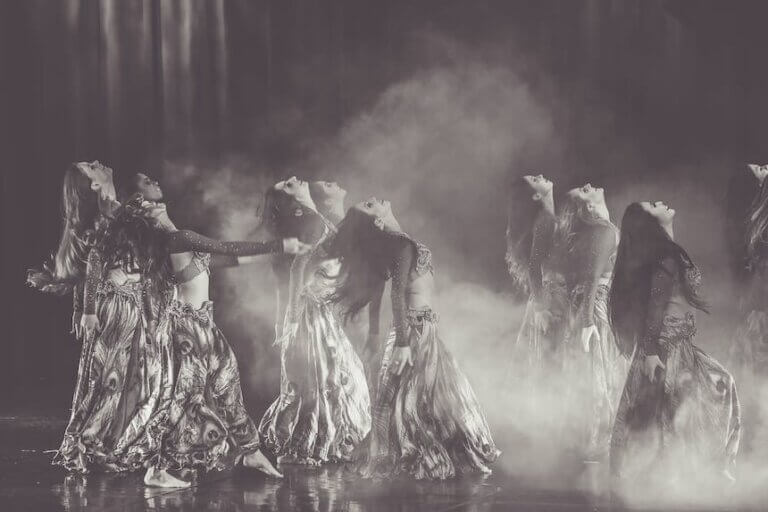


 Hi – I’m MiSs RiA, pole dance enthusiast and instructor. I’m delighted to share with you my 5 favorite intermediate pole dance poses.