10 Classical Spanish Dances

Spanish Dances article by Tanya, a dancer who lives in Spain.

The warm, cheerful, and picturesque streets of Spain contain many wonders for anyone who wants to visit them. There is a very rich and diverse culture, and you can get to know so much of this by seeing these traditional Spanish dances – as we’ll introduce you to now.

List of top 10 Spanish dances:

If you have had the opportunity to walk through Seville, Madrid and Barcelona, you have surely seen the famous Tablaos that offer Flamenco shows. But there are so many other beautiful Spanish dances, as we’ll cover in this article, from the Gypsy communities of the south to the Celtic costumes of Galicia.


1. Sevillanas


Previously called “Seguidillas”, they are a dance (and a music style) that’s typical of Andalusia, mainly in Seville, Cadiz, and Huelva. Sevillanas are danced in pairs, and they have a very festive nature.

This Spanish dance originated from La Mancha, but when it came in contact with Andalusian music, it became ‘flamencoized’, and movements from the Bolero dance were added; so it’s not strictly a Flamenco branch but a proper, individual classical dance.

The Sevillanas are an emblem of the famous Feria de Sevilla and of the pilgrimages of Huelva, in festivities like Virgen de la Cabeza (in Jaén).

2. Sardana


The origins of this dance are still uncertain and not really traceable. Some say that Sardanas are as old as the ancient Roman times, but most seem to agree that it was spread in Catalan regions like Roselló and Empordà during the 19th century. This dance, as time passed, became a symbol of the Catalan identity, step by step.

It is a Spanish dance performed in alternating circles of dancing women and men who hold hands and dance to a Cobla, a live band of eleven musicians. This dance, like Sevillanas, is performed during celebrations and public gatherings.

3. Paso Doble

spanish dancing_paso doble_competition
Photo by Ailura, CC BY-SA 3.0 AT, via Wikimedia Commons


Paso Doble is one of the most popular Spainish dances. At its true origin, even though is it is actually French, was a fast-paced march used by the infantry troops of the Spanish military, and goes by 120 steps per minute (which is the double of the standard unit, thus its name of “double step”). The pace is based on the movement and rhythm of a bullfight.

The military march was responsible for the origin of the modern Spanish dance that was used in 18th-century comedies and ballroom dances, often performed in pairs of one woman and one man, him symbolizing the bullfighter (el matador). In our modern times, it’s also a musical genre that has instruments and voices, as well as a version of instrumental music used during bullfights.

4. Fandango


If you are into dance, you have probably heard of this name at least once. Its origin is not actually as a Spanish dance, and according to the Diccionario de Autoridades of 1732, during that time, it was a “dance introduced by those who had visited the kingdoms of the Indias”, thus implying that its real origin is from Hispano-America.

By the 19th century, the Fandango embraced many aspects of the Andalusian Fandangos, and gave origin to the “fandango aflamencao” nowadays considered one the most elemental flamenco palos. This dance has more variations than any other flamenco dance. It’s a big part of the traditions of the Basque Country, Asturias, Valencia, Catalonia, and Portugal too.

This dance is fast-paced and is performed by couples. It has some similarities to boleros, and it’s usually danced with castanets, guitars, and hand-clapping, which makes it a very lively and festive performance.

5. Muñeira

Muñeira Spanish Dancer
Photo by Pieterjan Grobler Via Flikrr https://www.flickr.com/photos/krypty/

The Muñeira (Galician for “miller”) originates from Galicia and is often danced there and other Spanish autonomous communities like Asturias, and Castilla y León (which borders Galicia). In other regions of the country, this dance is called “Gallegada”.
The Muñeira is an example of the Celtic influence on the local culture of Spain, and the most evident parallel with Celtic music is a type of bagpipe called gaita, used to perform the accompanying music. The rest of the instruments are tamborils, bass drums, tambourines, conchas and charrascos.

Apparently, there is no documentation of this dance that goes prior to the 16th century, and nowadays it is an instrumental dance. The name makes reference to the working days in the mills and the spare time that went with the waiting for the milling.

6. Bolero

Bolero dance painting. Spanish dances
Marcelle Lender Dancing the Bolero in Chilpéric (1895-1896) painting in high resolution by Henri de Toulouse–Lautrec. Original from National Gallery of Art. Digitally enhanced by rawpixel.

The origin of Bolero traces back to Cuba, but it is also a very popular dance in Spain. It emerged from the Sevillana and La Contradanza during the crepuscule of the 18th and the early 19th century, more specifically during the years of 1750 and 1772, and became a very popular dance in Murcia, Madrid, Andalusia, and La Mancha.

It has a moderate slow tempo (thus, it is moderately paced) and it is usually performed as solo or with a partner, accompanied by castanets, guitars, and lyrics from the Seguidilla. It has somewhat fallen out of fashion but still holds a very important place in the history of Spanish dances.

7. Zambra


The Zambra (a word that comes from the Arabic Hispanic term “zámra” and “zamr” from classic Arabic and which means “tocata”) is a palo flamenco that originated from the gypsies of Granada in Andalusia, and it was performed at gypsy weddings. There’s the belief that Zambra is a continuation of Moorish dances, as it holds similarities with Arabian belly dance.

This is danced barefoot, with the dancer revealing her stomach by knotting her blouse under her chest. It was prohibited in Spain during the 16th century due to political reasons because Philip II wanted to wipe out traces of culture that didn’t belong to the Catholic religion. It was danced in clandestinity and taken back during the 20th and 21st centuries by known dancers such as Lola Flores.

Gypsies are still dancing it, for them and even for the tourists in the caves of Almeria and the Caves of the Sacromonte Hill in Granada.

8. Zarzuela

La Zarzuela is not precisely a dance style. It is a genre that mixes sung and spoken scenes while incorporating popular and opera-like songs, as well as dancing. A lyrical performance, if you’d like. The etymology of the word is said to come from the Palace of Zarzuela near Madrid, as the entertainment type presented to the court was of a similar fashion to that of the Zarzuela.

It’s traced back to the 17th century and became popular during the 19th century because of the Zarzuela Theatre (located in Madrid) and the work of Francisco Barbieri, a a Spanish composer and musicologist. The Zarzuela fell out of grace during the civil war and was retaken during the decade of the 50’s to the 60’s. It is still being performed nowadays across all of Spain.

Watch an hour long Zarzuela performance  – it really is quite the spectacle.

9. Jota


The Jota is a music genre and a dance style as well. It originated in Aragon and has different versions according to the region it is performed like Asturias, La Rioja, Eastern Andalusia, León, and many others, reflecting the local culture of each place.

The Aragonese Jota can be dated back to the 18th century and became more popular during the 19th century, which gave laboriously choreographed versions for festivals, movies, zarzuelas, and contests.

In is purest forms, this dance is kind of complex, as it has small jumps and rapid foot movements. It also is a visual representation, thus accompanied by singers, castanets and the dancers usually wear regional costumes. The most original and pure form of this dance is still found in places like Zaragoza, Andorra, Calanda, and Albacete.

10. Flamenco

Female Flamenco Dancer in full dancing.
A Flamenco dancer Photo by Alexander Jawfox on Unsplash

And last but not least, we have Flamenco, the heart of the most famous cultural export of Spanish Heritage. This is more than a dance style, it’s actually more of an art form, to the point of being given recognition by the UNESCO as part of the Masterpieces of the Oral and Intangible Heritage.

Flamenco comes from a myriad of folkloric traditions from Southern Spain, and it was made and developed by the Gypsies of Andalusia, and was present in Murcia and Extremadura.

The Romani Gypsies made a significant contribution to the professionalization of Flamenco, but the unique Andalusian style has contributions by both non-gypsy and gypsy heritages. The oldest record of Flamenco music traces back to the book of Las Cartas Marruecas by José Cadalso in 1774.

Flamenco was originally a form of political protest, and that is the origin of the famous tablaos. Franco Spanishized it by taking it away from the gypsies, prohibiting its lyrics, dance form, and giving it a different tinge to the original. However, the indelible mark of the gypsies could never be eliminated, and although it is one of the best know Spanish dances, it is recognized and known today that it has gypsy and Arab origins.

Majorette Dance: Moves, Dancing Styles and 200+ year History

Majorette Dance:

In this article, we twist and twirl through everything majorette. Things like what makes a great majorette dance, core moves, how to get started as a majorette and how to join or form a dance team.

So without further ado, let’s kick-on…

Majorette dance
Majorette dancers preparing with the band in 1970’s Sweden. Photo by Annie-Spratt on Unsplash

What is a majorette?

Simple question you’d think but actually there’s so much variation out there. We thought it might help to go back to this definition from the Cambridge English Dictionary:

What is a majorette?

a young woman or girl who wears a uniform and makes a pattern of movements with a baton (= stick) by turning it and throwing it into the air, as part of a group of girls who do this or as the leader of a musical group

Today, there are many styles of majorettes, as this type of dance has evolved. Many for instance will regularly not have batons, in performances for example, but we’ll dig into that later.

Majorette Characteristics, Moves and Techniques

Choreography

Majorette dancing has real flair.

Often the choreography is weaving a mixture of sharp synchronized moves, stunts and work with props (usually batons, flags and pom poms), to a background of upbeat music and bright outfits. Pulling this off takes extensive team training.

Marching & ‘high stepping’

Often accompanying marching bands during parades, majorettes entertain the crowds. So marching techniques are a cornerstone of many majorette performances.

The exact style of majorette marching followed rally depends on the style or origin of the routine. Generally, across all styles, the majorette will dancers maintain a solid upright posture. Each step will typically be to a consistent marching really emphasising the rhythm and co-ordination of the group, embellished by fast, energetic high kicks.

In this video AbbyTwirls provides an overview of a marching style and how to learn majorette marching – syncing leg and baton timing.

Baton twirling

As with marching, baton twirling can consist of lots of moves including:

  • Baton spins
  • Flourish
  • Baton throws
  • Finger twirls
  • Palm spins

Then you can add twirls, additional batons, juggling and even use fire batons, like this great fire baton routine.

In this video, you can learn a basic baton spin exercise to get started.

HBCU Style Moves

An exciting, versatile style of from Historically Black Colleges and Universities (HBCUs) in the United States, with a fresh take on majorette routines. A couple of the more common moves:

J-setting:

A high-stepping, energetic style set that utilizes call and response between dancers. This was made popular by the Jackson State University Prancing J-Settes. ‘Bucking’ is a signature J-setting move. These are powerful body and arm thrusts. It may be accompanies by J-Settes marching techniques known as the ‘J-Sette Walk’ ‘Salt and Pepper’ or ‘Tip Toe’ to name but a few.

Port de bras:

Another but more graceful arm movements. This time made famous in majorettes by the Southern University Dancing Dolls.

History of Majorette Dance

Pre-1800’s Germany:

Majorettes have been around even before 1800. Originally known as Tanzmariechen (translating as ‘Dance Marys’) in German or Dansmarietjes in Dutch.

Originally the Tanzmariechen were a group of ‘camp followers’ of the large German army, who would provide goods and services for the soldiers. This increasingly became more regulated over time but the wives of the soldiers did create entertainment for the soldiers. This included a parody of the battling forces, dressed in male, military attire. This video gives a more modern take on these traditions but keeps a taste of the military influences.

The 1900’s Europe:

With the increase of dance styles such as ballet and input of dance groups such as the revue girls and the Tiller girls the parades and postwar carnivals  of the Tanzmariechen evolved. These dance troops had costumers closer to those we associate with majorettes today. There was more emphasis on the performance, femininity and athleticism than the parody the Tanzmariechen started with, and is still key to German and European carnivals today.

Majorettes in the USA:

Today, much of the world associates ‘Majorettes’ more instinctively to American parades and sports shows. In the 1960s, young majorettes and dance troupes in America began to embellish the majorette performances with their own culture and styles.

As an interesting side note on majorette dance history, we also came across this really interesting guide from 1953, a University thesis capturing many of the core majorette techniques and detailing how to complete each. Worth a little look if you’re curious and have a few minutes.

HBCU Majorettes:

A style of majorettes developed with the performance art of historically black colleges (HBCUs), blending in elements of gymnastics, jazz, hip-hop and African dance.

Majorettes continued to front marching bands but came instrumental to representing their colleges, universities and sports teams, similar to cheerleading squads.

  • Southern University (featured in Beyoncé’s 2018 Coachella performance )
  • Alcorn State University (incorporating elements of jazz-ballet and hip-hop dance)
  • The Dancing Dolls of Jackson, Mississippi (covered in the TV series “Bring It!” and known for their fierce call-out dance battles)

It is from this style that Tik-Tok dance challenges have brought mass attention to majorettes more recently, with challenges like the ‘No love challenge’, ‘let it whip challenge’ and ‘her way challenge’.

Majorette FAQ:

Do boys and men majorette dance?

Traditionally majorettes has been for girls and women but that could be slowly changing. A US show about a group of men ‘The Prancing Elites’, who pursue their love of majorette dance helped to highlight the issue. Today, it’s also much easier to find groups including boys into their majorettes. Eventually this may feed the higher tier groups and championships to a greater extent. I you love dance, we say go for it!

How do you become a majorette dancer?

To become a majorette dancer:

1. Give it a try: As we’ve seen in this article, in todays world of YouTube and online dance classes you don’t even need to have joined a majorette group to know if it’s something that appeals and to get the basics down. So test out those dance moves, marches and baton twirls.

2. Join a majorette team: It’s a group performance, so if you’re serious about becoming a majorette dancer, have a look what groups are near you. Go along and try them out.

3. Attend competitions and workshops. Like all sports, there our competitions right up to world championships for majorettes. Participating in these can give real focus to your group to help you improve and develop collectively, as well as individually as a dancer.

4. Continued practice and dedication to master both the moves and routines.

How to Start a Majorette Dance Team?

If accessing a majorette dance team isn’t easy in your area, for your age group, you can always start one up yourself.

1.     Establish a vision for the team, the age range, skill level, what might be your style and how seriously will you take it.

2.     Recruit members for your team. Advertise and hold auditions in partnership with local schools, dance studios or community groups.

3.     Set a clear time and location for regular practice space. Possibly a local dance studio or hall. Have a ‘code of conduct’ emphasising the importance of prompt, regular training.

4.     Find a qualified advisor or coach to guide your team who knows the Majorette dance rules and guidelines. They will help develop a practice schedule, routines, and give instruction on mastering the majorette techniques and routines.

If you found this article interesting, have a look at other dances from around the world:

THE BEST SWING DANCE SHOES - image of people swing dancing, men and ladies

West Coast Vs East Cost Swing

Wondering what the difference between the West Coast and East Coast swing styles might be? Then let us tell you all about swing. Swing dance ...
Spanish dancers performing

10 Classical Spanish Dances

Spanish Dances article by Tanya, a dancer who lives in Spain. The warm, cheerful, and picturesque streets of Spain contain many wonders for anyone who ...
Majorette dancing band

Majorette Dance: Moves, Dancing Styles and 200+ year History

Majorette Dance: In this article, we twist and twirl through everything majorette. Things like what makes a great majorette dance, core moves, how to get ...

Cover image by  Eduard Egorov from Paxabay.

K-Pop Dance: Korea’s Dancing Sensations

KPop dance and music are so intimately linked. Together they have skyrocketed over recent years as kpop groups have become a global sensation.

When most people think of KPop (Korean Pop), they’ll associate catchy tunes, energetic dance and intricate choreography, often with perfectly synchronised moves.

In this article we’ll look at the rise of this dance style, how to get started.

So let’s get to it…

kpop dance
picture of a girl k-pop dancing. Image by Egi Mandala Putra from Pixabay

KPop origins & history

K-Pop originates from South Korea, but is influenced by a number of dance styles.

Originally K-Pop dance was influenced by American pop music. Going back to the 1950s, The Kim Sisters, rose to fame during that post-war period. The Kim Sisters are Kim Sook-ja (Sue) and Kim Ai-ja (who are literal sisters), and their cousin Kim Min-ja (Mia). Backed by talented parents, the girls, much like modern kpop, brought an eclectic mix to their performances, with singing, dancing, fashion and playing a selection of instruments.


In a 2018 NBC Interview, Sue Kim was asked ‘what makes a successful KPop group’, she said “Discipline. Without discipline, you cannot make it. It looks like whoever goes into K-pop groups, they have to have discipline. Something’s got to give, so they sacrifice their personal life to be good”.

Although they didn’t speak English initially, that didn’t hold The Kim Sisters back from achieving fame across United States and the wider world. Their success undoubtably opened the door for other Korean artists (and other international artists) to break into the international music scene.

The 1990s then were the next major step for K-Pop dance, with an increased popularity of Korean popular culture, also known as the “Hallyu Wave”. With relaxed travel restrictions in Korea, more international dance and musical influences were available. When they first appeared on MBC’s talent show in 1992, Seo Taiji and Boys, changed K-pop forever. Bringing rap and other western musical & dance influences into  K-Pop gave them rapid stardom, awards a millions of albums sold. Here’s the original music video where you can really feel many of those influences from other cultures and genres.

Growth continued throughout  the 2000s and 2010s, where K-Pop dance continued to evolve, ‘absorbing’ aspects of other international dance styles. Ultimately though, this collective of dance, music, fashion and fan participation has become something very special in it’s own right.

In 2012, Psy had a global success with his catchy song and iconic dance ‘Gangnam Style’, whose lyrics refer to a hip area of Seoul and brought a humour that created an instant hit.


More recently, the COVID-19 pandemic had a part to play in the rise of K-Pop dance on the global stage. With a push for at home isolation, the kPop ‘Idols’, their fans and content creators went online in unprecedented numbers – accelerating the spread of kpop, particularly across social platforms such as YouTube and Tik-Tok. This has fuelled the rise of ‘cover dances’ and ‘dance challenges’. These are now a key part of k-pop dance, where celebs, fans and content creators cover the moves and choreography of their favourite idols and can challenge others to do the same.

Cover dances are increasingly becoming serious business for young hopefuls looking for KPop success. Dera, part of The  White Family, a cover dance group, said “We are now demanded to look as identical as possible to the idol, whether the costumes, hairstyles, or the looks; become a cosplayer but the K-pop version,” she added.

Popular KPop Groups

All groups bring a powerful combination of dance and music. We recommend you checkout a few of their YouTube accounts to see them in action (and pick up a few moves whilst you’re there).

  • BTS – BTS, formed in 2010, with Jin, Suga, J-Hope, RM, Jamin, V and Jungkook as a hip-hop group and expanded to wider styles. Their first number one hit was “Blood Sweat & Tears”.
  • Twice – Formed in 2015, through the reality competition survival show “Sixteen” featuring Nayeon, Jeongyeon, Momo, Sana, Jihyo, Mina, Dahyun, Chaeyoung, and Tzuyu. Their first single was “Extended Play” with their first number one the following year “Cheer Up”. The “TT” hand gestures are famous among fans.
  • Blackpink – Koreas most famed girl group, with Jisoo, Jennie, Rosé, and Lisa. They had their first hits in 2016 with “Whistle” and “Boombayah” and went on to smash multiple records and receive even presidential thanks for helping spread KPop world wide.
  • Super Junior – a larger 12 piece boy band, formed in 2005, with Leeteuk, Heechul, Yesung, Shindong, Sungmin, Eunhyuk, Donghae, Siwon, Ryeowook, Kyuhyun, Han Geng, Kibum and Kangin. Changes in the line-up took place over the next 4 years. Known for synchronized and polished dance moves. They broke a record in the KKBOX album chart, occupying number 1 for 122 weeks!
  • Big Bang – Big Bang, formed in 2006, originally with G-Dragon, Taeyang, Daesung. Seungri and T.O.P. They spread the ‘Korean Wave’ with their iconic dance moves, pulling on hip-hop elements, unique gestures, and high-energy energetic throughout.
  • Momoland – formed in the Mnet show “Finding Momoland” in 2016. The group of Hyebin, Yeonwoo, Jane, Nayun, JooE, Ahin, and Nancy where joined by Daisy and Taeha in 2017. Famous for catchy dance moves and an example of how KPop can ‘blow up’ on social media. Check out the video for “Bboom Bboom” with a lively and energetic dance routine. The group disbanded in 2023.
  • Stayc’s – a more recently formed girl group came together in 2020 – originally with Sumin, Sieun, Isa, Seeun, Yoon, and J, is known for their sharp dance routines. Their hits include “ASAP” and “So Bad”.
  • (G)I-dle –  a girl group, originally formed in 2018 with Miyeon, Minnie, Soyeon, Yuqi, Shuhua and Soojin. Their dances to the likes of “Hann” display powerful choreography, as well as elegant movement. 
KPop dance idols
Image of Kpop dance idols Photo by Joel Muniz on Unsplash

What type of dance is K-Pop?

Although celebrated under the banner of Korean Pop, as we can see from the history section in this article, K-Pop draws from a huge pool of influences from across the globe including Africa, America and Asia.

This allows KPop as a genre to feature everything from upbeat dance choreography to slower, emotional ballads, and everything in-between. The great thing about this, beyond the sheer variety under the KPop banner is that by drawing inspiration so widely and leaning so heavily on dance, KPop can really transcend linguistic and cultural barriers. This goes a long way to explain its international success. Some of it’s influences include:

  • Contemporary – Contemporary dance, from the West has brought much to KPop Dance including improvisation, emotional expression and fluid, graceful movements.
  • Hip-Hop – K-pop choreographers have drawn a lot from hip-hop. Bringing powerful, bold moves perfect for the KPop performance style.
  • Jazz – Another African-American influence, this time bringing unique steps, fast footwork, and movements that emphasize body isolation.
  • Rock – Less of a dance style but the presence of rock music can be seen visually in KPop dance through the high-energy jumps and headbanging.
  • Electronic – Dance styles accompanying electronic music such as house, techno, and breakdance, give a fast, futuristic feel to KPop dance choreographies.

Notable K-Pop Choreographers

One of the most powerful aspect that has driven Kpop to fame is the precision of the choreography, a few of the talents behind this include:

Kyle Hanagami – an American choreographer who has heavily in KPop, including groups: Girls’ Generation, Red Velvet, and Blackpink.

Lia Kim –  choreographing dance routines with intricate patterns for the likes of Sunmi and Twice (Including “TT”).

Rie Hata – a Japanese choreographer known for her hip-hop influence and who has choreographed for many KPop boy bands including BTS.

Bada Lee – choreographing for many artists, she was also a backup dancer for Blackpink’s Lisa.

Other great KPop choreographers Include Chunha, Rino Nakasone, Taemin, Leejung, Jay Park and Koharu Sugawara.

Acknowledging K-Pop Choreographers

A slightly contentious subject can be the acknowledgements these choreographers get for their central part in the making of the dances and the groups. Often not identified in the acknowledgements, the role of ethics in copyright are also brought into question. Strictly speaking, Youtube creators for example should also not be able to monetise non-original content (e.g. copied choreography) but this is not the case often.

Alice Myung is a performer and choreographer who studied Psychology and Social Behavior at the University of California. Alice has written an interesting piece on movement transmission and representation as a challenging point of view to this approach and the importance of acknowledging the people and culture that influence s.

bus with kpop dance group red velvet
Photo by Hiu Yan Chelsia Choi on Unsplash

How to learn K-Pop Dance as a beginner

At DanceBibles, we know that there’s no better way to truly appreciate a dance than to get involved.

KPop dancing is fun, a great work-out and you can do it alone or with other dancers (or even some friends or family). Because so many of the dances involve complicated choreography, to stand a chance at staying motivated whilst you make progress, we recommend beginners start with easier dances.

What’s the easiest KPop dance to learn?

Songs by Twice, such as “Dance The Night Away” are excellent as they’re iconic, generally simple to follow and execute.

How long does it take to learn a KPop dance?

It really depends! Even if it’s an easy KPop dance, it depends on you skill level as a dancer, experience with KPop, the song speed, number of dancers to name but a few considerations. Rest assured, like the idols, when you have more practice behind you, learning each move and choreography piece will suddenly come a lot faster.

A pro tip is to ‘not eat the elephant whole’. Pick some of the basic moves and techniques, break the song down into manageable sections. By doing this and mastering smaller sections, you can eventually build the sections together to achieve a dance for the whole song. Doing this for an easier choreography is a good stepping stone when repeating these steps and gradually building up to moderate and eventually more complicated, advance choreography.

With social media, YouTube, online courses and classes in virtually every city – learning KPop at home or with coaching can happen in your own time frame and in a way that suits you best. Why not learn with a few friends and see what choreography you can master together?

Happy dancing!

Here’s some other articles about interesting dance styles from round the world:

Spanish dancers performing

10 Classical Spanish Dances

Spanish Dances article by Tanya, a dancer who lives in Spain. The warm, cheerful, and picturesque streets of Spain contain many wonders for anyone who ...
Majorette dancing band

Majorette Dance: Moves, Dancing Styles and 200+ year History

Majorette Dance: In this article, we twist and twirl through everything majorette. Things like what makes a great majorette dance, core moves, how to get ...
kpop dance

K-Pop Dance: Korea’s Dancing Sensations

KPop dance and music are so intimately linked. Together they have skyrocketed over recent years as kpop groups have become a global sensation. When most ...
Circle dance article. image of “Hora haiducilor” depicts traditional Moldavian folk circle dance Hora originating in the Balkans Sculptor Nicolae Vieru

Circle Dancing: Joy and Connection Through Dance

Circle dancing, sees dancers connecting, often through hand holding, in a circle, semicircle, or curved line. They move to the rhythm of singing or instruments ...
Wild horses. Symbolising the energy of Quebradita dancing - photo by Gene-Devine- on Unsplash

Quebradita: Unleashing the Energy of This Dynamic Dance

Quebradita dancing is known for its complex flips, daring lifts, and synchronized legwork, this exhilarating dance makes a powerful statement on any stage or dance ...
pasito duranguense - image of mexican flag

Pasito Duranguense: Dance to the Rhythm of Mexico

Pasito Duranguense is a vibrant dance and music genre inspired by its namesake Durango, Mexico. Emerging during the 1970s, it blends traditional Mexican music, such ...

Circle Dancing: Joy and Connection Through Dance

Circle dancing, sees dancers connecting, often through hand holding, in a circle, semicircle, or curved line. They move to the rhythm of singing or instruments.

The beauty of circle dance is its inclusivity. Accompanied by the relevant musical styles, it flexes in terms of catering for a full span of ages, abilities and fitness levels – creating a range of varied dance styles.

Circle dances vary from ancient, traditional formats to modern contemporary. The pace is anything from slow and meditative to lively and upbeat. You find some performed inside venues and others often outside and more connected with nature.

At DanceBibles, we love to explore the different dances from round the world and circle dancing is no exception. In this article we’ll dive into this fascinating dance, find out what makes it special, where it comes from and how you can get started.

Circle dance article. image of “Hora haiducilor” depicts traditional Moldavian folk circle dance Hora originating in the Balkans Sculptor Nicolae Vieru
Image by Maria Lupan  on Unsplash

How to Circle Dance

·      Often the music will start quietly and will allow people to get into the mood

·      Typically one person begins the circle dance and others will follow as comfortable

·      Sometimes we will join hands with our neighbours. Often dancers present the left hand open palm rotated backwards to ‘give’. The right hand is presented with an open palm ‘to receive’

·      There are a number of common steps depending on the dance. Have a look at this glossary

Circle dance of Females in Slovakia in full regalia, with musical accompaniment behind them
Image of circle dancers by Jan Hrasko from Pixabay taken in Hriňová Slovakia

Typical Aspects of Circle Dancing

Inclusivity

Whatever your age and ability, there is a circle dance to suit. No partner needed, simple steps and a welcoming atmosphere. This dance truly has community at its heart. Unlike most other dance styles, circle dance is non-competitive. With this in mind, the genre is very understanding and forgiving. ‘Circle Dancing for All’ say ‘There are no mistakes, merely variations!’.


Connectedness

The circle is no coincidence. For many the circle has symbolism to everything of circularity. This could be life & death, the changing of seasons, or even a connection to the earth, giving unity and wholeness.

People are also physically connected in the dance through their touch, energy, artistic expression and movement as they move in unison. This has ancient traditions in social and cultural occasion. The result is a shared feeling of community spirit.

At it’s most basic level circle dancing is a highly social form of dance. You can come without a partner, meet new people and make friends. Circle dance is an opportunity to immerse yourself into a new group of often likeminded people.

Image of Shiva statue
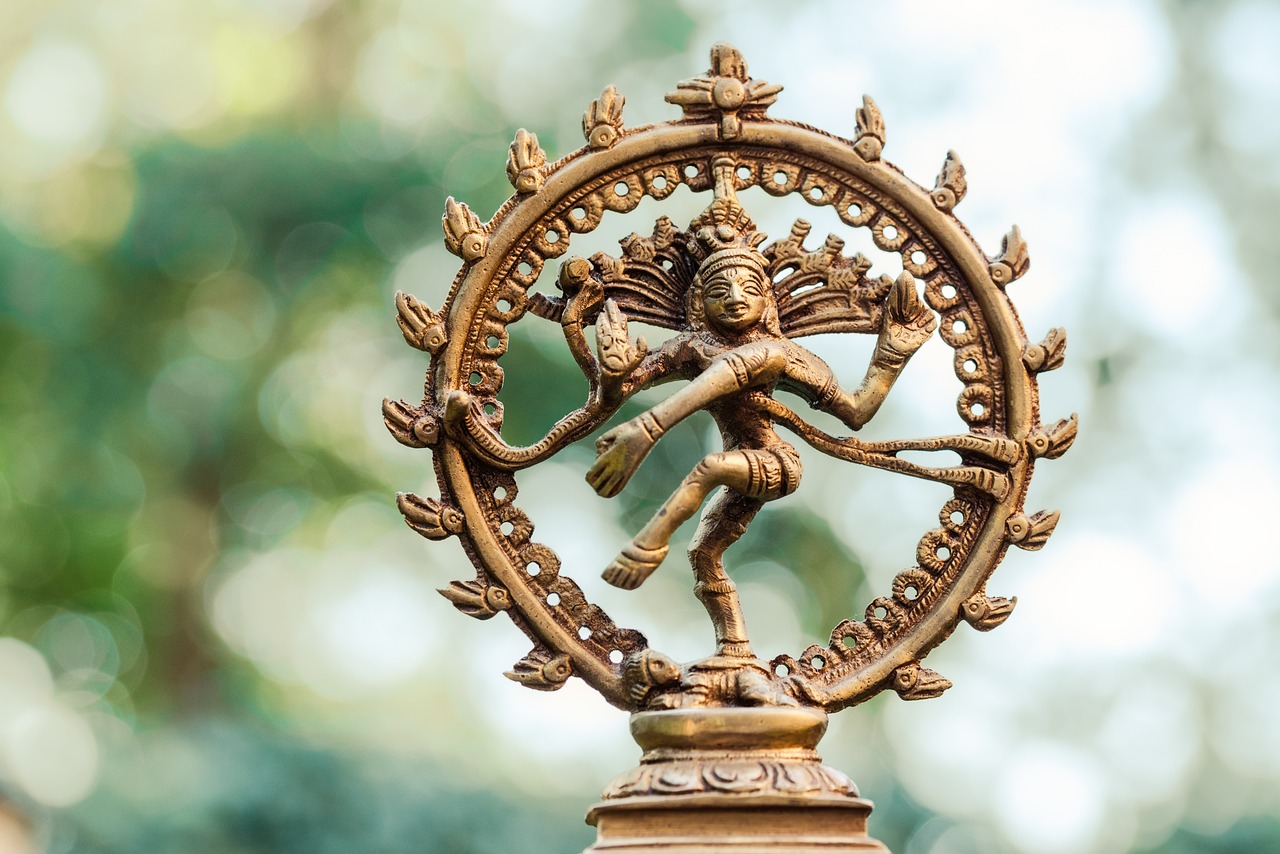
Shiva creating the world by dancing. Image by sabinevanerp on pixlebay

Reflection

For many historically and today, Circle dance has had an element of reflection to it, with some of the slower paced dances having a meditative element of mental quietness woven in. This is increasingly making circle dance a go-to tool for therapy tool in various settings.

The reflections, depending on the occasion, whether that be self-reflection, can have a spiritual or religious layer to them also.

Some styles of circle dance will have a centre piece in the middle of the circle. This serves a practical purpose of keeping the circle in a steady shape but also has an alternative meaning for some. This may include being lit with candles or around a fire, with all the symbolism light can bring.

Fun

For all the potential symbolism, ritual and deeper meaning we may find in some types of circle dance, one common thread you find across virtually all of these is an approach which is light-hearted and fun.


Musical Styles and Dances

Circle dancing incorporates various musical styles to reflect the broad nature of its participation. These can be loosely grouped into:

·      Self-made rhythm – Elements such as sticks, bones and handmade sounds were present during early circle dances for percussion.

·      Folk Song – Folk songs and dance have had the largest  presence in circle dancing

·      Classical & Contemporary Music – Circle dance repertoire has expanded to include classical and contemporary music. This brings a new dimension circle dancing, allowing for it to appeal to new audiences and with different levels of skill and physicality. Many choreographers now create dances to well-known classical pieces which can be beautiful to behold.

·      Meditative – The mentally refreshing and wellness properties of circle dance are compelling. These are intricately connected to the choice of relaxing, rhythmical song guiding the dance.

History of Circle Dancing

Circle dancing is believed to be the oldest form of dance. Some of the highlights include:

·      3000BC, Ancient Egyptian – rock petroglyphs (carved pictures) of girls circle dancing

·      10th Century, Germany – dance of Reigen originates from early Christian festivals

·      12th Century, Bosnia – tombstones in the depict dancers in a chain holding hands

·      14th Century, Macedonia – chronicles and monastery descriptions in show men dancing with linked arms.  Giovanni Boccaccio describes men and women circle dancing to their own singing or accompanied by musician

·      1588, Constantinople – German Reinhold Lubenau, reports on circle dancing a Greek wedding on his travels

And circle dancing has continued to this day, preserving many of the stories, customs and traditions through the generations. Many of these are often not written down, but have been passed generation to generation across the centuries.

Male and female dancers hold hands in a traditional circle dance
Image by ctvgs from Pixabay

List of example of circle dances around the world:

There are so many cultural variations of circle dance that its beyond the scope of this post to capture them all here but here we list a few examples:

·      An Dro – from Brittany, France – linking little fingers and swinging arms as the group is lead in a spiral of dance patterns.

·      Chain Dance – From the Faro Islands.

·      Danke – For example the Lawweeh, danced in a semi-circle at family celebrations in Lebanon, Syria, Palestine, Israel, Jordan and Turkey.

·      Deuda – part of the cultural heritage of the Karnali Province, Nepal. Holding hands in a circle. The first group sings a question, whilst a second group then answers this.

·      Dhan Nach – (Often also known by the name ‘Yalang’, ‘Chalakma’ or‘Yalakma’ depending on local language) A folk dance from the Limbu region of Nepal, accompanied by a song called ‘Palam’. It’s roots traceable to scaring the birds away and celebrating the harvest.

·      English folk dance; you can find instructions and music for dances with names as wild as ‘Brawl’ and ‘The yellow cats jig’ on Colin Hume’s page

·      Farandole and Bourrée – are examples of French dances with distinct regional influences.

·      Fugdi – Performed by women around the Go region in India, often during Hindu religious festival. The name ‘Fugdi’ actually comes from there being no percussion to the dance, the dancers create a rhythm by blowing air in a sound of ‘Foo’.

·      Govend – A traditional Kurdish dance.

·      Hora – a highly energetic circle dance, found in the Balkans, Romania, Moldova, Bulgaria and Israel at weddings and celebrations.

·      Kalamatianos  & Syrtos – performed at weddings in Greece & Cyprus, two variants with different pace and formality. Often handkerchiefs and used as part of the dances.

·      Khigga  – Assyrian circle dances, often performed at weddings, in either a line or a circle. It uses handkerchiefs embodied with beads and bells, as well as a ceremonial decorated cain.

·      Khorovod – Russian dances, traditionally performed during village gatherings and festive occasions. Each dance tells stories of local folklore and history, with Pagan origins and symbolism of moving around the sun.

·      Kolo – folk dance from Bosnia and Serbia holding hands or waists, with a stiff upper posture held throughout.

·      Kochari  – An Armenian folk dance, danced with hands across each others shoulders, in a closed circle.

·      Mayim Mayim dance; which celebrates the finding of water during 40 years of wandering in the desert.

·      Native American circle dances; serving various purposes like healing and preparation for war.

·      Nati & Harul– A lively Indian folk dance most popular in Himachal Pradesh and Himalaya region. In 2016,  9892 women danced Nati in their colorful Kulluvi dress, which is a world record.

·      Sacred Circle Dance – With a small centrepiece of flowers and dance, through the Findhorn Foundation, by Bernhard Wosien, starting in Scotland.

·      Sardana – A popular dance from Catalonia.

·      Sakela – a traditional Nepalese and Indian festival dance, connected to prayer for a good harvest and protection from natural disaster.

·      Syabru – a traditional Nepalese Himalayan folk dance, from within the Sherpa, Tamang and Yolmo communities at festivals and gatherings.

·      Tamzara  – An Anatolian folk dance with connected little fingers.


Final thoughts

Whilst circle dancing might not have the same individual skills elements at the level of other dance styles like Ballet, circle dance is about connectedness with the group. A true joy to watch or be part of. It’s beauty is in it’s intertwined links with rich song, customs and stories. Circle dances preserve history and culture to the point many are listed in the UNESCO Intangible Cultural Heritage lists (which are definitely worth checking out).

Give it a try and let us know how it goes. Happy circle dancing!

Spanish dancers performing

10 Classical Spanish Dances

Spanish Dances article by Tanya, a dancer who lives in Spain. The warm, cheerful, and picturesque streets of Spain contain many wonders for anyone who ...
Majorette dancing band

Majorette Dance: Moves, Dancing Styles and 200+ year History

Majorette Dance: In this article, we twist and twirl through everything majorette. Things like what makes a great majorette dance, core moves, how to get ...
kpop dance

K-Pop Dance: Korea’s Dancing Sensations

KPop dance and music are so intimately linked. Together they have skyrocketed over recent years as kpop groups have become a global sensation. When most ...
Circle dance article. image of “Hora haiducilor” depicts traditional Moldavian folk circle dance Hora originating in the Balkans Sculptor Nicolae Vieru

Circle Dancing: Joy and Connection Through Dance

Circle dancing, sees dancers connecting, often through hand holding, in a circle, semicircle, or curved line. They move to the rhythm of singing or instruments ...
Wild horses. Symbolising the energy of Quebradita dancing - photo by Gene-Devine- on Unsplash

Quebradita: Unleashing the Energy of This Dynamic Dance

Quebradita dancing is known for its complex flips, daring lifts, and synchronized legwork, this exhilarating dance makes a powerful statement on any stage or dance ...
pasito duranguense - image of mexican flag

Pasito Duranguense: Dance to the Rhythm of Mexico

Pasito Duranguense is a vibrant dance and music genre inspired by its namesake Durango, Mexico. Emerging during the 1970s, it blends traditional Mexican music, such ...
Beautiful bellydancer spinning in a pink dress. Photo by Gianluca Carenza on Unsplash. Header to the what is bellydancing article.

What is belly dancing?

Belly dancing, also known as Middle Eastern dance or Oriental dance, is an expressive and sensual form of dance that originated in the Middle East ...
Female Flamenco Dancer in full dancing.

Flamenco Dance: Mysterious and Mesmerizing

Flamenco dance is probably the first thing that comes to mind When you think of Spanish dance. This mesmerizing dance style has a long and ...
Ukrainian Folk Dancing

Ukrainian Folk Dances

Ukrainian folk dances are an important part of the country's culture. They have a long and varied history and can be classified into several different ...

Pasito Duranguense: Dance to the Rhythm of Mexico

Pasito Duranguense is a vibrant dance and music genre inspired by its namesake Durango, Mexico. Emerging during the 1970s, it blends traditional Mexican music, such as banda and norteña, with electronic sounds and elements of US genres like cumbia and techno. The result is a fast-paced and energetic dance style that has enthralled audiences in both Mexico and the United States.

Chicago has a large Mexican-American population of over 500,000, and Duranguense has become very popular in that community. In fact, some people even refer to Chicago as the “capital of Duranguense” in the United States.

The name “Pasito Duranguense” translates to “little Durango step,” referring to the dance’s quick and intricate footwork. Dance groups and bands, which often go hand-in-hand, have gained popularity not only for their lively performances but also for the cultural connection they provide to Mexican roots. A unique experience for both dancers and listeners alike. In this article we’ll explore more about this intriguing dance style.

pasito duranguense - image of mexican flag

How to Dance Duranguense

Pasito duranguense is similar to ballroom dance and can be performed both with a partner or solo.

  • To begin, stand in place and swing your hips to the beat of the music.
  • Each time your hips move from side to side, move your feet with a quick step.
  • This creates the characteristic rapid rhythm of the dance.

Photo by by-Jean-Weller-on-Flikr


This video have some great tips to get you started.

Musical Characteristics

Rhythm and Tempo

The rhythm of pasito duranguense is primarily based on syncopated patterns, giving it an energetic and danceable feel. The tempo is generally upbeat, as this style was created to accompany a dance known as the “Pasito”.

Instruments and Arrangements

Instrumentation in pasito duranguense typically includes a mix of traditional Mexican and modern instruments. The core of this genre is brass instruments, featuring trumpets, trombones, and saxophones. Additionally, keyboards or synthesizers are often used to add a touch of modernity to the arrangements.

Other instruments commonly found in pasito duranguense include the bajo sexto (a 12-string guitar-like instrument), bass guitar, and drums. The combination of these instruments contributes to the distinctive sound of this genre.

Popular Duranguense Bands

Notable examples include Grupo Montéz de Durango, Conjunto Atardecer

AK- 7, Patrulla 81and Los Horóscopos de Durango. Their songs often featured catchy melodies, energetic rhythms, and compelling lyrics, capturing the essence of the duranguense genre.

Major record labels, such as Musart-Balboa, released compilations featuring various artists, helping to promote the genre globally. You can find them on on Amazon.

Contribution to Mexican Music

The evolution of Pasito duranguense played a significant role in diversifying Mexican music. It combined elements from various music styles like banda, norteño, and techno, resulting in a uniquely Mexican sound. The dance associated with the genre, featuring intricate footwork, further showcased the region’s blend of cultural influences.

The emergence of Pasito duranguense also led to the creation of a sub-genre called Mexikansa, which featured the incorporation of Chicago-based artists and producers. This fusion demonstrated the ability of Mexican music to adapt to new environments and maintain its cultural roots.

International Reach

Pasito duranguense expanded beyond Mexico and gained popularity in the United States, particularly among the Mexican-American community. Its accessibility and distinctive dance style made it a popular choice at social events and gatherings.  Furthermore, the duranguense wave gave several Mexican and Mexican-American artists the opportunity to connect with audiences from different backgrounds, creating a sense of cultural unity and pride.

Controversies and Criticisms

Pasito Duranguense has faced its share of controversies and criticisms throughout its existence. While some appreciate the music and dance as an expression of Mexican-American culture, others argue that it has negative connotations or perpetuates stereotypes. Most of this broadly falls under the banners of references to drugs, provocative dance moves and the commercialisation of a cultural heritage. While critics argue that these controversies tarnish the genre’s image, others view it as an essential aspect of Mexican-American culture that should be embraced and celebrated.

Summing up:

This combination of Mexican-American styles has created a unique music and dance, which should be celebrated and we can’t wait to try for ourselves!


Read more about world dances:

Spanish dancers performing

10 Classical Spanish Dances

Spanish Dances article by Tanya, a dancer who lives in Spain. The warm, cheerful, and picturesque streets of Spain contain many wonders for anyone who ...
Majorette dancing band

Majorette Dance: Moves, Dancing Styles and 200+ year History

Majorette Dance: In this article, we twist and twirl through everything majorette. Things like what makes a great majorette dance, core moves, how to get ...
kpop dance

K-Pop Dance: Korea’s Dancing Sensations

KPop dance and music are so intimately linked. Together they have skyrocketed over recent years as kpop groups have become a global sensation. When most ...
Circle dance article. image of “Hora haiducilor” depicts traditional Moldavian folk circle dance Hora originating in the Balkans Sculptor Nicolae Vieru

Circle Dancing: Joy and Connection Through Dance

Circle dancing, sees dancers connecting, often through hand holding, in a circle, semicircle, or curved line. They move to the rhythm of singing or instruments ...
Wild horses. Symbolising the energy of Quebradita dancing - photo by Gene-Devine- on Unsplash

Quebradita: Unleashing the Energy of This Dynamic Dance

Quebradita dancing is known for its complex flips, daring lifts, and synchronized legwork, this exhilarating dance makes a powerful statement on any stage or dance ...
pasito duranguense - image of mexican flag

Pasito Duranguense: Dance to the Rhythm of Mexico

Pasito Duranguense is a vibrant dance and music genre inspired by its namesake Durango, Mexico. Emerging during the 1970s, it blends traditional Mexican music, such ...

What is belly dancing?

Belly dancing, also known as Middle Eastern dance or Oriental dance, is an expressive and sensual form of dance that originated in the Middle East. It is characterized by fluid, undulating movements of the torso and hips, often accompanied by intricate hand and arm gestures. Belly dancing is a popular form of entertainment at events and celebrations, but it is also enjoyed as a form of exercise and self-expression.

Belly dancing is also known by a variety of other names, including Middle Eastern dance, Oriental dance, and Raqs Sharqi. These names are all used to describe the same dance form, which originated in the Middle East and North Africa.

Beautiful bellydancer spinning in a pink dress. Photo by Gianluca Carenza on Unsplash. Header to the what is bellydancing article.
Photo by Gianluca Carenza on Unsplash.

The name “belly dance” is a bit of a misnomer, as the dance involves much more than just the movement of the belly. It is a dance form that involves the use of the entire body, with fluid, undulating movements of the torso and hips, as well as intricate hand and arm gestures.

Some people believe that the name “belly dance” is a result of the Western fascination with the dance form and the emphasis on the belly and hips. Regardless of its origin, “belly dance” is the most commonly used term for this dance form in the Western world. However, it is important to be aware that there are other names that are also used to describe this dance form, and to respect the cultural context in which it originated.

History of Belly Dancing

Belly dancing origin is somewhat shrouded in mystery, as it is a dance form that has evolved over many centuries and has been influenced by a variety of cultures. It is believed to have originated in ancient Egypt and was originally a sacred dance performed by women for women. Over time, it spread to other parts of the Middle East and North Africa, and was eventually embraced by the wider world.

One legend says that originally the dance served as a ritual and helped ease the pains of childbirth. Women surrounded the woman in labor and made characteristic movements with their hips to drive away evil spirits from the newborn baby.

The entire Near and Middle East was under the power of sensual dance. Over time, the style began to change from ritual dance to folklore or folk dance. Every ethnic group that was part of the region added something of its own to the movements of the dancers. There are hundreds of folk dances whose progenitor was the Oriental style. They have two things in common: the performer is always a woman, and the main elements are the movements of the hips and abdomen.

The seductive dances of oriental beauties were also appreciated by European merchants and traders, who began to travel to Egypt around the 16th century. But for the first time bellidance Old World saw in 1889 in Paris. Mata Hari helped spread bellydance across the continent. In 1889, the first show, where bellydance was performed by Arab women, was held in Paris. Four years after that event, the movements of oriental beauties were already enjoyed in Chicago thanks to Sol Bloom.

The popularity of belly dancing in the United States increased significantly in the 1950s, 60s, and 70s, as immigrant dancers from various countries in the Middle East, such as Turkey, Lebanon, Syria, and Egypt, began offering classes and teaching Americans how to perform the dance.

Costuming and Props

Costuming and props have long been an important part of belly dancing, and have played a role in the history of this dance form. In the past, belly dancers typically wore traditional Middle Eastern clothing, such as flowing pants or skirts, long, flowing skirts, and a variety of tops and head coverings. These garments were often adorned with intricate embroidery, beadwork, and other decorative elements, and were chosen to reflect the dancer’s cultural heritage.

Over time, the costumes worn by belly dancers have evolved and become more diverse, with many dancers choosing to incorporate elements of modern fashion into their outfits. Today, it is not uncommon to see belly dancers wearing a variety of costumes, ranging from traditional Middle Eastern garments to more modern, Western-style clothing.

Props are also an important part of belly dancing, and have been used for centuries to add visual interest and enhance the dancer’s performance. Some common props used in belly dancing include veils, finger cymbals, swords, canes, and shimmying belts. These props can be used to add drama and movement to the dancer’s performance, and can help to tell a story or convey a particular theme.

Overall, costuming and props have played a significant role in the history of belly dancing and continue to be an important aspect of this dance form today.

Techniques and Styles of Belly Dances

There are many different styles and techniques of belly dancing, each with its own unique flavor and flair. Some of the most popular styles include:

  1. Egyptian style: This is the most traditional and classical form of belly dancing, characterized by smooth, fluid movements and intricate shimmies. There are many famous belly dancers from Egypt.
  2. Turkish style: This style is characterized by strong, sharp movements and dramatic poses. It is often accompanied by fast-paced music and may include props such as veils and finger cymbals.
  3. Lebanese style: Characterized by wavy elements. Dancers wear heels, so the center of gravity is shifted, the movements are sharp.
  4. Tribal style: This is a modern, fusion style of belly dancing that draws on a variety of Middle East, India, Africa, Spain dance styles. It is characterized by group improvisation and the use of distinctive costume elements such as coin belts and head scarves.

The number of types of oriental dances is much greater. They differ in the nature of movements and costumes.

There are many different steps and moves involved in belly dancing, and each style and technique may have its own unique set of moves. However, there are some basic steps and moves that are common to most forms of belly dancing. One of the most basic steps in belly dancing is the “shimmy,” which involves a rapid shaking or vibrating of the hips. This move is achieved by contracting and relaxing the muscles of the hips and lower abdomen in rapid succession. Other common steps and moves in belly dancing include:

  1. figure 8: This move involves making a figure 8 shape with the hips by moving them in a circular motion.
  2. undulation: This move involves rippling or undulating the muscles of the torso, creating a wave-like motion.
  3. hip drops: This move involves dropping the hips down and then lifting them back up, often in time with the music.
  4. chest lift: This move involves lifting the chest and bringing it back down, often in conjunction with arm and hand gestures.
  5. camel walk: This move involves taking large, sweeping steps while keeping the hips stationary, as if walking through sand.
  6. arabic walk: This move involves taking small, quick steps while keeping the feet close to the ground and the hips stationary.

These are just a few examples of the many steps and moves involved in belly dancing. As you learn more about this dance form, you will discover many more moves and techniques to add to your repertoire.

Benefits of Belly Dancing

Belly dancing is more than just a fun and enjoyable activity – it also offers a number of physical and mental health benefits. Some of the benefits of belly dancing include:

  1. Improved flexibility and strength: Belly dancing involves a range of movements that stretch and strengthen the muscles of the torso, hips, and back. It can help to improve flexibility and increase muscle tone and strength.
  2. Increased cardiovascular endurance: Belly dancing is a low-impact form of exercise that can raise the heart rate and improve cardiovascular endurance. It is a great option for people who are looking for a low-impact way to get their heart rate up.
  3. Stress relief: Belly dancing is a great way to relieve stress and tension, as it allows you to lose yourself in the music and the movements. It is a fun and enjoyable way to de-stress and relax.
  4. Improved self-confidence and body positivity: Belly dancing can be a powerful tool for boosting self-confidence and promoting body positivity. It is a dance form that is open to women of all sizes and shapes, and it promotes acceptance and celebration of the female form. By learning to dance with grace and confidence, many women find that they gain a greater sense of self-worth and appreciation for their bodies.


Where did belly dancing come from?

Photo by Simon Hurry on Unsplash.

FAQ

Is belly dancing cultural appropriation?

Cultural appropriation is the act of adopting elements of a culture that is not one’s own, without understanding or respecting the cultural context in which they originated. This can include adopting traditional clothing, hairstyles, art forms, religious practices, or other cultural practices, without understanding or acknowledging their cultural significance. So, yes, to be a belly dancer without an Oriental background could be a cultural appropriation.

However, while cultural appropriation can be an issue in belly dancing, it is not always the case. There are often power dynamics, issues of race and colonialism, and other factors at play that can make it difficult to draw clear lines. However, if a dancer, regardless of their race, is well-informed about Raqs Sharqi and its history, and is actively working to educate others and respect the culture from which it originates, it may not be considered cultural appropriation. It is important for all dancers to be mindful of cultural appropriation and to strive to represent and respect other cultures in a way that is authentic and respectful.

Where did belly dancing come from?

It is believed to have originated in ancient Egypt and was originally a sacred dance performed by women for women. Over time, it spread to other parts of the Middle East and North Africa, and was eventually embraced by the wider world.

Conclusion

Belly dancing is a fun, expressive, and empowering dance form that has deep cultural roots. Whether you are looking to learn a new skill, get in shape, or simply have a good time, belly dancing has something to offer. With its many physical and mental health benefits, belly dancing is a great activity to add to your routine.

Resources for Further Learning
  1. https://www.jstor.org/stable/1478477
  2. https://factsanddetails.com/world/cat55/sub395/entry-5951.html
  3. https://blogs.iu.edu/muslimvoices/2022/05/27/belly-dance-in-islamic-worlds-by-meg-morley/

Take a look at other belly dance articles:

Jean-Léon Gérôme Sabre Dance in a Cafe. Oil on canvas painting

Belly Dance Movements: Where Did They Come From?

As a dancer, many times during class, my mind would start to wonder about the origins of that new bellydance step that the teacher was ...
Arabian dance in the nutcracker

The “Arabian” Dance in The Nutcracker

Christmas is around the corner, and if you are a Ballet enthusiast like me, you probably know that The Nutcracker recital has come to almost ...
Belly dance and Arabian dance costumes

Belly dance costumes

Arabian dance, just like the many other dance styles, is not only about the movements. It has a wide range of costumes and accessories like ...
A famous belly dancer

19 Famous belly dancers from round the world

Belly Dance, at its most basic can be traced back for centuries (and even possibly millennia). It is within the past century, roughly the last ...