History of Dancing

Dancing through time to the rhythm of humanity

Have you ever found yourself swaying to the rhythm of your favorite song, or to any song playing on the radio while doing chores around the house perhaps? Even if you are no dancer or if you are flat-out convinced that you were “born with two left feet”, chances are that you have danced your way through life more than you realize.

From those improvised home boogies to the masterfully choreographed moves on a grand stage, dance is an inherent part of human existence. That’s why in this article, we want to uncover the stories behind those rhythmic impulses. By doing so, we will travel many, many years back in time, and see the evolution of the histort of dance from ancient rituals to modern-day steps.

Lace-up your dance shoes and get ready to quickstep through some highlights on this historical tale.

The first dancers

It is not really possible to pinpoint exactly when dancing became part of human culture. However, archeology has revealed tombs decorated with dancers in Egypt and engraved rocks in Bhimetka, India with more than 10,000 years.
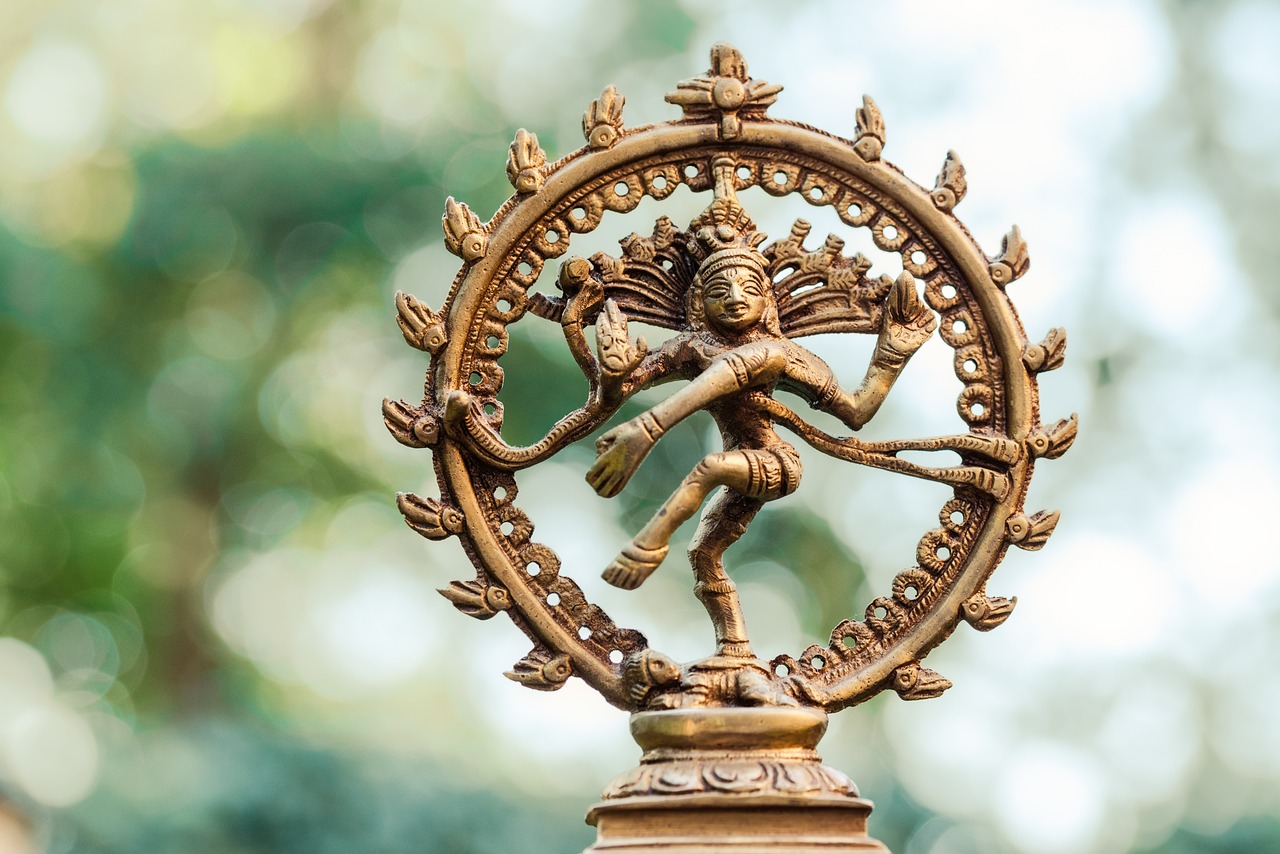
Image of Shiva statue
Shiva creating the world by dancing. Image by sabinevanerp on pixlebay

There are discoveries of  caves with rock paintings across the world that date back to 4000 BC —one of the best known is the “Dancing Sorcerer” in Trois Frères in France.

Based on prehistory and what was found in these caves, it is shown that the ancient groups of humans danced to the beat of the sounds of nature, applauded and bumped the soles of their feet, among other noises. Dance appears to have had a highly spiritual character during that time of history, since it was used as part of different rituals, religions and traditions that were transmitted from generation to generation. Early circle dances have many of these attributes, many of which have carried on to some modern day practice.

Another example, is a long recorded history of Chinese dances. But some of the dances in the ancient texts mention that they were associated with shamanic rituals. On the other hand, the important dances of the ancient period are considered to be the ‘ceremonial yayue’, dating back to the Zhou Dynasty, 1st millennium BC.

In china, dance had its pinnacle during the Tang Dynasty, and during this period, dancers from many parts of the world performed at the imperial court and Chinese opera. With this came dragon dancing, lion dancing and practices such as foot binding, which can still be seen today.

The arrival of civilizations

Years later, with the arrival of ancient civilizations such as those in Iran, Rome, Egypt, and Greece began to use dance incorporating musical instruments and the voice in religious rituals, dances to divinities, weddings, deaths, and receptions.

It is said that the first in Europe to understand dance as an artistic form were the ancient Greeks, who linked it to the cult of Dionysus —god of fertility, wine, and leisure—, and it was part of the theatrical practices along with music and poetry.

More so, this art had greater importance in ancient Greece in 1200  since their movements represented various histrionic expressions and they named each dance according to the events or event. The slow and heavy dances conveyed a tragic feeling known as Gymnopedias, the fast and euphoric dances expressed a satirical feeling and became known as Pyrrhica and Sikinnis, the energetic and joyous dances combined with songs were Hiporquema and Cordace, to mention the outstanding ones.

As an interesting fact, if you have read Homer’s Iliad and Odyssey, they tell how they practiced these dances in a marriage ritual, describing a collective dance of men and women where they held hands in a circular fashion.

You might also be interest to know that Pole dance history also goes way back, with the earliest mention of Malahamba in the Indian classical Manasollas, written in 1135 AD.

Medieval dance

The Middle Ages were a very dark period for this beautiful art that is dance.

It is especially difficult to learn the history of dance in the time of the Middle Ages. For centuries, only the most learned (nobles and clergy) knew how to write and read. Therefore, there are not many writings about dance in the Middle Ages, since it was only practiced by the common people.

As in many times and events in history, repression appears and dance is also present right in the Middle Ages in the year 476. The Christian church did not approve such movements and saw it as an unscrupulous activity. The nocturnal dances gave rise to excesses condemned by the Church, which tried to simply prohibit this art, without ever succeeding.

Through history, there have been several religions that took a similar stance.

Little by little, religious dances began to disappear to give way to new forms of dance.

Beginning in the 6th century, the people of France invented cheerful dance styles, practiced in a group around a singer. Dance and music were two inseparable activities: the people repeated the singer’s refrain while they danced around him.

The rise of Europe in the history of dance

Dance and music increasingly merged, beginning to see groups of people around a singer while they danced around them —here an important focus for the new era of dance as the modern era begins to develop. It is in the 15th century that a well-known dance for professional dancers appeared: the ballet! It is also when the history of ballroom dance began.

A history of ballet.

Classical dancing was very popular in France and Italy. Jean Baptiste Lully contributed to this popularity, thanks to his compositions, performed at the royal court, as well as at the Paris Opera. Thanks to the enthusiasm that these shows aroused, the ballet became a means of communication during the political regime, to subtly convey a message.

Initially, masks were often used to favor the bodily expression of the dancers. The dancers’ costumes made the artists feel freer, a feeling that many are also looking for today. The footwear and clothing helped to accentuate the harmony of the body, then the tiptoe posture arose.

For centuries, ballerinas were an emblematic figure of ballet culture. At the same time, some dancers discovered cultured dances, made up of complex choreographies that are difficult to memorize. With a fast tempo, the artists had to demonstrate impeccable intelligence and concentration in order to execute the movements perfectly. The cultured dances were reserved for the elite; today they are accessible to all, thanks to private dance classes and the many annual festivals of cultured dances.

We dive much deeper into the history of ballet here.

Baroque dance

In the Baroque period, the history of dance continued to evolve mostly in France, where the ballet de cour allowed instrumental music to be developed to better suit the dance.

Louis XIV was in charge of turning dance into a great spectacle and even created the Royal Academy of Dance in 1661. The main academic dances that arose at that time were the following: polonaise, minuet, gigue, gavotte, passepied, rigaudon, etc. .

It is important to note that in Spain several popular or social dances also began to be developed, such as the seguidilla, the chaconne, or the fandango.

Romantic dance

Although romantic dance was characterized by a taste for folkloric dances, the history of classical dance was the one that had the greatest evolution: from the characteristic ballet costume, the tutu, to music purely composed for ballet.

The tutu appeared for the first time in Robert le Diable’s Ballet des Monks, in 1831. While the first music exclusively composed for ballet to stand out was Coppélia, in 1870.

During this time, the choreographer Carlo Blasis rose as the father of modern ballet, as he summarized all the technical aspects of the dance in his book The Terpsichore Code.

In addition, in the mid-19th century, the center of dance creation and innovation moved from Paris to Saint Petersburg, where Russian ballet would become a leader in expressions of this art in the following centuries.

The dance of the contemporary era

In the 20th century, dance began to appear much closer to how it is practiced today. After World War II, that was the time when contemporary dance became popular!

Some choreographers, eager to get away from ballet’s reputation for “intellectual” dance, helped popularize modern dance, as well as modern jazz. While classical dance was considered more of a variation of group gymnastics, modern dance favored the freedom of the dancer as such.

Incorporating new movements from different styles (jazz, modern dance, classical dance…), contemporary dance plays with the change of rhythm and dance improvisation. The contemporary dancer seeks above all to express independence and creativity through movements that are both fast and slow, which require great technique. We take a more in-depth look at contemporary dance history here.
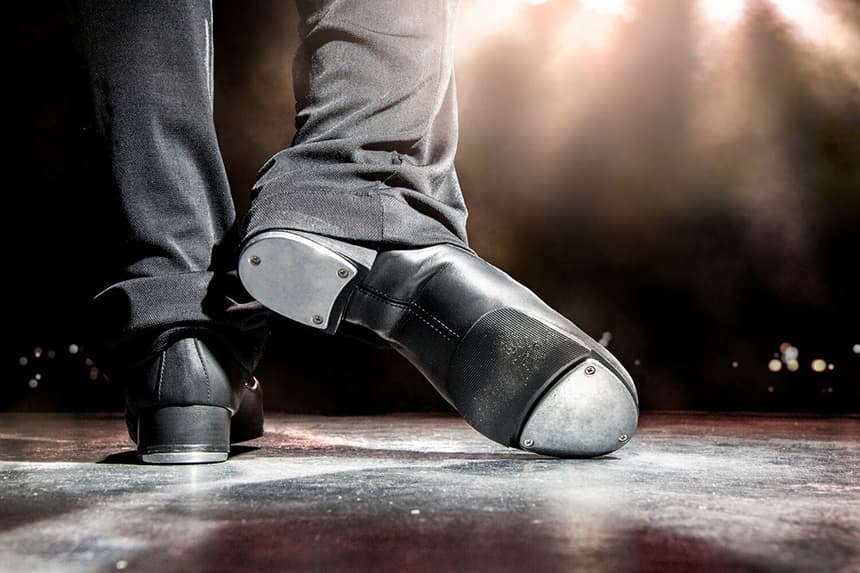
Tap dancing on stage, seeing the metal plates on the dancers shoes as he begins to tap
Photo by Josh Blake on Istockphoto.

This has been a whistlestop door. The history of dance in the last 150+ years needs a much more in-depth look different forms of dance, as they evolved into new styles. Here’s a few we’ve covered:

So, in every foot tap, spontaneous swirl and rhythms, the history of dance pulses. From the ancient caves, passing through the modern stages, dance transcends every excuse, threading a great part of our existence. It once adorned rituals, and now evolves freely in many different expressions. As beats change, so does dance, eternally enchanting, mirroring our journey through time.

Image of Shiva statue, with symbolic circle. History of dance.

History of Dancing

Dancing through time to the rhythm of humanity Have you ever found yourself swaying to the rhythm of your favorite ...
Circle dance article. image of “Hora haiducilor” depicts traditional Moldavian folk circle dance Hora originating in the Balkans Sculptor Nicolae Vieru

Circle Dancing: Joy and Connection Through Dance

Circle dancing, sees dancers connecting, often through hand holding, in a circle, semicircle, or curved line. They move to the ...
Tap dancing on stage, seeing the metal plates on the dancers shoes as he begins to tap

History of Tap Dancing (from 1828)

History of tap dancing: Tap dance is a type of dance that is performed by tapping one's shoes on the ...
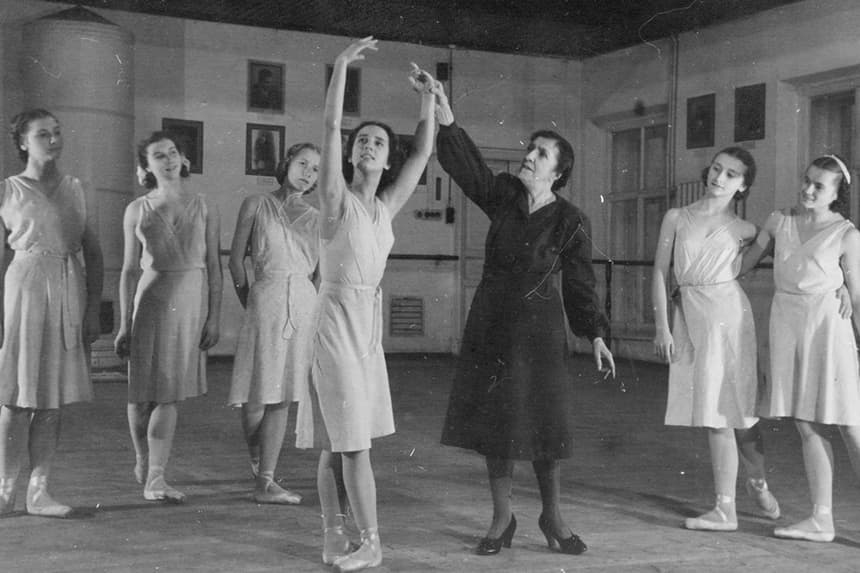
Agripina Vaganova with her students, training according to the Vaganova method.

Learn Ballet History

Ballet is a relatively young art form, with the earliest recorded mention of ballet dating back to the 15th century, ...
Hip Hop History. Image of a group of dancers male and female dancing together

History of Hip-Hop Dance

The history of hip hop dance is relatively short, as a young dance style, having only been around for five ...
Two salsa dancers, a man in a suit and a women in a dress, dancing under a spotlight, with a dark background

Salsa Dance History

Let's dance salsa! After all, this is one of the most incendiary rhythms of Latin dances. Real salsa lurks in ...
William Forsythe on a stage, talking to dance students

William Forsythe: a Revolutionary Look at Classical Dance

Improvisation and choreography are equal partners in a dance. Improvisation is the most important direction of choreographic thinking, it organizes ...
Contemporary Dance History. Photo of a dancer with a cape in a foggy stage

Contemporary Dance History

Contemporary dance is a popular dance direction characterized by plasticity, emotionality, variety of movements and techniques. Today, this dance has ...
History of ballroom dance. A ballroom dancing couple in competition

History of Ballroom Dancing

The history of dancing, in general, begins with the emergence of culture and even earlier. It is unlikely that we ...
Image of pole dancer in flowing silver dress with her hair back. History of pole dance

History of Pole Dance: from 12 century Mallahamba to today

Despite its controversial origins and stigma surrounding it, pole dancing has become more widely accepted and celebrated as a form ...

Circle Dancing: Joy and Connection Through Dance

Circle dancing, sees dancers connecting, often through hand holding, in a circle, semicircle, or curved line. They move to the rhythm of singing or instruments.

The beauty of circle dance is its inclusivity. Accompanied by the relevant musical styles, it flexes in terms of catering for a full span of ages, abilities and fitness levels – creating a range of varied dance styles.

Circle dances vary from ancient, traditional formats to modern contemporary. The pace is anything from slow and meditative to lively and upbeat. You find some performed inside venues and others often outside and more connected with nature.

At DanceBibles, we love to explore the different dances from round the world and circle dancing is no exception. In this article we’ll dive into this fascinating dance, find out what makes it special, where it comes from and how you can get started.

Circle dance article. image of “Hora haiducilor” depicts traditional Moldavian folk circle dance Hora originating in the Balkans Sculptor Nicolae Vieru
Image by Maria Lupan  on Unsplash

How to Circle Dance

·      Often the music will start quietly and will allow people to get into the mood

·      Typically one person begins the circle dance and others will follow as comfortable

·      Sometimes we will join hands with our neighbours. Often dancers present the left hand open palm rotated backwards to ‘give’. The right hand is presented with an open palm ‘to receive’

·      There are a number of common steps depending on the dance. Have a look at this glossary

Circle dance of Females in Slovakia in full regalia, with musical accompaniment behind them
Image of circle dancers by Jan Hrasko from Pixabay taken in Hriňová Slovakia

Typical Aspects of Circle Dancing

Inclusivity

Whatever your age and ability, there is a circle dance to suit. No partner needed, simple steps and a welcoming atmosphere. This dance truly has community at its heart. Unlike most other dance styles, circle dance is non-competitive. With this in mind, the genre is very understanding and forgiving. ‘Circle Dancing for All’ say ‘There are no mistakes, merely variations!’.


Connectedness

The circle is no coincidence. For many the circle has symbolism to everything of circularity. This could be life & death, the changing of seasons, or even a connection to the earth, giving unity and wholeness.

People are also physically connected in the dance through their touch, energy, artistic expression and movement as they move in unison. This has ancient traditions in social and cultural occasion. The result is a shared feeling of community spirit.

At it’s most basic level circle dancing is a highly social form of dance. You can come without a partner, meet new people and make friends. Circle dance is an opportunity to immerse yourself into a new group of often likeminded people.

Image of Shiva statue
Shiva creating the world by dancing. Image by sabinevanerp on pixlebay

Reflection

For many historically and today, Circle dance has had an element of reflection to it, with some of the slower paced dances having a meditative element of mental quietness woven in. This is increasingly making circle dance a go-to tool for therapy tool in various settings.

The reflections, depending on the occasion, whether that be self-reflection, can have a spiritual or religious layer to them also.

Some styles of circle dance will have a centre piece in the middle of the circle. This serves a practical purpose of keeping the circle in a steady shape but also has an alternative meaning for some. This may include being lit with candles or around a fire, with all the symbolism light can bring.

Fun

For all the potential symbolism, ritual and deeper meaning we may find in some types of circle dance, one common thread you find across virtually all of these is an approach which is light-hearted and fun.


Musical Styles and Dances

Circle dancing incorporates various musical styles to reflect the broad nature of its participation. These can be loosely grouped into:

·      Self-made rhythm – Elements such as sticks, bones and handmade sounds were present during early circle dances for percussion.

·      Folk Song – Folk songs and dance have had the largest  presence in circle dancing

·      Classical & Contemporary Music – Circle dance repertoire has expanded to include classical and contemporary music. This brings a new dimension circle dancing, allowing for it to appeal to new audiences and with different levels of skill and physicality. Many choreographers now create dances to well-known classical pieces which can be beautiful to behold.

·      Meditative – The mentally refreshing and wellness properties of circle dance are compelling. These are intricately connected to the choice of relaxing, rhythmical song guiding the dance.

History of Circle Dancing

Circle dancing is believed to be the oldest form of dance. Some of the highlights include:

·      3000BC, Ancient Egyptian – rock petroglyphs (carved pictures) of girls circle dancing

·      10th Century, Germany – dance of Reigen originates from early Christian festivals

·      12th Century, Bosnia – tombstones in the depict dancers in a chain holding hands

·      14th Century, Macedonia – chronicles and monastery descriptions in show men dancing with linked arms.  Giovanni Boccaccio describes men and women circle dancing to their own singing or accompanied by musician

·      1588, Constantinople – German Reinhold Lubenau, reports on circle dancing a Greek wedding on his travels

And circle dancing has continued to this day, preserving many of the stories, customs and traditions through the generations. Many of these are often not written down, but have been passed generation to generation across the centuries.

Male and female dancers hold hands in a traditional circle dance
Image by ctvgs from Pixabay

List of example of circle dances around the world:

There are so many cultural variations of circle dance that its beyond the scope of this post to capture them all here but here we list a few examples:

·      An Dro – from Brittany, France – linking little fingers and swinging arms as the group is lead in a spiral of dance patterns.

·      Chain Dance – From the Faro Islands.

·      Danke – For example the Lawweeh, danced in a semi-circle at family celebrations in Lebanon, Syria, Palestine, Israel, Jordan and Turkey.

·      Deuda – part of the cultural heritage of the Karnali Province, Nepal. Holding hands in a circle. The first group sings a question, whilst a second group then answers this.

·      Dhan Nach – (Often also known by the name ‘Yalang’, ‘Chalakma’ or‘Yalakma’ depending on local language) A folk dance from the Limbu region of Nepal, accompanied by a song called ‘Palam’. It’s roots traceable to scaring the birds away and celebrating the harvest.

·      English folk dance; you can find instructions and music for dances with names as wild as ‘Brawl’ and ‘The yellow cats jig’ on Colin Hume’s page

·      Farandole and Bourrée – are examples of French dances with distinct regional influences.

·      Fugdi – Performed by women around the Go region in India, often during Hindu religious festival. The name ‘Fugdi’ actually comes from there being no percussion to the dance, the dancers create a rhythm by blowing air in a sound of ‘Foo’.

·      Govend – A traditional Kurdish dance.

·      Hora – a highly energetic circle dance, found in the Balkans, Romania, Moldova, Bulgaria and Israel at weddings and celebrations.

·      Kalamatianos  & Syrtos – performed at weddings in Greece & Cyprus, two variants with different pace and formality. Often handkerchiefs and used as part of the dances.

·      Khigga  – Assyrian circle dances, often performed at weddings, in either a line or a circle. It uses handkerchiefs embodied with beads and bells, as well as a ceremonial decorated cain.

·      Khorovod – Russian dances, traditionally performed during village gatherings and festive occasions. Each dance tells stories of local folklore and history, with Pagan origins and symbolism of moving around the sun.

·      Kolo – folk dance from Bosnia and Serbia holding hands or waists, with a stiff upper posture held throughout.

·      Kochari  – An Armenian folk dance, danced with hands across each others shoulders, in a closed circle.

·      Mayim Mayim dance; which celebrates the finding of water during 40 years of wandering in the desert.

·      Native American circle dances; serving various purposes like healing and preparation for war.

·      Nati & Harul– A lively Indian folk dance most popular in Himachal Pradesh and Himalaya region. In 2016,  9892 women danced Nati in their colorful Kulluvi dress, which is a world record.

·      Sacred Circle Dance – With a small centrepiece of flowers and dance, through the Findhorn Foundation, by Bernhard Wosien, starting in Scotland.

·      Sardana – A popular dance from Catalonia.

·      Sakela – a traditional Nepalese and Indian festival dance, connected to prayer for a good harvest and protection from natural disaster.

·      Syabru – a traditional Nepalese Himalayan folk dance, from within the Sherpa, Tamang and Yolmo communities at festivals and gatherings.

·      Tamzara  – An Anatolian folk dance with connected little fingers.


Final thoughts

Whilst circle dancing might not have the same individual skills elements at the level of other dance styles like Ballet, circle dance is about connectedness with the group. A true joy to watch or be part of. It’s beauty is in it’s intertwined links with rich song, customs and stories. Circle dances preserve history and culture to the point many are listed in the UNESCO Intangible Cultural Heritage lists (which are definitely worth checking out).

Give it a try and let us know how it goes. Happy circle dancing!

Spanish dancers performing

10 Classical Spanish Dances

Spanish Dances article by Tanya, a dancer who lives in Spain. The warm, cheerful, and picturesque streets of Spain contain many wonders for anyone who ...
Majorette dancing band

Majorette Dance: Moves, Dancing Styles and 200+ year History

Majorette Dance: In this article, we twist and twirl through everything majorette. Things like what makes a great majorette dance, core moves, how to get ...
kpop dance

K-Pop Dance: Korea’s Dancing Sensations

KPop dance and music are so intimately linked. Together they have skyrocketed over recent years as kpop groups have become a global sensation. When most ...
Circle dance article. image of “Hora haiducilor” depicts traditional Moldavian folk circle dance Hora originating in the Balkans Sculptor Nicolae Vieru

Circle Dancing: Joy and Connection Through Dance

Circle dancing, sees dancers connecting, often through hand holding, in a circle, semicircle, or curved line. They move to the rhythm of singing or instruments ...
Wild horses. Symbolising the energy of Quebradita dancing - photo by Gene-Devine- on Unsplash

Quebradita: Unleashing the Energy of This Dynamic Dance

Quebradita dancing is known for its complex flips, daring lifts, and synchronized legwork, this exhilarating dance makes a powerful statement on any stage or dance ...
pasito duranguense - image of mexican flag

Pasito Duranguense: Dance to the Rhythm of Mexico

Pasito Duranguense is a vibrant dance and music genre inspired by its namesake Durango, Mexico. Emerging during the 1970s, it blends traditional Mexican music, such ...
Beautiful bellydancer spinning in a pink dress. Photo by Gianluca Carenza on Unsplash. Header to the what is bellydancing article.

What is belly dancing?

Belly dancing, also known as Middle Eastern dance or Oriental dance, is an expressive and sensual form of dance that originated in the Middle East ...
Female Flamenco Dancer in full dancing.

Flamenco Dance: Mysterious and Mesmerizing

Flamenco dance is probably the first thing that comes to mind When you think of Spanish dance. This mesmerizing dance style has a long and ...
Ukrainian Folk Dancing

Ukrainian Folk Dances

Ukrainian folk dances are an important part of the country's culture. They have a long and varied history and can be classified into several different ...

History of Tap Dancing (from 1828)

History of tap dancing:
Tap dance is a type of dance that is performed by tapping one’s shoes on the ground as fast as possible, with rhythm and music. Tap dancers can be found performing in many genres including jazz, tap dancing competitions, Broadway tap shows, musical theatre productions, and modern pop culture performances such as those seen on MTV or America’s Got Talent. This article explores this energetic dance style with examples of great dancing.
Tap dancing on stage, seeing the metal plates on the dancers shoes as he begins to tap
Photo by Josh Blake on Istockphoto.

The history of tap dancing is a history of American culture. It tells us about America’s past, present, and future. While few people know about tap dancing today, tap dance has come to symbolize the cultural diversity that makes this country great. So who first started tap dancing, we suggest you learn from this article.

Note! The tap dancer and musician are one person – his shoes are lined with special plates (usually metal), and therefore the best tap shoes make a resonant clatter at the slightest touch on the floor.

Where Did Tap Dance Originate?

Tap dance has been around since the early 19th century. It originated in New Orleans and was a popular form of entertainment for Americans. Tap dancing was first recorded in 1828 as “the act or art of dancing on tiptoe.” The word “tap” comes from the sound made by slapping shoes against the ground, which dancers would do to keep time with music played at social gatherings where people danced for amusement. But it took a full 100 years before the genre became popular on a national scale.

Origin Theories and First Information

In general, there are different theories of the origin and origin of the steppe. But all of them in one way or another come to a common denominator in that the earliest examples of tap dance did not originate on the stage, but rather were social dances among slave communities. Though the origins of tap can be traced to the ritual dances of the Indians. Their movements during rituals do resemble in some ways the rhythm of tap dance.

Tap dance initially appeared in a more standard shape during the early 1800s, when a new dance was created as a result of combining Irish jigs and African-American rhythms.

In 1830, a famous Irish dancer, who performed under the pseudonym of Papa Rice, showed the public the new dance. He combined the jig with some elements of African rhythms, in particular borrowed certain movements of the legs, shoulders, and arms. Papa Rice was greeted with applause – thus the tap dance that thrilled America was born.

Tap Dancing Active Promotion

Tap dancing became popular after 100 years when in 1920, wooden and leather soles were replaced by modern shoes with padded metal plates on the toe and heel. Tap dance became a commercialized urban art. It also attracted the attention of the media and movie directors who began to hire tap dancers in films. In 1926, a famous singer and dancer gave his first recital in New York. His name was Fred Astaire, and he was the most famous tap dancer ever, who combined his incredible technique with showmanship and elegance. He and his sister, Adele, brought tap dancing to the mainstream in the 1930s and 1940s with movies like “Top Hat” and “Swing Time”.

In 1930, Hollywood included tap dancing in many of its films. This genre reached its peak during the 1940s with such stars as Bill Robinson (Bill “Bojangles” Robinson) and Gene Kelly.

The postwar period in the history of tap dancing

The postwar period is considered a golden time for the development of tap dancing. With the war behind us, you can relax and enjoy the cast of musicals performing tap. The names of Fred Astaire, Gene Kelly, and Jinder Rogers are still on the billboards, and the great tap dancers never stop beating out the clear rhythm, turning dance into art.

In the early ’50s, tap-dancing continued to be popular but its appeal gradually diminished.

Revival

In the ’60s and ’80s, the steppe began to revive again thanks to the revival of the fashion for old musicals. And at the beginning of the 80s tap dance returned to the cinema screens: there were films with the great dancer Gregory Hines. At the same time a lot of different groups and schools dealing with this kind of dance were founded; international festivals and competitions were held. All this led to the U.S. Congress in 1989, declaring May 25 – Day Step, which is now celebrated by enthusiasts around the world.

Today

Though tap dancing is not as popular today as it once was, it has left an indelible mark on American culture. Tap dance represents the diversity that makes America great and continues to inspire new generations of dancers. While the origins of tap dance are shrouded in mystery, we can be sure that this unique form of dance will continue to delight audiences for years to come.


Related articles:

THE BEST SWING DANCE SHOES - image of people swing dancing, men and ladies

West Coast Vs East Cost Swing

Wondering what the difference between the West Coast and East Coast swing styles might be? Then let us tell you all about swing. Swing dance is an energetic and bustling genre that has a rich ...
Spanish dancers performing

10 Classical Spanish Dances

Spanish Dances article by Tanya, a dancer who lives in Spain. The warm, cheerful, and picturesque streets of Spain contain many wonders for anyone who wants to visit them. There is a very rich and ...
Image of Shiva statue, with symbolic circle. History of dance.

History of Dancing

Dancing through time to the rhythm of humanity Have you ever found yourself swaying to the rhythm of your favorite song, or to any song playing on the radio while doing chores around the house ...
Majorette dancing band

Majorette Dance: Moves, Dancing Styles and 200+ year History

Majorette Dance: In this article, we twist and twirl through everything majorette. Things like what makes a great majorette dance, core moves, how to get started as a majorette and how to join or form ...
Tap dancing on stage, seeing the metal plates on the dancers shoes as he begins to tap

History of Tap Dancing (from 1828)

History of tap dancing: Tap dance is a type of dance that is performed by tapping one's shoes on the ground as fast as possible, with rhythm and music. Tap dancers can be found performing ...
Tap shoes - a man on sitting down, so you can see the sole of his tap shoes

Tap Shoes

Choosing the Best Tap Shoes - 2023 Review Tap shoes are one of the most important accessories in any tap dancer’s wardrobe. The tap dance shoes can make all the difference to your performance and ...

Learn Ballet History

Ballet is a relatively young art form, with the earliest recorded mention of ballet dating back to the 15th century, or about 400 years ago. This article delves into ballet history and how it developed.

Agripina Vaganova with her students, training according to the Vaganova method.

The origins of the term ‘ballet’ are uncertain, with some sources suggesting it derives from the Latin word ‘balle’ (meaning dancing) and others suggesting it comes from the French ‘balleto.’ However, it is clear that ballet originated in a specific place. In the following article, we will explore the history of the development and popularization of this elegant art form.

Origin – 16th century ballet history

It is known that ballet originated during the Renaissance in Italy. The first mention of the word “ballet” is attributed to the court dance teacher Domenico da Piacenza. It was he who first proposed to combine several dances into one, perform them with a solemn finale and call them ballet.

The progenitor of classical dance is those forms of dance that were performed by hired dance masters for the nobles and princes at their celebrations. It was at such events that the original choreographic forms, the splendor of the spectacle, and the elements of drama in dance performances were born. Who would have thought that the usual entertainment of sovereigns would over time turn into art that millions of people around the world enjoy today?

A history of ballet. Ballet history

However, as a genre of art, the ballet took shape a little later. As we said earlier, ballet originated in Italy, but the first ballet production of The Queen’s Comedy Ballet was presented not in Italy, but in France in 1581. It was staged at the court of Catherine Medici of Italy, wife of the French King Charles VIII.

It was she who brought fashion for curious court ballets to France. The production was directed by the famous Italian choreographer and violinist Baltazarini di Beljoyozo from Italy. Since then, the ballet has moved to a professional stage where it occupied a certain place in opera and dramatic productions.

Mid 17th – 18th centuries

During this period of ballet history, this classical dance form continued to evolve about a century later, with the coronation of Louis XIV in France on June 7, 1654. Louis XIV was not only a fan of ballet, but also participated in productions himself, performing in the “Cassandra Ballet” at the age of 12 in 1651.

He earned the nickname “Sun King” for his role as the Rising Sun in “The Royal Ballet of the Night”. In 1661, Louis XIV established the Royal Academy of Dance to preserve dance traditions, with 13 of the best dance masters appointed to the Academy. Pierre Boschant, a royal dance teacher, was appointed director and later defined the five main positions of classical dance.

Louis XIV made the ballet stand out during his reign as a separate form of performance, different from balls. It was then that the division of dancers into amateurs and professionals appeared.

Ballet history fact!

Before 1681 only men danced in ballet. The first ballerina was the legendary dancer La Fontaine.

Then costumes and music were more important during performances than the dance technics. Girls danced in high heels wearing heavy dresses and masks. The costume of a man, although it was a little lighter (hence the greater grace and ease of movement), was still far from the clothes in which you could dance easily and freely.

The first to free the dancers from the shackles of these inconvenient costumes was a real reformer in the world of ballet art – the French ballet master Jean Georges Nover. He banned masks and gave the actors the opportunity to wear light suits that did not stiffen movement. Each innovation made dance more meaningful, and dance technique – more complicated.

Towards the end of the 17th century, court ballet achieved some success: it was fully funded by the authorities, which used it to exalt their own greatness. Gradually, the ballet completely separated from the opera and turned into an independent art.

One of the successful followers of Noverre became Jean Doberval, who in 1789 staged the ballet “Futile Precaution”. A simple story about the unhappy love of a young peasant and a village girl was presented on stage. The absence of stories about the adventures of the gods, majestic masks and corsets made the production natural, and the dance free.

Dance class in opera 1872. Edgar Degas (1834-1917).

Romanticism – late 18th – early 19th centuries

The strongest influence on ballet history was the direction of romanticism, which erupted in the late 18th century. In a romantic ballet, the female dancer first began to wear pointe shoes. Maria Taglioni was the first to do so, completely changing the previous ideas about ballet. In the ballet “Sylphide” she represented a fragile creature from the other world. The success was overwhelming.

Romanticism brought into the ballet the image of an incorporeal spirit – a ballerina who hardly touches the earth. In the same period, the roles of dancers are changing. Men turned into moving statues, which existed only to support the ballerina. Then the rising stars of female ballet completely and successfully overshadowed men.

Ballet history fact!

By the way, this situation was slightly corrected by the rise of the Nijinsky star from the Russian Ballet in the early 20th century. By this time, traditional for us ballet costumes, choreography, stage sets, props had already developed, in a word, everything had become almost what it is now. Eventually, it was a Russian ballet that started the revolution in ballet art.

Over time, the peak of the popularity of romantic ballet had already passed, and Paris, as the center of classical dance, began to fade away.

Russian ballet and its influence on world classical dance

The popularity of classical dance in Europe had an impact on ballet in Russia.

Ballet History Timeline.

The first ballet school in Russia was opened in 1738 (now the Vaganova Academy of Russian Ballet). At the same time, Peter I made dancing the main part of court etiquette, so the court youth was obliged to learn dancing. Thus, for example, the dance became a compulsory lesson in the Schlyakhet Cadet Corps in St. Petersburg. Since then, cadets have started to participate in ballet dances.

The dance instructor in the corps was Jean-Baptiste Lande. He understood that the nobility would not devote their lives to the art of dance. Therefore, in September 1737, Lande filed a petition in which he justified the need for a new special school where girls and boys of simple origin would be trained in choreography. Soon, such permission was given. From that moment on the training and development of dancers, for whom the ballet was a real profession, began.

At the beginning of the 19th-century Russian ballet art reached creative maturity thanks to the work of French ballet master Charles-Frederic-Louis Didlot. Didlot strengthens the role of the corps de ballet, the connection between dance and pantomime, asserts the priority of female dance. Russian dancers have brought expressiveness and sublimity to the dance.

The music of the legendary composer P. Tchaikovsky was the impetus for a new stage in the ballet history of Russia. Swan Lake, staged to Tchaikovsky’s music in 1877, gave rise to the fact that music for ballet began to be taken seriously. It was in the composer’s work that the romantic ballet became established. Tchaikovsky paid special attention to music, transforming it from an accompanying element into a powerful instrument that helps the dance to subtly capture and reveal emotions and feelings. Before that, music was considered just an accompaniment to dance.

Dancers from Swan Lake coming onto stage

Andrew Bossi Long CC 2.0via Wikimedia Commons

20th century

The beginning of the 20th century is characterized by an innovative search, the desire to overcome stereotypes and conventions of the academic ballet of the 19th century. One of the main innovators of this period in Russia is Sergey Diaghilev. In 1908, the annual performances of Russian ballet dancers in Paris began, organized by Diaghilev. The names of dancers from Russia became known throughout the world. But the first in this row is the name of the incomparable Anna Pavlova. Also, under his leadership in 1911, the ballet company was first organized. You can find out more about some of ballet types & styles in our related articles.

Anna Pavlova.
Diaghilev’s seasons – especially the first ones to include the ballets Firebird, Petrushka and Sacred Spring – played a significant role in popularizing Russian culture in Europe and helped establish a fashion for everything Russian. Thus, the passion of Europeans for traditional Russian costume gave rise to the new fashion. It was then, under the influence of Russian artists’ skill, that the western ballet took a second breath.

In 1929 Diaghilev died. Over time, his troupe broke up. One of its members – George Balanchine – was developing ballet in the USA and founded the New York City Ballé company. He became one of the most influential choreographers of the 20th century. In his dances, Balanchine strove for classical completeness of form, for impeccable purity of style. In many of his works, there is virtually no plot of any kind. The choreographer himself believed that the plot in the ballet is absolutely irrelevant, the main thing being the music and the movement itself. Today Balanchine’s ballets are performed in all countries of the world. He had a decisive influence on the development of twentieth-century choreography, not breaking with tradition, but boldly renewing it.

Another protege of Diaghilev, Serge Lifar, led the Paris Opera Ballet Company and for a long time was the most influential figure in French ballet.

The second half of the 20th century

In the 1950s, the dramatic ballet was in crisis. Strengthening the entertainment and pomp of performances, choreographers made futile attempts to preserve the ballet genre. Until the end of the 1950s, there was a breakthrough.

Choreographers and dancers of a new generation revived the forgotten genres – one-act ballet, ballet symphony, choreographic miniature. And since the 1970s, ballet troupes have emerged that were independent of opera and ballet theaters. Their number is constantly growing, among them, there are studios of free dance and modern dance. But today the academic ballet and the school of classical dance are still relevant.

FAQ:

Who were the 8 main figures who influenced the history of ballet?

Catherine Medici; Louis XIV; Jean Georges Nover; Jean Doberval; Jean-Baptiste Lande; P. Tchaikovsky; Sergey Diaghilev; George Balanchine.

What is the history of ballet?

16th century – the origin of ballet, the first ballet production. Mid 17th century – the rise of ballet dancers into amateurs and professionals. The end of 17th century – ballet is favourite form of art and accesses funding. 18th century – abandoning lavish costumes, the dance becomes freer and more professional. The start of Russian ballet. 18th - early 19th centuries – the era of romanticism in ballet, the female dancer first began to wear pointe shoes. 1877 – to the music of Tchaikovsky's Swan Lake ballet was staged. 20th century - Sergei Diaghilev's ballets are becoming popular throughout the world. 1950s - the dramatic ballet was in crisis. 1970s - the rebirth of ballet as we know it today begin.

What monarch reigned during the rise of professionalism in ballet history?

Professionalism in ballet emerged in the 18th and 19th centuries. During this time, several monarchs reigned in various countries where ballet was popular, including: King Louis XIV of France, who was the patron of the Paris Opera Ballet and played a significant role in the development of ballet as a professional art form. Queen Victoria of the United Kingdom, who was a patron of the Royal Ballet and supported the development of classical ballet in England. Tsar Nicholas I of Russia, who was a patron of the Imperial Ballet in St. Petersburg and played a significant role in the development of Russian ballet. King Ludwig II of Bavaria, who was a patron of the Munich Opera Ballet and supported the development of ballet in Germany.

Related articles:

Arabian dance in the nutcracker

The “Arabian” Dance in The Nutcracker

Christmas is around the corner, and if you are a Ballet enthusiast like me, you probably know that The Nutcracker recital has come to almost every city around the world. If you need to become ...
Ballet feet exercise. Ballerinas feet warming up stretching

Ballet foot exercises

10 Ballet Foot Exercises: Warm-up, Boost Your Technique and Foot Strength Foot exercises are an essential part of a ballet dancer’s training as they provide important strength and technique benefits. Developing strong and flexible feet ...
Ballerinas Feet. 3 ballet dancers stretching

Ballerina Feet: Ballet & Foot Health

If you’ve ever seen ballet or you’re a ballet dancer yourself, you’ll know how graceful dancers’ movements can be. But, of course, becoming a professional ballet dancer takes a LOT of hard work and dedication ...
Images of dancers on stage - moving to the best choreography, inspired by talented choreographers

The 9 Greatest Choreographers of the 20th century

This article see the DanceBible team pick some of the 20th century's (and all times!) greatest Choreographers, taking a historical slant via some very great and distinct contributions, which together help to describe the formation ...
Best bags for dancers. A girl carrying a bag on her shoulder whilst walking along.

Best dance bags

Best Dance Bags 2023 - Ultimate guide and review When you go to dance class or competitions, you probably take a lot of gear with you? Of course, dancers need a lot of space in ...
Classical Ballet. Ballerinas on stage with raised arms

Types of ballet

Ballet is a relatively young art form compared to other forms of classical dance, but its popularity exploded in the nineteenth, twentieth and twenty-first centuries and it remains one of the most loved forms of ...


History of Hip-Hop Dance

The history of hip hop dance is relatively short, as a young dance style, having only been around for five decades.
Despite this, it has quickly become one of the most popular dance styles in the world. In this article, we will explore the history and development of hip-hop dance, including some interesting facts and photographs from the 1970s and 1980s. Through a short but impactful history of hip hop, the dance has made its mark on the street dance world and continues to inspire people of all ages.
It is also worth noting!

Exploring the history of Hip hop is not just considering the dance, but a whole subculture, which is based on music (beatbox and rap), dancing (hip-hop dance, breakdance, popping, locking, krump), and arts such as graffiti.

Origin – Kool Herc

DJ Kool Herc setting up the world-famous bloc party at 1520 Sedgwick Avenue, The Bronx, New York City, signifying the birth of hip-hop. 11 August 1973. History of hip hop

The origins of hip-hop dance can be traced back to 1967 in the South Bronx neighborhood of New York City, which was one of the poorest and most disadvantaged areas at the time. It was here that a Jamaican DJ known as Kool Herc started organizing parties and performing rap music while also playing records.

As part of the parties, he would occasionally allow dancers to show off their skills by performing to the musical breaks in his music. This led to the development of the first dance movements and styles that would later be known as hip-hop dance. These early dance styles were characterized by their rhythmic patterns and energetic movements, which were often performed to the beat of hip-hop music.

70’s – Afrika Bambaataa

The term “hip-hop” had not yet been coined. It was invented a few years later in 1974 by DJ Africa Bambaataa when the culture developed and needed a common name. The word “hip” is derived from African American slang and refers to the moving parts of the body, such as the legs and arms. Besides, the word “hip” was used the meaning “acquisition of knowledge, improvement.” The word “hop” means “jump”. Thus, united, two words express the idea of ​​the whole hip hop trend – moving forward, developing, and understanding modern life.

That same year, 1974, the Bambaataa established the five basics of hip-hop:

  • MCing – is a combination of words and music, when a performer starts improvising or pre-conceived words to the rhythms.
  • DJing – is music control. DJ turns on any record and changes its sound with the help of technique, hands, or other things.
  • Breaking or break-dance – is the street dance that has accompanied hip-hop culture. It’s the foundation of all other street dancing.
  • Graffiti writing – is street art.
  • Knowledge – is a philosophy of culture that constantly tries to describe street life, even though it’s sometimes a dead end.

“Prescription” hip-hop culture existed covertly even before Bambaataa, but he was the one who officially voiced it in one of the interviews.

Street Gangs

To fully grasp the history of hip hop dance, it is important to consider the context and principles of hip-hop culture. It is a time when poor neighborhoods of New York were overflowing with drugs and crime when young people from an early age were on the path of criminal activity. Gangs and groups were organized on the streets. One of these street gangs was Black Spades, of which Bambaataa was a member before he became a popular musician.

Such gangs have also become centers for the development of hip-hop culture. Their activity peaked in 1973. The decline of gang activity can be attributed to the growing popularity and success of hip-hop dance and culture. After all, it was precisely this trend that first touched upon acute social, political, and racial problems.

By the mid-1970s, there were several hundred breaker teams in the Bronx and Harlem that shared the city – each team danced at its own intersection. Teams such as the Rock Steady Crew and the New York City Breakers had what they called “ritual battles”. Later on, they became very popular after one of the battles was filmed. The videos became widespread and generated a wave of imitations among teenagers.

80-90s

On September 21, 1982, the term “hip-hop” was first mentioned in the media, in an article titled “Afrika Bambaataa’s Hip Hop” in the magazine Village Voice.

During the 1980s and 1990s, hip-hop dance experienced rapid growth in popularity. The success was overwhelming! Also, in the 1980s, social hip-hop dance (party dance) began to develop. These dances were not created for competitive purposes or to showcase athleticism, but rather to bring people together and create a sense of unity. As a result, they spread quickly and became a popular form of dance.

More and more dancing teams were created. In 1984, the United Street Force was established. They, by the way, performed at the invitation of the White House for President Ronald Reagan.

Hip-hop dancers and breakers were invited to star in advertising campaigns for such brands as Burger King, Pepsi, Coke, Panasonic, MacDonalds and others.

As the 20th century came to a close, hip-hop continued to grow in popularity and evolve, even losing some of its original protest roots. By the start of the 21st century, hip-hop had become mainstream and fashionable. The first hip-hop dance teachers also emerged at this time, with Buddha Stretch often credited as one of the pioneers in this field. He started teaching in 1989.

Beginning of the 21st century

The beginning of the 21st century was in a way a new page in the history of Hip-Hop. In addition to movies and clips, popular TV shows about dancing appear, which further promote and spread such dancing as hip hop. Dancing hip-hop is becoming fashionable and cool, and more and more dance schools are opening, which teaches hip-hop dancing, as well as other street dance styles.

As hip-hop has become more commercialized, it has also split into two main categories: Old School and New School. Old School represents the foundation of hip-hop, encompassing the dance styles that were popular during its inception and early development. Old school is free, improvised, and relaxed but energetic.

Basic dance moves:

  • reebok;
  • smurf;
  • prep;
  • сabbage patch;
  • the wop;
  • the fila (rembo);
  • happy feet.

The new school came to hip-hop culture with the beginning of the commercialization of dance. It absorbed all that is in the old school but became more technically complex. If earlier, when dancing hip-hop it was almost always freestyle, that is, improvisation, the New School is characterized by choreography. Although the audience still has the impression of an improvisational manner of performing, thanks to the relaxation and freedom of movement.

An important stage in the formation of hip-hop as a dance genre – is the emergence of international competitions, in the form of both battles and stage art. Now dance teams not only compete in battles but also perform on great stages with many spectators. Such teams as Jabbawockeez, Quick Crew, Mos Wanted Crew, and AOV become popular not only in the dance world.

Hip-hop today

Despite the great popularity of hip-hop continues to be an integral part of the urban areas of the U.S., where it came from at one time. The history of hip hop dance is a struggle and victory, the desire for independence, and the love of freedom. Originated as a form of self-expression, it continues to address significant political, social, and racial issues. It requires both intellectual and emotional depth to fully grasp and excel in this dance style. Only those who truly understand and appreciate the depth of hip-hop can achieve success in it.

Hip-hop is a unique culture with its own philosophy. And it was created by people who were not afraid to confront the world. Perhaps that’s the main reason why this kind of choreography is so popular. Hip-hop dance is more than just a set of movements to music. It’s a dance call full of boldness and passion. A dance with a story that’s worth knowing.

Additional literature about hip hop dance history:

  • Can’t Stop Won’t Stop: A History of the Hip-Hop Generation – Jeff Chang
  • Hip-Hop and Urban Dance – Tamsin Fitzgerald
  • B-Boy Championships: From Bronx to Brixton – D. J. Hooch 


Related articles on street dancing and dance history:
House dance, street dancing

House Dance

Urban and street dances have always been able to go beyond traditional barriers and really connect people through movement. House dance does just this, hand in hand with the electronic ...
Popping dance on the street

Popping: Dance with Precision. 3 beginner techniques.

What is the popping dance technique and how do you 'Pop'? Popping is a style of street dance, where dancers quickly tense and release muscles (sometimes known as ‘hitting’ or ...
An image of a clown at a fair. Article about Clowning dance

Clowning Dance: Tommy the Clown & Hip-hop Clowns

What is clowning dance? Clowning dance (also known as clown dancing) is a unique and entertaining form of dance expression in the early 1990’s. It was developed by Thomas Johnson, ...
Street dance styles. Photo of male breakdancer in square outside tall building

Street Dance Styles

Street dance styles. When you hear the term "street dancing," what comes to mind? Do you think of hip-hop? Breakdancing? House dancing? Street dance is a broad term that encompasses ...
street dance

Best Street Dancers in the World

It is nearly impossible to accurately rank the top street dancers in the world, as each has their own distinct style and talent. While there are many skilled street dancers ...
Breakdancer performing in front of the crowd

What is Break Dance?

What is breakdance? You probably have a pretty good idea of breakdancing but maybe you're not close to the details and how to get started? Let us give you an ...

Cover photo by Breakreate on Unsplash

Salsa Dance History

Let’s dance salsa! After all, this is one of the most incendiary rhythms of Latin dances. Real salsa lurks in its roots – in the history of origin and development. Let’s learn how salsa appeared syncopated rhythms, its main steps, and hip movements, how this dance was enriched with different dance movements from other dance styles.
Two salsa dancers, a man in a suit and a women in a dress, dancing under a spotlight, with a dark background
Photo by Marko-zirdum on Pexels

So, bellow you can find the timeline and facts about salsa dance origin.

History of the Term Salsa

Yes, originally in Spanish, the word “salsa” means sauce. Only in the 30s of the 20th-century salsa began to be called the musical genre and style of dance, which has its roots in African tribes. But about everything in order…

There are several theories about the origins of the dance known as salsa. One of these theories states that the dance got its name in 1928 when Cuban musician Ignacio Pineiro shouted out “Echale Salsita!”, which translates to “Let’s add some spice!” while performing a new, energetic song. The phrase was eventually shortened to “salsa,” and the dance that accompanied the music became extremely popular. During the 1970s, the term “salsa” referred to a blend of various Latin American dance styles and rhythms, including cha-cha, mambo, pachanga, guaracha, and rumba.

Salsa’s Origin

Although salsa is considered a Cuban dance, its history began far beyond Latin America…

So, in 1492 Christopher Columbus sailed to the shores of Cuba (he actually discovered it). The Spanish invaded the new lands and exterminated almost the entire population of Cuba. But someone had to do some hard work there. To do this, the Spaniards brought slaves from West Africa to the territory of Latin America. The supply of slaves went on for a long time, until 1886 when slavery was officially abolished. On this basis, it was the people of Africa who played a huge influence on the origin and development of salsa dance.

Around the second half of the 19th century, Cuban music, until then little different from European music, began to acquire special characteristic features. The reason for this is the influence of African culture, which was becoming stronger as the slave system on the island weakened.

That is, Afro-Cuban dance, which includes salsa dance, appeared as a result of the merger of two cultures: Spanish and African. Spanish culture brought string instruments and melody to music, while African culture (especially the Bantu, Yoruba and Karagali tribes) brought drums and other less known percussion instruments to music.

It is also worth noting!

Cuba’s slave-holding system was slightly different from that of the United States at the time. In Latin America slaves were not forbidden to make music, so they often sang in church choirs and played European musical instruments. This had a huge impact on the formation of music and dance culture in the local population.

Contradanza, Danzon, Son are the forefathers of salsa dance

It is believed that the first danzon, Las alturas de Simpson, was written by the mulatto Miguel Failde in 1879. However, this is a very simplified vision of the question. Ballroom dancing styles are not created “suddenly”, out of nothing. As a rule, they “grow” from older dances, evolving under the influence of many external circumstances. It was the same with the danzon dance.

The ancestor of the danzon dance was the contradanza. It took a difficult and long way in Cuba: having appeared in England, it spread to France and then was brought to Espanola (Haiti). And it was not until 1791, when a brutal slave uprising broke out in Haiti, that the mass flight of French colonists led many of them to Cuba, where they settled in the eastern part of the island. As a result, the French contradanza, similar to the minuet, took root surprisingly quickly on Cuban soil and was popular for almost the entire 19th century.

In the beginning, the rhythms of danzon did not differ much from the rhythms of the contradanza. The Danzon dance was the name of a paired dance, which gradually replaced the figure dance, ie the contradanza. At the end of 1877, composer Miguel Failde composed four danzon. This date is usually considered as the start of a period of huge spread and “acceptance” of dance danzon. The romantic of closeness of the partners, the swinging of the hips and the use of minimum space for dance gave the danzon its special feature.

Until the 1920s, danzon was the national dance of Cuba. However, by the 1930s, danzon had almost disappeared in Cuba. The rise of another dance called Son in Havana in the 1920s played a significant role in the decline of danzon.

The Son Dance developed in parallel to the contradanza, but unlike the second, the Son is purely folk dance. The contradanza was performing by orchestras; the Son was a song accompanied mainly by drums. The merit of the Son dance lies in the fact that the freedom they afforded to spontaneous folk expression helped to enrich the dancing moves.

But by the end of the 1930s, jazz and swing brought to Cuba by the Americans did their job – danzon and son, so sweet to the heart of Cubans, began to lose popularity among the islanders…

Mambo

“Mambo’s Father” Damaso Perez Prado was born in Matanzas in Cuba in 1916. From an early age he studied the piano. By the 1940s, thanks to his energetic manner of playing, he had become a well-known musician.

In 1948 Perez Prado left his native island and moved to Mexico, where he formed his own orchestra. Taking as a basis a rhythms of son-montuno, popular at that time in Cuba, the musician decided to bring his sound closer to the music of popular American big bands of that time. To do this, Perez Prado added trombones and saxophones to his orchestra, as well as increasing the pace of his compositions. Perez Prado, his orchestra and his new musical and dance style – mambo – quickly gained popularity in Mexico and then in the USA (one day, music producer Sonny Burke, who was on holiday in Mexico, heard Perez Prado’s song and published it in America, where it became a real hit).

The popularity of mambomania in the 1950s and 60s had a significant influence on Latin American dance. It was Perez Prado who helped bring Latin American music and dance to the United States and the rest of the world. This period was crucial for the growth and development of salsa dancing, as Latin dances gained popularity not just in Cuba, but all over the world.

So where’s the salsa dance?

The origin of salsa dance is not a single, isolated event, but rather the result of the merging and blending of various cultural and dance influences. The development of salsa dance can be traced back to the long history of the evolution and spread of Cuban dance styles.

Cuban movements and dances in the form of mambo, cha-cha-cha, and others have gained wide popularity in the US. The turning point in the “standardization” of salsa as a dance was two major factors: the widespread use of household video equipment and the commercialization of salsa. And here we should mention two Torres, Eddie, and Alberta.

Since childhood, Eddie Torres was fond of Latin American dance, was a regular visitor to Latin American discos in New York. Being already a famous dancer, in 1995 Eddie Torres released his first video course called Salsa Nightclub Style. The video became popular and spread throughout the USA and then around the world.

The other pole of salsa dancing standardization was Los Angeles in California. The other Torres, Albert, played a leading role in spreading salsa on the West Coast. Albert Torres was the man who “promoted” salsa on the West Coast. He opened several salsa clubs, toured the best salsa dancers, was the first to hold salsa congresses.

That is, the name “salsa” and the standardization of movements and techniques, Latin American dances have already received in the United States. What about the Cuban style, you ask? In Cuba, there are more Casinos and Rueda de casinos dancing than salsa dance brought from abroad.

It is not surprising that Cubans began dancing salsa almost the same way as the Son dance. Only the pace became higher, and the number of various “knots” increased. For a long time, it was not even a question of mass introduction of any standard – simply because Cubans did not need it. People did not learn salsa in dance schools, but naturally – dancing to their pleasure on holidays with friends and acquaintances. That is why the peculiarities of the dance varied from one city to another, and in Havana – and from district to district. It must be admitted, however, that thanks to Cuban television and, in particular, the popular program Para Bailar, the Cuban salsa dance style has almost taken shape.

Today salsa is a popular social dance. Salsa competitions, and salsa dancers’ congresses are held all over the world, more and more schools are opened where salsa is taught.

Tell us if this article was useful for you if you learned much about salsa dance history. Perhaps you thought the salsa was a native Cuban dance, as we did before.

In any case, share your impressions with us!

Also interesting to read:

Other types of latin and ballroom dance:

Spanish dancers performing

10 Classical Spanish Dances

Spanish Dances article by Tanya, a dancer who lives in Spain. The warm, cheerful, and picturesque streets of Spain contain many wonders for anyone who wants to visit them. There is a very rich and ...
couple dancing the milonga in an evening

Milonga Dance: The uptempo relative of the Argentine Tango

Milonga dance celebrates Argentine Culture. A ballroom dance sharing many characteristics with the better known Argentine tango and considered to be the forerunner to Tango. A fluidity gives dancers the opportunity to express the vibrant ...
Male and Female doing a Tango dance before a crowd. Photo by Preillumination SeTh on Unsplash

Tango Dance

Tango Dance is a passionate and expressive form of dance that originated in Argentina in the late 19th century. It is characterized by its close embrace, intricate footwork, and dramatic flair. Tango Dance is known ...
Crowd gathered gor a parade with samba dancers in full costume

Samba Dance

The Samba is a Brazilian dance that has become popular all over the world. It is characterized by its lively and energetic steps and is often performed to music with a strong beat. The origins ...
Man and lady ballroom dancers, dancing in a dark room with spotlights. Ballroom Etiquette article

Ballroom Etiquette: Basic Guidelines for Dancers

Ballroom Etiquette Overview: From the beginner to the experienced dancer, it is an honour and a privilege to attend any dance. The time spent at dances by all age groups is precious. For many of ...
Best ballroom dance shoes.

Best ballroom dance shoes

Best ballroom dance shoes (Updated 2023) - Ultimate guide and review Capezio Best Opened Ballroom dance Sandals View at Amazon CLEECLI Best Price View at Amazon Very Fine Best Closed Ballroom dance Shoes View at ...

William Forsythe: a Revolutionary Look at Classical Dance

Improvisation and choreography are equal partners in a dance. Improvisation is the most important direction of choreographic thinking, it organizes the form of dance and the specificity of dance performance. One of those who made a serious contribution to the art of improvisation as a method of searching for choreographic vocabulary and a tool for developing creative thinking is William Forsythe.
William Forsythe on a stage, talking to dance students
Photo by Marlon Barrios Solano on Flikrr (edited to adjust sizing).

Researchers of modern dance rank Forsythe’s improvisation as postmodern improvisation, or the art of dance performance. Forsythe system has been shaped and honed for 15 years. And in 1994, it was designed in a specialized video manual “Technologies: A Tool for the Analytical Dance Eye”, which is still used for training new dancers of Forsythe’s troupe and is also a part of training professional dancers of modern dance in Europe and the USA.

About William Forsythe’s work and his influence on modern dance – read below.

Life and Career

William Forsythe is a ballet master, a specialist in the field
of modern dance, a researcher of the specifics of human body movement and improvisation. He was born in New York in 1949. He got his choreographic education in Florida. He got at the first dance class at the age of 17 with his roommate by accident, having absolutely no idea what the lesson will be.

In 1971 he joined the Joffrey Ballet (a company famous for the works of contemporary choreographers). It was there that Forsythe first saw Balanchine’s ballets on the stage of the New York City State Theater, which undoubtedly contributed to his development as a researcher of dance and choreography.

Since 1973 W. Forsythe has been working in Germany as a performer in the Stuttgart Ballet. Already in 1976, he was appointed ballet master of the company. For this company, he created his first neoclassical miniature – “Urlicht” – a duet to music by Gustav Mahler.

In 1984 William Forsythe became the head of the legendary Frankfurt Ballet and continued to be so until its closure in 2004. At Frankfurt Ballet, the choreographer worked on productions such as Artefact (1984), Steptext (1985), In the Middle, Somewhat Elevated (1987, Paris Opera), Impressing the Czar (1988), Limb’s Theorem (1990), Loss of Small Detail (1991), ALIE/NA(C)TION (1992), Eidos:Telos (1995), Endless House (1999), KAMMER/KAMMER (2000), and Decreation (2003).

His productions are part of the repertoire of the world’s major theatres, including the New York City Ballet, London’s Royal Ballet, Paris Opera, National Ballet of Canada and the Netherlands Dance Theatre.

This period of the ballet master’s work is characterized by a special radicalism: he puts on performances that are completely different from classical ballet, transforms the aesthetics of classical dance, proclaims freedom in dance from any canons and narratives.

In 1994, the program “Technologies: A Tool for the Analytical Dance Eye” was developed and released.

After 20 years at the Frankfurt Ballet, William Forsythe founded his Forsythe Company troupe in 2004. In addition to appearances at the main venues in Dresden and Frankfurt, the artists were active on tour. Forsythe has staged such ballets for the new company:

  • Three Atmospheric Studies (2005);
  • You made me a monster (2005);
  • Human Writes (2005);
  • Heterotopia (2006);
  • The Defenders (2007);
  • Yes we can’t (2008/2010);
  • I don’t believe in outer space (2008);
  • The Returns (2009);
  • “Sider” (2011).

He worked as a director and ballet master until 2015 in the troupe. As the reason for Forsythe’s resignation, the need to reduce workloads due to health reasons was reported. However, Forsythe has remained a consultant for the company, a guest lecturer and teacher, one of the co-directors and teachers of the European Dance Students’ Network program. The directorship of the Forsythe Company was taken over by Jacopo Godani under a new name The Dresden Frankfurt Dance Company”.

Forsythe produces and participates in the creation of a large number of architectural and performance installations. The installations have been exhibited at the Louvre, the Venice Biennale, and other important venues. His short film “Solo” was presented in 1997 at the Whitney Biennale.

The choreographer has also received special recognition in the field of fine arts, organizing amazing installations, whose viewers themselves become participants in the action.

Today Forsythe regularly holds lectures and seminars at various universities and creative organizations. He lives and works in Vermont.

Exhibitions

Special attention we should pay to Forsythe’s work in the fine arts. The project “Choreographic Objects” includes various installations, including interactive ones. Over the past few years, they have been shown in many museums.


Some of its current* interactive installations:

  • The Fact of Matter (Brisbane, Australia) – December 7., 2019 – April 26., 2020;
  • Acquisition/Körperschaft (Hasselt, Germany) – March 14. – May 10., 2020;
  • Aufand, Doing and Undergoing (Besançon, France) – until April 26, 2020;
  • City of Abstracts, Human Writes Drawings, Backwords (Essen, Germany).

* Expositions are temporarily closed due to the Coronavirus pandemic.

“City of Abstracts” is scheduled to be shown in Essen at Art Basel on September 17-20, 2020.

Forsythe’s Technologies of improvisation

In 1994 the computer program “Technologies: A Tool for the Analytical Dance Eye” was presented. Until now, it is actively used in the process of training dancers of different levels. This work deserves detailed consideration because its importance for the dance world is immeasurably great.

Improvisation technologies basically use the geometrical approach, working with lines, arcs, corners which form a body of the dancer. It was important for Forsythe to use what his dancers already knew. Since they were graduates of ballet schools, they were used to working with lines in body and space. This approach allowed the dancers to forget “how to move” and focus on the inner part of the movement, to overcome “numbness” in improvisation.

The choreographer shows simple movements and techniques in the program. The main purpose of his training is to teach the mind of a dancer to analyze movement in geometrical categories, corresponding parts of his body in space.

It’s useful!

Check out the program, even not only for ballet dancers. You will definitely learn a lot about your body.

For example, here are a few techniques from Forsythe’s technology. In his video lessons, the choreographer shows how to work with lines. For example, you can create an imaginary line with body parts and “move” that line in space, or you can create the same line with one of your body parts. You can also create a line by “pulling” it out of a point, or you can stretch not just a point but an entire line and create an imaginary plane.

You can extend the line by unbending a joint, for example, an elbow. You can work in the parterre by building movements along imaginary lines on the floor. The technique of getting into the line is to find a way that you can “get” into the imaginary line by a part of your body.

William Forsythe’s New Ballets

After leaving Forsythe Company in 2015, the choreographer has staged several ballets:

  • «Blake Works 1» for the Paris Opera Ballet;
  • «Playlist [Track 1, 2]»;
  • «A Quiet Evening of Dance»;
  • «Playlist (EP)» – the work for Boston ballet company;
  • «Artifact Suite».

Influence on modern dance

With the death of George Balanchine, the era of great discoveries in ballet was coming to an end, and few people believed in the possibility of a new revolution in dance. Nevertheless, the postmodern era has made its mark and proclaimed in dance freedom from any canons.

The improvisation and value of the moment “here and now”, the study of the movement and limits of the human body, the importance of the process rather than the final product of art – all this became the basis of contemporary dance. It was William Forsythe who brought ballet into the realm of marginal art, making it speak about contemporary ballet.

The avant-garde Forsythe has pushed back the boundaries of what is generally accepted: while in classical dance the position of arms and legs is fixed, Forsythe gives freedom to both arms and legs, and head. This also applies to his methods of working with dancers.

Improvisation – the main method of working with dancers – requires not only freedom to own their own body in space, but also freedom of thought. In this case, the intellectuality can be called one of the most precise characteristics of the specificity of W. Forsythe’s works.

Opinion!

Forsythe is a new turn. It’s basically a classic, but as if turned from a different angle… It’s as if you look at it through some special optics – and you get Forsythe.

At the same time, despite this release of thought and body, William Forsythe’s approach to choreography is surprisingly algorithmic. Through systematic exploration of the boundaries of space and time, the potential of the body and the mechanics of movement, the choreographer has developed his own author’s method of dance geometry and thus gives rise to a characteristic Forsythe’s style of movement.

The imagery and abstractedness of Forsythe’s ballets deserve special attention. After all, not every spectator is ready for a Forsythe’s form of interpretation, hence the complexity of perception. We can state the mechanical or geometrical style of dance plastics, but certainly not the lack of content.

Forsythe is simply not interested in stories and characters that are important in classical ballet. What is more important in these works is the emotional dynamics of the performers, the way the change in body movement determines the changes in a person’s emotional state. An abstract stage reality is formed on stage, within which a multivariate narrative of philosophical content is performed.

Dance critic Roslin Sulkas highlights the following features in the work of William Forsythe:

  • the presence of so-called “flickering movement” (based on elusive points of presence), performed by dancers with classical training, that is professionally developed in the aspect of ballet plasticity;
  • the use of the principle of inclusiveness – the possibility of including elements of absolutely any kind in the dance, both on the technical and conceptual sides;
  • approach to the realization of a complete work on the basis of the concept of “one theatrical universe”, where each element is a significant part of the multidimensional structure of the dance;
  • the development of a plastic language based on personal ideas of movement, where each element is endowed with volume.

We can’t help but mention the improvisational inserts in Forsythe’s ballets. Certain parts of the composition are performed by dancers in accordance with the concept of dance at their own discretion based on their own vision. Thanks to this, each display of a dance piece becomes unique and each broadcast gives a new reading to the work.

By its nature, modern dance is “dance of the head”, i.e. choreography that stimulates thinking tone not only of the dancer but also of the viewer in the process of perception of dance. Such mutual work of the ballet master and the viewer gives the necessary body and emotional contact. Then the viewer leaves with a huge plume of emotions and thoughts after the performance.

William Forsythe does not like to repeat himself, he always speaks to the viewer through his work in different ways. And no one knows what this choreographer will present to the public next time…

Conclusions

Doesn’t matter whether we call Forsythe by The New Balanchine or The Classic of the Ballet Avant-Garde, many today consider him one of the most important choreographers working today. Having traversed in his life from a dictatorship of ballet to a free of contemporary, William Forsythe has struck the ballet world with radicalism and experimentation. He has transformed and continues to transform the aesthetics of classical dance, has led to a rethinking of the importance of dance improvisation and has made an invaluable contribution to the training of dancers around the world.

Sources:

Contemporary Dance History

Contemporary dance is a popular dance direction characterized by plasticity, emotionality, variety of movements and techniques. Today, this dance has huge popularity. Its active popularization and development began only in the 80s of the last century. Even the word “contemporary” only then began to be used exactly as the name of the whole direction in dance. But you should understand that this style of dance appeared much earlier. Let’s find out about contemporary dance history.

Theories of Origin

We don’t know exactly when the Contemporary dance history began. It is not clear who and when he first started dancing, inventing movements and techniques. There are several theories that are based on the similarity of certain techniques to others.

Contemporary dance origin.

So, there is an opinion that contemporary dance came from Eastern practices, in particular from yoga and some martial arts. This is explained by the special technique of breathing in a contemporary, which is also inherent in yogic breathing. It’s also important for the contemporary dance to have a stable position, balance, smooth transition from one movement to another, which is also very typical for yoga. So one cannot help but think about the similarity of these two types of physical activity.

Contrary to the previous theory, some historians argue that the emergence of contemporary dance is directly related to either Central America or European countries.

Alternative to classical ballet

What nobody denies is that the contemporary appeared as a result of the denial of classical ballet and its canons. Ballet is a rather structured system of movements with strict rules. Contemporary dance has become a kind of opposition to everything classical, because of its free, expressive and natural character.

Contemporary VS Classic Ballet.

It should be noted that the classic base of a contemporary dancer is often an undeniable advantage in terms of physical fitness and capabilities of the body.

Founders

The mother of modern dance, free and sensual, is rightfully considered Isadora Duncan, although contemporary dancing got its popularity even 30 years after her death. It was she who began to contrast the sharp lines, strict choreographic movements and standardization of poses in favor of free, natural dance, which expresses sincere emotions and feelings.

Isadora Duncan.

Isadora has established a tendency to dance barefoot. She was not interested in inventing new pas, but in creating a new worldview – light and joyful. This feeling was fully conveyed through her dancing and performances. She talked so much about “liberation from conventionality”, about “free spirit in a liberated body” that her art was eventually dubbed “free”.

Isadora Duncan's Photos.

Authenticity and individuality, the manifestation of personal feelings of the dancer – these signs became the main in determining the modern dance according to Duncan and her followers. The ballerina’s frozen smile has disappeared, and she has been replaced by sincere emotions and feelings.

Attention!

It is also worth noting the significant influence of the idea of freedom of movement and expression of feelings in dance on classical ballet dances. Even the academic ballet could not allow a “soulless” gesture after Duncan.

Martha Graham (1894-1991)

Although Isadora and her dance were quite popular, contemporary dancing has gained more popularity thanks to Martha Graham. This dancer, who introduced and widely popularized contemporary dance to a global audience.

Martha Graham.

М. Graham excluded imitation of movements, teaching independent plastic thinking and expressiveness of gestures. For this purpose, she used the technique of contraction and release, according to which the movement originates from the center of the body where breathing is concentrated (diaphragm).

Martha Graham's photo.

Graham has introduced into modern dance all known to this day bases:

  • Breathing techniques: when exhaled, the diaphragm shrinks, directing the movement inside; when inhaled, it expands, the movement spreads in a spiral upward through the torso, arms, neck.
  • The movement must cover the entire space, that is, the dance takes place standing, sitting and on the floor (parterre).
  • The dance completely covers the whole body, all parts of the body are used.
  • More complete use of space through movements on the floor.

Merce Cunningham

Merce Cunningham worked with M. Graham’s troupe in 1939-45. In 1952, he formed his own troupe. He believed that the emotional element should be brought to choreography by the spectator, not by a choreographer or a dancer. His aesthetics were close to the theatre of absurdity and aleatoric in music. Cunningham has staged performances of both the Art Nouveau Dance and the European Classical School in many European and American companies, particularly the Paris Opera.

Merce Cunningham.

Pina Bausch

The German dance theatre in the Pina Bausch version becomes the third source of all modern culture with modern dance. She has been working as a choreographer since 1968, thanks to which she creates the Wuppertal Dance Theatre. She has not only transformed modern dance but has also created a new genre: dance theatre, a system in which words, music, and movement exist on equal terms. Many of the things that exist in the field of dance theatre today owe this genre to Pina Bausch.

Pina Bausch.

Present day

Today, contemporary dance is a popular dance around the world. Such dancers and choreographers as William Forsythe, Alain Platel, Steve Paxton (creator of contact improvisation), Wim Vandekeybus, Itzik Galili, Meg Stuart, Ruth St. Denis, Boris Charmatz, Anne Teresa De Keersmaeker, Sasha Waltz made a significant contribution to its development and popularization. They and many others are the authors and ideologists of modern free dance – contemporary dance. To these people, we should be grateful for what we see and enjoy this amazing dance exactly as it is.

Books about the history of the Contemporary:

  • Steve Paxton “Gravity” and “Trisha Brown: dance and art in dialogue, 1961-2001”;
  • Driver S. William Forsythe “Chur: Harwood Academic Publishers”, 2000;
  • Susan Rosenberg “Trisha Brown: Choreography as Visual Art”.


Here’s some articles relating to modern dance:

Acro Dance: What is it? Unravelling the Art of Acrobatics in Dance

Acro Dance: What is it? Unravelling the Art of Acrobatics in Dance

Acro dance: When athletics and art come together to make something new and beautiful. Physically demanding, emotionally captivating, welcome to the world of "Acro". As the fairly literal name would suggest, Acro Dance is a ...
What is the Contemporary Dance? A female dancer in a warehouse setting balanced on one foot

What is Contemporary Dance?

If you're wondering just what is contemporary dance, it's a form of dance that combines different styles to express emotions and convey ideas through fluid, expressive movements. It is a popular and widely-practiced form of ...
Isadora Duncan and her Dance Heritage.

Isadora Duncan

Isadora Duncan a woman whose name in the early 20th century was synonymous with dance and one of the greatest choreographers. “If you could explain something with words, there would be no point in dancing ...
William Forsythe on a stage, talking to dance students

William Forsythe: a Revolutionary Look at Classical Dance

Improvisation and choreography are equal partners in a dance. Improvisation is the most important direction of choreographic thinking, it organizes the form of dance and the specificity of dance performance. One of those who made ...
Contemporary Dance History. Photo of a dancer with a cape in a foggy stage

Contemporary Dance History

Contemporary dance is a popular dance direction characterized by plasticity, emotionality, variety of movements and techniques. Today, this dance has huge popularity. Its active popularization and development began only in the 80s of the last ...


Cover photo by Photo by Craig Whitehead on Unsplash


History of Ballroom Dancing

The history of dancing, in general, begins with the emergence of culture and even earlier. It is unlikely that we can not call tribal dances around the campfire dances. This article explores the history of ballroom dancing from the 15th century onward.
History of ballroom dance. A ballroom dancing couple in competition
Photo by Cinematics on Pexels

15th-century – The appearance of the term “ballroom”

We can say that since the 15th-century dances – the ancestors of ballroom dancing – were born. In the Middle Ages and the knightly era, different kinds of meeting people like balls enjoyed great popularity. At such gatherings, court dances were roundelays, brunl (dance with jiggles and tributaries) and the pavana, which often was performed with candelabra in hand.

But based on an analysis of literary sources found that ballroom dancing and the term “ballroom” itself appeared in the 15th century in Italy and France. They became widespread due to the passion of secular society for balls – secular evenings when men and women gathered to dance.

17-18th-century

17th-century, France – dance masters and teachers produce a variety of self-taught dancing. In 1661, by order of Louis XIV in Paris was opened “Academy of Dance” where was testing the knowledge of dancers, issued diplomas, arranged balls and evenings.

In the 18th century, new ballroom dances appeared: Pushpier, Museet, Rigdon, contradance. After the Great French Revolution ballroom dancing lost its aristocratic and magnificent character. The dances of lansier, landlord, mazurka, polonaise, gallop, cancan, polka, cotillion, cardingash won popularity.

In the 70s of the 18th century, the word “waltz” was used to refer to the peasant dance of some regions of Southern Germany and Austria, which since the beginning of the XIX century has become popular in all sectors of society in these countries, especially in Vienna and in the works of Johann Strauss, “king of waltzes”.

History of Waltz.

During the 19th century, ballroom dancing gained popularity in many countries in Old World. The waltz emerged as a particularly popular dance, known for its simple movements and exhilarating melodies.

20th-century – the emergence and spread of competitive ballroom dance

More and more kinds of ballroom dancing were appearing, which made it necessary to standardize and systematize them. In 1904 in England there was the Imperial Society of Teachers of Dancing – ISTD.

And already by the 20s of the 20th-century, ISTD decided to standardize the dances known at that time (slow waltz, tango, Viennese waltz, slow foxtrot, quickstep). We can say that even then, the European competitive program of sports ballroom dance formed, as it is today.

In the same years, the first ballroom dancing competitions began to be held. There was a division into competitive and social ballroom dancing. Social dancing has remained a form of non-professional dance.

It is worth noting! England is the rightful leader of competitive ballroom dancing, where the English school of ballroom choreography was founded and still remains important. Blackpool Dance Festival, the most popular and prestigious ballroom dancing competition, is held in England.

In 1935, the Federation Internationale de Dance pour Amateurs – FIDA was organized in Prague. In 1956 the organization broke up, but a year later International Council of Amateur Dancers (ICAD) was founded.

At the end of the 40s of the 20th century, five Latin American dances (cha-cha-cha, samba, rumba, pasodoble, jive) joined the European ones.

In the early ’80s the term “dance sport” was introduced to denote a competitive form of ballroom dancing.

The 1990s – recognition of ballroom dance as a sport

Further development of ballroom dancing is closely connected with the process of its recognition as a sport and ICAD activities. ICAD was renamed the International Dance Sport Federation (IDSF) in 1990.

In 1995, the International Olympic Committee (IOC) provisionally recognized IDSF and DanceSport. And two years later, in 1997, the International Olympic Committee recognized dance sport and IDSF became a member of the IOC.

2011 – IDSF renamed to World DanceSport Federation – WDSF.

To date, there are two styles of ballroom dancing – sports, that is, competitive and social. A strictly defined dozen dances of the European and Latin American programs belong to sports dance. Social dances also include bachata, salsa and other types of pair dance.

Nowadays

In modern sports dances, there are many different figures, movements, ligaments, lines that can be used to create a program. The technique of athletes is constantly improving, absorbing the most significant technical aspects of the performance of the best dancers of the past and present. Outstanding dancers and their followers form various schools with their own individual styles. Some of them unite to form their own directions in sports dances. Competition rules strictly regulate the number and complexity of movements and figures in combinations for each of the categories. There are also rules for competitive suits and dresses.

The future. The tasks of the World Federation for the next fifty years are to include dance sport in the program of the Olympic Games, Paralympic Games, and Youth Olympic Games.

Sources:

Related ballroom articles:

Spanish dancers performing

10 Classical Spanish Dances

Spanish Dances article by Tanya, a dancer who lives in Spain. The warm, cheerful, and picturesque streets of Spain contain many wonders for anyone who wants to visit them. There is a very rich and ...
couple dancing the milonga in an evening

Milonga Dance: The uptempo relative of the Argentine Tango

Milonga dance celebrates Argentine Culture. A ballroom dance sharing many characteristics with the better known Argentine tango and considered to be the forerunner to Tango. A fluidity gives dancers the opportunity to express the vibrant ...
Male and Female doing a Tango dance before a crowd. Photo by Preillumination SeTh on Unsplash

Tango Dance

Tango Dance is a passionate and expressive form of dance that originated in Argentina in the late 19th century. It is characterized by its close embrace, intricate footwork, and dramatic flair. Tango Dance is known ...
Crowd gathered gor a parade with samba dancers in full costume

Samba Dance

The Samba is a Brazilian dance that has become popular all over the world. It is characterized by its lively and energetic steps and is often performed to music with a strong beat. The origins ...
Man and lady ballroom dancers, dancing in a dark room with spotlights. Ballroom Etiquette article

Ballroom Etiquette: Basic Guidelines for Dancers

Ballroom Etiquette Overview: From the beginner to the experienced dancer, it is an honour and a privilege to attend any dance. The time spent at dances by all age groups is precious. For many of ...
Best ballroom dance shoes.

Best ballroom dance shoes

Best ballroom dance shoes (Updated 2023) - Ultimate guide and review Capezio Best Opened Ballroom dance Sandals View at Amazon CLEECLI Best Price View at Amazon Very Fine Best Closed Ballroom dance Shoes View at ...


Also interesting to read:

History of Pole Dance: from 12 century Mallahamba to today

Despite its controversial origins and stigma surrounding it, pole dancing has become more widely accepted and celebrated as a form of art and athleticism. Pole Dance, as we know it today, is quite a young and developing sport and art. But it has great potential. And to understand this, you need to learn more about the history of Pole Dance.
Image of pole dancer in flowing silver dress with her hair back. History of pole dance
Image by Pixabay on Pexels

India, Mallakhamb

In the 12th century, Mallakhamb sport was born in India, which combines acrobatics and yoga elements on a pole 35-55 cm in diameter (the pole narrowed in height). The word “Malla” means “wrestler” and “Khamb” means “pole” or “column”. The earliest mention of Malahamba is in the Indian classical Manasollas, written in 1135 AD.

Mallakhamb lost its popularity over the centuries, but in the 19th century, about 250 years ago, the sport became popular again. Today, there are official Mallahamba competitions in India. There are three main forms of Mallakhamb: pendant, rope and fixed. Interestingly, this is a traditionally male sport, but in recent years women have been actively taking part in performances and competitions.

China, Chinese Pole

The emergence of the Chinese Pole sport is also associated with the 12th century. That’s when men in China started using rubber-coated poles 5-9 meters high to perform acrobatic tricks. Traditionally, again, it is mostly a mans sport, existing and is still popular today.

It should be noted that for performances on the Chinese pole, two poles are often used (as in the competition scenes on Pole dance) to jump from one pole to another. You can also notice familiar tricks and elements such as the Inverted Crucifix, The Chinese Flag, the Chinese Pole Split, the Shoulder mount, etc.

Europe, Maypole dancing

Maypole dancing is a pagan dance of fertility during which girls danced around the May tree (any high tree or pillar) decorated with flowers.

Africa, tribal traditions

In a sense, the ancestor of the Pole Dance can also be called tribal ritual dances in Africa. During these rituals, Engaged Women danced around a high pillar, showing how she wanted her future husband to make love to her.

20th century

    • 1920. As we know Pole Dance today, it became known in the 1920s when circuses were camping. In the middle of such tents, there was always a long high pole that held the tent. For the entertainment of the audience, girls in short tops and skirts danced around them. That’s when the sexual connotation starts to appear in dancing on the pylon (Hoochie Coochie).
    • 1950. From tents, Pole Dance moves on to clubs and bars. The pole begins to use for the show burlesque.
    • 1968. Belle Jangles performs Pole Dance at a club in Oregon, USA. Since then, many clubs in the US. and Canadian have started installing poles for this kind of performance.
    • 1980. The active period of distribution of strip clubs with poles, where semi-clothed girls, who performed in thematic outfits and pole shoes & heels, perform. At the same time, Vancouver opens the first studio to teach dancing on the pylon. Remarkably, the studio taught not only the work on the pole but also choreography.
    • 1994. Fawnia Mondey, who was working as a stripper at that time, begins to train her colleagues and dancers she knows.
    • By 2001, Fawnia Mondey not only trained her colleagues but also opened her own classes and then school in Canada and was the first to record a video course on pole dancing on the pylon. This story was the beginning of the spread of this dance around the world and the beginning of its recognition as a sport.
    • In 2000 actress, Sheila Kelley opens a dance studio S-Factor, where she teaches dancing on the pylon. She is the one who popularizes Pole Dance exactly as fitness for women, as physical sport, as one of the ways to exercise and maintain the physical tone and weight loss of the female body. She is also starting to produce video courses and books.
  • Since 2003, several first Pole Dance competitions have been held. The rules of such competitions prohibit excessive nudity and intimate gestures during performances in order to separate the pylon dance from striptease, and focus on athleticism and artistry, rather than on the sexual appeal of the performer. In some competitions, clothing, and stripper shoes made of leather, latex, and lacquer are prohibited.
  • The 1st Pole World Championship was held in 2012 and only 43 athletes from 14 countries took part in it.

The Future

The Pole Dance federations are working today to make Pole Dance an Olympic sport. Thus, in October 2016 the IPSF submitted an application to the International Olympic Committee for inclusion in the Olympic program in 2020.

So we can see that, Pole Dance still has a long, centuries-old history, which goes back to the traditions of ancient India and African tribes. The sport has become a hybrid embodiment of different cultures, and historical and international influences. Pole Dance has been developed, popularized and recognized by the world community as a sport. It has moved away from the stereotype that it is a striptease. And now this sport has all the chances to become an Olympic sport.

Related articles on pole dancing:

Intermediate Pole Dance Moves

Intermediate Pole Dance Moves

Intermediate pole dance moves is the natural step in our series from our popular article on beginners pole dance moves. We hope that being around halfway on you’re journey learning to pole dance you feel ...
Image of young female dancer pole dancing for weight loss

Pole Dancing for Weight Loss

Pole dancing for weight loss is quickly becoming popular. Even when people are starting with beginner pole moves and work up to the more challenging routines. Many people are interested in pole dancing for weight ...
Benefits of Pole Dance. Pole dancer showing impressive grip and stretch of the legs

Benefits of Pole Dancing

When some people think of pole dancing, they may think of a sleazy strip club. However, pole dancing is becoming increasingly popular as a sport in it's own right, a great form of exercise and ...