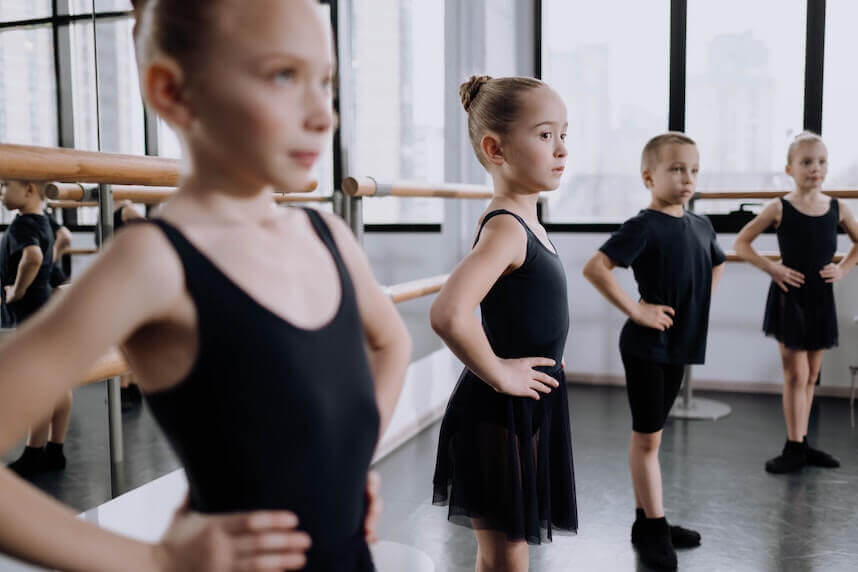
Types of ballet

Ballet is a relatively young art form compared to other forms of classical dance, but its popularity exploded in the nineteenth, twentieth and twenty-first centuries and it remains one of the most loved forms of dance today. There are several styles of ballet, which this article will delve into.

The final product that the audience sees when they go to watch a ballet is the final stage of a long process. Ballet is a prepared performance with carefully thought-out movement sequences. Some ballets tell a story, while others simply illustrate a theme or have no theme. To create a successful ballet, dance, music, painting, drama, and the visual arts come together to craft a coordinated performance that creates apparently effortless magic for the audience once the curtain lifts.

What types of ballet are there?

Ballet and classical choreography are classified based on different criteria. We will look at the main ballet styles, genres, and techniques in detail below.

Styles of Ballet

The most common classifications for different styles of ballet are based on their characteristics and time of origin.

Classical Ballet

Classical ballet is the original and foundational ballet style. When people say the word “ballet”, they usually mean the classical form.
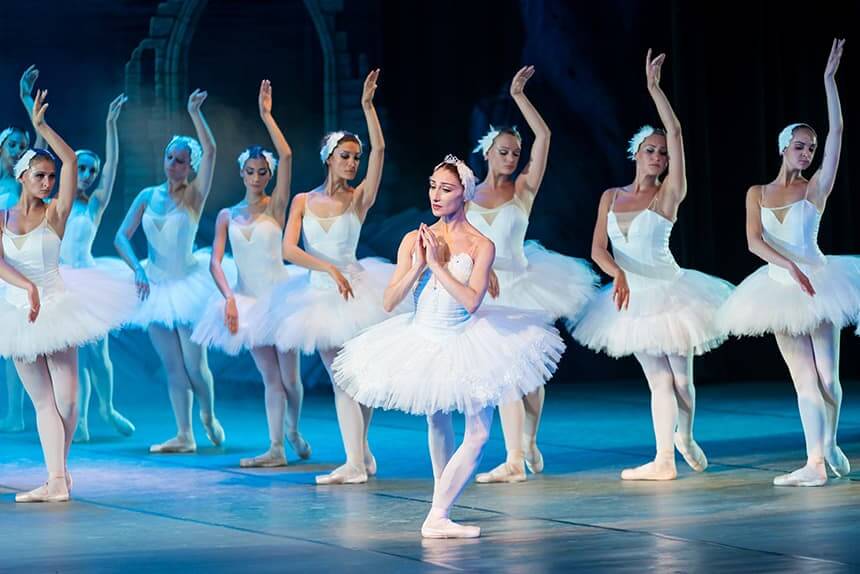
Classical Ballet Type.

Photo by Pixabay on Pexels

Characteristics of classical ballet:

  • The observance of specific positions of the legs, arms, body, and head, and the principle of “turn out” (the outward rotation of the legs from the hip).
  • Strict adherence to rules, techniques, and traditions associated with classical ballet
  • Strict traditional training techniques
  • In classical ballet, women usually wear special hard shoes known as pointe shoes that allow them to dance on their toes.
  • The movements in classical ballet tend to geometrical clarity
  • In classical ballet performances, dancers tell a story through choreography, gestures, and facial expressions (although there are also classic ballet productions without a plot).
  • Classical ballet is performed to music by classical composers such as Tchaikovsky.

Examples of classical ballet are Swan Lake, The Nutcracker, and Sleeping Beauty.

Different styles of classical ballet vary somewhat geographically. Different ballet schools and teaching traditions developed in, for example, France, Russia, Denmark and Italy. While, today, some of these differences are no longer as marked, each school still has its own characteristics, traditional techniques and ballet “stars”.

Romantic Ballet

Romantic ballet emerged during the Romantic era, when European, and later American, culture began to reflect on the self-worth of man and his place in nature.

Romantic type of ballet dances.

Photo by Pixabay on Pexels

Romantic ballet is characterized by:

  • Focus on the drama and emotionality of the stories being told
  • The appearance of original music
  • The increased role of music, which helped create the dramaturgy and gave figurative musical characteristics to the characters
  • Opposing the real world to the world of exoticism and fantasy (hence the spread of the mystical women image)
  • Keeping the strictness form and traditions of classical choreography
  • The airiness of movement
  • Pointe shoes and short white tutus appear
  • The cult of the ballerina as a central part of the performance and star ballet dancers appear
  • Active development and use of theatrical special effects (in particular, gaslighting)

The brightest examples are Sylphide and Giselle.

Note!

You can also read the piece about Ballet History here.


Neoclassical ballet

Neoclassical ballet became widespread precisely in the United States, where it was possible to depart from the classical rules and create a completely unique dance.

Image of neoclassical ballet
Image Public domain, via Wikimedia Commons

Apollo Musaget is generally considered to be the first neoclassical ballet, and the legendary choreographer George Balanchine is the pioneer of the style. Another huge influence was Isadora Duncan and her free, easy and rule-free dance. After such daring oppositions to the classical form of dance, other popular bold, original and innovative dancers, choreographers, and directors emerged.

Neoclassical dance is characterized by:

  • Classical technique enriched with free movements and experimental techniques.
  • Deviations from strictly classical technique and movement patterns
  • A shift of focus from the plot to the dancer’s skill
  • Complex choreographic elements
  • Neoclassical performances often lack scenery and are characterised by a move away from sumptuous and colorful costumes in favor of simple and minimalist styles.
  • Significant reduction in the length of performances

The austere, clear, noble, and transparent form of neoclassical ballet is epitomised in Apollo Musaget and subsequently in other neoclassical ballets. The classical dance vocabulary, purged of decoration in terms of plot, design, emotion, and gestures, became the new ideal.

Modern ballet

Modern ballet differs from other types of ballet in its bolder costumes and free dance interpretation. Modern ballet does away with tutus and pointe shoes; they are typically replaced by loose, elongated garments to create an airy, sophisticated look. Many dancers go on stage barefoot.

Photo of modern ballet dancing on stage, colourful and fast
Photo by Ahmad Odeh on Unsplash

Modern ballet is characterised by:

  • The use of gymnastic and acrobatics elements
  • The blurring of genre boundaries
  • New, original interpretations of classical ballets
  • Rejection of the main “pillars” of classical ballet such as the use of strict arm and leg positions and “turn out”.
  • A freedom of feelings and ideas and a departure from conservatism
  • The movements are based on the natural plasticity of the body
  • Experimentality and symbolism
  • Scenic effects

Inspiration for modern ballet can be taken from a huge range of sources including national dances and new trends in other dance styles. Many directors try to make the audience look at classical dance from a different angle and new readings of classics are welcomed.

Ballet Teaching Methods

The rigorous physical preparation of the dancer’s body is foundational to all styles of ballet. Ballet dancers’ training is based on scientific research and a historically established system of rules. The main methods of ballet training are Vaganova, Cecchetti, the Royal Academy of Dance, the French School, Balanchine, and Bournonville. Principles like set arm and leg positions and the use of turn are used in all styles and it can be tricky for untrained observers to distinguish between the styles. There are, however, significant differences between these teaching methodologies.

The Vaganova Method

This widespread and prestigious method was developed in Russia by Agrippina Vaganova in the early twentieth century. Vaganova was able to take the best from the French, Italian, and Russian schools as well as the teachings of the iconic choreographer Marius Petipa. The style has gained a reputation for the strictness of the training and the ethereal grace and elegance of its graduates.
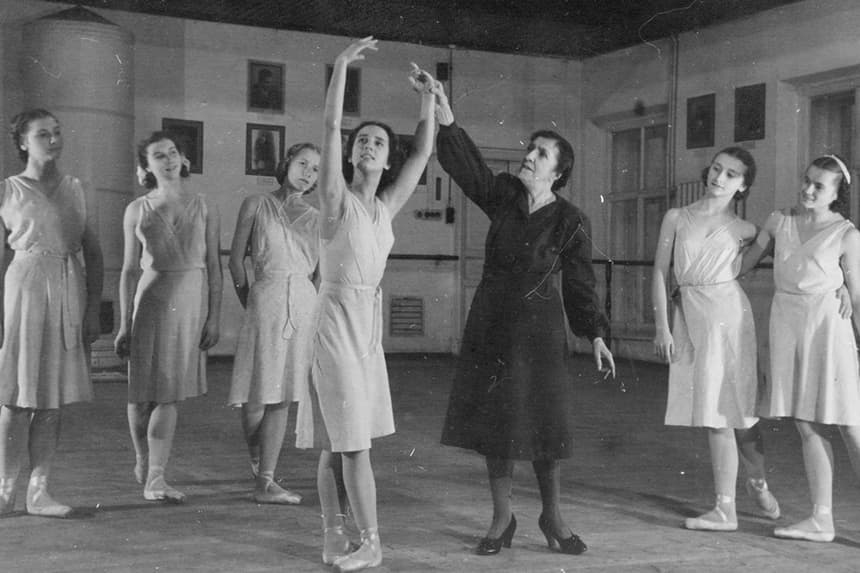
Agripina Vaganova with her students, training according to the Vaganova method.

The main principle of Vaganova’s pedagogical activity was the search for clean movement without unnecessary embellishment or carelessness and the desire to achieve great expressiveness of movements. Among the principles Vaganova brought into the process of training ballet dancers, it is worth mentioning the following:

  • Back positioning that allows the body to loosen up and become more expressive.
  • The positioning of the head and the direction of the gaze, which follows the movements of the arms and the body.
  • The dual role of arm movements: to create a spiritualized image and to support the dancer’s technique.

The teachers and judges at classical dance competitions still pay close attention to compliance with the principles and requirements of Vaganova technique.

The Cecchetti Method

Cecchetti’s pedagogical practice occupied a special place in ballet in the late 19th and early 20th centuries. Cecchetti, having learned a great deal from Russian ballet masters, synthesized the best qualities of the two different dance schools in his teachings.

Enrico Cecchetti method.

The pedagogical method he developed specifically for Russian pupils was distinguished by its clear systematization: he worked out a certain series of combinations for both adagio and allegro for each day of the week.

Cecchetti’s teaching principles had certain advantages. His method teaches solid skills for dynamic turns, steady poses, and clear tempos. Movements of arms, trunk, and legs acquire confidence and expression. Cecchetti’s class was rigorous, physically demanding, and developed breathing and leg strength (especially the feet).

French School

Bournonville’s technique is still part of Danish ballet practice. It appeared in European theatres as early as the nineteenth century, but August Bournonville’s ballets only became widely known outside of Denmark after World War II.

August Burnonville’s choreography is instantly recognizable. The illusion of weightless lightness is the main thing that the choreographer has brought to classical dance. The method requires the dancer to perform the most difficult movements as if they were so easy, in contrast to the French and Russian traditions, which highlight technically difficult steps.

Bournonville method

Bournonville’s technique is still part of Danish ballet practice. It appeared in European theatres as early as the nineteenth century, but August Bournonville’s ballets only became widely known outside of Denmark after World War II.

August Burnonville’s choreography is instantly recognizable. The illusion of weightless lightness is the main thing that the choreographer has brought to classical dance. The method requires the dancer to perform the most difficult movements as if they were so easy, in contrast to the French and Russian traditions, which highlight technically difficult steps.

The Royal Academy of Dance method

The English methodology of teaching classical dance evolved to spread this art form throughout England. The main feature of the methodology is the idea that by learning simple steps accurately and cleanly enough, it will be easier for the dancer to learn more complex and technical things later on. Accordingly, this school assumes slow and very careful teaching of simple steps, gradually increasing the level of complexity.

Balanchine method

The Balanchine method is used at the School of American Ballet (a school associated with ballet in New York City) and focuses on very fast movements combined with more open use of the upper body.

Balanchine’s method is characterized by intense speed, deep layers, and a strong emphasis on lines. The method has many hand positions and excellent and dramatic choreography. Balanchine-method hand positions (often referred to as “Balanchine hands”) tend to be more open, less curved, and often “broken” at the wrist. The arabesque positions tend to be uneven, with an open hip facing the audience to achieve the illusion of a higher arabesque line.

Kroon, Ron / Anefo, CC BY-SA 3.0 NL by Wikimedia Commons

Today, all of these techniques exist interdependently or in various combinations in ballet schools around the world. As a result of constant training, ballet dancers acquire an aesthetically beautiful positioning, strong muscles, flexible ligaments, and a confident command of the body.


Related articles:

Arabian dance in the nutcracker

The “Arabian” Dance in The Nutcracker

Christmas is around the corner, and if you are a Ballet enthusiast like me, you probably know that The Nutcracker recital has come to almost every city around the world. If you need to become ...
Ballet feet exercise. Ballerinas feet warming up stretching

Ballet foot exercises

10 Ballet Foot Exercises: Warm-up, Boost Your Technique and Foot Strength Foot exercises are an essential part of a ballet dancer’s training as they provide important strength and technique benefits. Developing strong and flexible feet ...
Ballerinas Feet. 3 ballet dancers stretching

Ballerina Feet: Ballet & Foot Health

If you’ve ever seen ballet or you’re a ballet dancer yourself, you’ll know how graceful dancers’ movements can be. But, of course, becoming a professional ballet dancer takes a LOT of hard work and dedication ...
Images of dancers on stage - moving to the best choreography, inspired by talented choreographers

The 9 Greatest Choreographers of the 20th century

This article see the DanceBible team pick some of the 20th century's (and all times!) greatest Choreographers, taking a historical slant via some very great and distinct contributions, which together help to describe the formation ...
Best bags for dancers. A girl carrying a bag on her shoulder whilst walking along.

Best dance bags

Best Dance Bags 2023 - Ultimate guide and review When you go to dance class or competitions, you probably take a lot of gear with you? Of course, dancers need a lot of space in ...
Classical Ballet. Ballerinas on stage with raised arms

Types of ballet

Ballet is a relatively young art form compared to other forms of classical dance, but its popularity exploded in the nineteenth, twentieth and twenty-first centuries and it remains one of the most loved forms of ...


Cover image  by vladislav83 on pixabay

This article was originally written by Emma but has been updated and contributed to by dance teacher Almiria Wilhelm.

Learn Ballet History

Ballet is a relatively young art form, with the earliest recorded mention of ballet dating back to the 15th century, or about 400 years ago. This article delves into ballet history and how it developed.

Agripina Vaganova with her students, training according to the Vaganova method.

The origins of the term ‘ballet’ are uncertain, with some sources suggesting it derives from the Latin word ‘balle’ (meaning dancing) and others suggesting it comes from the French ‘balleto.’ However, it is clear that ballet originated in a specific place. In the following article, we will explore the history of the development and popularization of this elegant art form.

Origin – 16th century ballet history

It is known that ballet originated during the Renaissance in Italy. The first mention of the word “ballet” is attributed to the court dance teacher Domenico da Piacenza. It was he who first proposed to combine several dances into one, perform them with a solemn finale and call them ballet.

The progenitor of classical dance is those forms of dance that were performed by hired dance masters for the nobles and princes at their celebrations. It was at such events that the original choreographic forms, the splendor of the spectacle, and the elements of drama in dance performances were born. Who would have thought that the usual entertainment of sovereigns would over time turn into art that millions of people around the world enjoy today?

A history of ballet. Ballet history

However, as a genre of art, the ballet took shape a little later. As we said earlier, ballet originated in Italy, but the first ballet production of The Queen’s Comedy Ballet was presented not in Italy, but in France in 1581. It was staged at the court of Catherine Medici of Italy, wife of the French King Charles VIII.

It was she who brought fashion for curious court ballets to France. The production was directed by the famous Italian choreographer and violinist Baltazarini di Beljoyozo from Italy. Since then, the ballet has moved to a professional stage where it occupied a certain place in opera and dramatic productions.

Mid 17th – 18th centuries

During this period of ballet history, this classical dance form continued to evolve about a century later, with the coronation of Louis XIV in France on June 7, 1654. Louis XIV was not only a fan of ballet, but also participated in productions himself, performing in the “Cassandra Ballet” at the age of 12 in 1651.

He earned the nickname “Sun King” for his role as the Rising Sun in “The Royal Ballet of the Night”. In 1661, Louis XIV established the Royal Academy of Dance to preserve dance traditions, with 13 of the best dance masters appointed to the Academy. Pierre Boschant, a royal dance teacher, was appointed director and later defined the five main positions of classical dance.

Louis XIV made the ballet stand out during his reign as a separate form of performance, different from balls. It was then that the division of dancers into amateurs and professionals appeared.

Ballet history fact!

Before 1681 only men danced in ballet. The first ballerina was the legendary dancer La Fontaine.

Then costumes and music were more important during performances than the dance technics. Girls danced in high heels wearing heavy dresses and masks. The costume of a man, although it was a little lighter (hence the greater grace and ease of movement), was still far from the clothes in which you could dance easily and freely.

The first to free the dancers from the shackles of these inconvenient costumes was a real reformer in the world of ballet art – the French ballet master Jean Georges Nover. He banned masks and gave the actors the opportunity to wear light suits that did not stiffen movement. Each innovation made dance more meaningful, and dance technique – more complicated.

Towards the end of the 17th century, court ballet achieved some success: it was fully funded by the authorities, which used it to exalt their own greatness. Gradually, the ballet completely separated from the opera and turned into an independent art.

One of the successful followers of Noverre became Jean Doberval, who in 1789 staged the ballet “Futile Precaution”. A simple story about the unhappy love of a young peasant and a village girl was presented on stage. The absence of stories about the adventures of the gods, majestic masks and corsets made the production natural, and the dance free.

Dance class in opera 1872. Edgar Degas (1834-1917).

Romanticism – late 18th – early 19th centuries

The strongest influence on ballet history was the direction of romanticism, which erupted in the late 18th century. In a romantic ballet, the female dancer first began to wear pointe shoes. Maria Taglioni was the first to do so, completely changing the previous ideas about ballet. In the ballet “Sylphide” she represented a fragile creature from the other world. The success was overwhelming.

Romanticism brought into the ballet the image of an incorporeal spirit – a ballerina who hardly touches the earth. In the same period, the roles of dancers are changing. Men turned into moving statues, which existed only to support the ballerina. Then the rising stars of female ballet completely and successfully overshadowed men.

Ballet history fact!

By the way, this situation was slightly corrected by the rise of the Nijinsky star from the Russian Ballet in the early 20th century. By this time, traditional for us ballet costumes, choreography, stage sets, props had already developed, in a word, everything had become almost what it is now. Eventually, it was a Russian ballet that started the revolution in ballet art.

Over time, the peak of the popularity of romantic ballet had already passed, and Paris, as the center of classical dance, began to fade away.

Russian ballet and its influence on world classical dance

The popularity of classical dance in Europe had an impact on ballet in Russia.

Ballet History Timeline.

The first ballet school in Russia was opened in 1738 (now the Vaganova Academy of Russian Ballet). At the same time, Peter I made dancing the main part of court etiquette, so the court youth was obliged to learn dancing. Thus, for example, the dance became a compulsory lesson in the Schlyakhet Cadet Corps in St. Petersburg. Since then, cadets have started to participate in ballet dances.

The dance instructor in the corps was Jean-Baptiste Lande. He understood that the nobility would not devote their lives to the art of dance. Therefore, in September 1737, Lande filed a petition in which he justified the need for a new special school where girls and boys of simple origin would be trained in choreography. Soon, such permission was given. From that moment on the training and development of dancers, for whom the ballet was a real profession, began.

At the beginning of the 19th-century Russian ballet art reached creative maturity thanks to the work of French ballet master Charles-Frederic-Louis Didlot. Didlot strengthens the role of the corps de ballet, the connection between dance and pantomime, asserts the priority of female dance. Russian dancers have brought expressiveness and sublimity to the dance.

The music of the legendary composer P. Tchaikovsky was the impetus for a new stage in the ballet history of Russia. Swan Lake, staged to Tchaikovsky’s music in 1877, gave rise to the fact that music for ballet began to be taken seriously. It was in the composer’s work that the romantic ballet became established. Tchaikovsky paid special attention to music, transforming it from an accompanying element into a powerful instrument that helps the dance to subtly capture and reveal emotions and feelings. Before that, music was considered just an accompaniment to dance.

Dancers from Swan Lake coming onto stage

Andrew Bossi Long CC 2.0via Wikimedia Commons

20th century

The beginning of the 20th century is characterized by an innovative search, the desire to overcome stereotypes and conventions of the academic ballet of the 19th century. One of the main innovators of this period in Russia is Sergey Diaghilev. In 1908, the annual performances of Russian ballet dancers in Paris began, organized by Diaghilev. The names of dancers from Russia became known throughout the world. But the first in this row is the name of the incomparable Anna Pavlova. Also, under his leadership in 1911, the ballet company was first organized. You can find out more about some of ballet types & styles in our related articles.

Anna Pavlova.
Diaghilev’s seasons – especially the first ones to include the ballets Firebird, Petrushka and Sacred Spring – played a significant role in popularizing Russian culture in Europe and helped establish a fashion for everything Russian. Thus, the passion of Europeans for traditional Russian costume gave rise to the new fashion. It was then, under the influence of Russian artists’ skill, that the western ballet took a second breath.

In 1929 Diaghilev died. Over time, his troupe broke up. One of its members – George Balanchine – was developing ballet in the USA and founded the New York City Ballé company. He became one of the most influential choreographers of the 20th century. In his dances, Balanchine strove for classical completeness of form, for impeccable purity of style. In many of his works, there is virtually no plot of any kind. The choreographer himself believed that the plot in the ballet is absolutely irrelevant, the main thing being the music and the movement itself. Today Balanchine’s ballets are performed in all countries of the world. He had a decisive influence on the development of twentieth-century choreography, not breaking with tradition, but boldly renewing it.

Another protege of Diaghilev, Serge Lifar, led the Paris Opera Ballet Company and for a long time was the most influential figure in French ballet.

The second half of the 20th century

In the 1950s, the dramatic ballet was in crisis. Strengthening the entertainment and pomp of performances, choreographers made futile attempts to preserve the ballet genre. Until the end of the 1950s, there was a breakthrough.

Choreographers and dancers of a new generation revived the forgotten genres – one-act ballet, ballet symphony, choreographic miniature. And since the 1970s, ballet troupes have emerged that were independent of opera and ballet theaters. Their number is constantly growing, among them, there are studios of free dance and modern dance. But today the academic ballet and the school of classical dance are still relevant.

FAQ:

Who were the 8 main figures who influenced the history of ballet?

Catherine Medici; Louis XIV; Jean Georges Nover; Jean Doberval; Jean-Baptiste Lande; P. Tchaikovsky; Sergey Diaghilev; George Balanchine.

What is the history of ballet?

16th century – the origin of ballet, the first ballet production. Mid 17th century – the rise of ballet dancers into amateurs and professionals. The end of 17th century – ballet is favourite form of art and accesses funding. 18th century – abandoning lavish costumes, the dance becomes freer and more professional. The start of Russian ballet. 18th - early 19th centuries – the era of romanticism in ballet, the female dancer first began to wear pointe shoes. 1877 – to the music of Tchaikovsky's Swan Lake ballet was staged. 20th century - Sergei Diaghilev's ballets are becoming popular throughout the world. 1950s - the dramatic ballet was in crisis. 1970s - the rebirth of ballet as we know it today begin.

What monarch reigned during the rise of professionalism in ballet history?

Professionalism in ballet emerged in the 18th and 19th centuries. During this time, several monarchs reigned in various countries where ballet was popular, including: King Louis XIV of France, who was the patron of the Paris Opera Ballet and played a significant role in the development of ballet as a professional art form. Queen Victoria of the United Kingdom, who was a patron of the Royal Ballet and supported the development of classical ballet in England. Tsar Nicholas I of Russia, who was a patron of the Imperial Ballet in St. Petersburg and played a significant role in the development of Russian ballet. King Ludwig II of Bavaria, who was a patron of the Munich Opera Ballet and supported the development of ballet in Germany.

Related articles:

Arabian dance in the nutcracker

The “Arabian” Dance in The Nutcracker

Christmas is around the corner, and if you are a Ballet enthusiast like me, you probably know that The Nutcracker recital has come to almost every city around the world. If you need to become ...
Ballet feet exercise. Ballerinas feet warming up stretching

Ballet foot exercises

10 Ballet Foot Exercises: Warm-up, Boost Your Technique and Foot Strength Foot exercises are an essential part of a ballet dancer’s training as they provide important strength and technique benefits. Developing strong and flexible feet ...
Ballerinas Feet. 3 ballet dancers stretching

Ballerina Feet: Ballet & Foot Health

If you’ve ever seen ballet or you’re a ballet dancer yourself, you’ll know how graceful dancers’ movements can be. But, of course, becoming a professional ballet dancer takes a LOT of hard work and dedication ...
Images of dancers on stage - moving to the best choreography, inspired by talented choreographers

The 9 Greatest Choreographers of the 20th century

This article see the DanceBible team pick some of the 20th century's (and all times!) greatest Choreographers, taking a historical slant via some very great and distinct contributions, which together help to describe the formation ...
Best bags for dancers. A girl carrying a bag on her shoulder whilst walking along.

Best dance bags

Best Dance Bags 2023 - Ultimate guide and review When you go to dance class or competitions, you probably take a lot of gear with you? Of course, dancers need a lot of space in ...
Classical Ballet. Ballerinas on stage with raised arms

Types of ballet

Ballet is a relatively young art form compared to other forms of classical dance, but its popularity exploded in the nineteenth, twentieth and twenty-first centuries and it remains one of the most loved forms of ...


Ballet Moves for Beginners

Are you dreaming about a career as a ballerina or just want to try classical dance for yourself? These simple (ha-ha) ballet moves for beginners will help you understand what ballet is and is it fits you.

Are you ready? There are 9 ballet movements that tone the muscles of the whole body. Let’s go.

Students learning to ballet dance - beginners moves
Photo by Cottonbro Studios on Pexels

PLIÉ

Plié in the first position is one of the basic elements of ballet. Stand in the first position and start bending your knees slowly until your knees are over your thumbs. Hold on to this position for a second and then return smoothly and quickly upwards. Complete the movement in the first position.

Plié should be performed in all 5 main ballet positions. There are two types of pliés: demi and grand.

GRAND PLIÉ

The Grand Plié also performs from the first position, but unlike the Plié, you sit much lower, tearing your heels off the floor.

RELEVE

Releve is a basic movement that almost all newcomers learn. To perform a simple releve, take the first position and hold the ballet barre with one hand. Tension the caviar muscles and pull up to be on your socks. Transfer all the weight to the part of the foot that is under your fingers. This position is called the demi-pointe. Then gently fall down.

Try to do single-leg releve as well. This exercise is good for strengthening the back surface of the hip and calf.

Over time, you try to connect the plié and the releve. First, make a plié and then climb up in the releve using the strength of your feet on climbing.

BATTEMENT TENDU

Battement tendu is an exercise in which the working leg is either pulled aside and then returned, or bent and unbent. There are several different types of battement with which you can practice the ability to correctly move your leg back to the original position, bend and stretch the leg, pull it out and lift it to any height in any direction and at any speed.

JETE

In this exercise, the working leg moves in three directions: forward, to the side, back and again to the side. But the sock is detached from the floor every time. The leg is raised to the position in which it will make from the other about 45 degrees. After making the whole chain of movements, repeat the jete from the other leg.

ROND

Push your right foot forward without tearing your sock off the floor. Smoothly, drawing a semicircle, move it to the side and then back. Return to the original position, repeat 6 times with each foot.

FONDU

Lower into the demi-plie by bending the supporting left leg and leading the sock to the right of the ankle stone. Unbend the supporting leg and pull the right one forward. Return to its original position. Repeat the movement by pulling the right foot to the side, but then lower into the demi plié, leading the right foot behind the shin with the left foot. Straighten the supporting leg by pulling the right foot back. Move the side again and return to the original position. Perform the exercise 4 times from each leg.

SAUTE

Saute is a jump with no position change. It is convenient for learning the mechanics of jumping with novice students. Its study is started separately, with pauses before each jump. Saute consists of three main points: half-sitting (preparation for the jump), the jump itself and landing (half-sitting). The jump is made by jumping with the pushing of heels from the floor.

During the jump, the legs in the air are stretched in the knees to the limit, toes are stretched too, and the body is straight, no tension, the legs in the air retain the given position. When landing after the jump, the socks touch the floor first, then the whole foot is lowered and a half-squat is made evenly on both feet. Keep the body straight.

ADAGIO

Get in the fifth position. Push your right foot forward as in a battement tendu, but then raise it, straight, to the parallel with the floor. Go back to the fifth position and also through the battement tendu lift the foot to the parallel with the floor to the side. Then make the same move back, again to the side and return to the original position. Repeat with the other leg.

So, after these ballet moves for beginners, are you ready to wake up the ballerina inside of you?


Related articles:

Arabian dance in the nutcracker

The “Arabian” Dance in The Nutcracker

Christmas is around the corner, and if you are a Ballet enthusiast like me, you probably know that The Nutcracker recital has come to almost every city around the world. If you need to become ...
Ballet feet exercise. Ballerinas feet warming up stretching

Ballet foot exercises

10 Ballet Foot Exercises: Warm-up, Boost Your Technique and Foot Strength Foot exercises are an essential part of a ballet dancer’s training as they provide important strength and technique benefits. Developing strong and flexible feet ...
Ballerinas Feet. 3 ballet dancers stretching

Ballerina Feet: Ballet & Foot Health

If you’ve ever seen ballet or you’re a ballet dancer yourself, you’ll know how graceful dancers’ movements can be. But, of course, becoming a professional ballet dancer takes a LOT of hard work and dedication ...
Images of dancers on stage - moving to the best choreography, inspired by talented choreographers

The 9 Greatest Choreographers of the 20th century

This article see the DanceBible team pick some of the 20th century's (and all times!) greatest Choreographers, taking a historical slant via some very great and distinct contributions, which together help to describe the formation ...


Also interesting to read: