Basic Hip Hop Moves for Beginners

To begin learning basic hip-hop dance, it is important to start with the basics. This includes getting a feel for the rhythm and music and learning the basic movements. In this tutorial, we provide a detailed breakdown of these foundational techniques, along with a selection of the best video tutorials to help you master hip-hop beginner moves. By starting with these simple steps, you can build a strong foundation for your hip-hop dance journey.

Basic Hip Hop Moves.

Groove

The groove involves alternating between bent and extended knees, in time with the beat. When you bend your knees and swing down, it accentuates the forward tilt of your body. By swinging up and extending your knees, you align yourself as if pushing off and create a slight tilt backwards.

The movement should be done expressively, with muscle tension, but the viewer should see a relaxed dancer. Performing groove, you will feel the music and rhythm. Then the groove can be varied by swinging movements of the hands and light tilting of the body to the sides.

Try to make a groove to different music with different tempo and rhythms. The better you do it, the faster you can choose faster music.

You can make a groove with an accent downwards – then the initial position will be with even legs. Or you can do a groove with an accent upwards, in which case you can start with bent knees.

Tone wop

It’s a basic movement taught to beginners in hip-hop. It needs to be studied to a degree of automation. During Tone Wop, the dancer takes small steps and “closes” and “opens” the feet.

You can take a step in any direction you want – backward, to the side or you can walk all the time just forward. But for starters, we recommend moving only in one direction to understand the structure of the movement.

Rhythm: on the score “once” we make a step, on the score “and” – “close” the stops, on the score “two” – “open”.

When you feel confident in this movement, try to add a variety of hand and body movements.

Brooklyn Bounce

– is a swing with crossed legs. Let’s start with Bounce. You can practice it as follows: jump up slightly and, once you land, bend your knees gently. Do it a few times – you should feel like you’re jumping like a ball, only smoothly and gently.

Next, try to learn how to work your legs:

Criss Cross

It’s a movement in which the legs cross in a jump with a groove. It may seem that the movement is very simple, but it is worth remembering that it is performed at a very fast pace and in conjunction with other elements, so the clarity of execution must be honed in the first class.

Salsa Rock

A little cardio – low jumps in place. The movement consists of throwing one leg forward while making a small jump backward with the support leg. Then the same movement must be done on the second leg. The body and arms are directed towards the jump (most likely this part will be obtained by inertia).

Sham Rock

– is a bailiff system with a twist and a final jump. Professional dancers beautifully capture each phase of the movement and place accents on the shoulders.

Dougie

The fashion movement Dougie looks cool to any music. These are legs with the foot turned inside out and hands walking beautifully in the opposite direction. The width of the step, the degree of bending of the knees, the waving of hands, and the general mood of the performance – all make this element into a full dance.

FAQ

What are the basic movements of hip hop?

The very first thing to start studying hip-hop is groove.
A list of basic movements:

  • Groove:
  • Tone wop;
  • Brooklyn Bounce;
  • Criss Cross;
  • Sham Rock;
  • Dougie

How do you do basic hip hop moves?

First, it is necessary to study the technique of execution of this or that movement, then – to bring the execution of the movement to automatism. After that, add the groove and freedom in your movements with your hands.

How can I learn hip hop?

It’s best to learn to hip-hop in a specialized dance studio. Under the guidance of the coach, classes will be held as productively as possible. If this is not possible, you can start with video lessons on YouTube. Watch more videos of cool professional dancers dancing – it will help you “catch” style and technique.

Here’s some other articles relating to hip hop and street dance:

House dance, street dancing

House Dance

Urban and street dances have always been able to go beyond traditional barriers and really connect people through movement. House dance does just this, hand in hand with the electronic ...
Popping dance on the street

Popping: Dance with Precision. 3 beginner techniques.

What is the popping dance technique and how do you 'Pop'? Popping is a style of street dance, where dancers quickly tense and release muscles (sometimes known as ‘hitting’ or ...
An image of a clown at a fair. Article about Clowning dance

Clowning Dance: Tommy the Clown & Hip-hop Clowns

What is clowning dance? Clowning dance (also known as clown dancing) is a unique and entertaining form of dance expression in the early 1990’s. It was developed by Thomas Johnson, ...
Street dance styles. Photo of male breakdancer in square outside tall building

Street Dance Styles

Street dance styles. When you hear the term "street dancing," what comes to mind? Do you think of hip-hop? Breakdancing? House dancing? Street dance is a broad term that encompasses ...
street dance

Best Street Dancers in the World

It is nearly impossible to accurately rank the top street dancers in the world, as each has their own distinct style and talent. While there are many skilled street dancers ...
Breakdancer performing in front of the crowd

What is Break Dance?

What is breakdance? You probably have a pretty good idea of breakdancing but maybe you're not close to the details and how to get started? Let us give you an ...

Cover photo by Breakreate on Unsplash

History of Ballroom Dancing

The history of dancing, in general, begins with the emergence of culture and even earlier. It is unlikely that we can not call tribal dances around the campfire dances. This article explores the history of ballroom dancing from the 15th century onward.
History of ballroom dance. A ballroom dancing couple in competition
Photo by Cinematics on Pexels

15th-century – The appearance of the term “ballroom”

We can say that since the 15th-century dances – the ancestors of ballroom dancing – were born. In the Middle Ages and the knightly era, different kinds of meeting people like balls enjoyed great popularity. At such gatherings, court dances were roundelays, brunl (dance with jiggles and tributaries) and the pavana, which often was performed with candelabra in hand.

But based on an analysis of literary sources found that ballroom dancing and the term “ballroom” itself appeared in the 15th century in Italy and France. They became widespread due to the passion of secular society for balls – secular evenings when men and women gathered to dance.

17-18th-century

17th-century, France – dance masters and teachers produce a variety of self-taught dancing. In 1661, by order of Louis XIV in Paris was opened “Academy of Dance” where was testing the knowledge of dancers, issued diplomas, arranged balls and evenings.

In the 18th century, new ballroom dances appeared: Pushpier, Museet, Rigdon, contradance. After the Great French Revolution ballroom dancing lost its aristocratic and magnificent character. The dances of lansier, landlord, mazurka, polonaise, gallop, cancan, polka, cotillion, cardingash won popularity.

In the 70s of the 18th century, the word “waltz” was used to refer to the peasant dance of some regions of Southern Germany and Austria, which since the beginning of the XIX century has become popular in all sectors of society in these countries, especially in Vienna and in the works of Johann Strauss, “king of waltzes”.

History of Waltz.

During the 19th century, ballroom dancing gained popularity in many countries in Old World. The waltz emerged as a particularly popular dance, known for its simple movements and exhilarating melodies.

20th-century – the emergence and spread of competitive ballroom dance

More and more kinds of ballroom dancing were appearing, which made it necessary to standardize and systematize them. In 1904 in England there was the Imperial Society of Teachers of Dancing – ISTD.

And already by the 20s of the 20th-century, ISTD decided to standardize the dances known at that time (slow waltz, tango, Viennese waltz, slow foxtrot, quickstep). We can say that even then, the European competitive program of sports ballroom dance formed, as it is today.

In the same years, the first ballroom dancing competitions began to be held. There was a division into competitive and social ballroom dancing. Social dancing has remained a form of non-professional dance.

It is worth noting! England is the rightful leader of competitive ballroom dancing, where the English school of ballroom choreography was founded and still remains important. Blackpool Dance Festival, the most popular and prestigious ballroom dancing competition, is held in England.

In 1935, the Federation Internationale de Dance pour Amateurs – FIDA was organized in Prague. In 1956 the organization broke up, but a year later International Council of Amateur Dancers (ICAD) was founded.

At the end of the 40s of the 20th century, five Latin American dances (cha-cha-cha, samba, rumba, pasodoble, jive) joined the European ones.

In the early ’80s the term “dance sport” was introduced to denote a competitive form of ballroom dancing.

The 1990s – recognition of ballroom dance as a sport

Further development of ballroom dancing is closely connected with the process of its recognition as a sport and ICAD activities. ICAD was renamed the International Dance Sport Federation (IDSF) in 1990.

In 1995, the International Olympic Committee (IOC) provisionally recognized IDSF and DanceSport. And two years later, in 1997, the International Olympic Committee recognized dance sport and IDSF became a member of the IOC.

2011 – IDSF renamed to World DanceSport Federation – WDSF.

To date, there are two styles of ballroom dancing – sports, that is, competitive and social. A strictly defined dozen dances of the European and Latin American programs belong to sports dance. Social dances also include bachata, salsa and other types of pair dance.

Nowadays

In modern sports dances, there are many different figures, movements, ligaments, lines that can be used to create a program. The technique of athletes is constantly improving, absorbing the most significant technical aspects of the performance of the best dancers of the past and present. Outstanding dancers and their followers form various schools with their own individual styles. Some of them unite to form their own directions in sports dances. Competition rules strictly regulate the number and complexity of movements and figures in combinations for each of the categories. There are also rules for competitive suits and dresses.

The future. The tasks of the World Federation for the next fifty years are to include dance sport in the program of the Olympic Games, Paralympic Games, and Youth Olympic Games.

Sources:

Related ballroom articles:

Spanish dancers performing

10 Classical Spanish Dances

Spanish Dances article by Tanya, a dancer who lives in Spain. The warm, cheerful, and picturesque streets of Spain contain many wonders for anyone who wants to visit them. There is a very rich and ...
couple dancing the milonga in an evening

Milonga Dance: The uptempo relative of the Argentine Tango

Milonga dance celebrates Argentine Culture. A ballroom dance sharing many characteristics with the better known Argentine tango and considered to be the forerunner to Tango. A fluidity gives dancers the opportunity to express the vibrant ...
Male and Female doing a Tango dance before a crowd. Photo by Preillumination SeTh on Unsplash

Tango Dance

Tango Dance is a passionate and expressive form of dance that originated in Argentina in the late 19th century. It is characterized by its close embrace, intricate footwork, and dramatic flair. Tango Dance is known ...
Crowd gathered gor a parade with samba dancers in full costume

Samba Dance

The Samba is a Brazilian dance that has become popular all over the world. It is characterized by its lively and energetic steps and is often performed to music with a strong beat. The origins ...
Man and lady ballroom dancers, dancing in a dark room with spotlights. Ballroom Etiquette article

Ballroom Etiquette: Basic Guidelines for Dancers

Ballroom Etiquette Overview: From the beginner to the experienced dancer, it is an honour and a privilege to attend any dance. The time spent at dances by all age groups is precious. For many of ...
Best ballroom dance shoes.

Best ballroom dance shoes

Best ballroom dance shoes (Updated 2023) - Ultimate guide and review Capezio Best Opened Ballroom dance Sandals View at Amazon CLEECLI Best Price View at Amazon Very Fine Best Closed Ballroom dance Shoes View at ...


Also interesting to read:

Styles of Ballroom Dancing

Confused about the number of styles of ballroom dancing? Let’s figure out together why in some sources they write about 12 or more styles of ballroom dancing, and in some – only about 10. We will cover in detail about each of the different styles with the best video examples to bring these to life.

Styles of Ballroom Dancing.

Well, let’s get started.

American VS International Ballroom Dance Program

For starters, let’s point out that ballroom dancing is a pair thing. There are two programs of ballroom dancing: American and International. American Program is danced mostly only in the U.S., International – around the world.

The International ballroom dancing program is strictly standardized and is a sport. For it is assigned a candidate for master of sports and therefore a master of sports. Competitions are held with the qualifying division of dancers into categories:

  • children;
  • juveniles;
  • juniors;
  • adults.

Each category also implies a division between beginners and professionals.

Sports ballroom dancing list

Latin American programme:

  • samba;
  • cha-cha-cha;
  • rumba;
  • pasodoble;
  • jive.

Standard (European Programme):

  • slow waltz;
  • tango;
  • foxtrot;
  • Viennese waltz;
  • quickstep.

Typically, when couples start ballroom dancing, they dance and compete in both the Latin American and standard programs, also known as the “ten dances.” However, in the future, they often choose to specialize in one of the programs and only professionally dance in that style.

Let’s analyze each of the directions in more detail and start with Latin Styles.

Samba

– a dance that is characterized by frequent changes in partners’ positions, hip movements, the so-called bounce (springing movement in the knees at every step) and expressiveness. The rhythm of the dance is syncopated, which is typical for African American music in general.

The main movements: Samba-Walk, Whisk, Botafogo, Volta. Partners do not always dance the samba as a couple inseparably, they can perform some elements at a considerable distance from each other, such as Batucada or Crusade Walk.

Let’s see how beautiful samba performed by champions Riccardo Cocchi and Yulia Zagoruychenko.

Cha-cha-cha (Cha-cha)

Musical size – 4/4. Tempo moderately fast, 30-32 tact per minute. It is performed energetically and playfully, with movements around the hall.

The country of origin of this style in Cuba. The dance has received the name because of special repeating basic rhythm: cha-cha-1-2-3. The main movements: New York, Fan, Opening Out, Alemana. The movements are characterized by clarity and accuracy.

Rumba

Musical size – 4/4. The tempo is moderate. Tactics per minute: 27-31. Emphasis: on 1 and 3 (1 stronger) kick. Performed in pairs, sensually and passionately, with movements around the hall. The rumba is characterized by hip movements and syncopic rhythm of steps, it emphasizes body movements more than legs. During the performance, the dancer as if fills the music with movements of the hips, arms, torso.

It is worth noting that rumba is a very romantic dance. It is a dance about love and all its movements are filled with sensuality. The main movements: Rumba Basic Movement, Alemana, Fan, Cucaracha, Natural Top, Opening Out, Spot Turn.

Pasodoble

– a Spanish bull toreador dance. The partner in this dance plays the role of the cloak, which wriggles around the toreador. Musical size – 2/4. The tempo is moderately fast, 60 beats (120 beats) per minute. Performed following the dramatic nature of the music, with active movements on the stage.

The pasodoble is characterized by expressive strokes of hands, “Spanish” poses, causing a marching rhythm of the music. The main movements: Appel, Appel, Huit, Flamenco Taps, Spanish Line, Coup de Pique, Separation.

Jive

Musical size – 4/4. The pace is fast, 44 beats per minute. This is the last dance of the obligatory competitive Latin American program. It’s fervent, inflammatory, and often very fast. In the course of dance steps, partners often open out of the pair, move away from each other, a lot of work with his hands and body. The steps are made from the toe.

Jive can be conditionally divided into swing and jump. In jumping jive figures are made with jumps, kicks, and flicks. In swing – by movements of the body, knees, and thighs. However, this division is conditional and usually during performances the figures of jumping and swing jive are combined.

5 dances of the European Programme

Slow Waltz

The Slow Waltz was formed on the basis of the Viennese (classical), which was quite often criticized. Dissatisfaction was caused by its exhausting and fast pace, constant rotation. Gradually, the music of the waltz became slower, a new kind of ballroom dancing appeared – the slow waltz. The slow waltz at balls is performed much less frequently than the Viennese one.

The musical size is ¾. The pace is moderate, 32 beats per minute. Performed smoothly and quietly, with movement in a circle. The dance is characterized by climbing the half fingers and lowering the whole foot with softening the knee, long and sliding movements, as well as slow turns.

The main movements: Whisk, Impetus Turn, Reverse Turn, Weave, Natural Turn, Natural Spin Turn.

Tango

Musical size – 2/4, 4/4. The tempo is moderate, 33 tacts per minute. Performed in close contact with a partner, with the advancement of the line of dance. The dance is characterized by the absence of ups and downs – tango dances almost constantly with bent knees.

For the tango of the sports ballroom international program is characterized by sharp changes in position, expressive movements, full contact partners in the hips, sharp elbows, in contrast to other dances of the European program.

Foxtrot

Slow foxtrot is a long line, continuous, smooth progression, restrained force, and flight. This dance requires good balance and constant control over each movement.

Slofox is the most difficult ballroom dance to study. The biggest difficulty is to perform fast steps without acceleration, and not too much to delay the step on the account of “slow”. It’s performed as a pair moves in a circle.

Viennese waltz

– is a special dance in which the dancing couples demonstrate graceful and smooth movements, the ability to control space at high-speed rotation and movement in the hall.

Musical size – ¾. The pace is fast, 60 beats per minute. Performed in pairs, the sixth leg position, with a wide movement in a circle. During the competition, unlike other dances of the European subgroup, the performance of the Vienna Waltz is only one minute.

Characteristic movements: Natural Turn, Reverse Turn, Change Step, Fleckerl.

Quickstep

– is light, lively, cheerful, filled with jumps, jumps with turns right and left.

Currently, the quickstep is dancing at a pace of 200 beats per minute. The main movements are progressive steps, chassis, turns, many other movements borrowed from foxtrot. The basic movement for beginners is the quarter turn. But the main it’s the difference from other European dances are “jumping”, as in promotion, when a couple as if “poured along the parquet”, with or without turns, and on the spot, with the original kicks and more complex movements.

Quickstep is a very beautiful and elegant dance. Its movements are performed in the rhythm of “slow, slow, fast, fast, slow”. When performed correctly, they show great legwork. The lively steps, combined with light syncopated jumps, look very attractive and give the impression of fluttering.

The American ballroom dancing program:

  • Smooth:
    • Waltz;
    • Tango;
    • Foxtrot;
    • Viennese Waltz.
  • Rhythm:
    • Cha Cha;
    • Rumba;
    • East Coast Swing;
    • West Coast Swing;
    • Bolero;
    • Mambo;
    • Samba.

Ballroom dancing – both sports and social – makes the body stronger, more resilient, sensual and plastic. Dance on an amateur level or professionally. But the main thing is to have fun with it!

Happy Dancing!


Other related ballroom dancing articles:

Spanish dancers performing

10 Classical Spanish Dances

Spanish Dances article by Tanya, a dancer who lives in Spain. The warm, cheerful, and picturesque streets of Spain contain many wonders for anyone who wants to visit them. There is a very rich and ...
couple dancing the milonga in an evening

Milonga Dance: The uptempo relative of the Argentine Tango

Milonga dance celebrates Argentine Culture. A ballroom dance sharing many characteristics with the better known Argentine tango and considered to be the forerunner to Tango. A fluidity gives dancers the opportunity to express the vibrant ...
Male and Female doing a Tango dance before a crowd. Photo by Preillumination SeTh on Unsplash

Tango Dance

Tango Dance is a passionate and expressive form of dance that originated in Argentina in the late 19th century. It is characterized by its close embrace, intricate footwork, and dramatic flair. Tango Dance is known ...

You may also be interested in reading:

History of Pole Dance: from 12 century Mallahamba to today

Despite its controversial origins and stigma surrounding it, pole dancing has become more widely accepted and celebrated as a form of art and athleticism. Pole Dance, as we know it today, is quite a young and developing sport and art. But it has great potential. And to understand this, you need to learn more about the history of Pole Dance.
Image of pole dancer in flowing silver dress with her hair back. History of pole dance
Image by Pixabay on Pexels

India, Mallakhamb

In the 12th century, Mallakhamb sport was born in India, which combines acrobatics and yoga elements on a pole 35-55 cm in diameter (the pole narrowed in height). The word “Malla” means “wrestler” and “Khamb” means “pole” or “column”. The earliest mention of Malahamba is in the Indian classical Manasollas, written in 1135 AD.

Mallakhamb lost its popularity over the centuries, but in the 19th century, about 250 years ago, the sport became popular again. Today, there are official Mallahamba competitions in India. There are three main forms of Mallakhamb: pendant, rope and fixed. Interestingly, this is a traditionally male sport, but in recent years women have been actively taking part in performances and competitions.

China, Chinese Pole

The emergence of the Chinese Pole sport is also associated with the 12th century. That’s when men in China started using rubber-coated poles 5-9 meters high to perform acrobatic tricks. Traditionally, again, it is mostly a mans sport, existing and is still popular today.

It should be noted that for performances on the Chinese pole, two poles are often used (as in the competition scenes on Pole dance) to jump from one pole to another. You can also notice familiar tricks and elements such as the Inverted Crucifix, The Chinese Flag, the Chinese Pole Split, the Shoulder mount, etc.

Europe, Maypole dancing

Maypole dancing is a pagan dance of fertility during which girls danced around the May tree (any high tree or pillar) decorated with flowers.

Africa, tribal traditions

In a sense, the ancestor of the Pole Dance can also be called tribal ritual dances in Africa. During these rituals, Engaged Women danced around a high pillar, showing how she wanted her future husband to make love to her.

20th century

    • 1920. As we know Pole Dance today, it became known in the 1920s when circuses were camping. In the middle of such tents, there was always a long high pole that held the tent. For the entertainment of the audience, girls in short tops and skirts danced around them. That’s when the sexual connotation starts to appear in dancing on the pylon (Hoochie Coochie).
    • 1950. From tents, Pole Dance moves on to clubs and bars. The pole begins to use for the show burlesque.
    • 1968. Belle Jangles performs Pole Dance at a club in Oregon, USA. Since then, many clubs in the US. and Canadian have started installing poles for this kind of performance.
    • 1980. The active period of distribution of strip clubs with poles, where semi-clothed girls, who performed in thematic outfits and pole shoes & heels, perform. At the same time, Vancouver opens the first studio to teach dancing on the pylon. Remarkably, the studio taught not only the work on the pole but also choreography.
    • 1994. Fawnia Mondey, who was working as a stripper at that time, begins to train her colleagues and dancers she knows.
    • By 2001, Fawnia Mondey not only trained her colleagues but also opened her own classes and then school in Canada and was the first to record a video course on pole dancing on the pylon. This story was the beginning of the spread of this dance around the world and the beginning of its recognition as a sport.
    • In 2000 actress, Sheila Kelley opens a dance studio S-Factor, where she teaches dancing on the pylon. She is the one who popularizes Pole Dance exactly as fitness for women, as physical sport, as one of the ways to exercise and maintain the physical tone and weight loss of the female body. She is also starting to produce video courses and books.
  • Since 2003, several first Pole Dance competitions have been held. The rules of such competitions prohibit excessive nudity and intimate gestures during performances in order to separate the pylon dance from striptease, and focus on athleticism and artistry, rather than on the sexual appeal of the performer. In some competitions, clothing, and stripper shoes made of leather, latex, and lacquer are prohibited.
  • The 1st Pole World Championship was held in 2012 and only 43 athletes from 14 countries took part in it.

The Future

The Pole Dance federations are working today to make Pole Dance an Olympic sport. Thus, in October 2016 the IPSF submitted an application to the International Olympic Committee for inclusion in the Olympic program in 2020.

So we can see that, Pole Dance still has a long, centuries-old history, which goes back to the traditions of ancient India and African tribes. The sport has become a hybrid embodiment of different cultures, and historical and international influences. Pole Dance has been developed, popularized and recognized by the world community as a sport. It has moved away from the stereotype that it is a striptease. And now this sport has all the chances to become an Olympic sport.

Related articles on pole dancing:

Intermediate Pole Dance Moves

Intermediate Pole Dance Moves

Intermediate pole dance moves is the natural step in our series from our popular article on beginners pole dance moves. We hope that being around halfway on you’re journey learning to pole dance you feel ...
Image of young female dancer pole dancing for weight loss

Pole Dancing for Weight Loss

Pole dancing for weight loss is quickly becoming popular. Even when people are starting with beginner pole moves and work up to the more challenging routines. Many people are interested in pole dancing for weight ...
Benefits of Pole Dance. Pole dancer showing impressive grip and stretch of the legs

Benefits of Pole Dancing

When some people think of pole dancing, they may think of a sleazy strip club. However, pole dancing is becoming increasingly popular as a sport in it's own right, a great form of exercise and ...

What to wear to a pole dancing class – with photos

If you’re planning on dancing, you’ll need special clothes that are characterized by certain materials and tailoring. If you’re planning to start pole dance, it’s important to find a uniform with open legs and waist areas, among other things. Let’s find out more about what to wear to a pole dancing class.

What to wear to a pole dance class

General principles of choice

First of all, when choosing a costume for pole dance, pay attention to the fabric. It should be elastic, durable and hygroscopic, as this sport involves a lot of movement. Fabric of the dance form should stretch in both directions, and it is better if it will not thin, otherwise – it will shine through during the performance of dance elements.

Most often costumes for pole dance are made of bi flex or velvet, and sometimes – with inserts from a grid or guipure.

A popular fabric for sewing forms is emerald bi-flex and velveteen.

Please note: velvet suits are a little warmer than bi flex, in warm seasons you may be hot.

Choose clothes that are easy to care for. You’ll probably have to wash it often because of the constant training. The bi flex dancing uniform will be virtually indestructible, even if it is washed every day.

And the most important thing is that you should like seeing yourself in your dancing clothes. It inspires you to more productive training and help keep you motivated in the classes.

Dancing Shoes

You may need ballet shoes with an open or closed-toe and pole dancing shoes for training. As you progress to potentially more glamorous outfits, if you’re uncomfortable with the high heels stripper style boots, you can do with socks. It’s about whatever is comfortable and safe, first and foremost.

Popular models of strips for dancing.

If it is of interest, high heels can be brought into more exotic pole dance classes. Beginners usually use the boots with a height of 4 centimeters. They are very convenient not only for training, but also in general, so you don’t have to worry about the fact that the heels will be hard for you to dance.

Next, the dancers go to the platform size of 6-7 centimeters, this is the most popular model and is suitable for absolutely different levels of training. For professionals – a great variant of 9 centimeters.

Form for warm-up

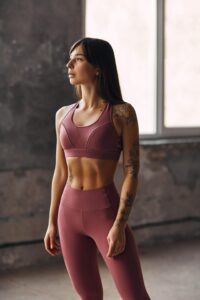
Every training session always starts with a warm-up. To warm up faster and better, you can use your leggings, T-shirt, and gaiters to warm up. Leggings and gaiters will help to stretch well and warm up all the muscles during the warm-up, so as to help prevent injury during the performance of dance elements.

An image of a Dancer warming up in leggings
Photo by Julia Rekamie on Unsplash

Form for training on the pyole

Then, after warm-up, you will need special shorts and top, because for the exercise on the pole you need a good grip of the skin with the pole.

There are two types of shorts:

  • ¾, which open the buttocks by a third;
  • shorts that completely cover the buttocks.

There are also various models of shorts with a high waist, as well as shorts with “suspenders”.

Popular models of shorts for dancing.

It is recommended to put on a sports top with open waist and hand areas. That is, a regular T-shirt is not suitable for dancing on the pole. An important requirement for a top is that it can be worn without a bra, it must hold the chest.

Another variant of the costume for a dance lesson – integral bodysuit. They are suitable for both training and performance. They are often sewn with special slots on the sides (that is for the good grip with the pylon).

Don’t forget about safety. The dance kneepads are tight around the leg, preventing the stretching from out the knee muscles and ligaments, and protecting them from abrasions. There are kneepads with special lacquer inserts on the upper back surface of the thigh. They provide additional grip on the pylon when performing various elements.

What to wear for the Pole sport lesson

For pole sport lessons the presence of shorts and top is obligatory as this direction is basically directed on the performance of acrobatic elements and their combinations. It is extremely important that in the chosen clothes you were comfortable and nothing interfered with the training.

Here are some options for clothing for classes pole sport.

Clothes for exotic pole dance

For exotic pole dance classes, you can wear both shorts with a top and sometimes leggings.

Exotic pole wear
Photo by chaoss on Shutterstock

Clothes for Pole Art

The pole art dance will be adorned with a long silk skirt or other lightweight and soaring fabric.

History of Pole Dance – how people stopped perceiving dance as a striptease.
Photo by Pixabay on Pexels

Dance form care

If your uniform is made of bi flex, it does not require special care. You can wash it often and not worry about its color and quality. The main rule – do not leave to dry on direct sunlight, bi flex may burn.

If you have chosen clothes for dancing from velvet, it is harder to care for it, because it can not be washed or ironed. Thoroughly clean the cloth from dust, clean with a sponge moistened in water and well wrung out to avoid disturbing the pile. After you get rid of the dust, wipe the product with a soft woolen cloth.

What NOT to do before the lesson:

  • apply moisturizing cream to your hands or body;
  • to use perfume abundantly;
  • to wear jewellery: rings, necklaces, and bracelets will scratch the pylon and prevent you from exercising effectively.

Happy poling!


Related articles on pole dancing:

Intermediate Pole Dance Moves

Intermediate Pole Dance Moves

Intermediate pole dance moves is the natural step in our series from our popular article on beginners pole dance moves. We hope that being around halfway on you’re journey learning to pole dance you feel ...
Image of young female dancer pole dancing for weight loss

Pole Dancing for Weight Loss

Pole dancing for weight loss is quickly becoming popular. Even when people are starting with beginner pole moves and work up to the more challenging routines. Many people are interested in pole dancing for weight ...
Benefits of Pole Dance. Pole dancer showing impressive grip and stretch of the legs

Benefits of Pole Dancing

When some people think of pole dancing, they may think of a sleazy strip club. However, pole dancing is becoming increasingly popular as a sport in it's own right, a great form of exercise and ...
How to Pole Dance? Image of pole dancer over lake at sunset. image by Damian Barczak on Unsplash

Learn How to Pole Dance

Interested to learn how to pole dance?!  Please read this first so as not to make the same mistakes I did... Let me start by saying that I wasn't a professional dancer and 'pole' was ...
Group of pole dancers of all ages

Pole Dancing for Kids???? There’s a lot of benefits, handled correctly

Can kids do pole dance? Absolutely! There are many reasons why a child might want to do pole as there's so many benefits to pole dancing. Pole dancing is all about strength, flexibility, and technique ...
beautiful pole dancer near the pylon. She may be demonstrating for an online pole course

Online Pole Dance Classes

How to choose online pole dance classes Regardless of your reasons for preferring online pole dance lessons, you can do so with one of the online pole dancing schools we offer on this list. It's ...


You may also be interested in reading:

TOP 10 Basic Pole Dance Moves for Beginners

The TOP 10 basic pole dance moves for beginners. These moves can be central to learning how to pole dance :

In todays guide, our resident pole dance instructor takes you through her favorite moves and how to perform them well.

So, let’s take a closer look at the basic pole dance moves for beginners. Good luck!

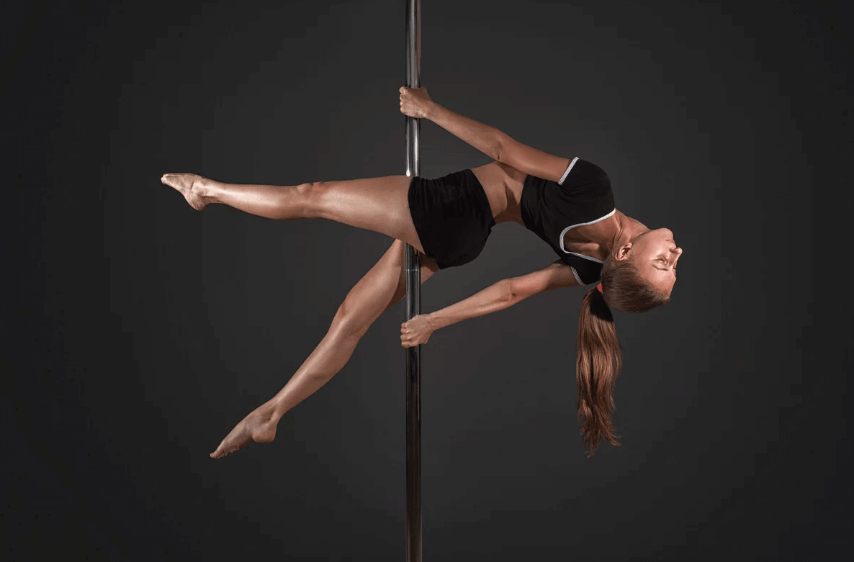
Horizon variation on the pole.
Pole dance photo by chesterf on Shutterstock

Beginner pole spins

We’ve chosen a few easy, simple spins that look beautiful and spectacular. Most likely, you will be taught to perform them in the dance school at the first lesson of pole dance. You can also learn these in online pole classes if you have your own pole at home.

1. The Chair Spin:

A classic to start with. Here’s how to do the chair spin in 5 easy steps:

  • Stand by the pole with your feet on the floor
  • Place your inside hand (the one closest to the pole) high on the pole, and your outside arm at chest height.
  • Swing your outside leg back and then to create momentum while your other knee is lifted and raises to meet the other leg
  • Use your outside hand to push your body away from the pole (otherwise, you’ll bump your hips on the pole) resulting in bruises. So, focus on maintaining a safe distance from the pole with your outside hand.
  • When you’re near the end, put your feet down and perform a graceful roll up.

Once you’ve mastered this from a standing start, why not try walking in to the chair spin pose.


Another variation of the chair spin is when you take your legs off the parquet and put them in a foot-on-foot position. Do not forget to bend your back when performing the element to make the posture look even more still and elegant.

The spin is can be performed on both static and rotating poles. After more practice, when you find that your hands and grip become stronger, you can eventually try the chair spin on one hand.

2. Front and Backward Frog Spins:

These are great poses for beginners on the pylon and a lot of fun. Perform this move in 3 steps:

Forward Frog Spin:

  • Grasp the pole with both hands, as in the previous chair spin exercise.
  • Then we make a swing forward and around the pole, grab the pole under the knee with leg close to the pole.
  • Raise your second leg and connect both legs at the toe to form the ‘frog’ posture.


The element also has a variation of the execution backward, as the ‘backward frog’:

  • Note that the starting position in this twist is different. The arm close to the pole is at eye level and has a grip on the pole in the armpit area.
  • The furthest arm is flat and holds the pole above the head.
  • From this position, push your feet back. When you start spinning, cling to the pole with your near-foot under your knee and bring your socks together.

3. Soldier’s spin

It is an important link between more complex tricks in compositions and dance numbers.

The element
Image featuring the x-pole portable dance pole

To perform the soldier spin:

  • Stand in front of the pole
  • Take two hands higher to be able to pull up further on the arms.
  • Step right foot forward, left foot forward, swing a little to start spinning.
  • Then push your feet off the parquet and at the same time pull up on our hands so that your hands are at chest or neck level.
  • In the straight position, we spin in the “soldier” position.

Beginners Pole Moves with Acrobatic elements

The following elements, in addition to plastics, will require you to have basic skills in acrobatics.

4. Basic Climb

Climbing up the pole is a crucial part of a developing dancers repertoire.

To begin climbing up the pole, follow these simple steps:

  • Lay one leg up on the pole slightly diagonally that way with the inside of the knee and ankle pressed against the pole. Feel the grip on the pole.
  • Place your hands as high as possible by grabbing the ring upwards.
  • You should place the second leg in front of the pole on the back of the shin under the heel.
  • Clamp the pole with your tibia and knee sides. Make sure the front foot is tight and not beveled.
  • Straighten the body by holding the pole with your hands and feet.
  • Bend your hands and lean your body into the pole. Now you will hold on to your hips as well.
  • Next, you need to move your hands higher and holding hands, move your bent legs also upward. Hold the pole by your ankles.
  • Then, with your back leg push away from the pole to move the hold to your knees.
  • Repeat all the movements you’ve already done before: straighten up, move your arms, tighten your legs, move your knees.
Young lady doing the pole climb using her knees and hands, as a beginner pole move
Image by antoniodiaz on Shutterstock

The second option is to use the forearm. That is, one hand remains straight, and the other – bent. The elbow is just below the shoulder and we rest our forearm on the pole diagonally. The use of an elbow allows you to use your knees at once and avoid needing to push them away from the pole.


5. Horizon and Basic Plank:

Horizon.

We recommend that you learn how to make the horizon on the static pole from the floor.

  • Stand as close to the pole as possible and grip the pole with your hands at approximately head level.
  • Pinch your stomach to the pole and raise your legs forward on both sides of the pole and squeeze it with your thighs.
  • Turn your pelvis one way, for example to the left.
  • Your feet should be crossed and use the heel of the upper leg to prevent it from sliding off the lower leg. Your toes should be pointed.
  • While keeping the body twisted, lower your hands down the pole and then gradually straighten them out.
  • Let go of the hand of the same name lower leg (in our case – left leg). So you hold the pole with your right hand and hip, with the body straight or with a slightly bent back.
  • If you feel that your thighs are not gripped enough with your pole, you can start practicing the horizon without falling completely horizontally with the floor, and leave the body diagonally to the floor, degrees 45 degrees. Over time, you will reach the desired position.

6. Hello Boys

The 'Hello boys' beginner pole dance move
Photo by BraunS on istock

How to perform the ‘hello boys’ pole move:

  • Perform a base climb
  • Clamp the pole between straight legs, twisting the pelvis into the lower leg on the side so that the back surface of the hip is pressed well against the pole.
  • Tilt harder towards the lower leg and grip the pole with the hand on the same side, just below the thigh.
  • Continue to hold the second bent arm approximately at head level.
  • Next, you should feel the grip of the lower leg’s thigh on the pole, never carrying the weight on the lower hand. We should not sit on the hand, it only helps a little.
  • Turn your body backward by straightening the upper arm, this will allow for a better hip-to-pole grip.
  • Feel whether you are holding on to your hip or hand.If you can hold your thigh and hands with confidence, try to tear off your upper leg from the pole.
  • If it is possible to hold on to the hip, move the upper leg to the side in the “spread” position.


7. Hood Ornament (Cricket)

So to tackle the Hood Ornament pose, follow these simple steps:

  • Stand sideways to the pole as close as possible on your fingers. Grasp the pole with your near armpit and place your far arm straight arm as high as possible.
  • The near-arm should be bent, with elbow facing down.
  • Now cling to the pole with your near knee. That is, press your straight leg in front under the knee, then bend it.
  • The knee looks down, the pelvis looks forward.
  • Now, hold by your arms and under the knee, raising your far leg and move straight back. Lean back into the pole with your ankle.
A pole dancer performing the Hood ornament Cricket move
Photo by Aikis on Shutterstock

If you feel confident in this position, while holding your armpit by the pole, try to release your near arm and straighten it in front of you.
Then you can look to straighten both of your hands. The next step, as you continue to improve, is to perform this element after climbing up the pole.


8. Chopper (Invert V, Straddle)

This is a great pose. A few steps to perform the Chopper:

  • Position yourself sideways to the pole.
  • Place your inside arm with a forearm grip at shoulder height, and your outside arm just above it.
  • Stand on your tiptoes and step forward with your inside foot, making sure your hips are in front of the pole.
  • As you pull on the pole with your arms, lift your tiptoes off the ground while keeping your legs straight.
  • Open your legs in a V-shape and allow your head to drop back. Aim to have your arms as straight as possible in this position.
  • You did it!
  • Now, to exit the pose, lift your head toward the pole and carefully lower your legs, keeping them slow and controlled.

By entering and exiting the move slowly, you will be building up muscular strength, which over time will help to make this move even more controlled.


9. Martini

Tasty drink and a cheeky little pole move. To perform the Martini:

  • Lift and lean the straight leg to the front surface of the pole under the knee and bend the leg.
  • Then, while maintaining a good knee grip, lower the pelvis down, increasing the area of grip on the pole.
  • Hold the pole with both hands, with the near one on top.
  • Now raise the far leg and move it straight from the front of the pole, press it against the near leg, the stretched foot looks up into the diagonal.
  • The elbow hooks at the back of the pole and with the palm of your hand holds the straight leg from the front.
  • If you’re sure you’re holding on well, you can remove the other hand from gripping the pole and get creative with your pose.
  • You’ve made a martini!


10. The hang on the leg

We’ll cover a couple of variations of this move, hanging on the near and the far leg.


The base hang on the far leg

A beginner hanging on a dancing pole by her near leg with arms outstretched
Photo by Petr Smagin on Shutterstock
  • Run the chopper, lift the pelvis as high as possible.
  • Keep your shoulders down, do not raise them to your head. Stretch your back as far as possible without rounding it up.
  • Place your far leg against the pole under your knee and bend your knee as tightly as possible.
  • Move the lower leg back straight, but make sure you stay on the pole well with your knee and side. Also, clamp the pole with the armpit of your near hand.
  • If you feel confident in this position, gently move your hand backward first, holding the pole firmly under your armpit and then do the same by your far arm.

You’ve done the hanging on your far leg!


The hanging on your near leg

Pole dancer learning to hang by near leg
Photo by BraunS on iStock

If you hold the pole under your knee in the hanging on the far leg, the hanging on the near leg assumes that the inner surface of the hip and shin will grip.

Run the chopper, but do not lift or press the pelvis too close to the pole. Leave it slightly behind. Hold the pole sideways to the pole and grip the pole with your near-foot in the inner thigh and tibia area. After that, lower the top of the body down and grip the pole with the armpit. Lower your head down. If you hold on well, keep your hands back, keeping your armpit, hip, and shin together.

Bonus Move: 11. Barrel with wide grip

We know this was a ‘top 10’ moves article but why not enjoy one last move for the road?!

Technique of the element:

To perform the barrel with a wide grip:

  • Stand facing the pole, grip the pole with your hands with a wide grip, the lower arm with the ring facing down straight (but do not turn off your elbow).
  • The upper arm with the ring facing up is bent about 90 degrees in the elbow. Watch your wrists, do not let them twist.
  • Next, raise the bent leg and the lower arm of the same side and press the front of the thigh against the pole.
  • At the same time, tilt the body slightly towards the lower arm.
  • Then, hold on firmly to the pole and gently lift the second leg upwards and press the front of the hip against the pole.
  • At the same time, lean towards the lower arm. Hold this so that your belly presses against the pole too.
  • As you enter the barrel, your lower arm slips slightly down and your upper arm straightens (but not completely).
  • Try to keep the body parallel to the floor.

You have made a barrel with a wide support grip!


Tips for beginners

  1. Wipe the pole all the time. Before, during and after training, wipe the pole with an alcohol solution and a soft cloth at all times. This will help to keep the pole dry all the time for a better grip on your skin. This means that there is less chance to get injured, and in general, it is easier to perform tricks and elements on a dry wiped pole.
  2. Wear shorts and a top. Many beginners are embarrassed to wear suitable pole dance clothing in the first few lessons. Don’t worry! This shape will allow you to stay on the pole better and not to slide. Again, it’s safer than training in leggings and T-shirts. You’ll always have to make hooks under your knees, armpits, waist level, and between your thighs. Doing this with your skin open is much easier.
  3. Think about magnesia. Many pole dancers use a special remedy for dry skin – magnesia. It’s the same substance that bodybuilders use, for example, to lubricate their hands to take the weight of the barbell. In the case of the pole, magnesium powder like this one on Amazon is most suitable. But if your palms are dry enough without it and do not sweat, try without it.
  4. Don’t worry if you can’t do something at first. In the beginning it can be difficult. But with a little effort, you will not notice how progress will become more obvious not only for you but also for the coach. It won’t be so difficult for you to do climbing, you will be able to do a variety of twists and beautiful handstands after a few weeks of training. The main thing is to keep your hands up and work on yourself. Remember, nothing is easy to start with and you will definitely succeed with some effort!


When you’ve mastered these starter pole moves, it’s time to take a look at intermediate pole dance moves.

Related articles on pole dancing:

Intermediate Pole Dance Moves

Intermediate Pole Dance Moves

Intermediate pole dance moves is the natural step in our series from our popular article on beginners pole dance moves. We hope that being around halfway on you’re journey learning to pole dance you feel ...
Image of young female dancer pole dancing for weight loss

Pole Dancing for Weight Loss

Pole dancing for weight loss is quickly becoming popular. Even when people are starting with beginner pole moves and work up to the more challenging routines. Many people are interested in pole dancing for weight ...
Benefits of Pole Dance. Pole dancer showing impressive grip and stretch of the legs

Benefits of Pole Dancing

When some people think of pole dancing, they may think of a sleazy strip club. However, pole dancing is becoming increasingly popular as a sport in it's own right, a great form of exercise and ...