Ballerina Feet: Ballet & Foot Health

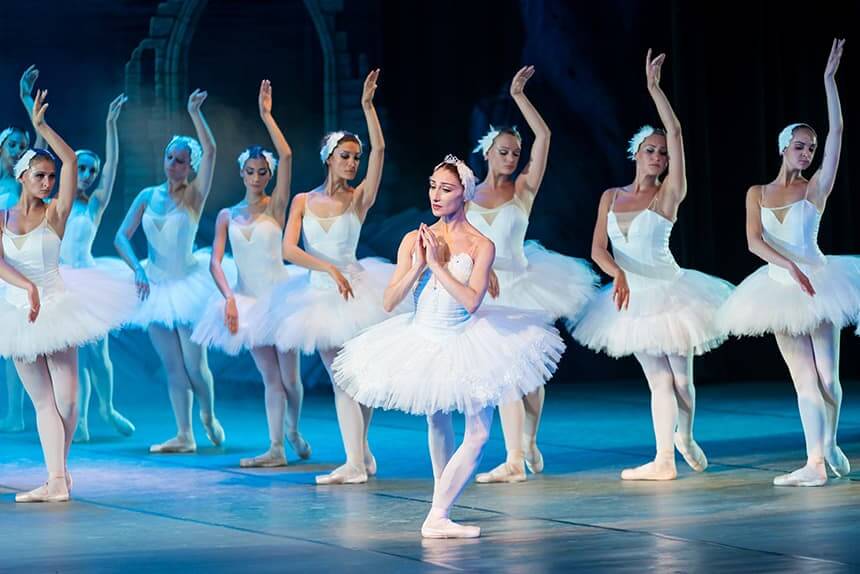
If you’ve ever seen ballet or you’re a ballet dancer yourself, you’ll know how graceful dancers’ movements can be. But, of course, becoming a professional ballet dancer takes a LOT of hard work and dedication. In addition to practicing many hours every day, dancers also need to take care of their feet. because they are essential tools for performing their art. Foot training for dancers begins on the first day of class and continues throughout their dance career.

Ballerinas Feet. 3 ballet dancers stretching
Photo by cottonbro studio on Pexels

The effects of ballet on dancers’ feet

The human foot is a complex structure made up of 26 bones, 33 joints, muscles, tendons, and ligaments. This intricate design allows the foot to support the body’s weight and absorb shock when we walk or run. When we put our feet through repetitive motions, such as those required in ballet, we can put stress on these structures and cause injuries.

Dancers are especially susceptible to foot injuries because practice with such frequency. On top of this, baller dancers typically wear shoes that provide limited support and cushioning. Pointe shoes, for example, are designed to allow dancers to dance on their toes but offer little protection from the impact of landing from jumps and other movements. As a result, ballet dancers often suffer from injuries to the bones and joints of their feet.

Despite these risks, ballet can be a healthy activity for your feet if you take some precautions:

  1. First, it’s important to choose the right ballet shoes. Make sure that you are fitted by a professional ballet shoe fitter even for soft ballet shoes. The wrong fit (too large or too tight) can affect your technique and cause injury.
  2. You can also ask your dance instructor for recommendations. As you become more experienced, may need to get pointe shoes. But be sure to buy them from a reputable store with a professional pointe shoe fitter and break them in slowly to avoid injury.
  3. It’s really important to warm up before dancing and stretch afterwards. This will help reduce your risk of injury.

If you start experiencing pain in your feet, be sure to speak to your dance teacher and see a doctor right away.

Is ballet harmful for your feet?

While it’s true that ballet dancers often suffer from foot injuries, these injuries are usually due to overuse or poorly fitted shoes. With the right precautions, you can avoid these injuries and enjoy a healthy career in ballet. Dancers who take care of their feet and warm up properly are less likely to experience injuries.

Typical dance-related foot and leg injuries

The intense physical activity in ballet puts a lot of stress on dancers’ feet and legs. As a result, they can get injured. These are some common injuries:

  1. Achilles tendonitis: an inflammation of the Achilles tendon, which is the large tendon that connects the calf muscle to the heel bone.
  2. Shin splints: pain in the lower leg, usually along the shinbone, as a result of overusing your lower leg muscles.
  3. Stress fractures: tiny cracks in the bones that can occur from overuse or repetitive impact.
  4. Plantar fasciitis: inflammation of the plantar fascia, which is a thick band of tissue that runs across the bottom of the foot. Typically, this causes pain and swelling at the base of the heel and the arch of the foot.
  5. Neuromas: the partial or complete disruption of a nerve can be caused by over-stretching. You may feel a burning or tingling sensation as well as numbness and spasms.
  6. Ankle sprains: these occur when the ligaments that support the ankle are stretched or torn.
  7. Blisters and bunions are also common among dancers. Like all injuries, they should be given proper attention because they can turn into something more serious if untreated.


Prevention is better than cure and the best way to avoid foot problems is to take proper care of your feet. This means wearing the right shoes, warming up, strengthening and stretching your feet regularly, and keeping your feet clean and dry. It’s also important to see a podiatrist on a regular basis so that any problems can be caught early and treated quickly.

Remember! If you experience any pain or discomfort in your feet or legs, it’s important to see a doctor right away. These problems can often be resolved with simple treatments but if they’re ignored, they can lead to more serious injuries.

What pointe shoes are best to protect your feet?

The best way to protect your feet while dancing is to choose the right shoes. All ballet dancers need well-fitting flat ballet shoes and many will require pointe shoes as well. There are many different types of pointe shoes on the market and it’s important to find a pair that fits correctly and provides the right support for your feet. It is essential to have ballet shoes fitted by a professional fitter, especially when buying pointe shoes. Your fitter will take into consideration your foot shape, your experience level and any special requirements you may have. You may need to try several different pairs before they find the perfect brand and style for your feet. Your fitter will also recommend appropriate protection for your feet such as toe pads, toe spacers, additional elastics, etc.

Pointe shoes need to be “broken in” before you wear them for a performance. Your fitter or dance teacher can show you how to break in your shoes. Take note that while many shoes require the back or shank to be softened, some newer brands have carbon fibre shanks that should not be “broken in” or softened. The process of getting your shoes performance-ready can take several weeks and it’s important to do it gradually so that you don’t injure your feet. Once your shoes are broken in, they should be comfortable and provide support while you’re dancing.

To protect against the strains of “ballet feet” or “ballerina feet” and choose the right pair of shoes for ballet, you should read the list of the best pointe shoes here. You’ll find a detailed guide on choosing the right pointe shoes for you.

Ballet feet.
Photo by Merve Sehirli Nasir on Unsplash


How foot type of foot affects your dance/ballet career

The type of foot a dancer has can affect their career in several ways:

  • Dancers with high arches may be more susceptible to injuries.
  • Dancers with flat feet may have trouble with pointe work.
  • Dancers with wide feet may have difficulty finding shoes that fit well.

It’s important to consult your dance teacher or coach to determine what type of feet you have and how to keep them strong and healthy. They can also help you find the right shoes and make sure you’re performing ballet exercises correctly.

While the type of foot a dancer has can affect their career, it’s important to remember that everyone is different. Some dancers with high arches will never experience an injury and some dancers with flat feet will excel at pointe work. Ultimately, it’s up to the individual dancer to find what works best for them.

Enjoy dancing and look after your ballet feet

Now that you know more about how ballet affects your feet, you can take steps to protect them. Dance is a beautiful art form that can be enjoyed by people of all ages and abilities. While there are some risks associated with ballet, these can be minimized by taking proper precautions. With the right shoes and regular exercise, you can enjoy dancing. If you experience any pain or problems with your feet, be sure to consult a doctor so that you can continue dancing for years to come.


Related articles to ballerina and ballet:

Students learning to ballet dance - beginners moves

Ballet Moves for Beginners

Are you dreaming about a career as a ballerina or just want to try classical dance for yourself? These simple (ha-ha) ballet moves for beginners will help you understand what ballet is and is it ...
Ballet feet exercise. Ballerinas feet warming up stretching

Ballet foot exercises

10 Ballet Foot Exercises: Warm-up, Boost Your Technique and Foot Strength Foot exercises are an essential part of a ballet dancer’s training as they provide important strength and technique benefits. Developing strong and flexible feet ...

This article was originally published by dancesbibles admin. Almiria Wilhelm contributed to this article.

Benefits of Pole Dancing

When some people think of pole dancing, they may think of a sleazy strip club. However, pole dancing is becoming increasingly popular as a sport in it’s own right, a great form of exercise and self-expression. In this article, we will explore the many benefits of pole dancing. Pole dance can improve your health and figure, help you lose weight help boost your self-esteem, and provide hours of fun and excitement. So what are you waiting for? Don’t hesitate, learn how to pole dance today!

Benefits of Pole Dance. Pole dancer showing impressive grip and stretch of the legs

1. It’s a Great Way to Get in Shape

Pole dancing is a great way to get in shape because it combines strength training with cardio exercise. It also helps improve your balance and coordination. Pole dance will tone your muscles and burn fat – all while you’re having fun! And if that’s not enough of an incentive, here are some other reasons why pole dancing should be part of every fitness routine:

  • It works on your whole body and all muscle groups.
  • It’s empowering to learn new tricks and with beautiful pole dancing clothes and pole shoes, to feel sexy and confident on the pole.
  • It works for multiple muscle groups simultaneously (including those deep-down ab muscles). This means you’ll see improvements in both your strength and flexibility within weeks! You don’t have to worry about getting bored with this workout as there are countless pole moves to learn so it always remains exciting. Pole dancing is a great way to improve your confidence and self-esteem.
  • It’s not just about looking good in the mirror – it also helps strengthen muscles around joints, which reduces injury risks during other activities like running or hiking!
  • It’s an excellent form of exercise for weight loss because it burns tons of calories in short periods of time. It is an amazing way to work out your whole body without even realizing it! You’ll be sweating like crazy after just 15 minutes on the best pole – but don’t let that deter you from trying this fun exercise routine because there are so many benefits!

2. It Can Improve Your Balance and Flexibility

Flexibility is definitely one of the biggest benefits of practicing pole dancing. From starting with pole dancing beginner moves, the constant stretching of muscles will help them become more flexible over time, which can lead to better posture and less pain from injuries or ailments like arthritis. Plus it’s fun! You’ll be surprised at how quickly you start seeing results after just one session on the pole. It’s easy to get addicted!

Health benefits of pole dancing.

3. You’ll See Improvements in Your Strength and Coordination

Pole dancing is a form of exercise that can improve your overall physical strength, especially in your core, arms, and upper body. The act of holding and supporting your body weight on the pole requires the use of these muscle groups, leading to increased strength and toning. Additionally, pole dancing can improve your grip strength, which can be beneficial for everyday tasks such as carrying groceries or lifting weights. Engaging in regular pole dancing can also improve your overall physical fitness, allowing you to recover from injuries more quickly and maintain good posture. If you approach pole dancing as a sport and train consistently, you may see even greater physical benefits.

You’ll also notice an increase in coordination as you learn to move with confidence on the pole. These are all things that were mentioned above but they’re worth repeating here because they’re so important! Pole dancing will strengthen muscles around joints which helps reduce injury risk during other activities.

4. No Partner Required (Kick Your Own Butt!)

You don’t need a partner to pole dance. You will not have much fun doing ballroom dancing, for example, without a partner. There is no limitation, however, in pole dancing. You are never dependent on other people. Accordingly, all you need is a pole and yourself to dance and develop in this direction. Just put on some music and start working out!

5. Boost Your Confidence and Self-Esteem

Pole dancing is a great way to boost your confidence and self-esteem. As you learn smooth and graceful movements, you will become more and more plastic over time. And since pole dancing is invariably associated with plasticity, you will feel beautiful and graceful, hence – extremely confident. It’s empowering to learn new tricks and feel sexy and confident on the pole.

It helps you learn how to move with confidence on the pole and it’s empowering to see your progress over time. You’ll feel more confident in social situations because you won’t be afraid of falling or looking silly on stage anymore!

Mental Benefits of Pole Dancing

Any kind of dancing and including pole dancing is a great stress reliever. This kind of activity is good for mental health (a good distraction from grief) because it is a form of creative expression. It can also be used as an escape from reality or problems in life. When you’re pole dancing, all your attention is focused on the movement and nothing else. This can be really beneficial if you’re struggling with something in your personal life.

Benefits of pole dancing fitness.Photo by Timur Garifov on Unsplash

5. It is a Fun and Empowering Form of Exercise

Pole dance has become popular because it’s fun. It is an incredibly fun and empowering form of exercise that has many benefits! There are many different types of moves available from simple spins around the pole all the way up until advanced tricks like handstands, doing splits, and so on – talk about impressive! Also, there are many different types of pole dance – from sensual and graceful moves to athletic and powerful stunts. This means there’s something for everyone, regardless of age or fitness level.

6. Teaches You Dance Skills and Plasticity

Pole dancing requires a lot of upper body strength, but it also teaches you dance skills and plasticity. To make pole dancing look feminine, aesthetically pleasing, and smooth, you will learn the plasticity and gracefulness of movement. Beautiful lines of arms and legs, taut feet, straight knees, correct posture, musicality – all this you will have to learn to become a good pole dancer.

Getting started

Pole dance classes are in dance studios worldwide. Why not also take a look at online pole dance classes with Pole body  or Open Dance Academy which you can do from the comfort of your own home. Either will to get you off to a flying start.

People who take up this activity get to learn new moves while becoming more flexible and gaining muscle strength. As this sport grows in popularity, more and more opportunities for pole dancing as a competitive sport as well as a recreational activity are expected to emerge. Opportunities that will give men, women, and children alike the chance to not only enjoy the physical benefits of pole dancing but also to explore its artistic expression.

So there you have it – with so. many benefits to pole dancing, why not start today! And you don’t have to be an expert dancer – anyone can do it! With time, patience, and practice, you’ll be performing complicated spins and moves in no time. What are you waiting for? Start today to feel great tomorrow with this high-energy workout that offers so many benefits.


Related articles on pole dancing:

Intermediate Pole Dance Moves

Intermediate Pole Dance Moves

Intermediate pole dance moves is the natural step in our series from our popular article on beginners pole dance moves. We hope that being around halfway on you’re journey learning to pole dance you feel ...
Image of young female dancer pole dancing for weight loss

Pole Dancing for Weight Loss

Pole dancing for weight loss is quickly becoming popular. Even when people are starting with beginner pole moves and work up to the more challenging routines. Many people are interested in pole dancing for weight ...
Benefits of Pole Dance. Pole dancer showing impressive grip and stretch of the legs

Benefits of Pole Dancing

When some people think of pole dancing, they may think of a sleazy strip club. However, pole dancing is becoming increasingly popular as a sport in it's own right, a great form of exercise and ...
How to Pole Dance? Image of pole dancer over lake at sunset. image by Damian Barczak on Unsplash

Learn How to Pole Dance

Interested to learn how to pole dance?!  Please read this first so as not to make the same mistakes I did... Let me start by saying that I wasn't a professional dancer and 'pole' was ...
Group of pole dancers of all ages

Pole Dancing for Kids???? There’s a lot of benefits, handled correctly

Can kids do pole dance? Absolutely! There are many reasons why a child might want to do pole as there's so many benefits to pole dancing. Pole dancing is all about strength, flexibility, and technique ...
beautiful pole dancer near the pylon. She may be demonstrating for an online pole course

Online Pole Dance Classes

How to choose online pole dance classes Regardless of your reasons for preferring online pole dance lessons, you can do so with one of the online pole dancing schools we offer on this list. It's ...

Ballroom Etiquette: Basic Guidelines for Dancers

Ballroom Etiquette Overview:

From the beginner to the experienced dancer, it is an honour and a privilege to attend any dance. The time spent at dances by all age groups is precious. For many of us, ballroom dance provides an opportunity to socialize with friends, meet new people, learn new skills, try something different or just have fun. No matter your age, dance etiquette is a code of behavior that makes everyone’s time at the dance worthwhile and pleasant.

The following guidelines are not intended to be legalistic rules, but simple courtesies for all dancers so we can share the pleasure of dancing with dancers and guests alike. They apply to both female and male dancers. Each dancer should practice dance etiquette to maintain an enjoyable atmosphere for all.

There are some guidelines or even rules for the ballroom dance community, following which you show respect to your colleagues and make the event – competition or training – an enjoyable and interesting pastime for everyone. Let’s take a look….

Man and lady ballroom dancers, dancing in a dark room with spotlights. Ballroom Etiquette article
Photo by Marko Zirdum on Pexels

List of Ballroom Etiquette

  1. Always arrive on time for your lessons and the dance. If you cannot arrive on time please let your instructor know in advance. Do not expect that someone else will cover for you.
  2. If you are not dancing, make yourself useful by helping to clean up any spills, removing chairs from the dance floor at the end of each dance, controlling music, etc.
  3. Avoid wearing heavy perfume or cologne. Keep your clothing neat and clean. Some people like to wear perfume or cologne to dances, but others find it overwhelming. It’s best to avoid wearing any kind of fragrance so that everyone can enjoy the dance. You should also make sure your clothing is neat and clean so you don’t smell like you’ve been sweating all day.
  4. When you’re dancing, always try to stay in the line of dance. This means that you should be dancing in the same direction as everyone else. It helps keep the flow of the dance going and makes it more enjoyable for everyone. It is customary to dance counterclockwise in ballroom dance competitions and dance classes.
  5. Anything can happen in a dance when several couples are dancing. If you accidentally hurt or push someone, try to apologize. It happens often, but still do not neglect this rule of decency, calmly apologize and move on the floor with your partner.
  6. When you come to class, it is important that you are healthy. This means that you should be free of any colds or flu symptoms. If you are not feeling well, please stay home and rest. You don’t want to spread your illness to your partner. And since you often dance in close contact, the likelihood of infecting someone greatly increases.
  7. Personal hygiene and bad breath. Don’t embarrass your partner when he or she is uncomfortable pairing up with you for a dance. Make sure you don’t give off any unpleasant odors. If necessary, chew gum BEFORE the class (you should not do it during the dance).
  8. A good partner tries to lead the lady gently and confidently, unobtrusively suggesting the direction of movement, making an effort to avoid discomfort when dancing.
  9. If you have not been asked for advice, refrain from giving it.
  10. Always thank your teacher and try to improve yourself for the next time.

Ballroom Dance Competition Etiquette

Know the courtesies of how to act at dance competitions.

  1. The invitation to the dance begins with a bow of the inviting person. The response to the invitation is also accompanied by a bow.
  2. After the invitation, the gentleman gives the lady his right hand and leads her to the dancing area, observing all the rules of etiquette.
  3. It is not recommended to leave the dance before its completion unless there is a good reason for that.
  4. The couple looks at each other, not under their feet.
  5. As far as possible, it is better to avoid collisions with other couples and try not to touch fixed structures and equipment of the hall.
  6. At the end of the dance, the gentleman should thank the lady and escort her off the floor.
  7. It is good if the dancing hairstyle of the lady does not interfere with the partner (often a ponytail or braid during pirouettes can hit the partner).
  8. Competitors are required to adhere to the ballroom dance shoes and costume rules of this competition.
  9. No matter how good or bad your performance was, smile, be confident, bow, and leave the dance floor gracefully, politely, and beautifully.

And there you have it. Of course most of ballroom etiquette is simply common decency. Good manners and courtesy will make everybodiess experience more enjoyable and memorable! Happy dancing!


Related ballroom articles:

Spanish dancers performing

10 Classical Spanish Dances

Spanish Dances article by Tanya, a dancer who lives in Spain. The warm, cheerful, and picturesque streets of Spain contain many wonders for anyone who wants to visit them. There is a very rich and ...
couple dancing the milonga in an evening

Milonga Dance: The uptempo relative of the Argentine Tango

Milonga dance celebrates Argentine Culture. A ballroom dance sharing many characteristics with the better known Argentine tango and considered to be the forerunner to Tango. A fluidity gives dancers the opportunity to express the vibrant ...
Male and Female doing a Tango dance before a crowd. Photo by Preillumination SeTh on Unsplash

Tango Dance

Tango Dance is a passionate and expressive form of dance that originated in Argentina in the late 19th century. It is characterized by its close embrace, intricate footwork, and dramatic flair. Tango Dance is known ...
Crowd gathered gor a parade with samba dancers in full costume

Samba Dance

The Samba is a Brazilian dance that has become popular all over the world. It is characterized by its lively and energetic steps and is often performed to music with a strong beat. The origins ...
Man and lady ballroom dancers, dancing in a dark room with spotlights. Ballroom Etiquette article

Ballroom Etiquette: Basic Guidelines for Dancers

Ballroom Etiquette Overview: From the beginner to the experienced dancer, it is an honour and a privilege to attend any dance. The time spent at dances by all age groups is precious. For many of ...
Best ballroom dance shoes.

Best ballroom dance shoes

Best ballroom dance shoes (Updated 2023) - Ultimate guide and review Capezio Best Opened Ballroom dance Sandals View at Amazon CLEECLI Best Price View at Amazon Very Fine Best Closed Ballroom dance Shoes View at ...


History of Tap Dancing (from 1828)

History of tap dancing:
Tap dance is a type of dance that is performed by tapping one’s shoes on the ground as fast as possible, with rhythm and music. Tap dancers can be found performing in many genres including jazz, tap dancing competitions, Broadway tap shows, musical theatre productions, and modern pop culture performances such as those seen on MTV or America’s Got Talent. This article explores this energetic dance style with examples of great dancing.
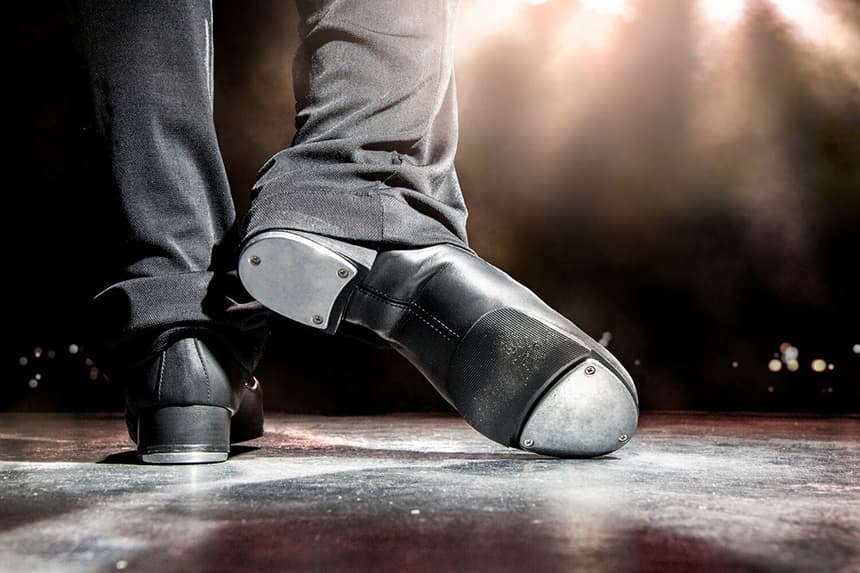
Tap dancing on stage, seeing the metal plates on the dancers shoes as he begins to tap
Photo by Josh Blake on Istockphoto.

The history of tap dancing is a history of American culture. It tells us about America’s past, present, and future. While few people know about tap dancing today, tap dance has come to symbolize the cultural diversity that makes this country great. So who first started tap dancing, we suggest you learn from this article.

Note! The tap dancer and musician are one person – his shoes are lined with special plates (usually metal), and therefore the best tap shoes make a resonant clatter at the slightest touch on the floor.

Where Did Tap Dance Originate?

Tap dance has been around since the early 19th century. It originated in New Orleans and was a popular form of entertainment for Americans. Tap dancing was first recorded in 1828 as “the act or art of dancing on tiptoe.” The word “tap” comes from the sound made by slapping shoes against the ground, which dancers would do to keep time with music played at social gatherings where people danced for amusement. But it took a full 100 years before the genre became popular on a national scale.

Origin Theories and First Information

In general, there are different theories of the origin and origin of the steppe. But all of them in one way or another come to a common denominator in that the earliest examples of tap dance did not originate on the stage, but rather were social dances among slave communities. Though the origins of tap can be traced to the ritual dances of the Indians. Their movements during rituals do resemble in some ways the rhythm of tap dance.

Tap dance initially appeared in a more standard shape during the early 1800s, when a new dance was created as a result of combining Irish jigs and African-American rhythms.

In 1830, a famous Irish dancer, who performed under the pseudonym of Papa Rice, showed the public the new dance. He combined the jig with some elements of African rhythms, in particular borrowed certain movements of the legs, shoulders, and arms. Papa Rice was greeted with applause – thus the tap dance that thrilled America was born.

Tap Dancing Active Promotion

Tap dancing became popular after 100 years when in 1920, wooden and leather soles were replaced by modern shoes with padded metal plates on the toe and heel. Tap dance became a commercialized urban art. It also attracted the attention of the media and movie directors who began to hire tap dancers in films. In 1926, a famous singer and dancer gave his first recital in New York. His name was Fred Astaire, and he was the most famous tap dancer ever, who combined his incredible technique with showmanship and elegance. He and his sister, Adele, brought tap dancing to the mainstream in the 1930s and 1940s with movies like “Top Hat” and “Swing Time”.

In 1930, Hollywood included tap dancing in many of its films. This genre reached its peak during the 1940s with such stars as Bill Robinson (Bill “Bojangles” Robinson) and Gene Kelly.

The postwar period in the history of tap dancing

The postwar period is considered a golden time for the development of tap dancing. With the war behind us, you can relax and enjoy the cast of musicals performing tap. The names of Fred Astaire, Gene Kelly, and Jinder Rogers are still on the billboards, and the great tap dancers never stop beating out the clear rhythm, turning dance into art.

In the early ’50s, tap-dancing continued to be popular but its appeal gradually diminished.

Revival

In the ’60s and ’80s, the steppe began to revive again thanks to the revival of the fashion for old musicals. And at the beginning of the 80s tap dance returned to the cinema screens: there were films with the great dancer Gregory Hines. At the same time a lot of different groups and schools dealing with this kind of dance were founded; international festivals and competitions were held. All this led to the U.S. Congress in 1989, declaring May 25 – Day Step, which is now celebrated by enthusiasts around the world.

Today

Though tap dancing is not as popular today as it once was, it has left an indelible mark on American culture. Tap dance represents the diversity that makes America great and continues to inspire new generations of dancers. While the origins of tap dance are shrouded in mystery, we can be sure that this unique form of dance will continue to delight audiences for years to come.


Related articles:

THE BEST SWING DANCE SHOES - image of people swing dancing, men and ladies

West Coast Vs East Cost Swing

Wondering what the difference between the West Coast and East Coast swing styles might be? Then let us tell you all about swing. Swing dance is an energetic and bustling genre that has a rich ...
Spanish dancers performing

10 Classical Spanish Dances

Spanish Dances article by Tanya, a dancer who lives in Spain. The warm, cheerful, and picturesque streets of Spain contain many wonders for anyone who wants to visit them. There is a very rich and ...
Image of Shiva statue, with symbolic circle. History of dance.

History of Dancing

Dancing through time to the rhythm of humanity Have you ever found yourself swaying to the rhythm of your favorite song, or to any song playing on the radio while doing chores around the house ...
Majorette dancing band

Majorette Dance: Moves, Dancing Styles and 200+ year History

Majorette Dance: In this article, we twist and twirl through everything majorette. Things like what makes a great majorette dance, core moves, how to get started as a majorette and how to join or form ...
Tap dancing on stage, seeing the metal plates on the dancers shoes as he begins to tap

History of Tap Dancing (from 1828)

History of tap dancing: Tap dance is a type of dance that is performed by tapping one's shoes on the ground as fast as possible, with rhythm and music. Tap dancers can be found performing ...
Tap shoes - a man on sitting down, so you can see the sole of his tap shoes

Tap Shoes

Choosing the Best Tap Shoes - 2023 Review Tap shoes are one of the most important accessories in any tap dancer’s wardrobe. The tap dance shoes can make all the difference to your performance and ...

Learn How to Pole Dance

Interested to learn how to pole dance?!  Please read this first so as not to make the same mistakes I did…

Let me start by saying that I wasn’t a professional dancer and ‘pole‘ was never on my list of things I wanted to try in life (silly really considering the many benefits of pole dance and how to fit it can make you). I began my search online a few years ago and quickly found a pole dancing studio near me. I called and made an appointment with ‘Lola’, the instructor for a single (one hour) lesson. Lola’s studio was located in a large warehouse in the back of an equally large business complex. After ringing the bell and being buzzed through the door, I walked down a long dark hallway that ended with a training room with a few poles.

Lola is a very experienced dancer, and in the first lesson, I found it difficult. My hands were too slippery, my clothes were uncomfortable, and I didn’t understand why I was doing most of the exercises at all. But after a while, everything began to fall into place. This article covers what you need to know so you’re on the right track straight away.

How to Pole Dance? Image of pole dancer over lake at sunset. image by Damian Barczak on Unsplash
Pole dancing image by Damian Barczak on Unsplash

Hands Can Slip a Lot

“It slips a lot!” – is the most common problem of pole dancing. This problem is especially true for beginners completing pole moves. To have a high grip of the palm with the pole surface, pole dancers use liquid magnesia or other analogs. The question is that your hands remain dry for a long period of time. Another recommendation I have for slippery palms is to wash your hands with cold water and soap before you pole, and let them dry naturally, don’t towel them off. This will help to get rid of hyperhidrosis of the palms for a while. Refusing to use additional grip aids (reasoning that “the skin will get used to it”) leads to futile suffering and a greater risk of injury.

Clothes are Important

Now you need all the pole clothes from tops to shorts. It’s not about just being sexy but about practicality. The main thing in pole dancing – the clothes must not make it difficult to move and slip. This is especially important not only for beginners who are still developing their pole muscles. I recommend wearing tight-fitting tops with open arms and armpits. You should also wear shorts. Open skin on the legs, arms, and waist is necessary for a good grip of the body on the pole, as a large number of tricks and movements require it. While the fabric slides on the metal, making it impossible to hold most positions.

It is not recommended to wear leggings, T-shirts and long tops. Also, before the class remove jewellery: rings, long/hanging earrings, pendants; rings scratch and damage pole, and other jewellery can get caught on something and hurt you. Here you can find more information what clothes to wear to the pole dance classes. We also did an article on pole dancing shoes and heels and dance kneepads for down the line a bit.

Pole dance wear.

It Can Be Painful

Pole dance is an amazingly fun exercise, but it can sometimes be very painful. It was scary for me to try the pole at first because I didn’t know what to expect. So you should know about this. But don’t be afraid.

First, the beginning elements are painless. Secondly, you quickly get used to some pain. The pain is felt when the skin rubs too tightly against the pole. But this goes away with practice. Often beginners are frightened by the presence of small bruises on their legs and arms. But don’t think it will always be that way.

Different Styles of Pole Dancing

Pole dancing has a rich history and each pole dance style has its own distinctive features so you can choose the direction you like best. So, let’s learn more about these styles.

Pole Art

Pole Art is a combination of dance and strength elements. Competitions usually require a ratio of 50% to 50%. Thus, it is the most harmonious combination of grace and finesse dance on a pole with power and spectacular tricks. Nevertheless, the emphasis is on artistry.

Judges focus on choreography, grace, and the performer’s image when competing in the pole art category. At the same time, such exciting pole movements can be quite easy to perform, the technical complexity of tricks is not put in the first position in importance, but is evaluated on a par with the overall presentation and integrity of the image. The chosen musical accompaniment and dancer’s look will also be important for the judges. The dancer plays a role, his movements tell a whole story in a few minutes of dance.

PoleSport

Pole Sport is a candidate for inclusion in the Summer Olympics. It is characterized by a greater number of power elements, the latest developments in the performance of tricks, and their combination into complex “combos”. The increased concentration on spectacular elements makes it easier to award points in competitions. This is an ideal option for those who want to combine dance and strength.

Mandatory elements and points to them are prescribed for each competition. Different categories also usually prescribe different types of restrictions on the level of difficulty: the number of touches on the floor by the dancer, the number of elements performed, and so on. Dancers ‘image’ is not a priority in pole sports. Often the appearance can be quite neutral.

Exotic Pole Dance

Exotic pole dance is a combination of ‘strip’ and pole dance. This is the sexiest style of pole dance and involves mainly performing dance routines around the pole. Exotic pole dancers generally wear high heels or shoes for pole and incorporate more floor work and sensual techniques into their routines. Exotic styles may also vary, for example, exotic hard vs. exotic flow.

  • Exotic Flow is a dance of flow. Elements of plastic in the dance flow smoothly from one to another. This category does not require the performer to perform complex tricks on the pole. Of particular importance is floorwork.
  • Exotic Hard is the most tricky category of exotic pole dance. The main emphasis is placed on the ability to perform acrobatic elements on the pole in high heels. Tricks must be dancing, but not a set of disparate elements on the pole.
  • Exotic Old Style is the sexiest category in exotic pole dance. The emphasis is on sensuality and femininity, sexuality and passion. Dance performed in this category must be musical, with accents and broaches. Tricks, as a rule, are chosen as smoothly as possible, with the possibility of transitions from one to another.

So you should initially decide what exactly you would like to do. If you want to focus on dance rather than on tricks, pay attention to pole art; if you are more interested in learning how to do various acrobatic elements on a pole, then focus on ‘pole sport’.

Pole Dance Can Be Different

Now you’ll see what I mean.

Sexy or not at all, gentle, dramatic, funny, fast or slow, smooth or brisk, expressive and sensual. So it’s not just about sexuality. You can manifest in this dance all the variety of movement and really express how you feel it. Yes, pole dance is often sexy, but it is only one of its styles.

You Don’t Have to Have a Dance or Sports Background to Start!

Many pole dancers, started with no dance experience at all, some have danced for a long time and continued to find their own unique style. Even if you don’t have a dance background, the beauty of pole dancing is that it is mostly self-taught – you can watch videos or online pole dancing classes and dance with portable pole for your home. You can also take lessons from a pole dance studio or instructor like I did, to get started.

You don’t need to be able to do the splits to do most of the elements. Arm and grip strength are gained over time. As for the plasticity and grace of movement, it will come with practice. So hurry up and start, instead of looking for reasons why you won’t be able to do it! I’m telling you this from my own experience, as I started from scratch 7 years ago, and today I’m coaching others!

Be Confident

Yes, you are not the first woman who wants to try yourself as a pole dancer. You are not alone. But if you want to be confident and succeed in this difficult task, then remember: You can do this!

Many people are really often embarrassed to come to their first class. In addition, not everyone feels comfortable training in a short top and shorts in front of strangers. However, believe me, the community of pole dancers will support you, because each of them went through the same thing as you! It takes just a couple of lessons, and you’ll feel that you were worried and unsure for nothing. Everyone in the dance hall is equal and beautiful!

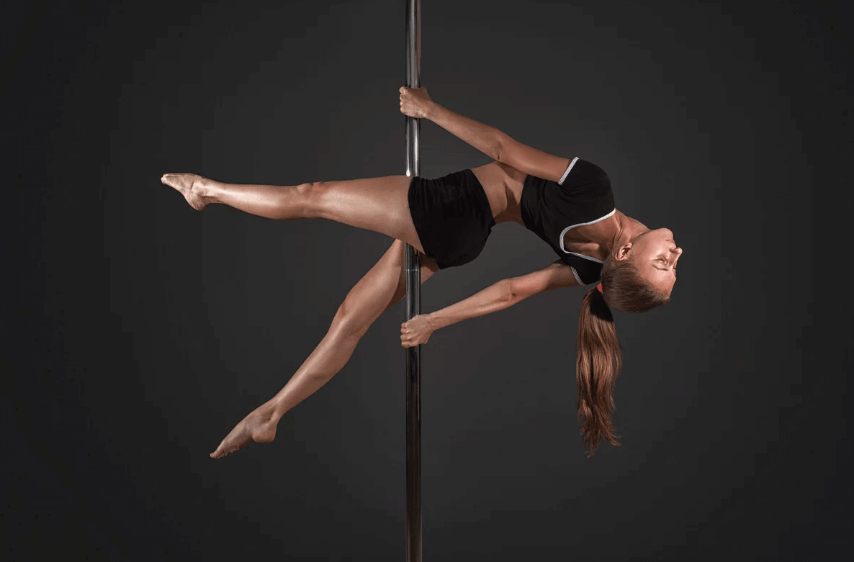
Horizon variation on the pole. Learn how to pole dance.

It Can Be Difficult at First

Actually, the first milestone can be difficult to overcome (not for everyone, but you have to be ready for it, so as not to despair). As a pole dance coach, I have seen many times that when coming to the first pole dance class, people are disappointed in themselves, come to the conclusion that this direction is not for them, and do not return to the pole. However, I would recommend you in this situation, overcome yourself and try again and again. When the body gets used to this kind of stress, it will become easier and you will begin to make the first progress. Also, you will begin to feel stronger, more flexible, and generally more confident. Pole dance is a very dynamic and exciting sport that you will love. You won’t notice how time flies when you’re working out with your favorite pole. Especially when you also have a dance pole for home use.

Then practice regularly and carefully follow the techniques of professional instructors and videos on the Internet. Be patient and persistent. All new skills require much practice to be learned.

It’s Never Too Late to Learn How to Pole Dance

Pole dance differs from other dance styles in that it is often started at an adult age. Children dance quite often on a pole. But a huge, even overwhelming number of adult groups cannot fail to please. After all, people who have always dreamed of learning to dance, but could not or did not have time, come to dance on the pole. And also more and more often women over 40, 50 years old come. They also want to dance, to tighten their bodies, to do what they love and what brings them pleasure! In that sense, pole dancing is very accessible to everyone, regardless of age.

It Will Help To Be In Shape

The body will be tightened, muscle definition will appear, including the abs. Pole dance can help you to lose weight and have a harmonious, beautiful, and slim figure.

It’s all up for grabs

To become a pole dancer, you may need to put in some time and effort. Pole dancing is an athletic and artistic form of dance that requires strength, flexibility, and confidence. If you want to learn how to pole dance for fun or as a competitive sport, we hope this article has answered your questions about the basics of starting out with pole art or sports!

I wish to help new pole dance lovers with these tips. Now you know how to start pole dancing, what to expect from the first classes and the fun you will have as you progress.


Related articles on pole dancing:

Intermediate Pole Dance Moves

Intermediate Pole Dance Moves

Intermediate pole dance moves is the natural step in our series from our popular article on beginners pole dance moves. We hope that being around halfway on you’re journey learning to pole dance you feel ...
Image of young female dancer pole dancing for weight loss

Pole Dancing for Weight Loss

Pole dancing for weight loss is quickly becoming popular. Even when people are starting with beginner pole moves and work up to the more challenging routines. Many people are interested in pole dancing for weight ...
Benefits of Pole Dance. Pole dancer showing impressive grip and stretch of the legs

Benefits of Pole Dancing

When some people think of pole dancing, they may think of a sleazy strip club. However, pole dancing is becoming increasingly popular as a sport in it's own right, a great form of exercise and ...
How to Pole Dance? Image of pole dancer over lake at sunset. image by Damian Barczak on Unsplash

Learn How to Pole Dance

Interested to learn how to pole dance?!  Please read this first so as not to make the same mistakes I did... Let me start by saying that I wasn't a professional dancer and 'pole' was ...
Group of pole dancers of all ages

Pole Dancing for Kids???? There’s a lot of benefits, handled correctly

Can kids do pole dance? Absolutely! There are many reasons why a child might want to do pole as there's so many benefits to pole dancing. Pole dancing is all about strength, flexibility, and technique ...
beautiful pole dancer near the pylon. She may be demonstrating for an online pole course

Online Pole Dance Classes

How to choose online pole dance classes Regardless of your reasons for preferring online pole dance lessons, you can do so with one of the online pole dancing schools we offer on this list. It's ...

Tap Shoes

Choosing the Best Tap Shoes – 2023 Review

Tap shoes are one of the most important accessories in any tap dancer’s wardrobe. The tap dance shoes can make all the difference to your performance and comfort on stage. Unfortunately, it’s not always easy to know which pair is best for you! If you want a quality shoe that will last (and look fabulous), then read our guide below before making your purchase. We’ll be happy to give our opinion on these products based off what we’ve learned about it so far.

The Results:

Spoiler: Miller & Ben Tap Shoes are the best combination of comfort, style and sound quality. Yes, they are more expensive than the mid-market price, but truly believe you deserve to feel comfortable in your feet and get the most out of every tap.


Miller & Ben Tap Shoes – 5 Reasons Why You Should Buy This Tap Shoes

Miller & Ben Tap Shoes – 5 Reasons Why You Should Buy This Tap Shoes.

The Miller & Ben Tap Shoes Triple Threat is the best tap shoes for advanced tappers and excellent for any avid tap dancer. These professional leather tap shoes have been designed by Avi Miller and Ofer Ben – world known Tap teachers and performers.

They use a full compressed wood heel for protection and a triple layer of leather at the front to provide a very durable sole. It has a triple layer front left only on the sole, giving it durability for competitive dancers who are often standing-dancing on their toes. The shoe is made from quality leather that lasts up to six months of constant use or five times a week. The shoe comes with taps installed in them, which reduce the cost of ownership.

The tap shoe has a 35 European size, which is equivalent to a US shoe size 5 – 12. The upper part of the shoes are made out of leather, while the sole has three layers in front only with compressed wood on top where your heel rests. The heels measure 1 ½ inches or 38 mm in height, which is perfect for any level of dancer.

Whether you are training or making an entrance on stage, these tap shoe covers keep you looking sleek and stylish without sacrificing the quality of their audio. These shoes bring together the form and function so that they never need to be considered separately again. Miller & Ben Tap Shoes Triple Threat designed for those with a passion for this particular sound. This is an excellent choice for anyone looking for high-quality leather tap shoes that are all-leather with no stitching in the front, for both men and women. But the shoe is not intended for beginners but rather for an experienced dancer.

Pros:
  • Made from quality leather (upper – leather; sole – leather, triple layer front only)
  • Unisex professional tap shoes
  • Designed by world known tap teachers and performers
  • The shoe comes with taps installed in them
  • Heel – Compressed Wood & Leather
  • The tap sounds loud and clear
  • Lasts up to six months of constant use or five times a week
Cons:
  • Expensive

Bloch Womens Jason Samuels Smith Tap Shoe Review

Bloch Womens Jason Samuels Smith Tap Shoe Review.

Bloch Dance Womens Jason Samuels Smith Professional Leather Tap Shoe is a top of the line product from Bloch that ensures durability, comfort and longevity. These shoes are carefully engineered to allow you to perform at a professional level with a small amount of effort!

With leather soles and painstakingly hand-stitched straps, these shoes will have you tap-dancing for years without worrying about replacements or breaks in time. Canvas lining ensuring long lasting use! The inside feels soft and luxurious on your foot with a specially engineered metal bonding procedure that ensures the screws which hold the taps will not loosen without modification by the dancer. They are designed to make full contact with a flat surface with the tap plate.

The sounds on these are beautiful and very clear and loud. These ones are heavier then normal shoes so it took a class or two of adjustment, but the taps are more crisp and louder. They seem to be more stable for toe stands. There are two colors: white and black.

Bloch Jason Samuels Smith Tap Shoes are one of the best investments you can make in your dance career.

Pros:
  • Sizes are available to fit most types of feet
  • Promotes long lasting use
  • Very supportive
  • Two colors
  • Durable and comfortable
  • The sounds are clear and loud
Cons:
  • Someone finds them a little uncomfortable to tap dance in at first

Capezio Women’s Flex Master Tap Shoe – Best Tap Shoes for Wide Feet

Capezio Women's Flex Master Tap Shoe.

The Capezio Women’s Flex Master Tap Shoe is a very popular shoe. It has excellent features that will help you do your best at tap dancing. The Capezio Tap Shoe is a professional, high-quality tap shoes. Made from top-quality materials including leather uppers and poron insole, this shoe provides the support you need to take your dancing career to the next level.

The top benefits of this product are its high-quality leather upper, split sole shoes design for flexibility, foot articulation and ease of toe stands, moisture absorbent microfiber lining, Poron® memory pad insole provides shock absorption and will never flatten out, folded edges padded collar and Achilles notch for comfort strong toe box. Toe box is ideal for those who want to operate at higher difficulty levels. This shoe also comes with Tele Tone® heel taps mounted on a fiberboard on top of a 3/4″ plastic heel and Tele Tone® toe taps mounted on a leather forepart with a fiberboard to produce a deeper resonating sound.

Capezio Women’s Flex Master Tap Shoes are a great choice for beginner tap dancers who want shoes that will provide them with all the flexibility, foot articulation, and ease of toe stands they need to master this difficult tap dance form. These shoes are made of high quality leather material with moisture absorbent microfiber lining which is also designed to help shock absorption.

The Capezio Tap Shoe is a good entry level shoe if you’re looking for something flexible.

Pros:
  • High quality leather upper
  • The sole is built for easier toe stands, flexibility, and foot articulation
  • Microfiber lining that absorbs moisture
  • The shock-absorbing insole will never flatten out
  • Folding edges, a cushioned collar, and an Achilles notch for added comfort
  • Two colors: black and caramel
  • Strong toe box
Cons:
  • Narrow width
  • The heel is rather long

Bloch Women’s Chloé and Maud – Dance Shoe

Bloch Women's Chloé and Maud Dance Shoe.

The Chloé and Maud Lace up Tap Shoe is a super flexible, comfortable and stylish tap dance shoe to keep you dancing and tapping away smoothly. This shoe is for tap dancers at all levels, who are looking for a comfortable and supportive shoe that has the best audio engineering on the market. They give a rich tone in the toe and deep tone in the heel for contrast

The outsole of this show features high metal content with an intense chrome look, giving you an unparalleled sound when the heel hits the floor. The cushioned insole adds cushioning so that you can start off on your feet right away – no more sore feet or blisters! It also has removable Chloé & Maud enamel ♥ lace holders positioned front and center to make your style shine every time!

Soft leather upper enables better durability which makes it last through any tough or long practicing session. The plush textured fabric lining offers incomparable comfort. Cushioned insole gives shock absorption to protect joints from impact.

The incredible style of these shoes cannot be ignored. The exquisite oxfords combined with the heart-shaped charm will be the perfect accent to your look on stage. This women’s dance shoes offer an unrivalled comfort that will have you syncopating without missing a beat! Bloch Women’s Chloé and Maud Dance Shoe combines style with performance features that will have you looking great as well as feeling great!

Pros:
  • Extremely comfortable
  • Featuring the Bloch Mega tap with a huge metal content and superb audio engineering
  • A rich tone in the toe and deep tone in the heel
  • Comes with a removable Chloe and Maud heart shaped charm
  • Soft leather upper, cushioned insole and plush textile lining
  • Stylish
Cons:
  • The taps a little heavy at times
  • It’s hard to size

Bloch Women’s Tap-Flex Slip On Tap Shoe

Bloch Women's Tap-Flex Slip On Tap Shoe.

Bloch Dance Womens Slip-on Flexible Tap Shoes are split sole tap shoe with leather upper and an elasticized instep piece. They are designed for optimal performance, comfort and durability. The tap shoes feature a leather upper with elasticized instep piece that slips onto your foot. Also, leather upper offers durability, breathability, and perfect fit. This shoe features non-slip pro balance rubber pad, strong heel counter, full Kashmir lining for comfort and reduced moisture to keep feet fresh.

These tap shoes come notched at the collar of the heel to alleviate pressure on Achilles tendon. Strong heel counter helps provide stability when lifting the heels during tap routines or turning around quickly. Bloch Slip-on Tap Shoes are your go-to tap shoes.

Bloch Dance Womens Slip-on Flexible Tap Shoes are for people who want a long lasting pair of tap shoes that will give them the most comfort and support. Whether they teach tap dance, perform in a dance company, or just love dancing recreationally – these shoes are perfect for any level of dancer.

You’ll stay with the slip-on style if don’t wanna fiddle around with laces. These are super comfortable, fit like a glove and sound excellent. They are very flexible and shaped so nicely to foot. The shoes have a nice quality sound, and at a great price for Blochs.

Pros:
  • Allows for freedom of movement with support
  • Nice sound
  • Leather upper with elasticized instep piece
  • Great price for Blochs
  • Greater cushioning is provided
Cons:
  • Stretching from wearing

Theatricals Adult Lace Up Tap Shoes T9500

Theatricals Adult Lace Up Tap Shoes T9500.

This best selling low heel, PU upper tap shoe has a canvas bind for support and long lasting wear.

Theatricals tap shoes are a great way to make your feet light up with each step. The materials this shoe is made from consist of pu leather, rubber sole, and screws in taps which have a sound board. The different aspects of the shoe include heel counter, non-skid rubber patch for safety, and cushioned sock lining for comfort. Comfortable sock lining provides extra padding to make sure even those longer classes go by faster without any pain due to rubbing against the wrong material.

This style runs 1in by heel height with women ordering same or half size larger than street shoe sizes while men order 2 sizes larger then their regular size. These are very reasonably priced especially when you consider that they offer beginners an opportunity to start learning without breaking the bank – which is not something many other manufacturers can say about themselves! At this price point you can not find another heels this high quality. This shoe is a great option for beginners and seasoned professionals alike.

Pros:
  • Best price
  • Full-sole lace-up tap shoe with an Oxford style
  • Taps have a sound board
  • Unisex
  • Cushioned socks lining
Cons:
  • These are not natural leather, accordingly, the material may not be breathing enough

Buying Guide

Buying Guide for tap shoes.
Photo by Fabian Schneider on Unsplash

Materials

There are many differences between leathers. First of all, tap shoes should be made of leather and hold well on the foot. There are also leather substitutes, but the life of your shoes depends directly on the material. You should also know that high-quality leather shoes cost more than those that are made of pu.

Triple Stacked Heel

1 to 2 inches is the standard value for the heel. To produce a good bass sound, the heel must be massive and the heel block must be large, at least for men. In general, heels are a very important point when choosing shoes. They consist of two plates: the lower one is thin and flat, and the upper one is thicker and a little concave. A small space is left between the plates, which gives a castanet effect and, accordingly, a better sound. Professional blocking plates are made of metal. The experts advise: if you choose cheap shoes, make sure to get high-quality heels.

The tap is where the sound is produced by the special pads. The nature of the sound depends on the quality, material and mounting pads. High requirements are imposed on the alloy from which the shoes are made.

The sole

The sole must be thick, thick, and made of quality compressed leather. This affects how the sole will hold up in the future, after a few months of use.

Make sure they fit properly

Sizing accuracy is one of the most important criteria. The shoes should fit perfectly on the foot. They should not be too large or too small – if they are, it may lead to blisters. To find the right size when buying your tap shoes, carefully read the size chart from the MANUFACTURER. Since these are not regular street shoes, they may not be the same size as these. Moreover, each manufacturer’s sizing chart may also be different. Measure the length of your foot to find the appropriate size, and pay attention to the width.

Note, natural leather stretches a bit over time.

How much do I need to spend?

Tap shoes come in many different price ranges; prices usually depend on their materials and design as well as whether they are brand new or pre-owned. For example, a new pair of Capezio tap shoes could cost over $100 while an older model of the same shoe will cost around $60.

Now, major manufacturers like Capezio make “economy” tap shoes in polyurethane, which is faux leather. They are the most affordable. Natural leather models are naturally more expensive.

Which Brand is The Best?

Miller & Ben Tap Shoes, Capezio, Bloch, Grishko and Sansha all make quality tap shoes. Some people prefer one brand over another and some dancers swear by a certain brand because they feel the exact brand provides extra support or allows them to achieve more advanced steps. There’s a lot of talk about the best tap dance shoes. That all depends on what you like and who your teacher is.

Final Words

Whether you’re serious about tapping or just beginner tap dancer, it’s important to get the right pair of shoes. Tap shoes are a versatile, affordable option for both beginners and seasoned professionals alike. The price ranges depend on the materials used in their construction as well as whether they are new or pre-owned.

However, it’s important to keep in mind that lower priced models may not be constructed of high quality material while higher end models may come at an expensive cost. If you’re looking for a less pricey option, consider faux leather or polyurethane tap shoes by major manufacturers like Capezio who offer “economy” options with comparable durability and sound quality to natural leather tap shoes. Tap Shoes can make your dancing more comfortable if you get the right fit!


FAQ

What are tap shoes?

What are tap shoes?

Tap shoes are a pair of musical shoes that can be used to produce a tapping sound in time with a percussion instrument. Tap shoes have a metal plate at the toe, and one or more percussions or cleats on the sole.

“Tap dance” is a form of dance characterized by quick, rhythmically accentuated steps with taps rather than steps from the ball of the dancer’s foot.

What is Contemporary Dance?

If you’re wondering just what is contemporary dance, it’s a form of dance that combines different styles to express emotions and convey ideas through fluid, expressive movements. It is a popular and widely-practiced form of modern dance, with the term “contemporary” referring to movements that are now or currently in style, as opposed to those that were fashionable years ago. One of the unique aspects of contemporary dance is its ability to tell a story without using words, using body movements to communicate themes of time and space.

Contemporary dance does not have a single, identifiable style. It is an eclectic mix of dance techniques from western (classical dance, jazz-modern) and eastern (qigong, Tai Chi Quan, yoga) art of movement. Contemporary dance is distinctive because it reflects current trends and knowledge about the possibilities of the human body and its interaction with dance. The dancer explores and finds new possibilities for movement. This articles provides a high level overview to introduce contemporary dancing.

What is the Contemporary Dance? A female dancer in a warehouse setting balanced on one foot
Photo by Jansel Ferma: on Pexels

What are the main features of contemporary dance?

There are many different styles for this type of dance, but they all have some common features. They are typically focused on the body and the dancer’s relationship with it. The body expresses feelings and emotions in ways that words cannot, so the dancer is free to do whatever they want without being restricted by their connection with an outside source. This type of dance can be fluid or rigid, depending on what the choreographer wanted to convey with their movements.

Contemporary dance is characterized by the widest palette of dance patterns and movements.

The movement of this type of dance is highly improvisational, though choreographers do put in some time preparing the overall structure. The movements are continuous and fluid; they roll one into another to make it seem like there was no break between them. Contemporary dancers tend to be more liberal with their use of props and costumes. Often, the style of music is unobtrusive and its tone fits in seamlessly with the dance itself.

One of the best things about this type of dance is that it can be expressed through so many different means. This makes it a constantly growing and changing style, while still maintaining its fluidity throughout every change.

Contemporary dance includes:

  • Upright (dance in a standing position)
  • Parterre (movements on the floor)

During classes, the focus is on breathing, working with space, body weight, voice, and emotion.

History of contemporary dance style

The term “contemporary” when applied to dance is generally used to describe the modernistic approach towards dance which was born in Western countries.

The history of this type of dancing dates a long way back to ancient times when it was called “naïve art” or “art brut”. This then evolved to the theatrical style known as ballet, popular in Western countries. In Russia, however, there was a different approach to a dance called modern dance that gave rise to such styles as abstract and avant-garde.

It is a style of dance that has been around for quite some time. Contemporary dance was born in the United States during the 1920s and 1930s. The roots of contemporary dance can be seen in the interpretation of ballet. The early innovators included dancers like Isadora Duncan, Ted Shawn, Ruth St. Denis, and Martha Graham; who worked to create modern interpretations of classical forms in which they combined with their own ideas.

This led to the creation of new concepts that allowed for freedom of movement of the body and personal expression through dance. Duncan used to dance to express feelings and emotions which was quite new for this period of time. These new styles became very popular and people began to flock to see them. Dancers like Isadora Duncan and Martha Graham were the first to use this term which later went on to become a separate form of dancing.

Today, contemporary dance is one of the most popular styles that exist and dancers around the world continue to innovate it into something better with each passing day. It continues to inform newer dance styles such as k-pop.

What is Modern vs Contemporary Dance?

Modern dance and contemporary dance styles of dance are generally regarded as the same thing, but they actually have quite a few differences.

In this case, the context becomes important. The first to use the term “modern dance” was in the early twentieth century, when the pioneers of modern dance Isadora Duncan, Martha Graham, Rudolph Laban, and many others decided that dance needed to return to its original significance. So in response to strict classical ballet, they gave up pointe shoes and danced barefoot; they began to talk with dance about complex issues; they went into the parterre, giving great importance to working with gravity, contrary to ballet, which denied gravity.

When, in addition to the basic principles of modern dance, the dance began to adopt the techniques of oriental martial arts, yoga, dance-movement therapy, dance became even more advanced. So in the ’60s, the term “contemporary” began to be used.

Today, the term “modern” is most often used to refer to a period of time, it often means the current, today’s practice. That is, it refers to the current stage of development of a particular dance style, such as modern ballet, modern jazz, etc. When the term is used without naming a particular genre (as in the previous examples), the term usually refers to the set of aesthetic values preached by the founders of that genre.

Opinions of contemporary dancers and choreographers also differ on this issue and they do not express clear criteria for the difference between contemporary vs modern dance. So instead of thinking about whether modern or contemporary dance styles exist or not, focus on practicing it and having fun!

Final Words

Different from ballet, where the main idea is weightlessness, in contemporary dance you know how much your body or arm weighs, and you use that to build free, easy, beautiful movement and dance. The focus of the contemporary dance is on the expression of emotions and ideas through movement, rather than trying to be perfect. The fluidity in this type of dance makes it a constantly growing and changing style without losing its fundamental free-flowing nature.

Today, it’s hard to define what exactly “contemporary dance” is because of its diversity and uniqueness. It is more important to enjoy the creative process while dancing and creating your own style rather than following strict rules set by people before you.


Other articles related to modern dance:

Acro Dance: What is it? Unravelling the Art of Acrobatics in Dance

Acro Dance: What is it? Unravelling the Art of Acrobatics in Dance

Acro dance: When athletics and art come together to make something new and beautiful. Physically demanding, emotionally captivating, welcome to the world of "Acro". As the fairly literal name would suggest, Acro Dance is a ...
What is the Contemporary Dance? A female dancer in a warehouse setting balanced on one foot

What is Contemporary Dance?

If you're wondering just what is contemporary dance, it's a form of dance that combines different styles to express emotions and convey ideas through fluid, expressive movements. It is a popular and widely-practiced form of ...
Isadora Duncan and her Dance Heritage.

Isadora Duncan

Isadora Duncan a woman whose name in the early 20th century was synonymous with dance and one of the greatest choreographers. “If you could explain something with words, there would be no point in dancing ...


Pole Dancing for Kids???? There’s a lot of benefits, handled correctly

Can kids do pole dance? Absolutely! There are many reasons why a child might want to do pole as there’s so many benefits to pole dancing. Pole dancing is all about strength, flexibility, and technique – children have the endurance of a horse and lots of energy, they’re flexible and they’re often great at doing things that look really cool but involve skill as well as style. There is no age limit on pole dancing, and there’s really nothing that a child couldn’t physically do that an adult can do on a dance pole. There are some children who might want to take classes with adults initially so they have someone serving as a role model. The reasons why kids might want to do pole dances are just as diverse as the adult reasons.

However, we know what many of you are obviously thinking, if you haven’t been involved in the sport before – is Pole Dance appropriate for kids? The short answer is yes, it isn appropriate for kids. However, you have to be careful about how it’s presented to children, and parents have to be really comfortable with what their child is doing – we’re obviously talking about the athletic ‘pole sport’ elements here and not the ‘exotic’ obviously and one does not need to lead to the other – they are very different.

Of course, no one should ever pressure a child to take pole class or pressure them to succeed in pole dancing. If a child declares this is something they are interested in doing, let the child have fun and enjoy what they’re doing at their level, in the right, appropriate class setting – they do exist in many towns and cities.  Let’s find out more about what’s on offer.

Group of pole dancers of all ages
Image by shutterstock

Benefits of Pole Dancing Classes for Kids

Developing a healthy and strong body

Kids are just as capable of learning pole tricks if their bodies are developed enough. There’s really no minimum age requirement to start doing tricks at all. Not everyone is able to stick ‘inversions’, but inversions are not required for anyone to be successful in pole fitness classes at the beginning. Many young pole dancers start out with traditional basic beginners moves and tricks as a ‘bird’ and ‘basic plank’. As they develop more strength, children are able to learn moves that are traditionally seen in adult classes, but at their own pace.

Another great positive side of pole for kids is the focus on fitness that you find in most pole studios. It’s usually not too hard for an instructor to create a class tailored to children’s abilities, but even if there are elements of the class that the kids can’t do, they will still be participating in something that requires them to focus on their breathing, coordination, and other skills that are great for them. The fitness benefits of pole classes for kids should not be underestimated – it’s one of the best things you can do to help your child grow and develop into healthy and strong individuals

Pole classes help you to look good

One of the things that makes pole fitness such a good activity for kids is that, contrary to popular belief, it’s really not about appearance. Even if you’re trying to look good while you pole, part of the reason you’re doing it is so you can improve your strength, coordination, and endurance. You don’t have to care about how you look in the mirror to do pole – just like adults, kids can participate in pole purely for the sake of their health and well-being. The fact that the pole classes help you to look good is an additional bonus!

Child socialization

The social aspect of taking classes with other kids is another great benefit for kids who are interested in pole fitness. There are many studios that have after-school classes just for kids, and it can be a lot of fun to go into the studio with friends. Your child will get the chance to meet other children who are enthusiastic about pole, which is always better than having to take classes alone. They’ll be able to learn from each other, push themselves, and have a great time. Pole is an activity that demands body awareness, balance, coordination, strength, and flexibility. Because of the high degree of physicality involved in learning pole tricks, it is not often recommended for people with certain kinds or levels of health issues. It is, however, highly recommended for children as an excellent way to develop their minds-bodies in relation to themselves, others, the world – everything.

It is an internationally recognized official sport

The biggest argument against pole being appropriate for kids is that it seems exploitative of girls’ bodies. Society has conditioned us through history to think there’s something wrong with a young girl displaying her body. Pole dancing may seem like it carries some of that risk for girls who haven’t experienced pole dancing yet, but it really doesn’t have to. When you take classes at a studio with instructors and other students who are being safe, responsible, and respectful, you can rest assured that your child is not being put at risk. Not many pole dancers, in reality, work as strip dancers. When gymnasts perform in short and open costumes, you don’t have any associations with striptease, do you? The same goes for pole dancers and pole kids too.

Remember that pole dancing classes are a sport like many others. Today, there are several international pole sport federations that bring together pole athletes from around the world. But what is even more important against this argument, pole sport has every chance to one day become a discipline of the Olympic Games. It is noteworthy that in pole sports there are both women’s and men’s categories. And recently a special pole acrobatics department for people with special needs appeared within the International Pole Sports Federation. Pole dancing development is in full swing!

Pole Sports as Exercise

One of the biggest benefits of pole dancing is that it can be enjoyed by people of all different fitness levels. While instructors may provide options for those who are looking to really push themselves, they will also provide modifications so that anyone can participate regardless of their physical abilities or limitations. Pole fitness classes are generally strength-based, which makes them great for burning calories and strengthening the heart. This makes it perfect for children who are looking to lose weight or have a fun, active way to spend their free time. When your child is able to participate in something that they enjoy without being competitive, they are more likely to stick with it and reap the benefits of pole dance.

Improving self-esteem

Providing your child with the opportunity to learn pole dancing can be a fun way to help them build their self-esteem. While the physical benefits are certainly important, it’s also possible for kids to really benefit from feeling more comfortable with their own bodies and learning to love themselves for who they are.

Pole Dance as Performance Art

One of the best things about taking a pole dance class is that there is an opportunity to perform your skills at the stage, small or big wherever. Although your child may not be interested in performing for an audience at their first lesson, they can work on increasing their strength and flexibility over time until they feel comfortable taking the stage.

Even aside from performing, many studios will have special nights where the instructors showcase their favorite moves while dressed up in costume. Children are often welcome to join in these shows as well, and it’s a great way for them to feel included and experience what pole dance is like for others.

Besides being a sport, it is also a very beautiful kind of dance. Many elements are performed gracefully and plastically, which requires certain dancing skills from the performer. Any other sports do not offer such an advantage.

Pole Fitness as a Great Hobby

When it comes down to it, pole dance can really be anything you make of it. While adults may have different reasons for taking a pole fitness class, children are usually looking to have fun. If your child is interested in performing or learning some of the more advanced floor moves, this can be an amazing opportunity for them; they might even make new friends who share their interests! However, it’s important to remember that not all studios will offer junior classes, so if your child is only interested in the beginning moves, you may need to look elsewhere.

Getting Started

As with any activity that has the potential to be dangerous (such as horseback riding or rhythmic gymnastics), it’s important to always supervise kids who are taking a pole dance class for the first time. While they will probably be more protected than adults due to safety regulations, it’s still important to take precautions in order to keep your child safe.

If you want to start your child out on a pole specifically, it’s important to take them to a studio that has instructors who know how to teach kids.

When your child takes their first pole dancing class, it’s important to keep in mind that it might not be what they expect. While they may be excited about being able to climb up on the pole, don’t forget that it’s important to let them know what’s appropriate behavior.

How old do you have to be to pole dance?

It is best to start practicing at age five. This is the most appropriate age, which coaches advise. But if your kid goes later, then there is nothing wrong. Here the concept of age is very extensible, and in the competitions in pole dance people participate, even in the category of 35+.

Aerial Fitness Classes for Kids

Another way to develop a healthy body for your child is aerial fitness activities if you are afraid of any social stereotypical prejudices and want to protect the child from them. This sport is also required to develop flexibility and strength but not linked in association with strip clubs. So aerial classes as a pole fitness can be a wonderful opportunity for children to build their minds-bodies, as well as providing them with an excellent cardiovascular workout. They allow kids to play with gravity in a way that’s safe and fun. If you’re looking for a sport that will help your child develop strength and coordination without putting too much pressure on their growing bones, aerial classes are an excellent choice.

One of the biggest benefits of taking aerial fitness is that it’s fun for all involved. While adults may take pole dance as a form of serious exercise or performance art, kids are generally just interested in having fun. Aerial classes allow them to play with gravity and their own strength in a fun and exciting way that they can feel great about.

Aerial arts is a relatively new art form, and many studios are still learning what works best for children. It’s important to speak with the instructor before enrolling your child in any classes to make sure that their level of fitness will be appropriate, you will both understand the goals for the class and how to accomplish them, and that you can communicate any issues or problems. If your child is already incredibly physically fit, the instructor may be able to provide more challenging options for them so they don’t get bored and lose interest.

Bottom Line

Pole dance is a highly performative, dynamic activity. It requires immense strength and flexibility to maintain balance, complete tricks, and train efficiently. If done correctly, it is a rigorous sport that allows people of all ages to shine.

Pole fitness is an activity that can be adapted for children of all ages and strength levels. Whether they are interested in learning how to perform or just want a fun way to get fit, kids can benefit from taking pole dance classes. As long as they feel comfortable and safe, it’s something that can be beneficial for both boys and girls.

One may expect this type of movement to be reserved for adults, but more pole studios are turning towards children as a new source of students while many parents begin to understand the value of such classes and let their kids go to pole dance studios! There are definitely some precautions parents should take to protect their children, like making sure they’re only taking classes with instructors who are responsible and aware, but there’s no reason to think that pole dance is inherently bad or inappropriate for kids. Pole dancing can be a fantastic activity for kids, empowering them to take their bodies seriously and develop them in healthy ways.

Best shoes for swing dancing

Best Shoes for Swing Dancing

If someone tells you that dance shoes are not the most important thing in dancing, don’t believe them. Especially if you do boogie woogie or lindy hop. If you want to learn to dance fast and right, you need the best swing dance shoes. Neither street shoes nor gym slippers quick do the job – they will lead to the mistakes. Let’s take a look at the right shoes for swing dance, covering some for men and some for the ladies.

Men’s Swing Dance Shoes

Best Value: Minishion Dancing Shoes

Minishion Dancing Shoes - Best Value.

Recommended 98%

These shoes deserve a place on this list with their elegant and incredibly stylish design. The classic men’s Oxford style dance shoes are eye-catching with a combination of natural white and black leather that will make any dancer stand out and brighten up on the dance floor. So why not, especially when it comes to swing dance!

They are very affordable, so don’t expect super-high quality out of them. However, they are totally worth every penny: good build quality, nice fabrics, they don’t pinch or chafe, and the soles don’t wear out as quickly as some swing shoes.

Pros:
  • Natural leather
  • Stylish design
  • Reasonable price
  • No rubbing, even just after purchase
  • Suede sole
Cons:
  • Not the best build quality

Very Fine Shoes Men’s: DanceNwear

DanceNwear Very Fine Shoes Men's

Recommended 97%

Professional men’s dance shoes will be your perfect swinging partner.

They are soft but reliable, hold the heel well, have a low 1-inch square heel and have cushioning properties. So jumping and active movements will not be a threat to your joints. At the same time, the suede soft sole will allow you to easily, but not uncontrollably slide and spin in pirouettes with your partner.

These shoes from dance shoe manufacturer VeryFine are a great example of how classics can be your best choice. They are very high quality and securely sewn, which will ensure their durability and reliability at competitions and performances.

Pros:
  • Cushioning properties of the suede sole
  • Soft but durable
  • Made of genuine leather
  • Long-lasting
  • Great fit and support
Cons:
  • Price is a little higher than average

Best Style: Ferro Aldo Arthur MFA139001D

Ferro Aldo Arthur MFA139001D Mens Wingtip Two Tone Oxford Black and White Spectator Dress Shoes.

Recommended 95%

It’s the perfect style and the best quality for the price. Just look at these stylish, two-tone Oxfords with a chunky sole and small heel. They’ll look even more striking and cool when you perform on stage and that’s what you need when you’re dancing with your partner!

Ferroo Aldo Arthur have a rounded toe and sturdy laces. The faux leather that these shoes are made of is very durable and sturdy. Although they are a bit stiff, they are still good for swing dancing as they have a comfortable sole and a very low flat heel. That being said, after you wear them a bit, they become even more comfortable to wear.

Unpacking the Ferro Aldo Arthur Oxfords you will notice that every stitch and detail is made carefully, securely and with attention. So you can definitely rely on these shoes for performances and workouts.

Pros:
  • The perfect style
  • High-quality synthetic leather
  • Inner lining made of soft fabric
  • High-quality tailoring
  • Reasonable price
  • Made of tough but supple synthetic leather
Cons:
  • Have a strong chemical odor at first
  • Size may not fit properly, read manufacturer’s recommendations before purchase

The Best for Practice: TOMS Men’s Classic Slip On Denim

TOMS Men's Classic Slip On Denim The Best for Practice.

Recommended 95%

These men’s espadrilles are soft and lightweight, making them perfect for your swing or lindy hop lessons. They feel weightless on the foot, but hold the feet securely enough and provide a little cushioning with the rubber outsole. The above features combined with an affordable price make them ideal for hours of swing dance training.

Made of a combination of textile fabric and faux leather. They have a dense rubber sole, which bends well, but cushioning. Comfortable inner part, rubber on the top of the foot, soft and pleasant to the skin. Textile insole is removable. There is a huge variety of colors, so you can choose exactly what will suit your outfit or mood! But the classic black, blue and dark brown are also available.

You will probably not want to perform in these Toms shoes at a festival or competition, because you are more likely to choose something more dressy, like Oxfords. But they are one of the best for classes because they perform all the functions a dancer needs and don’t tire your feet too quickly.

Pros:
  • Lightweight and weightless on your feet
  • Affordable
  • Thin but durable rubber sole
  • Soft and comfortable footwear
  • Wide range of colors
Cons:
  • Short-lived
  • Style is not the best for training only

Swing Dancing Shoes for Women

The range of women’s swing dance shoes is much more diverse in types, designs and colors than men’s shoes. Women can prefer both comfortable flat-soled sneakers and ballroom shoes, but with a small heel. A variety of dance sandals and boots are also available for women. Below we will consider the best positions in terms of comfort, quality and design. By purchasing the below described comfortable dancing shoes, you can be sure that nothing will prevent you from dancing with pleasure and in comfort.

Best Overall: Capezio 550 Junior Footlight

Capezio 550 Junior Footlight – Best Overall.

Recommended 99%

In general, Capezio is one of the most popular brands that produce dance shoes and clothing. Capezio dance shoes are popular among ballroom, ballet, modern and social dancers, but also among swing dancers. Thanks to many years of experience in the industry, the manufacturer knows how to make the shoes comfortable and suitable for a particular dance style.

Professional dancers use sandals or low-heeled shoes for lindy hop and swing. This pair of shoes, in our opinion, is one of the best shoes for swing dancing for women. They are sturdy and reliable enough to withstand hours of active dancing, but at the same time soft and flexible enough to allow your foot to move as much as you need it to. Sure, the heel may seem a little high, but because it’s as stable as possible, this dance shoes are still suitable for swing dancing.

Elegant shape, reliable heel support, closed toe and high stability are the main advantages of this shoes. They are available in several different colors. They are made of synthetic leather, and the inner lining is made of microfiber, pleasant to the touch, to prevent friction and discomfort. When buying them, note that they fit a narrow foot and they are undersized – typically take one size larger than your standard outdoor shoes.

Pros:
  • Stable and comfortable heel
  • High quality, soft but durable sole
  • Top sewing and build quality
  • Cushioned inner lining
  • Available in assorted colors
  • Full foot support

Best Value: Ollio Women’s Shoe

Ollio Women's Shoe Best Value.

Recommended 98%

Inexpensive, stylish flat-soled Oxfords are one of the best solutions for both practicing and performing at swing festivals. Swing is a very active dance and with these shoes, your feet won’t strain or get tired prematurely, because they only weigh about 5 ounces each. The comfortable, soft, flat sole will make your dance even more dazzling!

The style of these Ollio shoes deserves special attention, because they can be chosen to perfectly suit any swing dance outfit. There is a variety of colors available: one-color and two-color. This allows you to customize your look down to the smallest detail. These shoes are made of synthetic leather, but there are a few colored models that have a suede part added. This, by the way, makes them even more vintage in style. They are easy to match your size as they have a standard sizing grid.

We noticed that statistically, girls prefer a small heel. Based on this, and the best price for ladies swing dance shoes, we think this is the best option for daily practice.

Pros:
  • Very affordable price
  • Stylish vintage design
  • Lots of colors to choose from
  • Flat sole without heel
  • Rugged and durable
  • Light weight
Cons:
  • They are quite narrow, so they do not fit wide feet

Leather Swing Shoes: Eastland Women’s Sadie Oxford

Eastland Women's Sadie Oxford Leather Swing Shoes.

Recommended 96%

This model is made of genuine leather and is suitable for your swing style performances. Stylish Oxfords with a flat heel are suitable for wide feet also. High quality tailoring and materials will provide maximum comfort and durability of use. We recommend these highly!

The EVA outsole is ideal for swinging: it is durable, glides sufficiently, and is flexible. The insole remembers and follows the curves of your foot. Every detail is made with care and it can be seen with the naked eye. Immediately after unpacking and trying them on, they will seem visually large and not soft enough. But the first is only first impression and believe, it’s false, and second – you should wear them for a couple of hours to finally wear this pair of wonderful and very high quality Oxfords.

Keep in mind that this pair of shoes is quite sturdy and not as soft as the other models in this review. Some customers report chafing in the toe or heel area, which goes away after a few wears. Otherwise, the Eastland Sadie Oxford are comfortable and have excellent support thanks to the memory foam insole is your ideal solution.

Pros:
  • Made of 100% genuine leather
  • Insole with memory foam
  • Rugged and flexible sole
  • Elegant low heel with flat heel
  • Stylish design
Cons:
  • Price is above average
  • May chafe at first

Best Boots for Swing Dance: Women’s Leather Practice Dancing Boots

Women’s Leather Practice Dancing Boots – Best Boots for Swing Dance.

Recommended 95%

Many women choose for their dance performances boots, which in addition to holding the feet well, also fix the foot in the ankle area. This model is specially designed for dancing, so you can safely dance in the swing.

The shoes have a soft and flexible sole, so you can freely move your foot as required by the dance and your choreography. At the same time, the small and flat heel is very stable and gives more confidence in your steps and other movements.

Pros:
  • Good support not only of the foot but also of the ankle
  • Materials
  • Flexible sole
  • Stable low heel
  • Specially designed for dancing
Cons:
  • Smell for the first few hours
  • Not the most durable option

What should the best shoes for swing dancing should feature?

When choosing dancing shoes, pay attention to these characteristics:

  • The sole should be thin and soft – natural leather, suede or rubber (if slippery). Thanks to it the dancer feels the floor, helping avoid slips on the parquet.
  • The shoes should fit snugly around the foot. Do not squeeze, but fit. Natural leather will stretch a little in use and fit perfectly on the foot.
  • There should be a stable low heel. The optimal height is up to 1.57 inches. For children’s shoes it iss less. A lot of dancing movements are performed on the front part of the foot. The heel helps to keep the balance and not to fall on the heels.
  • Lindy hop dance shoes must have a reinforced heel. In open sandals without a heel a dancer’s foot slips.
  • High quality. Dance shoes are designed for many hours of stress. It should be sturdy, durable, high quality leather or fabric, well glued.
  • Individual peculiarities of the foot. The size may be the same, but the shape, width, and elevation of the foot are different for everyone.

Types of swing shoes

Men’s and women’s swing dance shoes are considered separately.

Swing Shoes for Women

  • Barefoot. The best type is basic latin shoes and kid’s latin type. Heel 4 cm, closed heel, open or closed toe.
  • Leather sandals with laces and low heel. Can be used if feet are swollen and need to adjust the fullness.
  • Closed dancing shoes or “training latin shoes,” similar to men’s ballroom shoes. It is sometimes that woman feel more comfortable in these than in open sandals.
  • Toms and Converse. Bright cloth closed shoes, similar to sneakers. Usually acceptable as a change of shoes, but not for constant training. They give wrong body balance.
  • Boots. Ok, if basic requirements are met: soft sole, tight fit.

Unsuitable women’s swing shoes:

  • Ballet shoes. The sole is stiff, the dancer does not feel the parquet.
  • High-heeled sandals. The swing step is done from the heel, the foot rolls smoothly. It cannot be done in a high heel.
  • Jazz sneakers. The soles are stiff and thick. They look bulky.

Men’s Swing Shoes

  • Men’s standard shoes. Soft, low wide heel. Perfect basic model.
  • Latina shoes with a tango heel. The most flexible sole and semi-supinator. Pointed elongated toe, stable heel. Perfect model for competitions and trainings.
  • Aris Allen, Oxfords. They look like regular shoes. On a leather sole. Especially recommended if you have to dance on a non slippery floor.
  • Sneakers Hi-Top. Lightweight, flexible, lined underneath sneakers for swing dancing.
  • Dance sneakers. Combined models of Oxford and low-profile sneakers.
  • Keds. Acceptable for use with certain suits.
  • Toms. It is acceptable to use with certain clothes and on multi-hour workshops.
  • Lorenzo. High athletic shoes. Ok for training. Have a simple athletic look, but inappropriate for competition.

Unsuitable men’s swing shoes:

  • Jazz sneakers. They have thick soles.
  • Shoes for folk dancing. Stiff sole.
  • Ballet shoes. The sole is too thin.
  • Street sneakers. The soles are stiff and thick.

If you want to learn to drive a motorcycle, you don’t buy a scooter. If you want to learn how to swing dance, do not buy flip-flops! Shoes for swing dancing must be special, to initially hold the correct balance, steps, movements. Quality shoes for swing is soft, tight-fitting foot, durable and long-lasting.

And what kind of shoes do you wear for swing dance?

Best Street Dancers in the World

It is nearly impossible to accurately rank the top street dancers in the world, as each has their own distinct style and talent.

While there are many skilled street dancers today, some have made a particularly significant contribution to the hip-hop scene and have become a part of its history. These iconic figures in hip-hop dance culture are widely recognized and respected within the professional dance community.

Therefore in order to broaden understanding of dance culture in general, we have created this list of the best and most popular freestyle, hip-hop, and break dancers in the world. This is not a ranking, and we have not given anyone a place. We merely offer to get acquainted with the iconic figures as one of the best hiphop dancers. So let’s begin!

street dance
street dancers competing

List of the best hip hop dancers in the world

This list starts with the fathers of hip-hop dance culture and continues with modern and outstanding professional hip-hop dancers. Of course there’s far to much talent out there to name everyone but we think this is a solid start!

Buddha Stretch

Buddha Stretch was one of the first to promote Hip Hop on the world stage. He was the one who took the popularity of hip-hop to a totally new level, in particular with the help of music videos. Also, it is believed that he started the so-called freestyle hip hop, which combined Old School and New School hip-hop dance. Later on, Buddha Stretch assembled a dance team of the best freestyle dancers named Elite Force and even worked with the most popular artists of the world.

While Buddha himself says he never planned to pursue dance and hip-hop professionally, it became so all-encompassing that it completely consumed him.

Mr Wiggles

Steffan “Mr. Wiggles” Clemente is a virtuoso performer of Bboying, Locking, Popping. The first mentor who introduced Stefan to the techniques of the emerging dance culture was his sister Wanda. She taught her little brother elements of the popular at the time Rockin dance. After that, he took up the study of top-rock and break-dance.

Soon Mr. Wiggles gets into the Rock Steady Crew. It was great luck and a good start for a novice dancer. After that he receives an invitation from another core group of funk and hip-hop culture – The Electric Boogaloos and he accepts it gratefully. He becomes a very popular hip-hop dancer in the ’90s and ’00s.

A hip-hop veteran, the New York Bessie Award winner is still in great shape today. He passes on his skills to young people at numerous masterclasses and takes part in the creation of educational films.


Les Twins

Les Twins – Larry & Laurent Bourgeois – are the most popular brothers who have become popular not only among dancers but all over the world. After watching the performance, even a person who is not connected with the choreography surely wants to try his hand at hip-hop. Because the guys’ dance is so beautiful that it involuntarily mesmerizes.

The brothers learned to dance from watching their idols on TV and then on the streets of the city. For the first time, people started to talk about these young Frenchmen in 2008, after their performance at the international dance contest Juste Debout. At the beginning of 2011, they became the winners of the popular talent show and won the hearts of the audience for good.

They have starred in advertising campaigns for companies such as Adidas, and have also worked extensively with popular artists, both as dancers and as choreographers.

To date, Les Twins have toured dozens of countries with master classes and performances. They are still very popular to this day, and in 2019 they even starred in Men in Black International.

Philip «Pacman» McChbeeb

The hip-hop performer and choreographer from the United States is now considered one of the best dancers in the world. He started dancing at 15, and at 16 he founded his own studio in Houston. At the same time, Philip is an engineer-physicist. Popularity came after participating in the dance show “So You Think You Can Dance”. In 2010, together with Dee (Moon) Zang created the team I.aM.Me, which became after winning the show “America’s Best Dance Crew” one of the world’s strongest hip-hop dance groups.

Pacman travels around the world with his workshops, regularly participates in dance shows, and puts on plays for Hollywood movies (for example, he participated in the filming and staging of plays for Step Up Revolution and Step Up All In).

Bboy Storm

Nils Robitsky – Bboy Storm – has been presenting HipHop and Funk styles since 1983 and is one of the leading dancers in this field. Popping, Locking, and Bboying have made him world-famous. This legendary man is honored with the title of the founder of breakdancing in Europe, along with some other famous breakdancers.

He won many breakdancing competitions in the nineties. In addition, he hosted the HipHop Magazine “Freestyle” on the German TV channel Viva. But by 1996 the work on the magazine “Freestyle” ends and something new begins. The name of the conceptually new and successful Berlin-based project is: “STORM and Jazzy Project”. A couple of gorgeous productions in the format of this project opens the door for STORM to the best halls of the world.

Besides all of the above, Niels worked on another creation – a book about the evolution of break and the history of breakdance in Germany.

To this day, he actively teaches, puts on performances, and conducts numerous master classes in breakdancing, popping, and locking.


Ashley Banjo

Ashley Banjo is an English street dancer, choreographer, and actor. He started dancing as a child. He is the leader of the Diversity Dance Company, which he organized with his younger brother in 2007. They gained huge worldwide popularity after winning the third season of Britain’s Got Talent in 2009. After that Ashley participated in many television programs both as a member of the jury and as a guest.

Today Ashley is one of the most popular media dancers in the world, thanks to his participation in many television shows. He has 1 million followers on Instagram, and Diversity continues to successfully perform and win the hearts of fans. Ashley Banjo is an official ambassador of the United Dance Organization.


Best Female Hip Hop Dancers

This is a list of famous hip hop female dancers who have conquered this not always easy and forceful style of dance. Look at how they dance and what they have achieved in the field of professional street dance. Then you will never be able to say that it is “not a woman’s” dancing.

Luam

This American is known primarily for her unconventional choreographic approach, all of her dance productions are the embodiment of the brightest and most interesting hip-hop features.

She began dancing, like many people, while still in high school. She experimented with different dance styles, which influenced her own style so much. Pursuing her dream of dancing, in 2002, she left her main job completely and put all her energy into perfecting her skills. She was able to fully dedicate herself to dance and choreography. Her efforts have not gone unnoticed.

Today she has already worked with major brands and many world-renowned artists. She teaches at the world-famous studio in New York City – Broadway Dance Center as well as gives master classes all over the world. She is one of the permanent teachers of Monsters of Hip-Hop along with such dance stars as Nappytabs, Marty Kudelka, Kevin Maher, etc.


Besides choreographic activities, Luam also hosts a podcast and an Instagram blog where she discusses important social topics and issues in the dance world.

B-girl Logistx

Bgirl Logistx is a young champion with great promise. Her real name is Logan Edra. Logan has been breaking since she was 9 years old (since 2011). In 2016, the family even decided to move to Los Angeles for Logistx to expand her dance prospects. Her first and main team is Underground Flow. In 2018 b-girl Logistx won the Silverback Open B-Girl Solo, after that win the world noticed her completely.

Besides breaking, Logan practices other styles of dance, such as hip-hop, and teaches commercial choreography, applying that knowledge to breaking. Logan believes that this makes her style special.

The young girl with the cute appearance turns the dance floor upside down, makes incredibly complex mouves – it amazes the audience time and time again.


Marie Poppins

Marie is a member of the trio Femme Fatale. She became interested in street dancing in France when she was a child. Even then she decided that her favorite style was Popping. She went to college in Chicago, so later on she developed and trained in America. She took a lot of part in various competitions and later worked with such artists as Madonna, Justin Bieber, Busta Rhymes, Ne-Yo, Celine Dion, and others. She has also appeared in films and worked as a choreographer in popular TV shows.

Top breakdancers in the world of the latest years

What about top break dancers who get their popularity last few years? Let’s take a look at a few of the most prominent ones.

Lilou

Ali Ramdani, known as Lilou, was born in France in 1984. He first became interested in dance as a child when he saw a performance on TV. Together with his friends in 1999, he founded the Pokemon Crew, a breakdancing team that today has no equal in the world.

In 2005 he took part for the first time in Red Bull BC One, where he won. In 2009 he was able to regain the title (the only one in the world to win this competition twice).

He conquers with his swagger, which is combined with a great sense of humor. Rare battles with his participation pass without impertinent banter that makes the whole audience laugh. His dance routine utilizes classical footwork with power technique. He is known for a move that looks like an “airchair”.

Today Lilou not only dances, but also promotes breakdancing, starring in semi-documentary films.

Lil Zoo

Fouad Ambelj aka Lil Zoo was born in Casablanca, Morocco, and lives in Austria. In 2008 he became a dancer by coincidence. Children in the neighborhood were doing breakdancing, and Lil Zou was fascinated by it. Later he began to train with a popular b-boy Yoriyas, with whom he later faced more than once in battles.

In 2018, he succeeded in winning the RedBull BC One World Finals title.

The hallmark of Lil Zu is positivity. His smile comes out on the dance floor before the dancer himself, which can speak of the man’s cordiality and friendliness. He is always energetic and fresh, and his energy energizes everyone around him. He is able to move quickly and dynamically, stopping sharply in the frieze, without falling out of the music, which gives his style more spectacular.

Physicx

B-Boy Physicx was born on August 23, 1984, in South Korea and currently resides in Seoul. He has a huge number of wins and awards, which makes him one of the best B-Boys in the world. He is a member of the Korean team Rivers Crew and also used to be a member of the legendary Korean team Project Soul. BBoy Physicx himself invented and implemented in breakdancing many elements and movements, most of which are technically very complex.

Cico

Cico’s real name is Mauro Peruzzi. Bboy CICO is a member of the Red Bull BC One All Stars. He began training in 1995 and is currently a member of Spinkings. CICO has participated in numerous events, including RED BULL BC ONE 2005, 2007, 2008 and won major battles in Europe.

With his 25 turns on one arm, this b-boy from Italy left his name in the list of world records and in the minds of thousands of break fans for a long time.


So there you have it – our views on some of the great street dancers.

Check out these related articles on street dancing:
House dance, street dancing

House Dance

Urban and street dances have always been able to go beyond traditional barriers and really connect people through movement. House dance does just this, hand in hand with the electronic ...
Popping dance on the street

Popping: Dance with Precision. 3 beginner techniques.

What is the popping dance technique and how do you 'Pop'? Popping is a style of street dance, where dancers quickly tense and release muscles (sometimes known as ‘hitting’ or ...
An image of a clown at a fair. Article about Clowning dance

Clowning Dance: Tommy the Clown & Hip-hop Clowns

What is clowning dance? Clowning dance (also known as clown dancing) is a unique and entertaining form of dance expression in the early 1990’s. It was developed by Thomas Johnson, ...
Street dance styles. Photo of male breakdancer in square outside tall building

Street Dance Styles

Street dance styles. When you hear the term "street dancing," what comes to mind? Do you think of hip-hop? Breakdancing? House dancing? Street dance is a broad term that encompasses ...
street dance

Best Street Dancers in the World

It is nearly impossible to accurately rank the top street dancers in the world, as each has their own distinct style and talent. While there are many skilled street dancers ...
Breakdancer performing in front of the crowd

What is Break Dance?

What is breakdance? You probably have a pretty good idea of breakdancing but maybe you're not close to the details and how to get started? Let us give you an ...

Online Pole Dance Classes

How to choose online pole dance classes

Regardless of your reasons for preferring online pole dance lessons, you can do so with one of the online pole dancing schools we offer on this list. It’s effective, productive, and just as exciting as offline classes! Except you do not need to go anywhere for that, you can practice when you want, and repeat the exercises as much as you need for a perfect performance. Just give it a try!

So, our review is made up of the best pole dancing lessons online. By what criteria did we choose these 4 courses? First, in our opinion, good pole dancing video lessons should be easy to understand. This means that the instructor knows how to convey information to the student. You agree that in order to perform the movement correctly, it is important to know the technique of its execution.

The second criterion is completeness of information. The number of lessons, their length and depth of explanation are important things that affect the dancer’s understanding of the information and the completeness of the information and skills received. So, of course, we cannot call courses the best if they contain insufficient information.

Besides those described above, when choosing online pole dance classes, you must make sure that the coach or coaches are professionals in their field. They have to get some titles and achievements in pole dancing but also be able to explain the information in a clear way.

Secondary, but also important, features include the quality of the video, the cost of the course, the period of access to the video materials, and the ease of using and playback of the video course.

So, let’s take a closer look at the online pole dancing courses 2021 available on the market.

Best Pole Dancing Classes at Home: OpenDance Academy

Having studied the market of online pole lessons there is no doubt that the courses from OpenDance Academy are the best platform for learning pole dancing online.

OpenDance Academy offers pole dancing classes for beginners as well as for professionals. Classes and courses are divided into levels, allowing you to learn at a comfortable pace, while getting exactly the level of knowledge and skills that you need.

Natasha Wang on warming up before a pole class online.

Moreover, the OpenDance Academy website has courses for men that focus on teaching complex pole strength exercises.

The instructors of pole dancing training are athletes and dancers of world renown. Among those are Maddie Sparkle, Sarah Scott, Kira Noire, Marion Crampe, and others.

Here are some of the most popular courses at OpenDance Academy:

Pole Dance Platinum – Best Overall

The course called Pole Dance Platinum is probably a bit expensive, but the most comprehensive and informative course with lifetime access to the materials. The video course is more than 650 minutes long and allows you to really master the skills of a professional pole dancer. It is something worth having. Highly recommended!

Pole Dance Platinum – Best Overall.

Exotic Pole Dance Classes

If you have never had dancing experience before, but want to learn how to move beautifully to music, exotic dancing for beginners is right for you. This 50-hour course will help you to loosen up, learn basic movements and routines. You can take it even if you have no heels.

exotic pole dance classes opendance academy.

Complete Class 2 – Best Professional Pole Dancing Classes

Dreaming of learning new and challenging techniques and tricks? World pole dance champions will show you how to do the entree from Russian Split to Fonji, new Jade Variations, and many other impressive moves. A huge array of the latest information and techniques from the world’s leading Pole Dance coaches, and no need to travel anywhere to the master class, they will all teach you to pole dance at home!

Complete Class 2 – Best Professional Pole Dancing Classes.
GET 10% OFF

Use the code dancebibles to get 10% off to buy more affordable pole dancing classes at Open Dance Academy.

Affordable Pole Dancing Classes: X-Pole TV

At home pole dancing lessons with Nicole Williams.

Some of the best pole dancing coaches have been put together on one X-Pole TV so you can effectively learn pole dancing online, even from the comfort of your own home.

This is the largest library of pole dancing instructional videos of any online school, with over 1,000 video lessons. X-Pole also offers to see if their training program is right for you so they have a 14-day free trial.

Affordable prices are also great: a one-month subscription costs only $15. And you can save a great deal on semi-annual and annual plans! Just pay once and practice for six months or a whole year, depending on the plan you buy. When you pay for either plan, in addition to the video library, you get access to streaming DVDs that vary in difficulty level. The website and video library platform are very user-friendly, making it easy to practice.

All teachers are experienced and leading dancers and athletes. You should visit the site, at least to get acquainted with these talented dancers! And generally, the team X-Pole are real professionals who also produce goods for the pole classes. For example, some of the best poles in our review are exactly the X-Pole production.

Pole Dance Lessons for Beginners: Polefitnessdancing

Pole fit classes with Danna Rossi will help you to get on shape and train at home effectively.

Danna Rossi, the founder of Pole Fitness Dancing, is an excellent and very experienced teacher who has worked her way up from a beginner to an outstanding dancer and most importantly in this case, to a skilled teacher. Her lessons are well received, she explains everything clearly and easily.

These pole dance tutorials are really very detailed, so everyone will be able to cope with the instructor’s challenge, thanks to the step-by-step guide! Videos are played on all possible devices, which is very convenient. There are courses for different levels, but especially popular – for beginners women and men. These are the best courses you can find for the average, physically unprepared person. You don’t need any dance or athletic experience as Danna Rossi has courses available for absolutely everyone! They are also good for you if your goal is to lose weight!

Course programs are divided into levels, for each course you will find a detailed description on the site: what each particular course is and is not, for whom it is suitable and for whom it is NOT.

Check out the website, there’s a free very informative guide on how to get started, how to choose a pole, some safety tips, and other information to help the beginner! For more advanced levels, we would recommend the courses mentioned above.

Beginner Pole Dancing Lessons: Udemy

Udemy is an aggregator of online courses. Since it is a large and global service, the interface here is really user-friendly, and there is a huge range of courses. There are also several options for pole dancers to choose from.

The first thing you’ll find on Udemy is a Pole Dancing Video Course with Noelle Wood. And this will be your great choice! High rating, a lot of real reviews, affordable price for as many as 63 video lessons. Noele has been teaching for eight years and has her own studio. Moreover, she has a 13 years ballet dancer’s background before pole dance teaching. She is also a pilates instructor so you can’t have any doubt about her professionalism.

Pole fitness class with Danna Rossi.

The quality of the videos in this course is not the highest, most likely it was filmed several years ago, nevertheless, it will not stop you from learning new things. Especially recommended for beginners!

There is also a second course on Udemy – Learn to Pole Dance online with Complete Pole – which is newer, so the video quality is much higher than the previous course. Moreover, the professional video from different angles and slow-motion repetitions will provide easier learning and understanding of the material. The course combines lessons from different teachers, as well as different directions, so you learn and sexy movements around the pole and spectacular strength tricks.

Stripper pole lessons.

Now a little more about the benefits of the platform. The platform is really versatile. To study with your smartphone, download the appropriate app. It’s really easy to use.

When you have mastered the chosen course, you will definitely receive a certificate. The program you choose can be evaluated by reviews, the number of students, and your overall grade. Reviews are left by real students, who can share their impressions about the quality of training, the format of presentation, and other features. Detailed course descriptions are also offered. As for the competence of the authors, everything is in order.

It’s nice that you can count on good discounts, thanks to which the price of the program will be reduced by almost 99%. You can start watching the lessons as soon as you make the payment. Access to the course is forever! You can get a refund if the course is unsuitable.

Take care of your safety!

When practicing at home, do not forget that pole dancing can be quite traumatic. By following a few simple rules, you will minimize the risk of injury:

  • A quality warm-up is a prerequisite for any training. Before you start pole training, warm up your muscles, tendons, and joints. Your body should gradually “turn on” and understand that now it is waiting for the physical load. We recommend warming up for at least 20-30 minutes. Stretch everything from your neck and hands to your feet. Do also some abs exercises, squats, push-ups. This will also help to put the necessary muscles to work.
  • Choose the right pole: without joints in awkward places, reliable and stable, with static and dynamic modes. And after you buy it, make sure you install it correctly and securely.
  • Use the crash mat when performing tricks and moves at height.
  • Clear the space around the pole so that you don’t break anything – neither your body part nor the furnishings.

Bottom Line

Online pole dancing classes give absolutely anyone at any age and place of residence the opportunity to start doing what they love. And it does not matter if you want to improve your skills, learn to dance from scratch, or just get a body in shape, doing it online is a very profitable and effective solution. Especially with such a diverse selection of pole dance lessons on the Internet, everyone can find the right level, granularity, quality, and direction of the course.

If you have chosen and completed one of the courses we have described, do not be lazy to write a review to share your opinion with future students.

Happy Online Training!

The 9 Greatest Choreographers of the 20th century

This article see the DanceBible team pick some of the 20th century’s (and all times!) greatest Choreographers, taking a historical slant via some very great and distinct contributions, which together help to describe the formation of modern choreography more broadly.
What did Balanchine do for classical ballet? Why did Martha Graham prove to be the main face of modern dance? How did Merce Cunningham reform the movement? What is Pina Bausch’s dance theatre? Here we will explore these and other questions about the really great modern dancers famous of this era.

It will briefly describe the biographies of nine equal in importance as some of the greatest choreographers of the 20th century but absolutely different in creative approach. Each of them is worthy of much further exploration – but this article serves as an initial introduction to these masters, which you can continue in theatre, books or movies.

Images of dancers on stage - moving to the best choreography, inspired by talented choreographers
Photo by ketan rajput on Unsplash

Martha Graham

1894-1991, USA

– founder of the modern dance style. She created the contraction-release technique.

portrait of Martha Graham in 1948
Yousuf Karsh, Public domain, via Wikimedia Commons

Contraction:

  • It’ s done on an exhalation…
  • A characteristic movement towards the center
  • Rounding of the shapes

Release:

  • On the inhale
  • Moving from the inside out

The contraction-release technique is still considered basic for modern and other styles of dance.


What new things has Martha brought to the choreography and dance:

  • Emotion provokes movement
  • Impulsive nature of movement
  • Use of space by moving on the floor
  • Graphic poses
  • The fabric increases the amplitude of the movement

She was the first to try structuring movements into a kind of system, something that neither Duncan nor Saint-Denis had done before her. As a visionary, she was constantly looking for new ways to dance. Her creative search determined that movement is subject to three basic constants: time, space, and energy. Since, as Martha herself said, she was not interested in dancing and creating productions about non-existent characters and heroes of former eras, she staged and told in her work about contemporary women and people, as well as contemporary issues. Thus, the great Martha Graham was the first to show that non-classical dance can also be intellectual. Without Martha Graham, the entire history of modern dance would have turned out very differently.

In 1926, Martha founded her own troupe – Martha Graham Dance Company – it still exists to this day.

George Balanchine

1904-1983, USA

– founder of neoclassical ballet. He created his own ballet school and professional company in the United States, which is now called New York City Ballet and is the largest company in America.

Kroon, Ron / Anefo, CC BY-SA 3.0 NL by Wikimedia Commons

Balanchine’s choreography is characterized by:

  • Classical poses, BUT hips, knees and feet turned inward while classical ballet’s legs are turned outward
  • Classical movement, but the hips are characterized by forward movement, whereas the classical ballet hips are always tucked
  • Neoclassical passes between poses with hips and knees turned inward

He was born, studied and started working in Russia. But he found his place for art and work when he moved to the United States.

Today, Balanchine’s ballets are performed on all of the world’s greatest stages. The Balanchine Foundation, which was created after the choreographer’s death to preserve the technique and performance skills that Balanchine himself laid down, is very picky about the level and quality of the dancers – they have to be able to dance ballet really well. Although ballet is progressing, Balanchine’s performances are still quite difficult to dance.

One-act storyless ballets are the most original part of his oeuvre. Besides, it”s likely that a modern ballet without Balanchine would not exist at all, the kind without specially written music, without 4-hour productions and complicated hierarchies.

Merce Cunningham

1919-2009, USA

– collaborated with John Cage, Robert Rauschenberg, Andy Warhol, and other avant-garde artists. He is sometimes counted among the creators of postmodern dance.

Photo of Merce Cunningham, one of the greatest choreographers of the 20th century and all time
Photo courtesy Cunningham Dance Foundation archive via Wikimedia Commons

Characteristic:

  • Using classical poses, but toes do not go outwards and with the addition of non-classical hand or foot positions
  • Combination of classical poses and modern techniques, such as contraction-release
  • Changing planes with the body
  • The dancer’s position does not depend on the location of the audience (the dancer can dance with his back to the audience)

He was born, studied and started working in Russia. But he found his place for art and work when he moved to the United States.

Merce Cunningham is one of those who also worked a lot with Martha Graham. However, unlike Martha, he believed that the human body is already beautiful itself, and that each movement is already interesting enough to capture the viewer’s attention. With the help of the Theory of Randomness (where the order of movement is determined not by the choreographer, but by the dice) Cunningham sought to break the movement patterns within which dancers were accustomed to exist.

One more striking feature of Cunningham’s creativity was his conviction that all the arts – music, dance and scenography – are equal and should not “adjust” to one another. Therefore, all of these arts often “met” already on stage in the choreographer’s performances.

Pina Bausch

1940-2009, Germany

– the most famous member of the “dance theatre” movement. She created Tanztheater Wuppertal Pina Bausch.

Characteristic:

  • Spiral motions
  • Impulse into the spiral – following the hand
  • Speed changes
  • Natural foots position
  • Loose body
  • Muscle relaxation
  • Start of movement on breath

Pina Bausch is one of the most popular choreographers among the masses. The most important theme for her was human relationships. She believed the idea that the dancer should move of improvisation and get inspiration from own experience. She could ask the dancer a lot about his parents, childhood, how he feels in different life situations, what he loves and does not love, what hurts him, his aspirations. The drama of human experiences and relationships was the theme of her art.

After Pina’s death, the Pina Bausch Creative Legacy Foundation was founded, which sees its main task as making the Dance Theatre’s legacy available to the public.

Mats Ek

1945, Sweden

– collaborated with the world’s leading dance companies. Mikhail Baryshnikov and Sylvie Guillem have danced in his productions.

  • Hands set the movement direction, the movement follows the hands
  • Using classical jumps, but with a loose body and movable arms and legs;
  • Bent knees and pulled feet
  • Ridiculous movements
  • Working with facial expressions

Many consider him a genius who shook the world of the classics by making us look at it in a different way. Others see his art as blasphemous. Mats Ek is one of the most recognizable choreographers of our time. Mats Ek’s style of choreography is characterized by its parody and tendency toward the theatre of the absurd. He has formed his own choreographic “handwriting”, which has grown out of an original symbiosis of classical, modern, and minimalist gestures.

Mats has combined a lot of knowledge with his sensuality, emotion and talent. He keeps the plastics and choreography simple enough, but very effective.

In 2007 he staged Gluck’s Orpheus at the Royal Swedish Opera.

William Forsythe

1949, USA – Germany

– one of the main living experimenters in the dance industry. He developed a popular computer program for teaching dance called “Technology of Improvisation”.

William Forsythe on a stage, talking to dance students
Photo by Marlon Barrios Solano on Flikrr. Image resized.

Characteristic:

  • Working with geometry (line, point, line from a point, semicircle from a point)
  • Working with lines: “drawing” lines with body parts and with the help of joints
  • Working with memory: coming out of the classical/non-classical pose – recalling the pose – returning to the original position

Forsythe’s works demand from the viewer a more active emotional and intellectual perception. The avant-garde Forsythe pushed the boundaries of the conventional: as opposed to classical ballet the choreographer gives freedom to the movements of the arms and legs. His main approach to dancers was improvisation, which also aimed to free not only the dancer’s body, but also his head.

Ohad Naharin

1952, Israel

– creator of modern dance techniques and improvisation gaga. Since 1990 he has been the director of the Batsheva troupe.

Characteristic:

  • Dance based on improvisation (sensations are set)
  • Moving and other manipulations of different imaginary objects (cubes, balls, etc.) with different parts of the body
  • Shaking
  • The impulse for movement comes from within
  • Muscles are relaxed

Ohad Naharin is one of Israel’s most famous choreographers. Today Ohad Naharin is called a star of contemporary choreography. Naharin is often involved in creating the music for his works. Naharin invites the best stage designers in the country to participate in his productions. He also encourages the dancers with whom he works to open up their own creative resources, giving them the opportunity to improvise. Naharin participates in a number of his works as a performer.

According to the choreographer, the main thing a dancer has to learn is the ability to listen to and understand their own body, and this means much more than obeying the choreographer who tells them how to move. The search for a deep interaction is what gave birth to gaga, both as a choreographic language and as a pedagogical system.

The New York Times and a number of other publications have elevated Naharin to the rank of one of the five best choreographers in the world.

Wim Vandekeybus

1963, Belgium

– one of the representatives of the “Belgian wave” of modern dance. He founded the experimental dance group Ultima Vez.

Ultima Vez / Wim Vandekeybus + Manfred Werner – Tsui, CC BY-SA 3.0, via Wikimedia Commons

“The Tiger’s Leap” (movement behind the hand, and then roll over)

  • Jump tending to parallel with the floor
  • Running in different directions (including back)
  • Emphasized physical strength, brutality
  • Hair increases amplitude

Wim Vandekeibus’s art is characterized by radicality and challenging in the beginning of his career and conservatism in the process of evolution. For example, at the beginning of his career the choreographer urged his dancers to go to every performance as if it were their last. His dancers worked on the verge of human limitations: they dodged bricks thrown at them and descended from dangerous heights without safety equipment. Vandekeibus liked to explore the body’s reflexes in extreme situations, and the audience loved Wim for his recklessness. Now it is in the past. The productions of recent years are characterized by conservatism and even a derision of former radicalism.

The choreographer says that he never thinks only about choreography, it is just a tool for him to tell about something. It has to be said that together with his company Ultima Vez he does this incredibly successfully and accurately.

Crystal Pite

1970, Canada

– a student of William Forsythe; one of the youngest choreographers to gain international fame. In 2002 she founded the Kidd Pivot dance company.

Headshot photo of Crystal Pite
Photo by Kat Baulu, CC by 2.0 via Wikimedia Commons
  • Movement in a spiral with a change of levels and going to the parterre (movement is initiated by the hand)
  • Manipulation (“foreign hand”)
  • Slide

In 1990, she made her debut as a choreographer with the British Columbia Ballet. Since then, Crystal Pite has created more than forty works of choreographic art. Pite’s choreography is known for its quirky humor and fearless

We’re thankful for the greatest choreographers and those who follow them

Hopefully you have been inspired to explore the work of these great choreographers in greater depth and detail.

Without them, there would be no modern choreography as we see it now: experimental, sophisticated, diverse, free, thinking and questioning, exploring movement and the human body.


Related articles:

Arabian dance in the nutcracker

The “Arabian” Dance in The Nutcracker

Christmas is around the corner, and if you are a Ballet enthusiast like me, you probably know that The Nutcracker recital has come to almost every city around the world. If you need to become ...
Ballet feet exercise. Ballerinas feet warming up stretching

Ballet foot exercises

10 Ballet Foot Exercises: Warm-up, Boost Your Technique and Foot Strength Foot exercises are an essential part of a ballet dancer’s training as they provide important strength and technique benefits. Developing strong and flexible feet ...
Ballerinas Feet. 3 ballet dancers stretching

Ballerina Feet: Ballet & Foot Health

If you’ve ever seen ballet or you’re a ballet dancer yourself, you’ll know how graceful dancers’ movements can be. But, of course, becoming a professional ballet dancer takes a LOT of hard work and dedication ...
Images of dancers on stage - moving to the best choreography, inspired by talented choreographers

The 9 Greatest Choreographers of the 20th century

This article see the DanceBible team pick some of the 20th century's (and all times!) greatest Choreographers, taking a historical slant via some very great and distinct contributions, which together help to describe the formation ...

Best ballroom dance shoes

Best ballroom dance shoes (Updated 2023) – Ultimate guide and review

Capezio Women's SD02 Rosa 2.5 Flared-Heel Sandal.
Capezio
Best Opened Ballroom dance Sandals
CLEECLI Women's Ballroom Dance Shoes – Best Price.
CLEECLI
Best Price
Very Fine Dance Shoes Competitive Dancer Series CD5024M 2.5 Heel.
Very Fine
Best Closed Ballroom dance Shoes

Attention all ballroom dancers! Are you tired of suffering from blisters and sore feet after a night of dancing? The solution to your two-left-feet woes may just be a new pair of ballroom dance shoes. So it might be time to invest in a new pair of ballroom dance shoes. These specialized shoes are designed to provide the support and stability you need to effortlessly glide across the dance floor. So say goodbye to sore feet and hello to ballroom dance floor domination with the best ballroom dance shoes on the market.

Our TOP-10 has both Latina and Standard Ladies shoes:

Latin Ballroom Dance Shoes Women (Opened Style)

For Latina dancing, it is best to wear specialized sandals with a closed heel and strap. The strap should be secured under the foot rather than the ankle for comfort and safety. It is also important to choose sandals with a soft and flexible footbed to allow for proper movement.

The heel height depends on the dancer’s height and her anatomy, because some people find it easier to dance on a higher stiletto than on a 2-inch heel.

Capezio Women’s SD02 Rosa 2.5″ Flared-Heel Sandal

Capezio Women's SD02 Rosa 2.5 Flared-Heel Sandal.

It is no exaggeration to call these sandals the best ballroom shoes because of their high durability, sophistication, look and great price.

CAPEZIO professional dance products are respected and known all over the world for their high quality. The Rosa ballroom dance shoes are no exception, because they are durable, but no less graceful looking. Note that the stripes are slightly thicker than some models of other brands, due to how they provide increased foot control, reducing wear and tear.

The flared mid-height heel is stable, but don’t forget the heel protectors, they add another ⅛ inch of height. The crossed strap gives extra support, but also makes the shoes look even more graceful on the foot.

Pros:
  • Sturdy and durable
  • Medium high heel
  • Durable stripes
  • Available in two colors
  • Extremely comfortable dance shoes
Cons:
  • There may not be enough holes to fasten the strap

Supadance Ladies High Heeled Ballroom Dancing Shoes 1063

Supadance Ladies Dance Shoes 1063.

Supadance has a half-century history in professional dancing shoes and it is a benchmark of quality and a trendsetter in fashion ballroom shoes. Supadance is considered the best brand in the industry. All ballroom dance shoes are made in England, with a factory located in London.

This is a really professional pair of sandals, suitable for both training and competition appearances. These Latin shoes are very narrow, so they will fit perfectly on a narrow foot.

Seven perfect thickness and strength straps are connected in the middle by a diamond-shaped bundle and perfectly hold the foot and toes. Stable heel makes it possible to perform dance steps with confidence.

The buckle is a quick-release hook fastener. The buckle strap wraps around your ankle or foot twice for extra stability.

Pros:
  • Great quality
  • Available in different colors and shades
  • Stable
  • Very sophisticated and perfect design
  • Light
  • Flexible sole
Cons:
  • Wouldn’t fit on wide feet
  • A little expensive

S92307 2-Inch Heel Very Fine Ballroom Latin Dance Shoes for Women

Very Fine Ballroom Latin Dance Shoes for Women S92307 2-Inch Heel.

This is a more affordable ballroom dance sandals that’s also more versatile: you can easily adjust the width thanks to the two rhinestone buckles on the front of the shoe.

The lower heel model will suit those who are just starting to dance on heels. Those who want to buy a higher heel can also choose this model, but with a 3-Inch heel height. They have a fairly soft sole, although slightly thicker than the previous Supadance. The heel is stable, and additional comfort is achieved by the double strap wrap. To get a snug fit, it is recommended to order half a size smaller than your street shoes.

The relatively affordable price of the Very Fine brand makes it one of the main suppliers of ballroom shoes in the American market. Considering that ballroom dancing can really become an expensive activity, the price of the shoes matters. Try experiencing Very Fine’s quality at an affordable price and you too!

Pros:
  • Width adjustment
  • Affordable price
  • Different color available
  • Stable
  • Comes with a shoe brush

CLEECLI Women’s Ballroom Dance Shoes – Best Price

CLEECLI Women's Ballroom Dance Shoes Best Price.

If you are a beginner and just want to experience dancing on heels, try these cheap ballroom dancing sandals. Buying them at the most affordable price, you won’t spend much, you’ll be able to practice wearing them and see how comfortable you are, what you’d like to change.

This design is characterized by the presence of mesh fabric, which gives the gracefulness of the foot. The mesh is very soft, it does not chafe, though it can be a little thin and rubbed over time. The sandals fit really well on the foot, and look good while dancing. They are very comfortable, so that long dance classes are easy and your feet almost do not get tired of the heel.

When buying pay attention to the size chart and clearly follow it, then get exactly the size you need.

Pros:
  • Cheap
  • Look good on your feet
  • Stable
  • Available in different colors
  • Soft
Cons:
  • Mesh is not strong enough
  • Not the most durable

Freed of London Women’s Ballroom Dance Shoe

Freed of London Women's Ballroom Dance Shoe.

Next is a pair of shoes from Freed of London, another revered brand in the world of ballroom dancing. The company, indeed, specializes in the production of dance shoes for decades, so there is no reason to doubt the quality of their products.

Unlike the sandals from Supadance and Capezio where the straps are connected without any decoration, this model has a beautiful diamante centerpiece and diamante buckle. It looks very nice and delicate on the foot. This is a great shoe for performances and tournaments.

These sandals will be a great way to complete your look at any, even the world competition. This is your perfect choice if you’re looking for something very pretty and dressy.

Pros:
  • Leather sole
  • Handmade
  • Incredible beautiful design
  • Available in two colors
  • Soft and Lightweight
  • Ultra Slim Heel
Cons:
  • Not cheap

Standard (Closed Styles)

The European Standard Dances rules require women to wear closed style ballroom dance shoes. These are classic pumps with a thin heel, can be with a strap or without, such as an elastic band. Ideal ones won’t shrink or dangle on your foot, moreover the worst-case scenario is when they’re bigger than when they’re a little too tight. That’s because dance shoes’ uppers are made of either leather or satin which are materials that stretch out a bit over time and allow your foot to sit comfortably in them. Let’s look at the market and see what’s best to buy out of all the available variety.

Very Fine Dance Shoes Competitive Dancer Series CD5024M 2.5″ Heel

Very Fine Dance Shoes Competitive Dancer Series CD5024M 2.5 Heel.

The best ballroom shoes for standard dance have been the shoes from Very Fine. They are inexpensive, stable, comfortable, and fully meet all the expectations and requirements that are usually imposed on this category of dance shoes.

Right after you buy them, you need to wear them out a little bit, because they might be a little tight on your foot. But they do stretch. This is normal.

The heel is very stable, the sole is soft and comfortable, the foot does not sweat in them, thanks to the non-slip nanofiber insole. They have a classically slightly rounded toe, a fully closed foot, in the manufacture used heavy-duty materials. These shoes are guaranteed to last a very long time. Perfect for regular dance classes and competitions!

Pros:
  • Leather sole
  • Durable and reliable
  • Stable
  • Very comfortable
  • Inexpensive
Cons:
  • You have to wear it out, at first, it can be tight

Dance Club 7904 Women’s Dance Shoes

Dance Club 7904 Women's Dance Shoes.

This style of shoe is slightly different in shape, more shapely and interesting. Those, who often feel pressure on the bones of their ankles, will not find it suitable, because this model has a slight rise in this area. Instead, Dance Club shoes are great for small and narrow feet, because they fix the foot very well. A rhinestone embellished buckle complements the standard strap; this small addition makes this pair of shoes even more exquisite.

The shoes are very soft, lightweight, they almost do not feel on the foot. Moreover, they complement your foot, giving you extra cushioning due to the soft suede sole and extra padding. This classic quality of the famous Ballroom dance shoe manufacturer is what you need for guaranteed comfort during your dance moves.

Pros:
  • Leather sole
  • Buckle embellished with crystals
  • Good foot retention
  • Average price
  • Cushioning and softness
Cons:
  • Will not fit if this shape squeezes at the ankles bones

Supadance Ladies Dance Shoes

Supadance Ladies Dance Shoes.

These shoes are interesting for their design which is more open and with a diagonal strap. Additionally, the elongated toe, the diamond buckle, and the thinner heel also give this shoe a special aesthetic. Because of this incredibly elegant model looks very sophisticated on the foot and will decorate any dancer’s style.

The rest, Supadance doesn’t make you doubt the quality of the product being made: soft cushioning sole, locking shape and tightly fastened strap, quality, and durable satin. If you are on the lookout for more open shoes for slow European ballroom dancing, these might be the best buy. They are very elegant indeed.

Pros:
  • Solid, durable
  • Comfortable, soft, cushioning
  • Very elegant design
  • Leather sole
  • Buckle embellished with crystals
  • Cross Strap
Cons:
  • Price
  • Available in one color

International Dance Shoes IDS American Flex

International Dance Shoes IDS American Flex.

The next two items are the best for american smooth dances. In this competition category, partially open shoes for women are allowed, so you can safely choose one of the options we offer.

International is a world-renowned brand. These soft, ultra-light, easy-to-bend slow dance shoes fit your foot perfectly, don’t squeeze, and help you move to the beat of the music.

Very high-quality satin and soft suede outsole provide the comfort of movement and durability of use. A soft elastic band and double strap prevent the shoes from slipping off the foot.

Pros:
  • At the same time elastic and fixes the foot
  • Gel lining
  • Nice double strap
  • Unmatched comfort level
Cons:
  • Expensive

Freed of London Women’s Ballroom Dance Shoe

Freed of London Women's Ballroom Dance Shoe.

The shoes with the elongated toe, partially open foot, and cross strap feel very comfortable in the dance. They are super soft, so you’ll have no trouble with heel movements and half-finger lifts, and the battements will look even more precise and technical.

Pros:
  • Elegant design
  • Soft and lightweight
  • Good flexion
  • Available in three colors
Cons:
  • Expensive

Buyers Guide – How to Buy Best Ballroom Dancing Shoes

Purchasing quality dance shoes is not only the basis of effective training but also your health. To avoid a sprain or other ankle injury, it is advisable to pay attention to several factors when choosing sandals or shoes.

Size. Adult dancers need to choose dancing shoe size to size, otherwise, you will look like a dancing child with shoes “overgrown”. If you choose Latin dance sandals, do not worry if the toe slightly protrudes over the sole, it is extremely important for you to feel contact with the floor. Standard shoes when buying should also sit tight, and even cramped. Leather tends to stretch, so by buying a loose model, you run the risk of losing your shoes after a couple of exercises, like Cinderell

Material. Shoe manufacturers mostly use natural leather, suede and satin. Certainly, a leather shoe is the best alternative, its main advantage is that it does not let the foot sweat, and does not require special care. However, the satin shoes are in great demand among professional dancers. It is light and comfortable, fairly practical, as it is washable, dyeable and other actions. The only drawback is that it has to be changed much more often, because the fabric is still a fabric. These shoes wear out more quickly, losing their original appearance. Their wearing time is about six months.

Last, but not least important detail is the heel. It must be comfortable. If you get tired of standing on it after a couple of minutes of trying it on, you probably will not be able to dance on it. Beginners ballroom dancers are better to take a heel of 2 inches.

You should buy protectors of heels for your shoes, they help to keep the heel from wear and tear longer. This detail will give you stability on the floor and keep it from scratches. Protectors are made of silicone, usually, they are chosen in the tone of the heel (can be transparent or black).

Care of dancing shoes

It is necessary to take care of the shoes after training and competitions, you should dry and clean them, lubricate the soles with castor oil (this will provide the necessary care and the shoes will be much less slippery), and store them in a special bag. Do not leave dancing shoes in plastic bags!

FAQ

What shoes do ballroom dancers wear?

Ballroom dancers wear shoes from Capezio, Supadance, Very Fine, Freed of London, International, Dance Club brands and manufacturers.

Are ballroom dancing shoes more comfortable?

Yes, ballroom shoes, indeed, more comfortable. Ballroom dance shoes are not accidentally called dancing, they are made of natural or special eco-leather, they are softer than everyday shoes and more follows the anatomy of your foot. Ordinary shoes have a too thick sole, which will not allow you to feel the parquet. Even orthopedic models do not have such a bendable supinator as dancing shoes, especially this is true for Latin sandals. Dancing wearing ordinary shoes, you will not be able to stretch the toe, the movements will be stiff and incorrect.

What are the best dance shoes?

The Best Ballroom Latin Dance Sandals is Capezio Women’s SD02 Rosa; the best ballroom closed style dance shoes is Very Fine Series CD5024M

How are ballroom dance shoes different?

Ballroom dance shoes are different by extremely soft and light soles which helps the dancer to point his or her toe while having stability and support in the foot.

Bottom Line

If you are a ballroom dancer, no matter professional or beginner, you know how hard it is to dance all of these moves sometimes. You have to stay straight posture while your legs, feet, hips and hands are moving in different ways, so your body creates really amazing and beautiful forms.

It’s important that every dancer must wear only good fitting and quality made shoes to protect himself or herself from the traumas now and over the years, even when the dancer’s career will be in the past.

Choose the ones of this best-list or try the shoes of one of the mentioned brands. It can be more expensive or harder to buy but it is your health guarantee and way to be the best.

Dance, enjoy and win!

Best dance bags

Best Dance Bags 2023 – Ultimate guide and review

When you go to dance class or competitions, you probably take a lot of gear with you? Of course, dancers need a lot of space in their dance bags to accommodate dance shoes, outfits, water bottle and other things. It does not matter massively whether the dance bag is a daily use, class or for competitions.

The best dance bags are roomy, durable, comfortable, and stylish; some of these bags feature a rack. Check out our top 10 choices of best dancers backpacks and bags. All the products offered are tested through experience and time, that is why professional dancers and amateurs choose them.

Best Large Competitions Dance Bags – Wheeled and with Garment Rack

Regular trips to competitions and performances, with tons of costumes, makeup, and other stuff, can wear anyone out. But what about a handy wheeled bag with a garment rack? It will help organize belongings, get ready for performances quickly, change clothes. Essentially, it will make any of your trips much more comfortable.

EcoGear 28 Inch Wheeled Duffel with Garment Rack

EcoGear 28 Inch Wheeled Duffel with Garment Rack Best dance bag for Competitions.

This is an absolute must-have for competitive dancing. Unlike many dance suitcases on the market with built-in racks, this one is very sturdy and stable. Hang all your stuff on the rack to keep them looking sleek, and the rack will stand securely without deflecting sideways (its max load of 20 pounds). Plus, it doesn’t take long to install the hanger and it’s easy to do.

Other features of this duffel are the presence of reflective trim, as well as the presence of a large number of compartments and pockets, including shoe compartment.

Pros:
  • Stable rack
  • Sturdy wheels
  • Affordable price
  • Durable fabric
  • Lots of compartments
  • Not heavy
Cons:
  • Available in one dark gray color only
  • Only two wheels

Travolution 28″ Wheeled Drop-Bottom Duffel

EcoGear 28 Inch Wheeled Duffel with Garment Rack Best for dance bag for Competitions.

The Travolution rolling dance bag also offers a wheeled travel suitcase with a built-in rack, which is ideal for trips to dance competitions and gigs. However, it can be used more widely for vacations and travels as well. It is good precisely because it is sturdy and reliable, the hanger is also very stable.

This dance suitcase is not heavy at all. It is made of sturdy fabric. No problems with sagging, tilting, or overturning. The rack is assembled quickly and easily, so you don’t have to spend time on it. There are many convenient compartments inside this suitcase that make it easy to stay organized with a lot of stuff.

This suitcase is slightly more expensive than the previous one, but it is still in the affordable category and much cheaper than its other counterparts (whilst still maintaining a good level of quality).

Pros:
  • Stable rack
  • Convenient bottom hinged compartment
  • Solid wheels
  • Durable fabric
  • Lots of compartments
  • Lightweight
  • Available with pink trim
Cons:
  • Only two wheels
  • The main color is dark gray

Mavii Costume Rack Carry – Best Price for dance bag with rack

Mavii Costume Rack Carry-On Luggage.

If you are looking for a small size suitcase or for a child, this would be your best choice. The Mavii bag is a more compact model that has a built-in rack. That said, it is lighter than the previous two and smaller by a few inches. Although it is an inch taller than the allowed carry-on luggage on most airlines, in most cases, it is suitable as carry-on luggage to take with you into the cabin.

It’s worth noting that the color of this dance bag both inside and out is much nicer than just the dark gray of the previous two. The fabric is very strong. This suitcase has hard walls in the main largest compartment. There are additional compartments on the outside as well as on the flip side inside; there is room to fold shoes separately.

Four wheels are very maneuverable and stable. The rack installs very easily, in a couple of minutes. It is made of aluminum.

By the way, Mavii dance bags were created by the dancer sisters, who designed the product specifically for the dancers’ comfort.

Pros:
  • Size suitable for hand luggage on planes
  • Stable rack
  • 4 stable and secure wheels
  • Rugged premium fabric with security trim
  • Best price
  • Lots of compartments
  • Lightweight
Cons:
  • Only two wheels

Backstage Dance Travel Bag

Backstage Dance Travel Bag.

Looking for the roomiest suitcase possible? Here it is!

Maximum roomy dance bag for all of your dance stuff. Many functional additional compartments keep your luggage organized, so you know exactly where everything is, even though there may be a lot of stuff! By the way, one of the outer pockets has a cooling function so you can put snacks and water in it, which is a nice touch.

The walls of the dance bag are soft, so when you’re not using it, the bag is easy to house simply by folding walls inward. The fabric is very durable. One of the advantages of this product is the availability of different colors: the main color is black, and you can choose between pink, purple, blue, and all-black (for edging and interior).

Pros:
  • Large size
  • Convenient storage bag out of competition period
  • Has insulated pocket for cooling
  • Available in different colors
  • Stable rack
  • Lots of compartments
  • The inside bag has 8 D-rings
Cons:
  • Only two wheels
  • A little more expensive than others (because of the large size)

Dance Bags for Teens and Adults

An everyday cool bag for dance classes is as important as a comfortable duffel. This is something everyone dancer wears almost every day, so why not buy one that will put you in a great mood? Here are a few of those options.

Capezio Rock Star Duffle Bag – Professional Dance Bag

Capezio Rock Star Duffle Bag.

Caprezio is one of the top brands producing dance equipment and supplies. The company produces high-quality and durable bags, which have already become a real quality mark among dancers. This Caprezio dance bag has shoe compartments, high-quality and soft-touch fabrics, sturdy seams and is highly recommended.

This is an incredibly stylish bag, with textured polyester with a glossy Caprezio logo on the front. The bag features two padded handles and one long strap.

The most important thing that makes this bag the best is its internal compartments. Inside, there are two folding shelves with hooks to safely and conveniently hold your dance shoes. The bags also include a zippered mesh pocket with a wire port, vents in the shoe compartment, as well as an interior back pocket. There is also a zippered side pocket and a mesh pocket without a zipper on the outside. Enough to keep any dancer organised!

Pros:
  • Multifunctional compartment
  • Durable fabric and tailoring
  • Stylish design
  • Comfortable handles and strap
  • Roomy
  • Perfect size
  • Good for both adults and kids
Cons:
  • A bit pricey

Custom Name Teen Dance Class Bag

Custom Name Teen Dance Class Bag.

A customizable bag with your own name or other text or pattern on it is the best option for you if you like getting people’ attention or want a unique design.

Pros:
  • Customized design
  • Affordable price
  • Available in different colors
  • Large and spacious
  • Sturdy fabric and tailoring
Cons:
  • Lack of compartments
  • Non-removable strap length is not adjustable

Bloch Dance Unisex Adult Multi – Compartment Tote Bag

Bloch Dance Unisex-Adult Multi-Compartment Tote Bag.

This is a bag by the world-renowned manufacturer of dancewear and accessories, Bloch. This piece consists of three large compartments – two of them with a magnet, the third, the main one, with a zipper. The bright pink lining with dancers’ silhouettes makes a difference and thus the plain black nylon bag gets its own twist and originality.

This dance bag will hold everything from your dance belongings to cosmetics and other bits you might need for class. Good, durable, high quality material ensures that you can carry a ton of stuff in this seemingly small bag. Dance instructors find this one especially useful!

If you are looking for a tote shoulder bag, in a more classic style than previously offered, this is the perfect choice. Especially since Bloch is something that is a symbol of quality.

Pros:
  • Compact looking but very roomy
  • Waterproof
  • Very durable fabric
  • Stylish bright pink lining on the inside
  • Lots of compartments to store different things
  • More classic design
  • Extremely lightweight
Cons:
  • Only available in one color

Dance bags for little girls

A favorite bag that children will always want to go to dance class with!

Silver Lilly Women’s Dance Bag

Silver Lilly Women’s Bag.

A very cute and merely adorable small dance bag for girls with “Dance” printed on it is just what a little dancer needs. Exclusively for dancers!

This kid’s dance bag has room for everything: shoe compartment, outer mesh pocket, outer closed zippered pocket, separate envelope bag with zipper. The main compartment is very spacious, it will hold everything needed. On the bottom on the outside there are rubber “feet” which protect the bottom from abrasion.

The main advantage of this accessory is the design. The product is available in different bright colors like pink as well as in practical black, but with bright pink inserts. Everyone can choose what they like.

Pros:
  • Bright designs and “Dance” lettering
  • Roomy
  • Durable
  • Long detachable and adjustable strap
  • Shoe compartment and more
  • Affordable price
  • Suitable for both girls and boys
Cons:
  • Unlikely to be a good size for very young children, up to 4 years old

Dance Ballet Slippers Duffel Bag

Dance Ballet Slippers Duffel Bag.

This product is specially designed for little ballerinas. The adorable design with little pointe shoes on the outside immediately tells the whole world, “I’m a ballet star”. It”s a great gift for a child, it’s super cute!

The girls’ ballet bags have only one main compartment, there is no shoe compartment, but there are several small pockets on the outside and inside. It only comes with one non-removable long strap. Kids ages 3-6 will definitely love it!

The patches on the sides of the bag do not cling to clothing, this is a positive. The bag is available in different colors, in addition to pink, there is black with pink accents, hot pink and purple.

Pros:
  • Super cute thing
  • Perfect for little dancers
  • Cool design
  • Different colors
Cons:
  • Not waterproof (although the manufacturer claims so)
  • Only one main compartment

Debbieicy Cute Ballet Dance Backpack

Debbieicy Cute Ballet Dance Backpack.

The cutest thing you’ve ever seen! This tutu dress bag is adorable!

Pros:
  • A rich perfect pink
  • Pendant included
  • Durable fabric
  • Cheap
Cons:
  • New product may have an odor

How to Choose a Dance Bag?

A dance bag, whether it is an everyday thing for a training uniform, or a luggage bag for competitions, should be sturdy, comfortable and roomy. Below are a few things to consider when choosing such a bag for dance outfit.

  • Material. Most of the time customers prefer nylon, polyester, and canvas fabrics. Products made of these types of fabrics are generally strong, resistant to wear and durability – exactly what is needed for a bag, which we do not always handle with care. During its life, such a bag will better maintain its beautiful and presentable appearance, as well as its bright color and original shape. In addition, nylon, for example, is waterproof, which will ensure the safety of dance wear during bad weather conditions when you might be travelling or moving between venues.
  • Size and weight. Depending on the bag’s purpose and training type, your product may vary in size. For example, you don’t likely need a very large bag for pole dance to hold a tank top, shorts and magnesium. But the pointe shoes, ballroom dance shoes or sneakers to dance hip-hop, you certainly can not fit into a compact bag. Certainly, the weight of the bag also matters, it’s not worth it to be heavier than all your stuff together.
  • Zipper quality. When sewing dance bags, quality and reliable fittings should be used. Products should be equipped with sturdy zippers, molded locks and spinning carabiners that work properly throughout the operational period.
  • Length and material of handles. Dance bags are usually equipped with a shoulder strap that is adjustable in length, as well as two short handles; so it can be carried in the hand, on the shoulder and over the shoulder, which is convenient.
  • Sewing. The tight and even seams mean that the product is made carefully and with attention to detail. Such a piece will last a long time.
  • Design. Often dancers prefer bright, colored designs, although black will be very practical and not as marky as, for example, pink. Everyone chooses according to his or her discretion. Also worth checking out are the designs that let the world know that you’re a dancer. These are bags with images of dancers or dance attributes.
  • Shoe section. Ideally, your bag should have different compartments for larger and smaller items, including a compartment for shoes, so that they do not stain your clothes.

FAQ

What is the best dance bag?

EcoGear Duffel is the best dance bag with a garment rack. Capezio Rock Star is the best dance duffel bag if you are looking for it for daily use.

Where to buy dance bags?

You can check this review and buy one of the reviewed dance bags on Amazon. You'll find most popular manufacturers' products there.

What every dancer should have in their bag?

  • Dance shoes
  • Dance dresses
  • Cosmetics
  • Hair styling products
  • Dance uniforms
  • Towel
  • Pain ointments and pills
  • Water
  • Snacks

What dance bags do professional ballet dancers use?

Professional ballet dancers use dance bags of these manufacturers:

  • Bloch
  • Capezio
  • Horizon Dance
  • Wear Moi
  • Freed of London

Bottom Line

Dancing is not merely a training, it is a way of life. Active, athletic and intense dancer’s lifestyle requires providing comfortable conditions for training and travel. This is the main function and criteria for choosing a good bag for dancer that will accompany you on your way to training or competitions.

A dancer’s bag filled with a lot of stuff is an indispensable attribute of his life. We hope that our products in this review will be the same for you.


Cover image by Benjamin Voros on stocksnap.io

Best Dance Pole for Home Use

How to choose best dance pole for home use (Updated 2023)

When it comes to selecting the best dance pole for home use, it’s important to consider factors such as grip, rotation, and stability. A high-quality pole will ensure a smooth and secure experience, whether you’re using it for pole sports or exotic dancing. To help you make an informed decision, we’ve tested and reviewed some of the best dance poles for home use on the market. We’ve chosen a top pick of a universal, non-slip pole dance kit that’s suitable for a variety of purposes. Our review will provide all the information you need to make the best choice for your home.

The best pole dancing portable pole: XPERT Pro(PX) 2021

x pole xpert pro (px) 2021 model the best pole dancing portable pole.

Recommended 98%

X-pole is an ideal pole for home and professional studios and bars. It can be easily removed and transported with the help of a special carry bag, making it a convenient choice for those who need a pole that can be easily moved between locations.

The X-Pole is high quality, thanks to a leading manufacturer, Vertical Leisure. A British company that specializes in creating portable dance poles, Vertical Leisure ensures that every X-Pole is designed with the requirements of professional dancers in mind. You can trust that this pole is built to last and meet the needs of even the most demanding users.

One of the standout features of this pole is the ability to customize it to fit your specific needs. You can choose from various colors, coatings, heights, and diameters to ensure that the pole is exactly what you’re looking for. This level of customization sets this pole apart from others on the market.

  • You can choose between steel, gold, black, pink and white poles.
  • This pole is available in several different colors, each made with a specific type of material. Standard silver poles are made of steel, while gold poles are made of brass. Colored poles are created using powder coating. No plastic is used in the construction of this high-quality pole.
  • The standard X-Pole USA pole kit is designed for ANY ceiling height from 7′ 6″ to 9′ 1″. It can be extended with additional tubes to any height within the maximum design up to 11′ 10″.
  • X-Pole is produced in two diameters: 40 and 45 mm.

The pole is 100% securely attached. It is very well fixed due to the large diameter of the upper and lower plate. These plates prevent the pole falling to the side during training. This is super important for removable poles, so you can safely practice and have confidence when on the pole.

It is installed and disassembled in 5-10 minutes. The pole is mounted and adjusted at the bottom, so you do not need a stepladder or even a chair to install the pole.

Pole Installation

Pros:
  • Available in five colors
  • Smooth and Unique tube Joint system
  • Improved hinge and bearing systems for better spinning
  • Easy to store and transport
  • The tallest pole for home use (with additional equipment)
  • Different diameters to choose from
  • Easily to switch from static to spinning with X-LOCK mechanism
  • Easy to adjust
  • Durable

Best Choice for both beginners and professionals(Generation 2)Lupit Classic G2

Best Choice for both beginners and professionals Lupit Classic G2 Generation 2.

Recommended 96%

These are poles to achieve your physical goals while feeling 100% safe. Despite consisting of multi-pieces for the utmost portability, they are also professional quality.

The manufacturer of this pole offers two different diameters to choose from: 42mm and 45mm. The pole is designed to be held in place using a strut/jack system, meaning it does not need to be fixed to the floor or ceiling and should not leave any marks. Installation is quick and easy, and can be done without the need for any additional help. The necessary hex keys, both large and small, are included in the kit. The small key is used to install and secure the folding pole, while the large key is used to switch between modes. Changing modes is simple, requiring only a few turns of the key. The entire kit weighs approximately 35 pounds.

The top and bottom domes of Lupit poles have a soft silicone lining around the bases, which prevents damage to both the floor and ceiling.

NOTE: Extensions must be bought separately; they are not included in the basic kit. The basic kit is available for ceilings up to 9ft 2in high – which is enough for most people.

The pole material is stainless steel coated in chrome. Even though many manufacturers usually first apply a nickel layer of chrome to the stainless steel, this product does not contain nickel.

Why is this good?

During use (no matter how high-quality the chrome pole is), the upper chrome layer tends to get erased or scratched, in turn, exposing nickel plating. This material can be absorbed by the skin, possibly causing allergic reactions, dermatitis, and redness. In particular instances, this can make pole dancers really unwell! The absence of nickel and the presence of a chrome layer prevents allergic reactions and is safe for your skin and health while maintaining the right stickiness and grip.

Pros:
  • 100% nickel free
  • Smooth and Unique tube Joint system
  • Improved hinge and bearing systems for better spinning
  • Tall pole for home (with additional equipment)
  • Different diameters to choose from
  • The smallest base dome that does not interfere with movement
  • Easy to adjust, user-friendly and durable
  • Available in two colors: silver and black (powder-coated)
Cons:
  • A slight movement on the statics

Professional Stripper Pole YAHEETECH

YAHEETECH Professional Stripper Pole.

Recommended 95%

A nice quality multi-piece pole, suitable for both beginners and professionals for practicing at home. It is stable, has two modes, and switches from static to dynamic (and back) with a few turns of the hex key. It has a pleasant silver luster. The swivel base and the angular stability lock help stabilize the pole on uneven surfaces.

It can be slightly challenging to install. You will need to figure out where the parts should be located and in which order they must be assembled (the kit’s instructions will help you). However, doing it for the first time should not take more than 15-20 minutes.

Pros:
  • Budget-friendly option
  • The complete kit includes everything you need for installation and adjustment
  • High level of maximum permissible weight
  • Adjustable height
Cons:
  • Minimal warranty agreement
  • Some buyers have reported manufacturing defects
  • A slight movement on the statics

Maximum Value MegaBrand Spinning Dancing Pole

MegaBrand Spinning Dancing Pole – Maximum Value.

Recommended 95%

A multi-piece pole with adjustable height supplied with all necessary attachments for different ceiling heights. Items come well packed in compact and individual protected tube packages. This makes it easy to hide in case you have guests or merely need more space in the room.

It takes 10-15 minutes to install, but it is easy to install on uneven floors thanks to a swivel base. The surface is relatively smooth, so even though the pole does not provide the best grip, it is overall stable and sticky. It is an excellent value for your money at the budget end of the reviewed products.

Pros:
  • High level of maximum weight capability
  • Most choice
  • Low price
  • Smooth and long spinning time
Cons:
  • Minimal warranty agreement
  • Installation may be more time consuming
  • A slight movement on the statics

Professional Portable Spinning Stripping Pole for Home Pro-Fit 50mm

Pro-Fit 50mm Professional Portable Spinning Stripping Pole for Home.

Recommended 94%

The best solution for those who prefer a 50 mm pole thickness. This is a chrome-plated steel tube supplied with a handy carrying bag and LED lighting (which can be used for parties). Everything you need to install and adjust the pole in your home is included, making it the most complete and equipped pole dance kit for home use.

The manufacturer guarantees a maximum weight capacity of 250 pounds. Therefore, this pole is not adequate for some individuals; it ceases being safe. Additionally, the upper dome is rather small in diameter, which means that it is not as safe without fastening as other products in this review.

Pros:
  • Complete training and fun kit
  • Adjustable height
  • One of the few manufacturers that produce 50mm diameter poles
  • Easy to store in the bag
Cons:
  • Relatively low weight capability
  • Small top dome diameter

Best Gold Pole for Home Use BEAMNOVA Strip Pole Dance Pole

BEAMNOVA Strip Pole Dance Pole – Best Gold Pole for Home Use.

Recommended 94%

This is the best of the few gold-colored poles on the market. The quality metal coating, which does not wear off over time, is slip-resistant enough for pleasurable home training on a beautiful gold pole. It looks stunning in the house and shines brightly.

The kit provides a mounting set and several different length pieces from which to choose to assemble to the height of your ceiling. It is not difficult to install, and the domes have silicone pads to protect your floor and ceiling from damage.

Pros:
  • Golden color
  • Good grip
  • Corrosion resistance
Cons:
  • Slightly more expensive than its silver equivalents
  • Unconfirmed Warranty

Cheap Home Stripping Pole AW Static Dancing Pole

AW Static Dancing Pole – Cheap Home Stripping Pole.

Recommended 92%

AW is the best choice for those on a budget who do not need a spinning pole. It is an affordable, static pole, which is installed without fasteners or drilling. It consists of several folding parts available in three colors: silver, pink and purple. The kit includes a set for installation, a DVD instruction, and a handy carrying bag.

This pole is only suitable if you need a static mode, have low ceilings, and do not want a more premium pole. It is not designed for climbing and advanced tricks. The execution of acrobatic tricks can be unsafe. Therefore, you can only dance around it.

Pros:
  • Lowest price
  • Different colors in stock
  • Complete with a bag
Cons:
  • Only one mode
  • Short
  • You may have to screw it to the ceiling
  • For beginners only

Buyer’s Guide

Modes

Depending on where you intend to use the stripper pole (studio, home, or bar), choose the number of modes you need. Professionals almost always choose 2in1, i.e., a two-mode pole with switchable modes. With a special key or another mechanism, the pole can be easily switched from static to spinning mode.

The most common practice for home pole dancing is pole without fastening, with installation in the strut. If your ceiling is above 8ft 6in, we recommend fastening the dynamic pole to the ceiling (and the floor, too, if possible). Certainly, dance studios need a double-mode pole for training various acrobatic elements and dances but bars, strip clubs, and other entertainment places are more likely to have single-mode static poles.

Material and polishing

Stripper poles are made and plated with different metals: brass, chrome, stainless steel, copper, titanium, etc. The surface material of the tube has a strong effect on the grip against the skin. Chrome-plated poles are statistically the most purchased in the world; it is regarded as a standard that gives the best value for money.

It has its features and limitations. We do not recommend these poles if you practice in a wet room and the surface of the pole is constantly damp (even if slightly), or your hands sweat heavily. The reason for this is that its characteristics are similar to those of the titanium coating.

The best and most universal is a stainless steel pole with a mirror-polished finish. This material provides a good grip on the skin and slides relatively comfortably (for example, to perform various spins on a static mode). Stainless steel pipes are not affected by corrosion and rust as might happen to poles made of ordinary steel in very damp rooms, such as when installed in the sauna or near the pool. This material is also excellent for those who sweat heavily. Stainless steel is also recommended for those who suffer from allergies.

Mirror polishing creates micro grooves on the surface that are invisible to the eye and effectively removes moisture. This is very important because it further increases grip against the skin. Additionally, the chance of burning the skin is reduced to a minimum in case of drops and falls. And the big plus of stainless steel poles is that there is no additional coating that can peel off or tear off over time.

Powder enamel

Powder enamel (usually used to give an unusual pole color) must be very smooth. This is the only way to achieve a sticky effect because the enamel coating has a much stronger grip against the skin than stainless steel or chrome.

On the one hand, this is a significant advantage, but on the other hand, if you use breaks, you can severely harm the skin, leaving a burn. Another drawback is that enamel has a tendency to wear away, so if you forget to remove your rings before training, there is a risk of quite large scratches. Thus, poles with enamel coating are not for everyone, but you should try exercising on such equipment if you are a fan of strength elements and statics.

The greatest grip, however, is the silicone coating or so-called Chinese Pole. But it is designed not so much for dancing as for acrobatics.

NOTE

that you will most often need good products for grip on the pole, even with the highest level of grip.

Diameter and thickness

Poles with a diameter of 42-45 mm are considered the most optimal. But there are also poles with a diameter of 38mm or 50mm.

Metal thickness is also important. It should be at least 2mm if the pole is up to 8ft 2in – 8ft 6in (the most common height of ceilings). This means you can use a 2mm pipe for the home to avoid overpaying for the extra pipe thickness and worrying about extra weight when installing-dismounting. The pipe size of 3-4mm will be good for higher poles; the pole has to be thick enough to withstand the weight and loads. Also, such poles do not heat up so quickly and slide less. Poles above 13ft 1in should be made of a pipe with metal thickness starting from 5mm or reinforced by another pipe located inside the main.

Height

Poles differ in height, with the average being 11ft 5in for dance studios and 8ft 6in – for home. This height does not require any additional reinforcement. However, poles currently used for major competitions have a height of 13ft and more.

To ensure safe dancing, you must use an enhanced version of the installation; this is done by inserting a pipe with a smaller diameter inside the main pipe and freezing the space between them. Such poles are heavier and more expensive. When it comes to buying a pole for your home or in a dance studio with ceilings up to 11ft 5in, you merely need to decide on the desired height. To do this, we have described below how to measure the ceiling’s height to install a pole. In addition, most of the house poles available on the market are available with a release mechanism that allows you to adjust the height up to 1ft 5in.

Weight

First of all, the pole’s weight indicates what it is made of, and therefore it’s quality. If the Chinese pseudo pole’s weight is about 17 lb, it is made of plastic or a very thin layer of steel (most probably, it’s made of tin). Professional equipment should be made of quality steel while still being easily carried or transported from one place of installation to another. Poles usually weigh around 33-40 lb, depending on height, number of modes, and material.

Color

The classic pole color is silver. It is the most common and low-cost choice, which, besides, usually provides a good grip. But if aesthetics and design are important for you, pay attention to the beautiful black, gold, pink, and even blue poles.

When choosing a color, be aware of the color’s material; this determines the tenacity. For example, the copper coating’s soft texture on top of steel gives maximum adhesion, and palms almost do not slide on it (some do not even need grips when working on copper poles). A copper-coated pole has a gold-like tint. While the titanium plating also gives a golden color to the pole, it has less stickiness and is less tenacious to the skin. A detailed overview of the materials is given above.

Fixing

According to the installation method, the poles can be stationary, removable, half-removable, and portable. Stationary poles are fixed to two points, meaning you will need to drill holes in the floor and ceiling.

Removable poles are equipped with a special release mechanism to allow you to install the pole in the spreader. The main thing is to make sure that the pipe stands strictly upright; otherwise, performing a trick on such a pole can be unsafe. It is better to use a removable pole with a large diameter upper dome. Thus, half-removable poles are attached only to the ceiling, whereas portable ones are poles with a special podium that can even be used on the street.

Smooth spinning

Dynamic spinning must be smooth and uninterrupted. Please take note of this feature when purchasing.

Diameter and height of the domes

The removable pole should be chosen with large domes, e.g., 230mm in diameter. It increases the contact area with the ceiling and minimizes the risk of the pole slipping. The domes should have a rubber gasket to protect the floor and ceiling from scratches. When it comes to the fixed pole, it is essential that the lower dome does not interfere with your dance, so it is better if it’s short and has a small diameter.

Mode Switch

The classic mode switch from static to dynamic is the lock. With a special key and two or three turns, the mode can be easily switched. Before making a purchase, check whether the pole is equipped with a suitable key. There are also models with a simplified key switch version, where the mode can be switched by lightly turning the tube at the bottom of the pole. However, you should think about the reliability and durability of this mechanism. The first variant is more reliable and time-tested.

Warranty

Buying a pole can be quite serious and challenging. Besides, it must be 100% reliable and the safest thing to buy. Be sure to consider the manufacturer’s warranty period. Usually, it is between 30 days and 1 year.

Compactness

If you need to regularly carry the pole, it is better to buy a multi-piece foldable that comes complete with a handy bag. So when disassembled, the pole will be much easier to transport. By its characteristics, a removable pole is almost no different from a single piece.

When assembled, all the pole parts are tightly pressed together, forming a smooth joint, practically imperceptible to the eye and the touch. All parts are interchangeable. With the multi-piece removable pole, you can train anywhere, change the pole’s height using different length parts, quickly assemble and install it if necessary.

How to correctly measure the height of a pole?

To measure the exact height of the ceiling, you will need:

  • a measuring tape (or laser);
  • a stepladder or chair (so that you can reach the ceiling with your hand freely).

Found it? Let’s measure!

Important:

You cannot measure the height against the wall; the room’s ceiling may be uneven in particular areas.

  1. Determine the exact location of the pole (better to determine it with the minimum recommended distances for comfortable training: statics – at least 1.5 meters to the walls and furniture, and at least 2 meters to the other poles; spinning – at least 1.8 meters to the walls and furniture, and at least 2.3 meters to the other poles).
  2. Ensure that the floor and ceiling are appropriate according to all installation requirements of the removable or stationary pole. This includes a strong floor and ceiling (concrete base with a dense coating or strong frame bases made of metal and wooden slabs) that does not significantly bend or wobble under load.
  3. Mark the place of the pole on the floor with chalk or some object.
  4. Place a chair or stepladder next to this place.
  5. Now, you will need an assistant: one person stands on a stepladder and holds a roulette at a point on the ceiling, while the second person stands on the floor and pulls it out to the point marked on the floor. For better accuracy, make height measurements in millimeters. For example, for a height of 2m 75cm5mm, you can write it down as 2755 mm.

Conclusions

To sum up, if you want to engage in Pole Dance seriously, you should ideally invest in one of the more premium, quality recommendations. Choose a good quality pole because your skill and safety can depend on it. The opportunity to train as much as possible without applying too much grip on your palm is worth spending a few more dollars. This way, you will even save on anti-slip money in the future!

You might be interested in:

Intermediate Pole Dance Moves

Intermediate Pole Dance Moves

Intermediate pole dance moves is the natural step in our series from our popular article on beginners pole dance moves. We hope that being around halfway on you’re journey learning to pole dance you feel ...
Image of young female dancer pole dancing for weight loss

Pole Dancing for Weight Loss

Pole dancing for weight loss is quickly becoming popular. Even when people are starting with beginner pole moves and work up to the more challenging routines. Many people are interested in pole dancing for weight ...
Benefits of Pole Dance. Pole dancer showing impressive grip and stretch of the legs

Benefits of Pole Dancing

When some people think of pole dancing, they may think of a sleazy strip club. However, pole dancing is becoming increasingly popular as a sport in it's own right, a great form of exercise and ...
How to Pole Dance? Image of pole dancer over lake at sunset. image by Damian Barczak on Unsplash

Learn How to Pole Dance

Interested to learn how to pole dance?!  Please read this first so as not to make the same mistakes I did... Let me start by saying that I wasn't a professional dancer and 'pole' was ...
Group of pole dancers of all ages

Pole Dancing for Kids???? There’s a lot of benefits, handled correctly

Can kids do pole dance? Absolutely! There are many reasons why a child might want to do pole as there's so many benefits to pole dancing. Pole dancing is all about strength, flexibility, and technique ...
beautiful pole dancer near the pylon. She may be demonstrating for an online pole course

Online Pole Dance Classes

How to choose online pole dance classes Regardless of your reasons for preferring online pole dance lessons, you can do so with one of the online pole dancing schools we offer on this list. It's ...

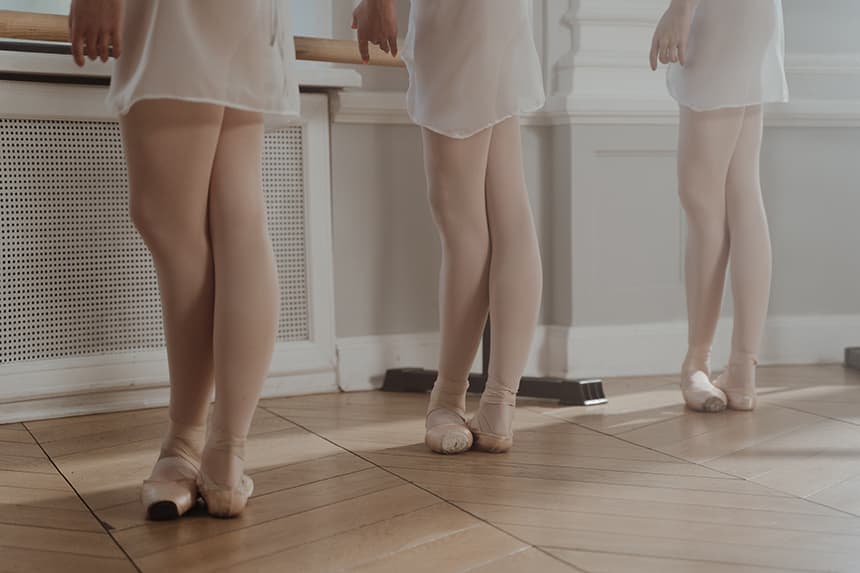
Types of ballet

Ballet is a relatively young art form compared to other forms of classical dance, but its popularity exploded in the nineteenth, twentieth and twenty-first centuries and it remains one of the most loved forms of dance today. There are several styles of ballet, which this article will delve into.

The final product that the audience sees when they go to watch a ballet is the final stage of a long process. Ballet is a prepared performance with carefully thought-out movement sequences. Some ballets tell a story, while others simply illustrate a theme or have no theme. To create a successful ballet, dance, music, painting, drama, and the visual arts come together to craft a coordinated performance that creates apparently effortless magic for the audience once the curtain lifts.

What types of ballet are there?

Ballet and classical choreography are classified based on different criteria. We will look at the main ballet styles, genres, and techniques in detail below.

Styles of Ballet

The most common classifications for different styles of ballet are based on their characteristics and time of origin.

Classical Ballet

Classical ballet is the original and foundational ballet style. When people say the word “ballet”, they usually mean the classical form.

Classical Ballet Type.

Photo by Pixabay on Pexels

Characteristics of classical ballet:

  • The observance of specific positions of the legs, arms, body, and head, and the principle of “turn out” (the outward rotation of the legs from the hip).
  • Strict adherence to rules, techniques, and traditions associated with classical ballet
  • Strict traditional training techniques
  • In classical ballet, women usually wear special hard shoes known as pointe shoes that allow them to dance on their toes.
  • The movements in classical ballet tend to geometrical clarity
  • In classical ballet performances, dancers tell a story through choreography, gestures, and facial expressions (although there are also classic ballet productions without a plot).
  • Classical ballet is performed to music by classical composers such as Tchaikovsky.

Examples of classical ballet are Swan Lake, The Nutcracker, and Sleeping Beauty.

Different styles of classical ballet vary somewhat geographically. Different ballet schools and teaching traditions developed in, for example, France, Russia, Denmark and Italy. While, today, some of these differences are no longer as marked, each school still has its own characteristics, traditional techniques and ballet “stars”.

Romantic Ballet

Romantic ballet emerged during the Romantic era, when European, and later American, culture began to reflect on the self-worth of man and his place in nature.

Romantic type of ballet dances.

Photo by Pixabay on Pexels

Romantic ballet is characterized by:

  • Focus on the drama and emotionality of the stories being told
  • The appearance of original music
  • The increased role of music, which helped create the dramaturgy and gave figurative musical characteristics to the characters
  • Opposing the real world to the world of exoticism and fantasy (hence the spread of the mystical women image)
  • Keeping the strictness form and traditions of classical choreography
  • The airiness of movement
  • Pointe shoes and short white tutus appear
  • The cult of the ballerina as a central part of the performance and star ballet dancers appear
  • Active development and use of theatrical special effects (in particular, gaslighting)

The brightest examples are Sylphide and Giselle.

Note!

You can also read the piece about Ballet History here.


Neoclassical ballet

Neoclassical ballet became widespread precisely in the United States, where it was possible to depart from the classical rules and create a completely unique dance.

Image of neoclassical ballet
Image Public domain, via Wikimedia Commons

Apollo Musaget is generally considered to be the first neoclassical ballet, and the legendary choreographer George Balanchine is the pioneer of the style. Another huge influence was Isadora Duncan and her free, easy and rule-free dance. After such daring oppositions to the classical form of dance, other popular bold, original and innovative dancers, choreographers, and directors emerged.

Neoclassical dance is characterized by:

  • Classical technique enriched with free movements and experimental techniques.
  • Deviations from strictly classical technique and movement patterns
  • A shift of focus from the plot to the dancer’s skill
  • Complex choreographic elements
  • Neoclassical performances often lack scenery and are characterised by a move away from sumptuous and colorful costumes in favor of simple and minimalist styles.
  • Significant reduction in the length of performances

The austere, clear, noble, and transparent form of neoclassical ballet is epitomised in Apollo Musaget and subsequently in other neoclassical ballets. The classical dance vocabulary, purged of decoration in terms of plot, design, emotion, and gestures, became the new ideal.

Modern ballet

Modern ballet differs from other types of ballet in its bolder costumes and free dance interpretation. Modern ballet does away with tutus and pointe shoes; they are typically replaced by loose, elongated garments to create an airy, sophisticated look. Many dancers go on stage barefoot.

Photo of modern ballet dancing on stage, colourful and fast
Photo by Ahmad Odeh on Unsplash

Modern ballet is characterised by:

  • The use of gymnastic and acrobatics elements
  • The blurring of genre boundaries
  • New, original interpretations of classical ballets
  • Rejection of the main “pillars” of classical ballet such as the use of strict arm and leg positions and “turn out”.
  • A freedom of feelings and ideas and a departure from conservatism
  • The movements are based on the natural plasticity of the body
  • Experimentality and symbolism
  • Scenic effects

Inspiration for modern ballet can be taken from a huge range of sources including national dances and new trends in other dance styles. Many directors try to make the audience look at classical dance from a different angle and new readings of classics are welcomed.

Ballet Teaching Methods

The rigorous physical preparation of the dancer’s body is foundational to all styles of ballet. Ballet dancers’ training is based on scientific research and a historically established system of rules. The main methods of ballet training are Vaganova, Cecchetti, the Royal Academy of Dance, the French School, Balanchine, and Bournonville. Principles like set arm and leg positions and the use of turn are used in all styles and it can be tricky for untrained observers to distinguish between the styles. There are, however, significant differences between these teaching methodologies.

The Vaganova Method

This widespread and prestigious method was developed in Russia by Agrippina Vaganova in the early twentieth century. Vaganova was able to take the best from the French, Italian, and Russian schools as well as the teachings of the iconic choreographer Marius Petipa. The style has gained a reputation for the strictness of the training and the ethereal grace and elegance of its graduates.

Agripina Vaganova with her students, training according to the Vaganova method.

The main principle of Vaganova’s pedagogical activity was the search for clean movement without unnecessary embellishment or carelessness and the desire to achieve great expressiveness of movements. Among the principles Vaganova brought into the process of training ballet dancers, it is worth mentioning the following:

  • Back positioning that allows the body to loosen up and become more expressive.
  • The positioning of the head and the direction of the gaze, which follows the movements of the arms and the body.
  • The dual role of arm movements: to create a spiritualized image and to support the dancer’s technique.

The teachers and judges at classical dance competitions still pay close attention to compliance with the principles and requirements of Vaganova technique.

The Cecchetti Method

Cecchetti’s pedagogical practice occupied a special place in ballet in the late 19th and early 20th centuries. Cecchetti, having learned a great deal from Russian ballet masters, synthesized the best qualities of the two different dance schools in his teachings.

Enrico Cecchetti method.

The pedagogical method he developed specifically for Russian pupils was distinguished by its clear systematization: he worked out a certain series of combinations for both adagio and allegro for each day of the week.

Cecchetti’s teaching principles had certain advantages. His method teaches solid skills for dynamic turns, steady poses, and clear tempos. Movements of arms, trunk, and legs acquire confidence and expression. Cecchetti’s class was rigorous, physically demanding, and developed breathing and leg strength (especially the feet).

French School

Bournonville’s technique is still part of Danish ballet practice. It appeared in European theatres as early as the nineteenth century, but August Bournonville’s ballets only became widely known outside of Denmark after World War II.

August Burnonville’s choreography is instantly recognizable. The illusion of weightless lightness is the main thing that the choreographer has brought to classical dance. The method requires the dancer to perform the most difficult movements as if they were so easy, in contrast to the French and Russian traditions, which highlight technically difficult steps.

Bournonville method

Bournonville’s technique is still part of Danish ballet practice. It appeared in European theatres as early as the nineteenth century, but August Bournonville’s ballets only became widely known outside of Denmark after World War II.

August Burnonville’s choreography is instantly recognizable. The illusion of weightless lightness is the main thing that the choreographer has brought to classical dance. The method requires the dancer to perform the most difficult movements as if they were so easy, in contrast to the French and Russian traditions, which highlight technically difficult steps.

The Royal Academy of Dance method

The English methodology of teaching classical dance evolved to spread this art form throughout England. The main feature of the methodology is the idea that by learning simple steps accurately and cleanly enough, it will be easier for the dancer to learn more complex and technical things later on. Accordingly, this school assumes slow and very careful teaching of simple steps, gradually increasing the level of complexity.

Balanchine method

The Balanchine method is used at the School of American Ballet (a school associated with ballet in New York City) and focuses on very fast movements combined with more open use of the upper body.

Balanchine’s method is characterized by intense speed, deep layers, and a strong emphasis on lines. The method has many hand positions and excellent and dramatic choreography. Balanchine-method hand positions (often referred to as “Balanchine hands”) tend to be more open, less curved, and often “broken” at the wrist. The arabesque positions tend to be uneven, with an open hip facing the audience to achieve the illusion of a higher arabesque line.

Kroon, Ron / Anefo, CC BY-SA 3.0 NL by Wikimedia Commons

Today, all of these techniques exist interdependently or in various combinations in ballet schools around the world. As a result of constant training, ballet dancers acquire an aesthetically beautiful positioning, strong muscles, flexible ligaments, and a confident command of the body.


Related articles:

Arabian dance in the nutcracker

The “Arabian” Dance in The Nutcracker

Christmas is around the corner, and if you are a Ballet enthusiast like me, you probably know that The Nutcracker recital has come to almost every city around the world. If you need to become ...
Ballet feet exercise. Ballerinas feet warming up stretching

Ballet foot exercises

10 Ballet Foot Exercises: Warm-up, Boost Your Technique and Foot Strength Foot exercises are an essential part of a ballet dancer’s training as they provide important strength and technique benefits. Developing strong and flexible feet ...
Ballerinas Feet. 3 ballet dancers stretching

Ballerina Feet: Ballet & Foot Health

If you’ve ever seen ballet or you’re a ballet dancer yourself, you’ll know how graceful dancers’ movements can be. But, of course, becoming a professional ballet dancer takes a LOT of hard work and dedication ...
Images of dancers on stage - moving to the best choreography, inspired by talented choreographers

The 9 Greatest Choreographers of the 20th century

This article see the DanceBible team pick some of the 20th century's (and all times!) greatest Choreographers, taking a historical slant via some very great and distinct contributions, which together help to describe the formation ...
Best bags for dancers. A girl carrying a bag on her shoulder whilst walking along.

Best dance bags

Best Dance Bags 2023 - Ultimate guide and review When you go to dance class or competitions, you probably take a lot of gear with you? Of course, dancers need a lot of space in ...
Classical Ballet. Ballerinas on stage with raised arms

Types of ballet

Ballet is a relatively young art form compared to other forms of classical dance, but its popularity exploded in the nineteenth, twentieth and twenty-first centuries and it remains one of the most loved forms of ...


Cover image  by vladislav83 on pixabay

This article was originally written by Emma but has been updated and contributed to by dance teacher Almiria Wilhelm.

Ballet Movies

Ballet movies is part of our series of reviews on movies about dancing
We have re-watched 14 ballet movies (‘films’ for some our our audience) and 1 series (what a hardship!), which tell stories of dance life. The list includes Hollywood-style feature movies, dramas, and documentaries about ballet. We’ve shortlist our favorites, to help you focus in on which ones to try first.

Enjoy watching!

A Ballerina’s Tale (2015)

A Ballerina's Tale 2015.

This is one of the most popular ballerina movies. Misty Copeland’s been dancing since she was a kid. However, the teachers of the ballet school thought that at the age of 13 there was no point in starting ballet lessons. Despite the fact that an art-passionate teenager at the age of 15 won a prestigious contest, many openly hinted that the girl can not have a successful career – she has the wrong physique.

In a troupe of 80 people, she considered herself a stranger, and the directors were thinking, not knowing how to work with such a girl. The only way out was to give her a solo part.

The Red Shoes (1948)

The Red Shoes.

If you want to enjoy watching ballet movies, this is a must see. “The Red shoes” is a model drama about art as a monster that destroys its children. The film is saturated with long dancing numbers and the participation of Leonid Myasin for authenticity. It still remains an exemplary movie to which all ballet directors are trying to look up to.

Billy Elliot (2000)

Billy Elliott.

“Billy Elliot” is a ballet movie about a boy who wants to be a famous dancer. His father, a miner, because of gender prejudices does not consider dancing a man’s pastime and categorically against his son’s passion.

In a serious, in a funny way, “Billy Elliot” does not want to tell another boring story of following his dream. But it tells about growing up and normal for every teenager’s desire to find the right place in life.

First Position (2011)

First Position. Ballet documentary

A ballet documentary film about many years of training in ballet classes just for a few minutes on stage. Recently watching documentary movies about ballet is more interesting than fiction. Intrigue is still high, and the truth of real life can be much more dramatic than any fictional story.

Good dynamics, interesting protagonists, to the extent of drama and facts. The ballet movie is a well crafted documentary, well worth a watch.

Ballet 422 (2014)

Ballet 422 (2014). Ballet moviesAnother documentary tells the story of the debut of the young choreographer Justin Peck. The film tells the ups and downs of the creative process. In 72 minutes, viewers see how one man’s idea became a reality.

Darling (2017)

Darling.

It is danish ballet movie about the relationship between the two ballet dancers. Darling is a world-famous ballerina, Frans is her husband and partner in ballet. Together they plan to stage the Royal Giselle Theatre, where Darling will have the main part. During the first rehearsal, Darling falls in pain – she can no longer dance. The film tells the story of how the ballerina copes with the acceptance of injury, and it is before one of the most important events in the life of any ballet dancer.

The film shows the reverse side of the ballet dancer’s life very truthfully. Moreover, the film reveals the crisis of transition from stage activities to teaching – that is, the moment when ballerina can no longer perform on stage.

The Turning Point (1977)

The Turning Point.

This film is worth watching at least because it received 11 Oscar nominations and was never awarded, thus becoming one of the most famous losers in film history. Despite this, it is very deeply immersive: secondary roles in it were played by dancers of the American Ballet Theatre. The choreography was created by the famous director George Balanchine.

The Company (2003)

The Company 2003.

A new creative season has begun. The promising commonwealth of young dancers gathers again under the wing of Alberto Antonelli, the ingenious director of the troupe, famous for his ruthless exactingness demand for artists. How much tension will the artists have to go through to create an unforgettable spectacle on stage one day?

“The Company” was filmed with the participation of the Chicago Joffrey Ballet. When watching it there is a feeling of almost documentary curiosity, although The Company is a feature movie. This film is not so much about the people in the ballet as about the ballet. Therefore, it is obligatory for all fans of ballet art to watch it.

Center Stage (2000)

Center Stage (2000).

The main characters are young and confident, incredibly talented and ambitious dancers. They are ready to do anything to achieve success and recognition. Dance is the meaning of their lives, and they spare no effort climbing the Olympus of fame. But in ordinary life, they are ordinary people, with their problems, sorrows and joys, problems and shortcomings. But how do you become a star and still be human?

The White Crow (2019)

The White Crow (2019). Best ballet movies and films

A biographical drama about the legendary dancer Rudolf Nureyev and his difficult fate. The ballet movie is filled with the political context of the Soviet era, but it does not become less “dancing”.

Polina (2016)

Polina.In 2017, the American wide box office released the film “Polina”, telling about a Russian ballerina who moved to Paris in the hope of becoming famous. She does not want to engage in classical ballet in conservative and joyless Russia, but in contemporary dance in advanced Europe.

The main character of the film has devoted her life to ballet. She goes through grueling training, and through love difficulties, not without intrigue. The viewers see the story of the evolution of talent, tenacity, and real ballerina, who goes through many difficulties.

Dancer (2017)

Dancer.

The film “Dancer” directed by Stephen Kantor tells about the life and work of the famous ballet dancer Sergei Polunin, who became widely known after the release of the clip Hozier – Take Me To Church directed by David LaChapelle.

The film is about the biography of the performer. Polunin was accepted into the Royal Ballet Company of London at the age of 17. Two years later he became the youngest premier in the company’s history. However, the film tells not a classic success story, but tells about the emptiness that a person meets on top – and how to start life again, but by its own rules.

Center Stage: On Point (2016)

It is musical drama about the modernization of classical ballet and the fight against stereotypes in the dance art. The story is about a girl whose talent is darkened by her older sister, a brilliant ballerina. The film shows the young girl’s struggle for deserved recognition of her talent and her own dance vision.

The film is not without love stories and typical plot turns. This is another story of a dancer, whose path is accompanied by defeats and victories. But from that should not be considered bad – in this film will be a lot of dance, music and extravaganza, which is sure to please the youth audience.

Black Swan (2010)

Black Swan.“Black Swan” is a modern story about ballet dancer Nina (played by Natalie Portman), whose life is changing as she gets the main role in Swan Lake. The film shows well the daily hard work of ballet dancers, tells about the strained relations between “ballet mom” and children-dancer. The life of the main character is inseparable from her professional activities because ballet and getting her starring role in the legendary ballet production – became the meaning of her life.

“Black Swan” should please not only fans of classical dance, but also those who love drama stories about self-reflection, which sometimes leads to schizophrenic tendencies.

But it should be noted that in this tape could not maintain a balance between acting and ballet. There are very visible cuts, understudies, misconstructed classes, the inability of the protagonists to dance professionally. Yes, Natalie Portman is good, but she is definitely not a ballerina and the montage could not disguise it.

Pina (2011)

Pina.

The film is not quite about classical ballet, but rather about modern dance – Art Nouveau. But we can’t ignore mentioning it in this list. Wim Wenders’ documentary is about the legendary German dancer and choreographer Pina Bausch, who passed away in the summer of 2009. While watching the film you understand where this or that “chips” and the movements of the contemporary dance appeared in due time.

Series «Flesh and Bone»

Flesh and Bone. Ballet series

This ballet series, something similar to the “Black Swan”: also about paranoia, mistrustfulness, and manic aspiration for absolute perfection, which, as you know, does not happen. There is a lot of dancing – though not as much as one would like – but even more ballet and melodramatic clichés, from which one even enjoys: and the choreographer, without a shadow of shame seducing young dancers, and drugs, and categorical tyranny. In short, behind every performance of Swan Lake, there is always an unpleasant inside.

We are sure that the list can be completed for a very long time!

After that, you may well be interested in seeing some other movies about dancing


Arabian dance in the nutcracker

The “Arabian” Dance in The Nutcracker

Christmas is around the corner, and if you are a Ballet enthusiast like me, you probably know that The Nutcracker recital has come to almost every city around the world. If you need to become ...
Ballet feet exercise. Ballerinas feet warming up stretching

Ballet foot exercises

10 Ballet Foot Exercises: Warm-up, Boost Your Technique and Foot Strength Foot exercises are an essential part of a ballet dancer’s training as they provide important strength and technique benefits. Developing strong and flexible feet ...
Ballerinas Feet. 3 ballet dancers stretching

Ballerina Feet: Ballet & Foot Health

If you’ve ever seen ballet or you’re a ballet dancer yourself, you’ll know how graceful dancers’ movements can be. But, of course, becoming a professional ballet dancer takes a LOT of hard work and dedication ...
Images of dancers on stage - moving to the best choreography, inspired by talented choreographers

The 9 Greatest Choreographers of the 20th century

This article see the DanceBible team pick some of the 20th century's (and all times!) greatest Choreographers, taking a historical slant via some very great and distinct contributions, which together help to describe the formation ...
Best bags for dancers. A girl carrying a bag on her shoulder whilst walking along.

Best dance bags

Best Dance Bags 2023 - Ultimate guide and review When you go to dance class or competitions, you probably take a lot of gear with you? Of course, dancers need a lot of space in ...
Classical Ballet. Ballerinas on stage with raised arms

Types of ballet

Ballet is a relatively young art form compared to other forms of classical dance, but its popularity exploded in the nineteenth, twentieth and twenty-first centuries and it remains one of the most loved forms of ...


Photo by Kal Visuals on Unsplash

Isadora Duncan

Isadora Duncan a woman whose name in the early 20th century was synonymous with dance and one of the greatest choreographers.

“If you could explain something with words, there would be no point in dancing it.”

Isadora Duncan

is an American dancer considered the founder of free dance, the forerunner of the art nouveau dance.

Isadora Dunkan a woman whose name in the early 20th century was synonymous with dance

Biography

Isadora Duncan was born in San Francisco in 1877 to Joseph Duncan, a banker. Born Dora Angela was the youngest of four children in the family. Soon after Isadora was born, the head of the family went bankrupt and the family lived in extreme poverty for some time.

The father soon left the family and the mother, Mary Isadora Gray, had to work hard to support the four children. But she used to say a lot: “You can do without bread, but you can’t do without art.” In their house there was always music, the family read a lot, played ancient tragedies. Little Isadora started dancing already at the age of two. And at six, she opened the first “school of dance” for neighbouring children: teaching them the movements that she invented herself. At the age of 12, while giving lessons, the young dancer could already earn a part-time job. A year later she left school and devoted all her time to dancing, studying music, literature, and philosophy.

From childhood, Isadora perceived dancing differently from other children – the girl “followed her fantasy and improvised, dancing as she liked”. Dreams of a big scene led in 1985, Duncan in Chicago, where she unsuccessfully went to auditions in different theatres, and then in New York, wherein 1896 the girl got a job with the theatre famous critic and playwright John Augustine Daly. There she took ballet lessons from ballerina Marie Bonfanti. But Duncan is known for her denial and contemptuous attitude towards ballet. Ballet, according to the dancer, was just a complex of mechanical body movements that do not convey spiritual experiences. So, disappointed in classical choreography, Isadora moved to London in 1898 and then to Paris.

Isadora Duncan Biography.

It was in Paris in 1901 there was a fateful meeting between Duncan and Lois Fuller (about which the dance movie “La danseuse” was filmed and which later became the founder of the modern dance). Loi and Isadora had similar views on the dance, seeing it as a natural body movement rather than a rigid system of proven movements like in ballet. In 1902 Fuller and Duncan went on a dance tour in European countries. Together they created new compositions: “Dance Serpentine”, “Dance of Fire”, “The Divine Shoe”. Duncan became very famous in the European cultural scene.

In 1903, the dancer went to Greece. There she initiated the construction of a temple on Kopanos hill for dancing classes.

In 1904 Isadora Duncan moved to Germany and opened her first dance school there and then another one in Paris, but it was soon closed down due to the outbreak of World War I.

Having become a widely popular and revered dancer around the world, Duncan continues to tour Europe, Russia, and America. She never liked it, she believed that the tour distracted her from her true calling to educate young dancers and create something creative.

Personal life

Isadora Duncan’s personal life was filled with tragic twists of fate. But she, as a creative person, found solace in work and creativity, no matter what.

In 1904, she met the director Edward Gordon Craig, and a year later they have a daughter. But the happiness didn’t last long. Craig, who never officially became Isadora’s husband, returned to his former mistress.

In 1910, Duncan gave birth to a second child from billionaire Paris Singer. By the way, the heir to a vast empire of sewing machines needed a lot of effort to win the heart of an incredible and so famous dancer.

Isadora with children.

In 1913, both Isadora Duncan’s children died tragically. The car in which the children were driving in for a trip fell off the bridge in the Seine. The doors in the water jammed, nobody managed to get out. Isadora went down in fever. She didn’t want to live, her strength gradually left her. The doctors sent her inconsolable mother to the resort and prescribed complete peace.

1914. Having become pregnant with the third child by Italian sculptor Romano Romanelli, Isadora also found no consolation: the child died a few hours after birth.

Isadora Duncan and Romano Romanelli.

Then Isadora realized that she was not meant to be happy, that her destiny was loneliness. From now on, work is the only thing that holds her back in this life. There is a new detail in the dancer’s stage image – a long red scarf that stood out like a bloody wound against the white tunica. It symbolized the wound that was not healing in her heart.

In 1917, 6 of the first of Isadora Duncan students were adopted by her and were given the name Duncan. This was done so that during the tour to the U.S. there were no problems associated with the German origin of the participants in the tour.

Duncan and Esenin.

In 1921, Isadora Duncan met Sergei Esenin, a famous Russian poet who was 18 years younger than her. It was a bright and discussed love affair because despite the language barrier and age difference the couple was madly in love. At first, they lived in Russia, but soon Duncan had to go on tour to America. To go abroad together, the couple got officially married in 1922. While they lived in Russia, the relationship developed perfectly.

But abroad Esenin stopped writing, began drinking, and most of all he was annoyed that no one here knew him as a poet Esenin. Marriage was officially dissolved in 1924, although a couple separated earlier: Esenin left Duncan and went to Russia in 1923. Two years after the divorce, Duncan received the news of Esenin’s suicide, which also left a sad trace in her soul.

Fact!

Duncan was bisexual. For example, after Esenin, she had an affair with American poetess Mercedes de Acosta. The letters that the girls wrote to each other told historians much about this relationship.

Death

On 14 September 1927, at the height of her fame, the dancer was to give a concert in Nice. A legend that became famous later said that a moment before getting into the car, Isadora exclaimed to her fans: “Goodbye, friends! I’m going to glory!”. The driver touched the car from his seat, but neither he nor the dancer noticed that a long red scarf wrapped around her throat caught the rear wheel axle. After stretching out, he literally strangled Isadora Duncan. The body of the great actress was cremated and the ashes were buried in Paris’ Per Lachez Cemetery.

Dunkan's death.

Dance Heritage

Virtually no video recordings of Isadora Duncan’s dance remained, because the dancer herself believed that the dance could not be recorded, that this is a specific energy that exists right at the moment of the dance.

There is still a perception that Isadora Duncanwent into some kind of trance and improvised when she came on stage. That is certainly not true. According to a June Layson research, Duncan staged almost 223 dances + 20 in “Iphigenia”, of which 176 for herself, 47 for the students.

Innovations introduced by Duncan:

  • The barefoot dance – nobody recognized barefoot dance before her.
  • Light Tunic – Duncan always said that dancing should be about nudity, and tunic helped to show the contours and shape of the body.
  • Music by “serious” composers. Whereas previously ballets and dances had been put on special music by special composers, Duncan chose music by “serious” composers.
  • Cancellation of the corset. At the end of the 19th century, women still wore corsets, but Duncan believed that a corset ugly the body and its shape (including in everyday life).
  • The emancipation of the woman. Duncan fought for a woman’s right to live the life she chooses.

A lot of people say that Duncan didn’t have the technique. In fact, her dance has certain common features, which can be called a Duncan technique.

Component technicians:

  • solo dance (she was the first one to dare to go on stage without an entire troupe of artists);
  • running;
  • jumps;
  • steps;
  • flowability of movements (one movement flows from another);
  • pantomime;
  • expressive gesture.

The origins of Duncan’s choreography:

  • Antiquity;
  • Renaissance;
  • German romanticism;
  • Symbolism;
  • Modern;
  • the dance of the future (the dancer really forced the concept of the dance of the future, because if we now read her essay, published in 1903, we understand that all her prophecies have come true, that the dance really exists for life, the dance somehow corresponds with the forms of the one who moves, etc.).

Dance of the Future Concept

Duncan has developed his own philosophical views. She believed that learning to dance needed everyone to make it a “natural state” for people. Under the influence of Nietzsche’s philosophy, Duncan wrote the book Dance of the Future.

According to her beliefs, it is in the dance that a person is able to express his highest ideals and the process of his own formation as self-overcoming. For Duncan, dance is an affirmation of life, health, sensuality, an expression of life’s impulse.

The main requirement of Duncan is to radically reconsider views on dance, to recognize it as a “high” kind of art, to use symphonic and opera music, to express spiritual impulses through dance. The ideal of Duncan becomes the dancer of the future – a new harmonious man, living in harmony with nature, with his soul and space.

The beautiful movements of this new man should express the impulses of the soul and correspond to the forms of his body. Dance, as Duncan thought, is not an exercise and pirouettes, it is an exaltation of life, theopractics, it is an alternative to the word means to generate ideas. The movement, as she thought, does not need to be thought up, it needs to be invented.

She thought nature was the source of the dance. But Duncan also saw nature in a philosophical way. She learned to observe nature: the movements of waves, clouds, trees, and always sought to bring in his movement a little divine sequence that is inherent in nature.

Another interesting statement by Duncan: “Will is expressed through the use of gravity”. That is, Isadora, denying the unnatural forms of ballet that struggled with gravity, on the contrary, believed that one should feel one’s body, used earth, and gravity to express one’s dance and form.

For her, dance is not only an art but also the basis of a whole concept of life, more refined, natural. Duncan brings morality, beauty, and health to dance. Beauty as understood by Duncan is truth and harmony.

Sources:

  • June Layson “Isadora Dunkan: A Preliminary Analysis of Her work” Dance Research: The Journal of the Society for Dance Research.
  • isadoraduncanarchive.org

What is Break Dance?

What is breakdance? You probably have a pretty good idea of breakdancing but maybe you’re not close to the details and how to get started? Let us give you an overview.

What is breakdance

Breakdance, also known as b-boying or breaking, is a style of street dance that originated in the South Bronx in New York City during the early 1960s.

Breakdancers perform a variety of moves including footwork, freezes, and power moves, often battling against each other in a display of skill and creativity. Also, breakers have an excellent physical form, as performing complex acrobatic movements requires special preparation. B-boys and b-girls (as they call themselves) develop strength and flexibility of the body, a sense of balance, and endurance.

History of origin

The dance appeared in New York, where it originated in the sixties of the twentieth century. But it is believed that it was finally formed and became a completely independent break-dance only in the year 73. The ancestor of the breaking recognized James Brown, in the show which was first involved in the breakdancers.

70-80s is the period of breakdance popularization. Look at what an old-school breaking was like:

The evolution of the breakdancing is closely linked to the growth of hip-hop and its culture.

The detailed history of hip-hop and breakdance.

Popular Dance Elements

Flare

Flare is the rotation of the legs in a circle, alternately changing hands.

Windmill

Rotation on the floor with widely spaced legs due to fly movements of legs. There are variants in the installation of the hands behind the back – this is one of the basic movements.

Headspin

Rotation on the head with the help of hands. The position of the legs can be extended and bent at a blunt or right angle. One of the brightest moves that newcomers to breakdancing want to learn.

Turtle

Horizontal rotation of the body on bent arms that rest with the elbow against the press.

Six steps

Six-foot movements when the arms support. Looks like circular jogging of the feet on the floor.


Best b-boys & b-girls

DanceBibles editorial choice – our TOP 5 favorite breakers

Menno

is three times Red Bull BC One champion (2014, 2017, 2019).

This guy is one of a kind. Extremely original and fluid. Menno has an interesting and recognizable style. He uses complex, original transitions from element to element. He has a special energy, strong message, is well able to create psychological attacks during the battle.

Lussy Sky

Lussy Sky is one of the strongest and most musical B-boys of our time. His footwork is too good, hits almost every beat. Just look at his battle with Menno and you’ll understand.

Ami

Ami got good foundation skills her footwork is on another level. We like her breaking for her lightness and ease of performance, her incredible energy. It’s always interesting to watch Amy.

Zeku

Enduring, strong, technical Zeku, his skill is extraordinary.

Lilou

B-Boy Lilou is one of the most famous and spectacular bboys in the world. He won the Red Bull BC One in Berlin In 2005 and n New York in 2009. He has a unique style, a special manner of performance and behavior on stage.

Championships and competitions

  • Red Bull BC One;
  • WDSF World Breaking Championship;
  • Battle of the Year;
  • Freestyle Session;
  • IBE;
  • Chelles PRO.

Music

Hip hop music is great for breakers. Rep, funk, jazz, electro, soul are sometimes also popular among dancers. That is if the rhythm of music allows you to break to it, it’s good music.


Article cover photo by Jerm Gonzalo on Pexels.

So there you have it – hopefully we’ve answered the question ‘what is breakdance?’ for you and you’re keen to explore breakdance further.

Take a look at these articles on the best street dancers and street dancing
House dance, street dancing

House Dance

Urban and street dances have always been able to go beyond traditional barriers and really connect people through movement. House dance does just this, hand in hand with the electronic ...
Popping dance on the street

Popping: Dance with Precision. 3 beginner techniques.

What is the popping dance technique and how do you 'Pop'? Popping is a style of street dance, where dancers quickly tense and release muscles (sometimes known as ‘hitting’ or ...
An image of a clown at a fair. Article about Clowning dance

Clowning Dance: Tommy the Clown & Hip-hop Clowns

What is clowning dance? Clowning dance (also known as clown dancing) is a unique and entertaining form of dance expression in the early 1990’s. It was developed by Thomas Johnson, ...
Street dance styles. Photo of male breakdancer in square outside tall building

Street Dance Styles

Street dance styles. When you hear the term "street dancing," what comes to mind? Do you think of hip-hop? Breakdancing? House dancing? Street dance is a broad term that encompasses ...
street dance

Best Street Dancers in the World

It is nearly impossible to accurately rank the top street dancers in the world, as each has their own distinct style and talent. While there are many skilled street dancers ...
Breakdancer performing in front of the crowd

What is Break Dance?

What is breakdance? You probably have a pretty good idea of breakdancing but maybe you're not close to the details and how to get started? Let us give you an ...

Learn Ballet History

Ballet is a relatively young art form, with the earliest recorded mention of ballet dating back to the 15th century, or about 400 years ago. This article delves into ballet history and how it developed.

Agripina Vaganova with her students, training according to the Vaganova method.

The origins of the term ‘ballet’ are uncertain, with some sources suggesting it derives from the Latin word ‘balle’ (meaning dancing) and others suggesting it comes from the French ‘balleto.’ However, it is clear that ballet originated in a specific place. In the following article, we will explore the history of the development and popularization of this elegant art form.

Origin – 16th century ballet history

It is known that ballet originated during the Renaissance in Italy. The first mention of the word “ballet” is attributed to the court dance teacher Domenico da Piacenza. It was he who first proposed to combine several dances into one, perform them with a solemn finale and call them ballet.

The progenitor of classical dance is those forms of dance that were performed by hired dance masters for the nobles and princes at their celebrations. It was at such events that the original choreographic forms, the splendor of the spectacle, and the elements of drama in dance performances were born. Who would have thought that the usual entertainment of sovereigns would over time turn into art that millions of people around the world enjoy today?

A history of ballet. Ballet history

However, as a genre of art, the ballet took shape a little later. As we said earlier, ballet originated in Italy, but the first ballet production of The Queen’s Comedy Ballet was presented not in Italy, but in France in 1581. It was staged at the court of Catherine Medici of Italy, wife of the French King Charles VIII.

It was she who brought fashion for curious court ballets to France. The production was directed by the famous Italian choreographer and violinist Baltazarini di Beljoyozo from Italy. Since then, the ballet has moved to a professional stage where it occupied a certain place in opera and dramatic productions.

Mid 17th – 18th centuries

During this period of ballet history, this classical dance form continued to evolve about a century later, with the coronation of Louis XIV in France on June 7, 1654. Louis XIV was not only a fan of ballet, but also participated in productions himself, performing in the “Cassandra Ballet” at the age of 12 in 1651.

He earned the nickname “Sun King” for his role as the Rising Sun in “The Royal Ballet of the Night”. In 1661, Louis XIV established the Royal Academy of Dance to preserve dance traditions, with 13 of the best dance masters appointed to the Academy. Pierre Boschant, a royal dance teacher, was appointed director and later defined the five main positions of classical dance.

Louis XIV made the ballet stand out during his reign as a separate form of performance, different from balls. It was then that the division of dancers into amateurs and professionals appeared.

Ballet history fact!

Before 1681 only men danced in ballet. The first ballerina was the legendary dancer La Fontaine.

Then costumes and music were more important during performances than the dance technics. Girls danced in high heels wearing heavy dresses and masks. The costume of a man, although it was a little lighter (hence the greater grace and ease of movement), was still far from the clothes in which you could dance easily and freely.

The first to free the dancers from the shackles of these inconvenient costumes was a real reformer in the world of ballet art – the French ballet master Jean Georges Nover. He banned masks and gave the actors the opportunity to wear light suits that did not stiffen movement. Each innovation made dance more meaningful, and dance technique – more complicated.

Towards the end of the 17th century, court ballet achieved some success: it was fully funded by the authorities, which used it to exalt their own greatness. Gradually, the ballet completely separated from the opera and turned into an independent art.

One of the successful followers of Noverre became Jean Doberval, who in 1789 staged the ballet “Futile Precaution”. A simple story about the unhappy love of a young peasant and a village girl was presented on stage. The absence of stories about the adventures of the gods, majestic masks and corsets made the production natural, and the dance free.

Dance class in opera 1872. Edgar Degas (1834-1917).

Romanticism – late 18th – early 19th centuries

The strongest influence on ballet history was the direction of romanticism, which erupted in the late 18th century. In a romantic ballet, the female dancer first began to wear pointe shoes. Maria Taglioni was the first to do so, completely changing the previous ideas about ballet. In the ballet “Sylphide” she represented a fragile creature from the other world. The success was overwhelming.

Romanticism brought into the ballet the image of an incorporeal spirit – a ballerina who hardly touches the earth. In the same period, the roles of dancers are changing. Men turned into moving statues, which existed only to support the ballerina. Then the rising stars of female ballet completely and successfully overshadowed men.

Ballet history fact!

By the way, this situation was slightly corrected by the rise of the Nijinsky star from the Russian Ballet in the early 20th century. By this time, traditional for us ballet costumes, choreography, stage sets, props had already developed, in a word, everything had become almost what it is now. Eventually, it was a Russian ballet that started the revolution in ballet art.

Over time, the peak of the popularity of romantic ballet had already passed, and Paris, as the center of classical dance, began to fade away.

Russian ballet and its influence on world classical dance

The popularity of classical dance in Europe had an impact on ballet in Russia.

Ballet History Timeline.

The first ballet school in Russia was opened in 1738 (now the Vaganova Academy of Russian Ballet). At the same time, Peter I made dancing the main part of court etiquette, so the court youth was obliged to learn dancing. Thus, for example, the dance became a compulsory lesson in the Schlyakhet Cadet Corps in St. Petersburg. Since then, cadets have started to participate in ballet dances.

The dance instructor in the corps was Jean-Baptiste Lande. He understood that the nobility would not devote their lives to the art of dance. Therefore, in September 1737, Lande filed a petition in which he justified the need for a new special school where girls and boys of simple origin would be trained in choreography. Soon, such permission was given. From that moment on the training and development of dancers, for whom the ballet was a real profession, began.

At the beginning of the 19th-century Russian ballet art reached creative maturity thanks to the work of French ballet master Charles-Frederic-Louis Didlot. Didlot strengthens the role of the corps de ballet, the connection between dance and pantomime, asserts the priority of female dance. Russian dancers have brought expressiveness and sublimity to the dance.

The music of the legendary composer P. Tchaikovsky was the impetus for a new stage in the ballet history of Russia. Swan Lake, staged to Tchaikovsky’s music in 1877, gave rise to the fact that music for ballet began to be taken seriously. It was in the composer’s work that the romantic ballet became established. Tchaikovsky paid special attention to music, transforming it from an accompanying element into a powerful instrument that helps the dance to subtly capture and reveal emotions and feelings. Before that, music was considered just an accompaniment to dance.

Dancers from Swan Lake coming onto stage

Andrew Bossi Long CC 2.0via Wikimedia Commons

20th century

The beginning of the 20th century is characterized by an innovative search, the desire to overcome stereotypes and conventions of the academic ballet of the 19th century. One of the main innovators of this period in Russia is Sergey Diaghilev. In 1908, the annual performances of Russian ballet dancers in Paris began, organized by Diaghilev. The names of dancers from Russia became known throughout the world. But the first in this row is the name of the incomparable Anna Pavlova. Also, under his leadership in 1911, the ballet company was first organized. You can find out more about some of ballet types & styles in our related articles.

Anna Pavlova.
Diaghilev’s seasons – especially the first ones to include the ballets Firebird, Petrushka and Sacred Spring – played a significant role in popularizing Russian culture in Europe and helped establish a fashion for everything Russian. Thus, the passion of Europeans for traditional Russian costume gave rise to the new fashion. It was then, under the influence of Russian artists’ skill, that the western ballet took a second breath.

In 1929 Diaghilev died. Over time, his troupe broke up. One of its members – George Balanchine – was developing ballet in the USA and founded the New York City Ballé company. He became one of the most influential choreographers of the 20th century. In his dances, Balanchine strove for classical completeness of form, for impeccable purity of style. In many of his works, there is virtually no plot of any kind. The choreographer himself believed that the plot in the ballet is absolutely irrelevant, the main thing being the music and the movement itself. Today Balanchine’s ballets are performed in all countries of the world. He had a decisive influence on the development of twentieth-century choreography, not breaking with tradition, but boldly renewing it.

Another protege of Diaghilev, Serge Lifar, led the Paris Opera Ballet Company and for a long time was the most influential figure in French ballet.

The second half of the 20th century

In the 1950s, the dramatic ballet was in crisis. Strengthening the entertainment and pomp of performances, choreographers made futile attempts to preserve the ballet genre. Until the end of the 1950s, there was a breakthrough.

Choreographers and dancers of a new generation revived the forgotten genres – one-act ballet, ballet symphony, choreographic miniature. And since the 1970s, ballet troupes have emerged that were independent of opera and ballet theaters. Their number is constantly growing, among them, there are studios of free dance and modern dance. But today the academic ballet and the school of classical dance are still relevant.

FAQ:

Who were the 8 main figures who influenced the history of ballet?

Catherine Medici; Louis XIV; Jean Georges Nover; Jean Doberval; Jean-Baptiste Lande; P. Tchaikovsky; Sergey Diaghilev; George Balanchine.

What is the history of ballet?

16th century – the origin of ballet, the first ballet production. Mid 17th century – the rise of ballet dancers into amateurs and professionals. The end of 17th century – ballet is favourite form of art and accesses funding. 18th century – abandoning lavish costumes, the dance becomes freer and more professional. The start of Russian ballet. 18th - early 19th centuries – the era of romanticism in ballet, the female dancer first began to wear pointe shoes. 1877 – to the music of Tchaikovsky's Swan Lake ballet was staged. 20th century - Sergei Diaghilev's ballets are becoming popular throughout the world. 1950s - the dramatic ballet was in crisis. 1970s - the rebirth of ballet as we know it today begin.

What monarch reigned during the rise of professionalism in ballet history?

Professionalism in ballet emerged in the 18th and 19th centuries. During this time, several monarchs reigned in various countries where ballet was popular, including: King Louis XIV of France, who was the patron of the Paris Opera Ballet and played a significant role in the development of ballet as a professional art form. Queen Victoria of the United Kingdom, who was a patron of the Royal Ballet and supported the development of classical ballet in England. Tsar Nicholas I of Russia, who was a patron of the Imperial Ballet in St. Petersburg and played a significant role in the development of Russian ballet. King Ludwig II of Bavaria, who was a patron of the Munich Opera Ballet and supported the development of ballet in Germany.

Related articles:

Arabian dance in the nutcracker

The “Arabian” Dance in The Nutcracker

Christmas is around the corner, and if you are a Ballet enthusiast like me, you probably know that The Nutcracker recital has come to almost every city around the world. If you need to become ...
Ballet feet exercise. Ballerinas feet warming up stretching

Ballet foot exercises

10 Ballet Foot Exercises: Warm-up, Boost Your Technique and Foot Strength Foot exercises are an essential part of a ballet dancer’s training as they provide important strength and technique benefits. Developing strong and flexible feet ...
Ballerinas Feet. 3 ballet dancers stretching

Ballerina Feet: Ballet & Foot Health

If you’ve ever seen ballet or you’re a ballet dancer yourself, you’ll know how graceful dancers’ movements can be. But, of course, becoming a professional ballet dancer takes a LOT of hard work and dedication ...
Images of dancers on stage - moving to the best choreography, inspired by talented choreographers

The 9 Greatest Choreographers of the 20th century

This article see the DanceBible team pick some of the 20th century's (and all times!) greatest Choreographers, taking a historical slant via some very great and distinct contributions, which together help to describe the formation ...
Best bags for dancers. A girl carrying a bag on her shoulder whilst walking along.

Best dance bags

Best Dance Bags 2023 - Ultimate guide and review When you go to dance class or competitions, you probably take a lot of gear with you? Of course, dancers need a lot of space in ...
Classical Ballet. Ballerinas on stage with raised arms

Types of ballet

Ballet is a relatively young art form compared to other forms of classical dance, but its popularity exploded in the nineteenth, twentieth and twenty-first centuries and it remains one of the most loved forms of ...


History of Hip-Hop Dance

The history of hip hop dance is relatively short, as a young dance style, having only been around for five decades.
Despite this, it has quickly become one of the most popular dance styles in the world. In this article, we will explore the history and development of hip-hop dance, including some interesting facts and photographs from the 1970s and 1980s. Through a short but impactful history of hip hop, the dance has made its mark on the street dance world and continues to inspire people of all ages.
It is also worth noting!

Exploring the history of Hip hop is not just considering the dance, but a whole subculture, which is based on music (beatbox and rap), dancing (hip-hop dance, breakdance, popping, locking, krump), and arts such as graffiti.

Origin – Kool Herc

DJ Kool Herc setting up the world-famous bloc party at 1520 Sedgwick Avenue, The Bronx, New York City, signifying the birth of hip-hop. 11 August 1973. History of hip hop

The origins of hip-hop dance can be traced back to 1967 in the South Bronx neighborhood of New York City, which was one of the poorest and most disadvantaged areas at the time. It was here that a Jamaican DJ known as Kool Herc started organizing parties and performing rap music while also playing records.

As part of the parties, he would occasionally allow dancers to show off their skills by performing to the musical breaks in his music. This led to the development of the first dance movements and styles that would later be known as hip-hop dance. These early dance styles were characterized by their rhythmic patterns and energetic movements, which were often performed to the beat of hip-hop music.

70’s – Afrika Bambaataa

The term “hip-hop” had not yet been coined. It was invented a few years later in 1974 by DJ Africa Bambaataa when the culture developed and needed a common name. The word “hip” is derived from African American slang and refers to the moving parts of the body, such as the legs and arms. Besides, the word “hip” was used the meaning “acquisition of knowledge, improvement.” The word “hop” means “jump”. Thus, united, two words express the idea of ​​the whole hip hop trend – moving forward, developing, and understanding modern life.

That same year, 1974, the Bambaataa established the five basics of hip-hop:

  • MCing – is a combination of words and music, when a performer starts improvising or pre-conceived words to the rhythms.
  • DJing – is music control. DJ turns on any record and changes its sound with the help of technique, hands, or other things.
  • Breaking or break-dance – is the street dance that has accompanied hip-hop culture. It’s the foundation of all other street dancing.
  • Graffiti writing – is street art.
  • Knowledge – is a philosophy of culture that constantly tries to describe street life, even though it’s sometimes a dead end.

“Prescription” hip-hop culture existed covertly even before Bambaataa, but he was the one who officially voiced it in one of the interviews.

Street Gangs

To fully grasp the history of hip hop dance, it is important to consider the context and principles of hip-hop culture. It is a time when poor neighborhoods of New York were overflowing with drugs and crime when young people from an early age were on the path of criminal activity. Gangs and groups were organized on the streets. One of these street gangs was Black Spades, of which Bambaataa was a member before he became a popular musician.

Such gangs have also become centers for the development of hip-hop culture. Their activity peaked in 1973. The decline of gang activity can be attributed to the growing popularity and success of hip-hop dance and culture. After all, it was precisely this trend that first touched upon acute social, political, and racial problems.

By the mid-1970s, there were several hundred breaker teams in the Bronx and Harlem that shared the city – each team danced at its own intersection. Teams such as the Rock Steady Crew and the New York City Breakers had what they called “ritual battles”. Later on, they became very popular after one of the battles was filmed. The videos became widespread and generated a wave of imitations among teenagers.

80-90s

On September 21, 1982, the term “hip-hop” was first mentioned in the media, in an article titled “Afrika Bambaataa’s Hip Hop” in the magazine Village Voice.

During the 1980s and 1990s, hip-hop dance experienced rapid growth in popularity. The success was overwhelming! Also, in the 1980s, social hip-hop dance (party dance) began to develop. These dances were not created for competitive purposes or to showcase athleticism, but rather to bring people together and create a sense of unity. As a result, they spread quickly and became a popular form of dance.

More and more dancing teams were created. In 1984, the United Street Force was established. They, by the way, performed at the invitation of the White House for President Ronald Reagan.

Hip-hop dancers and breakers were invited to star in advertising campaigns for such brands as Burger King, Pepsi, Coke, Panasonic, MacDonalds and others.

As the 20th century came to a close, hip-hop continued to grow in popularity and evolve, even losing some of its original protest roots. By the start of the 21st century, hip-hop had become mainstream and fashionable. The first hip-hop dance teachers also emerged at this time, with Buddha Stretch often credited as one of the pioneers in this field. He started teaching in 1989.

Beginning of the 21st century

The beginning of the 21st century was in a way a new page in the history of Hip-Hop. In addition to movies and clips, popular TV shows about dancing appear, which further promote and spread such dancing as hip hop. Dancing hip-hop is becoming fashionable and cool, and more and more dance schools are opening, which teaches hip-hop dancing, as well as other street dance styles.

As hip-hop has become more commercialized, it has also split into two main categories: Old School and New School. Old School represents the foundation of hip-hop, encompassing the dance styles that were popular during its inception and early development. Old school is free, improvised, and relaxed but energetic.

Basic dance moves:

  • reebok;
  • smurf;
  • prep;
  • сabbage patch;
  • the wop;
  • the fila (rembo);
  • happy feet.

The new school came to hip-hop culture with the beginning of the commercialization of dance. It absorbed all that is in the old school but became more technically complex. If earlier, when dancing hip-hop it was almost always freestyle, that is, improvisation, the New School is characterized by choreography. Although the audience still has the impression of an improvisational manner of performing, thanks to the relaxation and freedom of movement.

An important stage in the formation of hip-hop as a dance genre – is the emergence of international competitions, in the form of both battles and stage art. Now dance teams not only compete in battles but also perform on great stages with many spectators. Such teams as Jabbawockeez, Quick Crew, Mos Wanted Crew, and AOV become popular not only in the dance world.

Hip-hop today

Despite the great popularity of hip-hop continues to be an integral part of the urban areas of the U.S., where it came from at one time. The history of hip hop dance is a struggle and victory, the desire for independence, and the love of freedom. Originated as a form of self-expression, it continues to address significant political, social, and racial issues. It requires both intellectual and emotional depth to fully grasp and excel in this dance style. Only those who truly understand and appreciate the depth of hip-hop can achieve success in it.

Hip-hop is a unique culture with its own philosophy. And it was created by people who were not afraid to confront the world. Perhaps that’s the main reason why this kind of choreography is so popular. Hip-hop dance is more than just a set of movements to music. It’s a dance call full of boldness and passion. A dance with a story that’s worth knowing.

Additional literature about hip hop dance history:

  • Can’t Stop Won’t Stop: A History of the Hip-Hop Generation – Jeff Chang
  • Hip-Hop and Urban Dance – Tamsin Fitzgerald
  • B-Boy Championships: From Bronx to Brixton – D. J. Hooch 


Related articles on street dancing and dance history:
House dance, street dancing

House Dance

Urban and street dances have always been able to go beyond traditional barriers and really connect people through movement. House dance does just this, hand in hand with the electronic ...
Popping dance on the street

Popping: Dance with Precision. 3 beginner techniques.

What is the popping dance technique and how do you 'Pop'? Popping is a style of street dance, where dancers quickly tense and release muscles (sometimes known as ‘hitting’ or ...
An image of a clown at a fair. Article about Clowning dance

Clowning Dance: Tommy the Clown & Hip-hop Clowns

What is clowning dance? Clowning dance (also known as clown dancing) is a unique and entertaining form of dance expression in the early 1990’s. It was developed by Thomas Johnson, ...
Street dance styles. Photo of male breakdancer in square outside tall building

Street Dance Styles

Street dance styles. When you hear the term "street dancing," what comes to mind? Do you think of hip-hop? Breakdancing? House dancing? Street dance is a broad term that encompasses ...
street dance

Best Street Dancers in the World

It is nearly impossible to accurately rank the top street dancers in the world, as each has their own distinct style and talent. While there are many skilled street dancers ...
Breakdancer performing in front of the crowd

What is Break Dance?

What is breakdance? You probably have a pretty good idea of breakdancing but maybe you're not close to the details and how to get started? Let us give you an ...

Cover photo by Breakreate on Unsplash

Standard Dances

Standard dances are a group of 10 pairs of dances that have different origins and are divided into Latin and Standard Programs.

Standard Dances (International) – a group of 5 dances, which are performed with advancement along the line of dance (in a circle in a counter-clockwise direction) in constant contact between partners.

List of Standard Dances:

A couple ballroom dancing
Photo by Preillumination on Unsplash

Today standard dances have evolved into a competitive sport, with specific techniques and guidelines for both the dance and the appearance of the dancers. Women should wear appropriate ballroom dresses, and men should be dressed in black or dark blue tailcoats and a butterfly or tie.

Slow Waltz

Slow or English Waltz is an essential part of the European ballroom dancing program now. The appearance of a slow waltz is associated with the reaction of the world to the Viennese waltz, which is more dynamic and fast. The pace of the Vienna Waltz was quite fast, and soon composers began to write music that was much slower. From this music developed a new style of Waltz, called Boston, with slower turns and longer, sliding movements.

The main movement is a step, a step to the side, a prefix.

Tango

Tango originated in Buenos Aires, Argentina. Tango is one of the most mysterious dances in the world. After all, it combines the restraint of characters, the austerity of lines, and unconcealed passion at the same time.

Modern tango has many varieties. Among them, there is a strict ballroom style and passionate Argentinian and unusual Finnish. Ballroom tango is a sports dance with strict dance norms and rules; there is no place for improvisation in it. Dancers perform ballroom tango with bent knees, it is distinguished by the sharpness of lines, and expressive performance.

Slow Foxtrot

Foxtrot originated in the 20th century and was named after its founder, Hary Fox. The steps of the dance are long, smooth, and sliding. Performing a slow foxtrot is difficult enough because dancers require good balance and constant control over each movement.

Quickstep

Quickstep is a type of foxtrot. It is performed easily, and gracefully, and dancers as if weightless floating above the dance floor. The dance consists of quick and slow combinations. Slow combinations are performed on two musical accompaniment accounts, fast – on one. The main figures of quickstep are the chassis and the main step.

Viennese Waltz

The Viennese Waltz is one of the varieties of waltz. The first Viennese Waltz dates from the 12th to the 13th century. Despite the fast pace, the Viennese waltz is characterized by smooth execution, and grace that does not interfere with the rapid whirling and turns. The number of figures is quite limited, but despite this, the dance looks very dynamic and varied.

Related ballroom articles:

Spanish dancers performing

10 Classical Spanish Dances

Spanish Dances article by Tanya, a dancer who lives in Spain. The warm, cheerful, and picturesque streets of Spain contain many wonders for anyone who wants to visit them. There is a very rich and ...
couple dancing the milonga in an evening

Milonga Dance: The uptempo relative of the Argentine Tango

Milonga dance celebrates Argentine Culture. A ballroom dance sharing many characteristics with the better known Argentine tango and considered to be the forerunner to Tango. A fluidity gives dancers the opportunity to express the vibrant ...
Male and Female doing a Tango dance before a crowd. Photo by Preillumination SeTh on Unsplash

Tango Dance

Tango Dance is a passionate and expressive form of dance that originated in Argentina in the late 19th century. It is characterized by its close embrace, intricate footwork, and dramatic flair. Tango Dance is known ...
Crowd gathered gor a parade with samba dancers in full costume

Samba Dance

The Samba is a Brazilian dance that has become popular all over the world. It is characterized by its lively and energetic steps and is often performed to music with a strong beat. The origins ...
Man and lady ballroom dancers, dancing in a dark room with spotlights. Ballroom Etiquette article

Ballroom Etiquette: Basic Guidelines for Dancers

Ballroom Etiquette Overview: From the beginner to the experienced dancer, it is an honour and a privilege to attend any dance. The time spent at dances by all age groups is precious. For many of ...
Best ballroom dance shoes.

Best ballroom dance shoes

Best ballroom dance shoes (Updated 2023) - Ultimate guide and review Capezio Best Opened Ballroom dance Sandals View at Amazon CLEECLI Best Price View at Amazon Very Fine Best Closed Ballroom dance Shoes View at ...

Also interesting to read:


Contact Improvisation

Here you’ll find the fullest information about dancing contact improvisation, its history, rules, exercises, and many others.

What is contact improvisation?

Contact Improvisation (CI) – is an improvised dance form that is based on real-time communication and a point of physical contact between two people or more. Dancers improvise in physical contact using elements of dance, acrobatic and martial arts.

It’s better to see once than try to understand through the words:

So the two main elements of CI are:

  • physical contact (can come in the form of leaning, pushing, falling, lifting, etc.);
  • improvisation (evolving of the dancing is unexpected and surprising, the dancers can’t prepare for it and the next step demands the full dancers’ attention).

CI can be used just as searching for material to choreographies but it is also a kind of social dance form.

Contact Improvisation Dancing
Image by Michael on Pixabay

History

To understand the whole idea of CI, let’s take a closer look at the history of its origin and development.

CI is quite a young direction in the art of free dance. 1972 was the year Steve Paxton founded contact improvisation. In January of this year, together with several male students at the University of Oberlin, he presented a 20-minute, first in the history of CI, dance performance “Magnesium”. The performance consisted of unexpected things: participants constantly collided, threw each other, jumped, rolled on the floor, and on each other.

A few months later, Paxton assembled a laboratory of 15 people. They researched the movement and found ways to interact with partners. Initially, they studied how the body works, how gravity works, the physical capabilities of a person, how the human body reacts to living situations (falls, collisions, danger, etc.). Paxton’s first works in contact were different from the further development of CI: movements were faster and more unexpected.

Over time, the feeling and the flow of movement became longer. It was more time to feel what was happening.

At the beginning of the CI movement, performance participants almost never used music. The point was to listen to “music” that comes from within you.

They took away everything we think is a dance, and the dance stayed. What does it consist of? It turned out that there are a lot of things in it: the physics of the human body, its interaction with the laws of physics – earthly attraction, acceleration, centrifugal force… There is also the anatomy of movement and what is born in people when they meet. A huge space for research was found.

Then they started experimenting: what happens if you don’t make the body dance, but see what it can do on its own? And they discovered that there is a dance that it always performs, and they called it the “small dance”. When a person is standing, as it seems to him, motionless, millions of small reflex inclusions work in the muscles, which we have almost no control. The body is constantly balancing relative to the state of equilibrium so as not to fall. The body is dancing!

Then they began to investigate what happens to a person during a fall, landing, jump, how to make support without making too much effort, and so on.

As a result of the research, the group presented a new performance, which Paxton called “Contact Improvisation”. The dancers performed at John Weber Gallery in Manhattan, during the broadcast of the film by George Manupelli, Dr. Chicago.

After presenting this work, the band members began touring in the states and Europe and practicing CI with new members, spreading and popularizing this movement. Among Paxton’s supporters were quite famous dancers at that time: Kurt Siddal, Nancy Stark Smith, Nita Little, Karen Rudler, and others.

However, Paxton didn’t standardize and formalize this form of dance in any way. Leaving the CI system open, Paxton allowed the CI to evolve and the participants to bring something of their own into the improvising dance.

Today, contact improvisation is danced in the form of a performance or in the form of “jams”, where people can both participate in the dance and act as spectators, and change roles at any time.

Features, rules, forms

Despite all its freedom from rules and requirements, contact improvisation still has some specific features and several techniques. But these techniques do not limit you, but rather provide a basis for interaction between partners.

We can say that CI is a dialog, the dialog between two people, sometimes even strange. And it begins from listening to each other without having asked to add anything to it, without thinking, planning, or navigating. There is a flow of information between them.

It includes physical information like a weight but also sensory information like fear and excitement.

Physical information

Contact improvisation is opened for a physical exploration that consists of weight sharing, losing and regaining balance, playing with momentum, and other surprises. Through touching and searching for common trajectories, contact improvisation explores concepts such as support, giving and receiving, following and resisting, balance, taking responsibility, and finding a solution

Adults can learn contact improvisation from children. They can move without mental restrictions:

Among the CI techniques, it is worth noting work with bodyweight (transferring the weight of your body to another person and taking the weight of the other person on yourself):

  • rolling on the floor (rolling on the floor and on each other’s body);
  • low table (when one of the dancers stand on his fourth and another dancer rolls on this “table” as he does it on the floor);
  • hight table (it’s the same low table but the first dancer stands on his legs and tilts his body forward);
  • side lift (the partners are on each other’s sides, one of them holds a hand on the other’s lower back and lifts it with the strength of the supporting leg, raising the other leg like a pendulum; the other partner tries to transfer his weight smoothly).

This is not an exhaustive list. There are so many kinds of communication between partners with the help of the body in CI.

Despite the fact that some performances resemble acrobatics, CI is fundamentally different from acrobatics. CI partners try to perform elements with the least effort, that is, with the application of minimal physical strength. The partners’ attention is focused on how to get into a “comfortable” position or use the impulse so as not to use muscles or use them with minimal force.

Sensual information

In CI we give and receive information at the same time. So partners always try to understand each other without any words. And it’s not only about physical contact, but it’s also about understanding the intent of any movement.

CI is about the moment, it is about what is happening and any thoughts. Plans and other stuff may cause dancers to lose this contact and maybe to miss out on an opportunity to ride on the right way. And on the other hand, the intent will help these people to stay together.

An important part of improvisation is to allow what is happening now to happen. This means not thinking about what will happen in a few seconds, but being right in the moment.

Despite the fact that Paxton and his followers initially studied motion physics, later some of them began to talk about the inseparability of body and mind. This gave rise to the study of physical action as an analog of communication between people in real life. For example, the ability to give one’s weight or support another corresponds to the ability to trust others and support others in the daily routine of communication. This space provides connecting with other people in a way that isn’t possible anywhere else.

Rules of CI space

Safety is the most important principle in the framework of CI because, without a sense of security (both physical and mental), no other principle in this direction will work.

In light of the above, CI is a place without judgment. It means doing something mutual without competition, without a fight, without thinking about who is the winner and who is not.

  • You don’t need shoes.
  • You don’t need to follow so strict rules.
  • Use the whole body.

One of the basic rules that participants in CI groups must follow in order to avoid injuries during work is to do the warming up the body and stretching at the beginning of each lesson. And you should avoid rolling over and give weight to your partner’s knees, ankles, and head.

Benefit of CI

CI has a positive effect on the human body, develops and heals it, gives it flexibility, plasticity, strengthens and stretches muscles, fills the body with lightness and vitality. Participants acquire the ability to listen, hear, and understand their own body, which allows them to open up more and act naturally, using movements more effective and less energy-consuming.

In psychological terms, regular attendance at CI classes allows a person, firstly, to learn to trust other people to a greater extent, secondly, to learn to take responsibility for another person, thirdly, to learn how to work, act in pairs, and, in fourth, to unleash your own creativity.

Conclusions

CI is a spontaneous dance form that involves two bodies in motion and is built around a point of contact with a partner. Each such contact and performance is something unique, something that is born here and now. It’s the magic of CI and its uniqueness. In search of choreographic material, you can find yourself, contact with the outside world, support, or the ability to “speak” by your body.

So if you have the opportunity to try out the CI on yourself, feel free to try!

And then write in the comments how it is to you.?

For those who want to know more about CI:

  • Stephen Paxton’s video lecture from the conference at Culturgest, Lisbon 2019​:
  • link to the specialized magazine on improvisation and dance, which has been published since 1975:
    Contact Quarterly


Cover image by Michael Via Pixabay

List of Latin Ballroom Dances

We don’t know if you can tell samba from salsa and rumba from bachata, but we bet – you don’t know the FULL list of Latin dances. We get it. Below is a list of all Latin American dances with detailed explanations and videos of the respective dance.
Important!

Latin dances are a collection of dances that have formed in Latin America. They include both folk (so-called social) and sports ballroom dances (International Latin).

List of latin dances - a man and lady couple enjoying a latin dance in a studio
Photo by Preillumination SeTh on Unsplash

List of Latin Ballroom Dances

The Latin program consists of 5 main dances such as:

  • Samba;
  • Cha-Cha-Cha;
  • Rumba;
  • Paso Doble;
  • Jive.

(this list specified in the order of performance of dances at the contest, only in the category of professionals the first dance – chacha, the second – samba).

Ballroom Latin dances are strictly standardized, as part of the competition, there are clear rules and requirements for dresses and costumes of dancers, for their hairstyles. For each age category, there are strictly defined permitted dance figures and movements.

And it is only by moving into higher categories that the dancer has more and more opportunities to express himself: dresses become more unusual and brighter, the heel of the ballroom shoes is higher, and movements more diverse, sensual and technically complex. This is the magic of ballroom dancing: when you come to the dance class as a child, you look at the senior dancers and look forward to being able to dance and perform just like them.

Well, let’s discuss each dance separately.

Samba

Samba is a dance characterized by hip movements and springy movements by the knees, the so-called “Samba Bounce”. The movement of the partners takes place along the line of the dance.

  • Time signature: 2/4 or 4/4, accentuated in the first and third (first more) kick.
  • Tempo: 50-52 beats per minute.
  • Basic moves: botafogo, corta jaca, volta, whisk.

Cha-Cha-Cha

Cha-Cha-Cha got its name and character because of the special repetitive main rhythm and specific instrument of maracas. In the cha-cha-cha, the dancers step on each beat, be sure to straighten their knees after each step, and actively work with their hips. The main characteristic movement for the cha-cha is the lock-step – the attachment of the non-supporting leg to the supporting one so that they join at the knee (when moving back and forth).

  • Time signature: 4/4.
  • Tempo: 30 beats per minute.
  • Basic moves: Basic, New Yorkers, Under Arm Turns, Away & Back, Chasses, Spot Turns.

Rumba

This is a very sensual and romantic dance, unlike his Cuban rumba. This dance is quite slow, but every score and every moment of the music is filled with sensual and elaborated movements of partners. The peculiarity of performing rumba figures – transferring body weight to the “one” account without taking a step – makes the dance more interesting due to accented stops and accelerations; the dance seems to have its own breath.

  • Time signature: 4/4.
  • Tempo: 25-27 beats per minute.
  • Basic moves: Basic, Cucaracha, Side Step, Under Arm Turn, New Yorker, Hand to Hand, Aida.

Pasodoble

The Pasodoble dance, which originates from Spain, is inspired by bullfighting and includes choreography that represents the roles of the toreador and the muleta. A key aspect of the dance is the posture of the dancers, which involves the chest being lifted and the hips pushed forward. The weight is often placed on the front of the feet and steps are typically performed with the heels.

  • Time signature: 2/4 or 6/8.
  • Tempo: 56 beats per minute.
  • Basic moves: Appel, Attack, Spanish Line, Flamenco Taps, Huit, Sixteen, Shasse to Right.

Jive

Fast and incendiary jive is the last dance of the competitive Latin program, so the dancers must show that they are not tired and are ready to perform it with greater return. Jive has basic steps made up of a fast syncopated steps left and right, together with a slower step back and return to the front. Jive is also characterized by the clear and quick kick movements.

  • Time signature: 4/4.
  • Tempo: 40-44 beats per minute.
  • Basic moves: Basic, Fallaway Rock, Fallaway Throwaway, Hip Bump, American Spin, Walks.

List of Social Latin Dances

The types of Latin dances described below are folk dances, that is, they were created on the streets of Cuba directly by the local population. These dances are not as standardized as a ballroom, but no less energetic and sensual.

Salsa

Salsa has managed to harmoniously combine typical African folk dances with Cuban folklore. It dances in pairs as well as in groups. It has two main types – circular and linear. The main movements consist of a fast, fast, and slow step with 4 musical scores.

Interesting!

Read about the history of the salsa dance in our article – “Salsa Dance Origins“.

Bachata

Bachata is a pair dance, which is distinguished by its intimacy, romanticism, sensuality. Its basis is very close finding partners in relation to each other. This is the main feature of the style – sensual romanticism. The movements are very smooth, wavy, the bodies of dancers often touch. The main movement of bachata is 4 steps from side to side, the last of which is highlighted by the accent (putting your foot forward or putting your foot on the sock).

Merengue

Merengue is characterized by dance movements in close contact paired with the soft swaying of the hips. It has a faster tempo than bachata, although the two dances are very similar in many ways. In the merengue, improvisation of partners and flirting is important.

Reggaeton

Reggaeton can be very different (duro, romantico, perreo), everything depends on the music, the dancer, and his preferences. The main characteristic is muscle isolation, i.e. moving one part of the body relative to a fixed body or another part of the body. This gives the dance contrast and distinguishes it from other Latin dances.

Mambo

Greater temperament, freedom of expression of emotions, and luxurious musical accompaniment distinguish this dance. At the end of each tact, there is a slowdown, on the count of “four”, in the amount of 4/4. The dance is characterized by a clear rhythm and fast tempo.

Kizomba

The dance is performed slowly and very smoothly. It is danced exclusively in pairs. Slow and smooth movements, very close contact with a partner, mesmerizing Portuguese music create the atmosphere of dance kizomba.

Zouk

Zouk consists of three counts. Dance moves are saturated with beautiful bends of the upper part of the body and deflections. The steps and turns are complemented by circular rotations, wave-like movements, and turns of the head. There are several types of Zouk, such as the Caribbean and Brazilian Zouk.

Macarena

This well-known dance appeared under the influence of the popular song of the same name by the group Los del Río, in the clip of which the dance movements were shown.

Here’s some other ballroom & latin dance articles you may be interested in:

Spanish dancers performing

10 Classical Spanish Dances

Spanish Dances article by Tanya, a dancer who lives in Spain. The warm, cheerful, and picturesque streets of Spain contain many wonders for anyone who wants to visit them. There is a very rich and ...
Conga line dancing

Conga Line: How to Conga at parties in 3 steps

Conga lines have long been a favorite for parties and social gatherings, helping break the ice and getting that party vibe going. If you’ve never experienced a Conga Line, it’s good fun. In this article  ...
couple dancing the milonga in an evening

Milonga Dance: The uptempo relative of the Argentine Tango

Milonga dance celebrates Argentine Culture. A ballroom dance sharing many characteristics with the better known Argentine tango and considered to be the forerunner to Tango. A fluidity gives dancers the opportunity to express the vibrant ...
Male and Female doing a Tango dance before a crowd. Photo by Preillumination SeTh on Unsplash

Tango Dance

Tango Dance is a passionate and expressive form of dance that originated in Argentina in the late 19th century. It is characterized by its close embrace, intricate footwork, and dramatic flair. Tango Dance is known ...
Crowd gathered gor a parade with samba dancers in full costume

Samba Dance

The Samba is a Brazilian dance that has become popular all over the world. It is characterized by its lively and energetic steps and is often performed to music with a strong beat. The origins ...
Man and lady ballroom dancers, dancing in a dark room with spotlights. Ballroom Etiquette article

Ballroom Etiquette: Basic Guidelines for Dancers

Ballroom Etiquette Overview: From the beginner to the experienced dancer, it is an honour and a privilege to attend any dance. The time spent at dances by all age groups is precious. For many of ...
Cover photo by Preillumination SeTh on Unsplash

Pole Dancing at home: with or without a Pole

Learning pole dance at home provides a useful option for aspiring pole dancers. You can fully train pole dance at home on your own, or you can practice in addition to your training in the dance studio. It is very convenient, because you yourself choose when and how much to train, and do not waste valuable time on the road.

Anyway, we have some useful and effective tips and reminders on how to learn pole dance at home. You can find out more about it in the article below.

Pole Dance at Home.

Learning Pole Dance at home with a Pole

If you have a pole installed at home, you can, of course, take online pole lessons, paid and free, on your own.

Important!

Do not forget about safety when performing complex tricks – be sure to put the mat, and do not ignore the high-quality warm-up – be sure to fully stretch & warm up the whole body, so as not to damage the muscles during training.

Below are some of our recommendations on how to work with the pole yourself.

Several YouTube channels to practice pole dance at home:

Check out some of our favorite pole dance home workouts:


Let’s train Pole Dance Spins:

Popular paid online courses:

  • X Pole TV.
  • Courses on Udemy.
  • Studio Veena.
  • Danna’s Online Pole Dancing Course.
  • Pole and Aerial.
  • 123Poling.
It’s interesting!

We have chosen the best poles for home use. Check out the details.

Regularly train basic elements

Pole dance at home requires ongoing support for your fitness. You must constantly train the basic elements on both sides to perform beginners pole dance moves. Some of these elements are:

  • chopper (invert V, straddle);
  • the hang on the leg;
  • flags;
  • basic Climb;
  • basic spins (chair spin and variations, soldier, frog).

This is a base that needs to be done regularly.

Important!

When training for pole dance at home, do not forget to carry out each strength element on both sides. Observance of this, I am not afraid of this word, the MAIN rule in Pole dance, guarantees the uniform development of the muscles of your body.

Training without a Pole

Even if you don’t have a pole at home, you can maintain your physical form with various exercises with improvised tools and with your own body weight.

Grip Exercises

Most of the tricks in Pole Dance include grip. Therefore, grip and wrist training is a must for pole dancers.

Exercises with an expander for hands. Buy an expander, like these ones on Amazon – they are inexpensive, but can almost completely replace your pole for grip training. Using them is pretty self explainatory!

Wrist Strengthening Exercise:

  • get on all fours;
  • make sure your palms are strictly under your shoulders and your knees are under the pelvis;
  • lift the heel of your wrists and slowly lower it;
  • do 15-20 such repetitions.

You can do this exercise standing up, pushing your palms off the wall. Depending on the tilt of the body, you can adjust the complexity of the load on the palm of your hand.

Posture improvement

Posture plays a key role in the pole technique. You have to constantly control the shoulders to be lowered back, the shoulder blades put together.

Exercise “W” will help strengthen the muscles of the upper back.

Watch the video below about a detailed explanation of the athlete’s exercise technique. The same technique is also suitable for pole dancers.

Working out the purity of motion

A good helper for pole dancer is classical ballet. It helps to make body lines longer and smoother, and the body stronger. Such independent training at home will definitely help you and come in handy when performing tricks and spins on the pole.

For example, you can try one of these lessons:


An important point is working with the feet. Here are some exercises for stretching the foot:


Exercise for tightening knees

The most universal exercise is to sit down, stretch even legs forward, stretch the flex feet, and pull your knees into the floor by force.

Exercise for improving your chopper

A set of exercises for a chopper:

  • Sit on the floor, stretch your legs forward, and spread them out as wide as possible.
  • Start lifting one foot up 30 degrees from the floor cute. You have to do 15 times or for 20-30 seconds on one foot.
  • Do the same on another leg.
  • Next, lift both legs together. It’ll be a little harder, try to use the press. Be sure to keep your back straight, a chopper with a humpbacked back looks ugly!
  • Lie on your back, press your hands along the body, press your lower back to the floor. Raise your legs up, “open” them as wide as possible, as in the position of the chopper. Start to lift the pelvis up and towards yourself, slowly lower it back. Keep your legs level at all times. This way you can train your abs and buttocks for the chopper pose. Do 20-40 reps.

Balance work

Swallow pose balance work & stretching
Photo by Emily Sea on Unsplash

Your main assistant in balance practice is swallow exercise.

For an advanced level, try to stand on the half finger.

Stretching

And of course, the best thing you can do to improve your pole dancing work technique at home is stretching. It is important not to overdo it and stretch correctly. Here are some articles on stretching that will be useful for training at home:

So, Dear Pole People, we hope, this article about home pole training was useful for you.

Happy Poling!


Related articles on pole dancing:

Intermediate Pole Dance Moves

Intermediate Pole Dance Moves

Intermediate pole dance moves is the natural step in our series from our popular article on beginners pole dance moves. We hope that being around halfway on you’re journey learning to pole dance you feel ...
Image of young female dancer pole dancing for weight loss

Pole Dancing for Weight Loss

Pole dancing for weight loss is quickly becoming popular. Even when people are starting with beginner pole moves and work up to the more challenging routines. Many people are interested in pole dancing for weight ...
Benefits of Pole Dance. Pole dancer showing impressive grip and stretch of the legs

Benefits of Pole Dancing

When some people think of pole dancing, they may think of a sleazy strip club. However, pole dancing is becoming increasingly popular as a sport in it's own right, a great form of exercise and ...
How to Pole Dance? Image of pole dancer over lake at sunset. image by Damian Barczak on Unsplash

Learn How to Pole Dance

Interested to learn how to pole dance?!  Please read this first so as not to make the same mistakes I did... Let me start by saying that I wasn't a professional dancer and 'pole' was ...
Group of pole dancers of all ages

Pole Dancing for Kids???? There’s a lot of benefits, handled correctly

Can kids do pole dance? Absolutely! There are many reasons why a child might want to do pole as there's so many benefits to pole dancing. Pole dancing is all about strength, flexibility, and technique ...
beautiful pole dancer near the pylon. She may be demonstrating for an online pole course

Online Pole Dance Classes

How to choose online pole dance classes Regardless of your reasons for preferring online pole dance lessons, you can do so with one of the online pole dancing schools we offer on this list. It's ...
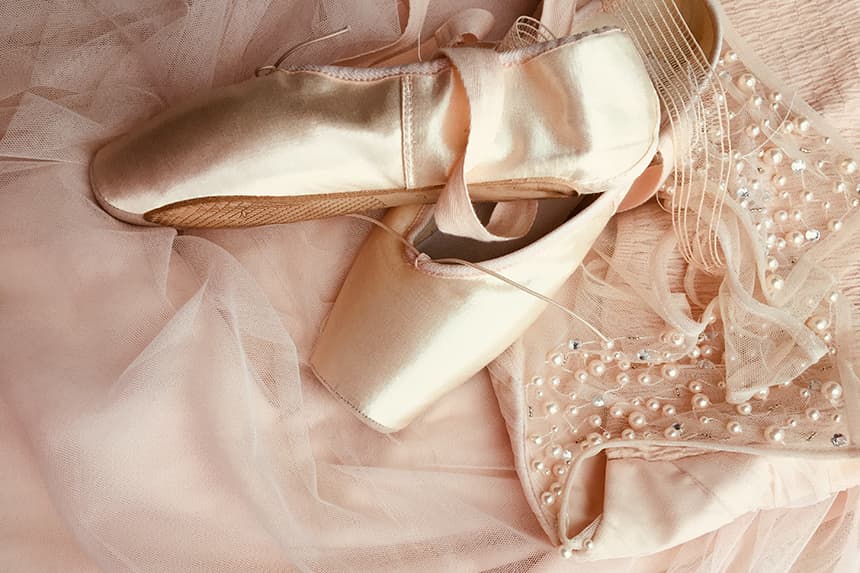
Salsa Dance History

Let’s dance salsa! After all, this is one of the most incendiary rhythms of Latin dances. Real salsa lurks in its roots – in the history of origin and development. Let’s learn how salsa appeared syncopated rhythms, its main steps, and hip movements, how this dance was enriched with different dance movements from other dance styles.
Two salsa dancers, a man in a suit and a women in a dress, dancing under a spotlight, with a dark background
Photo by Marko-zirdum on Pexels

So, bellow you can find the timeline and facts about salsa dance origin.

History of the Term Salsa

Yes, originally in Spanish, the word “salsa” means sauce. Only in the 30s of the 20th-century salsa began to be called the musical genre and style of dance, which has its roots in African tribes. But about everything in order…

There are several theories about the origins of the dance known as salsa. One of these theories states that the dance got its name in 1928 when Cuban musician Ignacio Pineiro shouted out “Echale Salsita!”, which translates to “Let’s add some spice!” while performing a new, energetic song. The phrase was eventually shortened to “salsa,” and the dance that accompanied the music became extremely popular. During the 1970s, the term “salsa” referred to a blend of various Latin American dance styles and rhythms, including cha-cha, mambo, pachanga, guaracha, and rumba.

Salsa’s Origin

Although salsa is considered a Cuban dance, its history began far beyond Latin America…

So, in 1492 Christopher Columbus sailed to the shores of Cuba (he actually discovered it). The Spanish invaded the new lands and exterminated almost the entire population of Cuba. But someone had to do some hard work there. To do this, the Spaniards brought slaves from West Africa to the territory of Latin America. The supply of slaves went on for a long time, until 1886 when slavery was officially abolished. On this basis, it was the people of Africa who played a huge influence on the origin and development of salsa dance.

Around the second half of the 19th century, Cuban music, until then little different from European music, began to acquire special characteristic features. The reason for this is the influence of African culture, which was becoming stronger as the slave system on the island weakened.

That is, Afro-Cuban dance, which includes salsa dance, appeared as a result of the merger of two cultures: Spanish and African. Spanish culture brought string instruments and melody to music, while African culture (especially the Bantu, Yoruba and Karagali tribes) brought drums and other less known percussion instruments to music.

It is also worth noting!

Cuba’s slave-holding system was slightly different from that of the United States at the time. In Latin America slaves were not forbidden to make music, so they often sang in church choirs and played European musical instruments. This had a huge impact on the formation of music and dance culture in the local population.

Contradanza, Danzon, Son are the forefathers of salsa dance

It is believed that the first danzon, Las alturas de Simpson, was written by the mulatto Miguel Failde in 1879. However, this is a very simplified vision of the question. Ballroom dancing styles are not created “suddenly”, out of nothing. As a rule, they “grow” from older dances, evolving under the influence of many external circumstances. It was the same with the danzon dance.

The ancestor of the danzon dance was the contradanza. It took a difficult and long way in Cuba: having appeared in England, it spread to France and then was brought to Espanola (Haiti). And it was not until 1791, when a brutal slave uprising broke out in Haiti, that the mass flight of French colonists led many of them to Cuba, where they settled in the eastern part of the island. As a result, the French contradanza, similar to the minuet, took root surprisingly quickly on Cuban soil and was popular for almost the entire 19th century.

In the beginning, the rhythms of danzon did not differ much from the rhythms of the contradanza. The Danzon dance was the name of a paired dance, which gradually replaced the figure dance, ie the contradanza. At the end of 1877, composer Miguel Failde composed four danzon. This date is usually considered as the start of a period of huge spread and “acceptance” of dance danzon. The romantic of closeness of the partners, the swinging of the hips and the use of minimum space for dance gave the danzon its special feature.

Until the 1920s, danzon was the national dance of Cuba. However, by the 1930s, danzon had almost disappeared in Cuba. The rise of another dance called Son in Havana in the 1920s played a significant role in the decline of danzon.

The Son Dance developed in parallel to the contradanza, but unlike the second, the Son is purely folk dance. The contradanza was performing by orchestras; the Son was a song accompanied mainly by drums. The merit of the Son dance lies in the fact that the freedom they afforded to spontaneous folk expression helped to enrich the dancing moves.

But by the end of the 1930s, jazz and swing brought to Cuba by the Americans did their job – danzon and son, so sweet to the heart of Cubans, began to lose popularity among the islanders…

Mambo

“Mambo’s Father” Damaso Perez Prado was born in Matanzas in Cuba in 1916. From an early age he studied the piano. By the 1940s, thanks to his energetic manner of playing, he had become a well-known musician.

In 1948 Perez Prado left his native island and moved to Mexico, where he formed his own orchestra. Taking as a basis a rhythms of son-montuno, popular at that time in Cuba, the musician decided to bring his sound closer to the music of popular American big bands of that time. To do this, Perez Prado added trombones and saxophones to his orchestra, as well as increasing the pace of his compositions. Perez Prado, his orchestra and his new musical and dance style – mambo – quickly gained popularity in Mexico and then in the USA (one day, music producer Sonny Burke, who was on holiday in Mexico, heard Perez Prado’s song and published it in America, where it became a real hit).

The popularity of mambomania in the 1950s and 60s had a significant influence on Latin American dance. It was Perez Prado who helped bring Latin American music and dance to the United States and the rest of the world. This period was crucial for the growth and development of salsa dancing, as Latin dances gained popularity not just in Cuba, but all over the world.

So where’s the salsa dance?

The origin of salsa dance is not a single, isolated event, but rather the result of the merging and blending of various cultural and dance influences. The development of salsa dance can be traced back to the long history of the evolution and spread of Cuban dance styles.

Cuban movements and dances in the form of mambo, cha-cha-cha, and others have gained wide popularity in the US. The turning point in the “standardization” of salsa as a dance was two major factors: the widespread use of household video equipment and the commercialization of salsa. And here we should mention two Torres, Eddie, and Alberta.

Since childhood, Eddie Torres was fond of Latin American dance, was a regular visitor to Latin American discos in New York. Being already a famous dancer, in 1995 Eddie Torres released his first video course called Salsa Nightclub Style. The video became popular and spread throughout the USA and then around the world.

The other pole of salsa dancing standardization was Los Angeles in California. The other Torres, Albert, played a leading role in spreading salsa on the West Coast. Albert Torres was the man who “promoted” salsa on the West Coast. He opened several salsa clubs, toured the best salsa dancers, was the first to hold salsa congresses.

That is, the name “salsa” and the standardization of movements and techniques, Latin American dances have already received in the United States. What about the Cuban style, you ask? In Cuba, there are more Casinos and Rueda de casinos dancing than salsa dance brought from abroad.

It is not surprising that Cubans began dancing salsa almost the same way as the Son dance. Only the pace became higher, and the number of various “knots” increased. For a long time, it was not even a question of mass introduction of any standard – simply because Cubans did not need it. People did not learn salsa in dance schools, but naturally – dancing to their pleasure on holidays with friends and acquaintances. That is why the peculiarities of the dance varied from one city to another, and in Havana – and from district to district. It must be admitted, however, that thanks to Cuban television and, in particular, the popular program Para Bailar, the Cuban salsa dance style has almost taken shape.

Today salsa is a popular social dance. Salsa competitions, and salsa dancers’ congresses are held all over the world, more and more schools are opened where salsa is taught.

Tell us if this article was useful for you if you learned much about salsa dance history. Perhaps you thought the salsa was a native Cuban dance, as we did before.

In any case, share your impressions with us!

Also interesting to read:

Other types of latin and ballroom dance:

Spanish dancers performing

10 Classical Spanish Dances

Spanish Dances article by Tanya, a dancer who lives in Spain. The warm, cheerful, and picturesque streets of Spain contain many wonders for anyone who wants to visit them. There is a very rich and ...
couple dancing the milonga in an evening

Milonga Dance: The uptempo relative of the Argentine Tango

Milonga dance celebrates Argentine Culture. A ballroom dance sharing many characteristics with the better known Argentine tango and considered to be the forerunner to Tango. A fluidity gives dancers the opportunity to express the vibrant ...
Male and Female doing a Tango dance before a crowd. Photo by Preillumination SeTh on Unsplash

Tango Dance

Tango Dance is a passionate and expressive form of dance that originated in Argentina in the late 19th century. It is characterized by its close embrace, intricate footwork, and dramatic flair. Tango Dance is known ...
Crowd gathered gor a parade with samba dancers in full costume

Samba Dance

The Samba is a Brazilian dance that has become popular all over the world. It is characterized by its lively and energetic steps and is often performed to music with a strong beat. The origins ...
Man and lady ballroom dancers, dancing in a dark room with spotlights. Ballroom Etiquette article

Ballroom Etiquette: Basic Guidelines for Dancers

Ballroom Etiquette Overview: From the beginner to the experienced dancer, it is an honour and a privilege to attend any dance. The time spent at dances by all age groups is precious. For many of ...
Best ballroom dance shoes.

Best ballroom dance shoes

Best ballroom dance shoes (Updated 2023) - Ultimate guide and review Capezio Best Opened Ballroom dance Sandals View at Amazon CLEECLI Best Price View at Amazon Very Fine Best Closed Ballroom dance Shoes View at ...

William Forsythe: a Revolutionary Look at Classical Dance

Improvisation and choreography are equal partners in a dance. Improvisation is the most important direction of choreographic thinking, it organizes the form of dance and the specificity of dance performance. One of those who made a serious contribution to the art of improvisation as a method of searching for choreographic vocabulary and a tool for developing creative thinking is William Forsythe.
William Forsythe on a stage, talking to dance students
Photo by Marlon Barrios Solano on Flikrr (edited to adjust sizing).

Researchers of modern dance rank Forsythe’s improvisation as postmodern improvisation, or the art of dance performance. Forsythe system has been shaped and honed for 15 years. And in 1994, it was designed in a specialized video manual “Technologies: A Tool for the Analytical Dance Eye”, which is still used for training new dancers of Forsythe’s troupe and is also a part of training professional dancers of modern dance in Europe and the USA.

About William Forsythe’s work and his influence on modern dance – read below.

Life and Career

William Forsythe is a ballet master, a specialist in the field
of modern dance, a researcher of the specifics of human body movement and improvisation. He was born in New York in 1949. He got his choreographic education in Florida. He got at the first dance class at the age of 17 with his roommate by accident, having absolutely no idea what the lesson will be.

In 1971 he joined the Joffrey Ballet (a company famous for the works of contemporary choreographers). It was there that Forsythe first saw Balanchine’s ballets on the stage of the New York City State Theater, which undoubtedly contributed to his development as a researcher of dance and choreography.

Since 1973 W. Forsythe has been working in Germany as a performer in the Stuttgart Ballet. Already in 1976, he was appointed ballet master of the company. For this company, he created his first neoclassical miniature – “Urlicht” – a duet to music by Gustav Mahler.

In 1984 William Forsythe became the head of the legendary Frankfurt Ballet and continued to be so until its closure in 2004. At Frankfurt Ballet, the choreographer worked on productions such as Artefact (1984), Steptext (1985), In the Middle, Somewhat Elevated (1987, Paris Opera), Impressing the Czar (1988), Limb’s Theorem (1990), Loss of Small Detail (1991), ALIE/NA(C)TION (1992), Eidos:Telos (1995), Endless House (1999), KAMMER/KAMMER (2000), and Decreation (2003).

His productions are part of the repertoire of the world’s major theatres, including the New York City Ballet, London’s Royal Ballet, Paris Opera, National Ballet of Canada and the Netherlands Dance Theatre.

This period of the ballet master’s work is characterized by a special radicalism: he puts on performances that are completely different from classical ballet, transforms the aesthetics of classical dance, proclaims freedom in dance from any canons and narratives.

In 1994, the program “Technologies: A Tool for the Analytical Dance Eye” was developed and released.

After 20 years at the Frankfurt Ballet, William Forsythe founded his Forsythe Company troupe in 2004. In addition to appearances at the main venues in Dresden and Frankfurt, the artists were active on tour. Forsythe has staged such ballets for the new company:

  • Three Atmospheric Studies (2005);
  • You made me a monster (2005);
  • Human Writes (2005);
  • Heterotopia (2006);
  • The Defenders (2007);
  • Yes we can’t (2008/2010);
  • I don’t believe in outer space (2008);
  • The Returns (2009);
  • “Sider” (2011).

He worked as a director and ballet master until 2015 in the troupe. As the reason for Forsythe’s resignation, the need to reduce workloads due to health reasons was reported. However, Forsythe has remained a consultant for the company, a guest lecturer and teacher, one of the co-directors and teachers of the European Dance Students’ Network program. The directorship of the Forsythe Company was taken over by Jacopo Godani under a new name The Dresden Frankfurt Dance Company”.

Forsythe produces and participates in the creation of a large number of architectural and performance installations. The installations have been exhibited at the Louvre, the Venice Biennale, and other important venues. His short film “Solo” was presented in 1997 at the Whitney Biennale.

The choreographer has also received special recognition in the field of fine arts, organizing amazing installations, whose viewers themselves become participants in the action.

Today Forsythe regularly holds lectures and seminars at various universities and creative organizations. He lives and works in Vermont.

Exhibitions

Special attention we should pay to Forsythe’s work in the fine arts. The project “Choreographic Objects” includes various installations, including interactive ones. Over the past few years, they have been shown in many museums.


Some of its current* interactive installations:

  • The Fact of Matter (Brisbane, Australia) – December 7., 2019 – April 26., 2020;
  • Acquisition/Körperschaft (Hasselt, Germany) – March 14. – May 10., 2020;
  • Aufand, Doing and Undergoing (Besançon, France) – until April 26, 2020;
  • City of Abstracts, Human Writes Drawings, Backwords (Essen, Germany).

* Expositions are temporarily closed due to the Coronavirus pandemic.

“City of Abstracts” is scheduled to be shown in Essen at Art Basel on September 17-20, 2020.

Forsythe’s Technologies of improvisation

In 1994 the computer program “Technologies: A Tool for the Analytical Dance Eye” was presented. Until now, it is actively used in the process of training dancers of different levels. This work deserves detailed consideration because its importance for the dance world is immeasurably great.

Improvisation technologies basically use the geometrical approach, working with lines, arcs, corners which form a body of the dancer. It was important for Forsythe to use what his dancers already knew. Since they were graduates of ballet schools, they were used to working with lines in body and space. This approach allowed the dancers to forget “how to move” and focus on the inner part of the movement, to overcome “numbness” in improvisation.

The choreographer shows simple movements and techniques in the program. The main purpose of his training is to teach the mind of a dancer to analyze movement in geometrical categories, corresponding parts of his body in space.

It’s useful!

Check out the program, even not only for ballet dancers. You will definitely learn a lot about your body.

For example, here are a few techniques from Forsythe’s technology. In his video lessons, the choreographer shows how to work with lines. For example, you can create an imaginary line with body parts and “move” that line in space, or you can create the same line with one of your body parts. You can also create a line by “pulling” it out of a point, or you can stretch not just a point but an entire line and create an imaginary plane.

You can extend the line by unbending a joint, for example, an elbow. You can work in the parterre by building movements along imaginary lines on the floor. The technique of getting into the line is to find a way that you can “get” into the imaginary line by a part of your body.

William Forsythe’s New Ballets

After leaving Forsythe Company in 2015, the choreographer has staged several ballets:

  • «Blake Works 1» for the Paris Opera Ballet;
  • «Playlist [Track 1, 2]»;
  • «A Quiet Evening of Dance»;
  • «Playlist (EP)» – the work for Boston ballet company;
  • «Artifact Suite».

Influence on modern dance

With the death of George Balanchine, the era of great discoveries in ballet was coming to an end, and few people believed in the possibility of a new revolution in dance. Nevertheless, the postmodern era has made its mark and proclaimed in dance freedom from any canons.

The improvisation and value of the moment “here and now”, the study of the movement and limits of the human body, the importance of the process rather than the final product of art – all this became the basis of contemporary dance. It was William Forsythe who brought ballet into the realm of marginal art, making it speak about contemporary ballet.

The avant-garde Forsythe has pushed back the boundaries of what is generally accepted: while in classical dance the position of arms and legs is fixed, Forsythe gives freedom to both arms and legs, and head. This also applies to his methods of working with dancers.

Improvisation – the main method of working with dancers – requires not only freedom to own their own body in space, but also freedom of thought. In this case, the intellectuality can be called one of the most precise characteristics of the specificity of W. Forsythe’s works.

Opinion!

Forsythe is a new turn. It’s basically a classic, but as if turned from a different angle… It’s as if you look at it through some special optics – and you get Forsythe.

At the same time, despite this release of thought and body, William Forsythe’s approach to choreography is surprisingly algorithmic. Through systematic exploration of the boundaries of space and time, the potential of the body and the mechanics of movement, the choreographer has developed his own author’s method of dance geometry and thus gives rise to a characteristic Forsythe’s style of movement.

The imagery and abstractedness of Forsythe’s ballets deserve special attention. After all, not every spectator is ready for a Forsythe’s form of interpretation, hence the complexity of perception. We can state the mechanical or geometrical style of dance plastics, but certainly not the lack of content.

Forsythe is simply not interested in stories and characters that are important in classical ballet. What is more important in these works is the emotional dynamics of the performers, the way the change in body movement determines the changes in a person’s emotional state. An abstract stage reality is formed on stage, within which a multivariate narrative of philosophical content is performed.

Dance critic Roslin Sulkas highlights the following features in the work of William Forsythe:

  • the presence of so-called “flickering movement” (based on elusive points of presence), performed by dancers with classical training, that is professionally developed in the aspect of ballet plasticity;
  • the use of the principle of inclusiveness – the possibility of including elements of absolutely any kind in the dance, both on the technical and conceptual sides;
  • approach to the realization of a complete work on the basis of the concept of “one theatrical universe”, where each element is a significant part of the multidimensional structure of the dance;
  • the development of a plastic language based on personal ideas of movement, where each element is endowed with volume.

We can’t help but mention the improvisational inserts in Forsythe’s ballets. Certain parts of the composition are performed by dancers in accordance with the concept of dance at their own discretion based on their own vision. Thanks to this, each display of a dance piece becomes unique and each broadcast gives a new reading to the work.

By its nature, modern dance is “dance of the head”, i.e. choreography that stimulates thinking tone not only of the dancer but also of the viewer in the process of perception of dance. Such mutual work of the ballet master and the viewer gives the necessary body and emotional contact. Then the viewer leaves with a huge plume of emotions and thoughts after the performance.

William Forsythe does not like to repeat himself, he always speaks to the viewer through his work in different ways. And no one knows what this choreographer will present to the public next time…

Conclusions

Doesn’t matter whether we call Forsythe by The New Balanchine or The Classic of the Ballet Avant-Garde, many today consider him one of the most important choreographers working today. Having traversed in his life from a dictatorship of ballet to a free of contemporary, William Forsythe has struck the ballet world with radicalism and experimentation. He has transformed and continues to transform the aesthetics of classical dance, has led to a rethinking of the importance of dance improvisation and has made an invaluable contribution to the training of dancers around the world.

Sources:

Ballet Moves for Beginners

Are you dreaming about a career as a ballerina or just want to try classical dance for yourself? These simple (ha-ha) ballet moves for beginners will help you understand what ballet is and is it fits you.

Are you ready? There are 9 ballet movements that tone the muscles of the whole body. Let’s go.

Students learning to ballet dance - beginners moves
Photo by Cottonbro Studios on Pexels

PLIÉ

Plié in the first position is one of the basic elements of ballet. Stand in the first position and start bending your knees slowly until your knees are over your thumbs. Hold on to this position for a second and then return smoothly and quickly upwards. Complete the movement in the first position.

Plié should be performed in all 5 main ballet positions. There are two types of pliés: demi and grand.

GRAND PLIÉ

The Grand Plié also performs from the first position, but unlike the Plié, you sit much lower, tearing your heels off the floor.

RELEVE

Releve is a basic movement that almost all newcomers learn. To perform a simple releve, take the first position and hold the ballet barre with one hand. Tension the caviar muscles and pull up to be on your socks. Transfer all the weight to the part of the foot that is under your fingers. This position is called the demi-pointe. Then gently fall down.

Try to do single-leg releve as well. This exercise is good for strengthening the back surface of the hip and calf.

Over time, you try to connect the plié and the releve. First, make a plié and then climb up in the releve using the strength of your feet on climbing.

BATTEMENT TENDU

Battement tendu is an exercise in which the working leg is either pulled aside and then returned, or bent and unbent. There are several different types of battement with which you can practice the ability to correctly move your leg back to the original position, bend and stretch the leg, pull it out and lift it to any height in any direction and at any speed.

JETE

In this exercise, the working leg moves in three directions: forward, to the side, back and again to the side. But the sock is detached from the floor every time. The leg is raised to the position in which it will make from the other about 45 degrees. After making the whole chain of movements, repeat the jete from the other leg.

ROND

Push your right foot forward without tearing your sock off the floor. Smoothly, drawing a semicircle, move it to the side and then back. Return to the original position, repeat 6 times with each foot.

FONDU

Lower into the demi-plie by bending the supporting left leg and leading the sock to the right of the ankle stone. Unbend the supporting leg and pull the right one forward. Return to its original position. Repeat the movement by pulling the right foot to the side, but then lower into the demi plié, leading the right foot behind the shin with the left foot. Straighten the supporting leg by pulling the right foot back. Move the side again and return to the original position. Perform the exercise 4 times from each leg.

SAUTE

Saute is a jump with no position change. It is convenient for learning the mechanics of jumping with novice students. Its study is started separately, with pauses before each jump. Saute consists of three main points: half-sitting (preparation for the jump), the jump itself and landing (half-sitting). The jump is made by jumping with the pushing of heels from the floor.

During the jump, the legs in the air are stretched in the knees to the limit, toes are stretched too, and the body is straight, no tension, the legs in the air retain the given position. When landing after the jump, the socks touch the floor first, then the whole foot is lowered and a half-squat is made evenly on both feet. Keep the body straight.

ADAGIO

Get in the fifth position. Push your right foot forward as in a battement tendu, but then raise it, straight, to the parallel with the floor. Go back to the fifth position and also through the battement tendu lift the foot to the parallel with the floor to the side. Then make the same move back, again to the side and return to the original position. Repeat with the other leg.

So, after these ballet moves for beginners, are you ready to wake up the ballerina inside of you?


Related articles:

Arabian dance in the nutcracker

The “Arabian” Dance in The Nutcracker

Christmas is around the corner, and if you are a Ballet enthusiast like me, you probably know that The Nutcracker recital has come to almost every city around the world. If you need to become ...
Ballet feet exercise. Ballerinas feet warming up stretching

Ballet foot exercises

10 Ballet Foot Exercises: Warm-up, Boost Your Technique and Foot Strength Foot exercises are an essential part of a ballet dancer’s training as they provide important strength and technique benefits. Developing strong and flexible feet ...
Ballerinas Feet. 3 ballet dancers stretching

Ballerina Feet: Ballet & Foot Health

If you’ve ever seen ballet or you’re a ballet dancer yourself, you’ll know how graceful dancers’ movements can be. But, of course, becoming a professional ballet dancer takes a LOT of hard work and dedication ...
Images of dancers on stage - moving to the best choreography, inspired by talented choreographers

The 9 Greatest Choreographers of the 20th century

This article see the DanceBible team pick some of the 20th century's (and all times!) greatest Choreographers, taking a historical slant via some very great and distinct contributions, which together help to describe the formation ...


Also interesting to read:

Contemporary Dance History

Contemporary dance is a popular dance direction characterized by plasticity, emotionality, variety of movements and techniques. Today, this dance has huge popularity. Its active popularization and development began only in the 80s of the last century. Even the word “contemporary” only then began to be used exactly as the name of the whole direction in dance. But you should understand that this style of dance appeared much earlier. Let’s find out about contemporary dance history.

Theories of Origin

We don’t know exactly when the Contemporary dance history began. It is not clear who and when he first started dancing, inventing movements and techniques. There are several theories that are based on the similarity of certain techniques to others.

Contemporary dance origin.

So, there is an opinion that contemporary dance came from Eastern practices, in particular from yoga and some martial arts. This is explained by the special technique of breathing in a contemporary, which is also inherent in yogic breathing. It’s also important for the contemporary dance to have a stable position, balance, smooth transition from one movement to another, which is also very typical for yoga. So one cannot help but think about the similarity of these two types of physical activity.

Contrary to the previous theory, some historians argue that the emergence of contemporary dance is directly related to either Central America or European countries.

Alternative to classical ballet

What nobody denies is that the contemporary appeared as a result of the denial of classical ballet and its canons. Ballet is a rather structured system of movements with strict rules. Contemporary dance has become a kind of opposition to everything classical, because of its free, expressive and natural character.

Contemporary VS Classic Ballet.

It should be noted that the classic base of a contemporary dancer is often an undeniable advantage in terms of physical fitness and capabilities of the body.

Founders

The mother of modern dance, free and sensual, is rightfully considered Isadora Duncan, although contemporary dancing got its popularity even 30 years after her death. It was she who began to contrast the sharp lines, strict choreographic movements and standardization of poses in favor of free, natural dance, which expresses sincere emotions and feelings.

Isadora Duncan.

Isadora has established a tendency to dance barefoot. She was not interested in inventing new pas, but in creating a new worldview – light and joyful. This feeling was fully conveyed through her dancing and performances. She talked so much about “liberation from conventionality”, about “free spirit in a liberated body” that her art was eventually dubbed “free”.

Isadora Duncan's Photos.

Authenticity and individuality, the manifestation of personal feelings of the dancer – these signs became the main in determining the modern dance according to Duncan and her followers. The ballerina’s frozen smile has disappeared, and she has been replaced by sincere emotions and feelings.

Attention!

It is also worth noting the significant influence of the idea of freedom of movement and expression of feelings in dance on classical ballet dances. Even the academic ballet could not allow a “soulless” gesture after Duncan.

Martha Graham (1894-1991)

Although Isadora and her dance were quite popular, contemporary dancing has gained more popularity thanks to Martha Graham. This dancer, who introduced and widely popularized contemporary dance to a global audience.

Martha Graham.

М. Graham excluded imitation of movements, teaching independent plastic thinking and expressiveness of gestures. For this purpose, she used the technique of contraction and release, according to which the movement originates from the center of the body where breathing is concentrated (diaphragm).

Martha Graham's photo.

Graham has introduced into modern dance all known to this day bases:

  • Breathing techniques: when exhaled, the diaphragm shrinks, directing the movement inside; when inhaled, it expands, the movement spreads in a spiral upward through the torso, arms, neck.
  • The movement must cover the entire space, that is, the dance takes place standing, sitting and on the floor (parterre).
  • The dance completely covers the whole body, all parts of the body are used.
  • More complete use of space through movements on the floor.

Merce Cunningham

Merce Cunningham worked with M. Graham’s troupe in 1939-45. In 1952, he formed his own troupe. He believed that the emotional element should be brought to choreography by the spectator, not by a choreographer or a dancer. His aesthetics were close to the theatre of absurdity and aleatoric in music. Cunningham has staged performances of both the Art Nouveau Dance and the European Classical School in many European and American companies, particularly the Paris Opera.

Merce Cunningham.

Pina Bausch

The German dance theatre in the Pina Bausch version becomes the third source of all modern culture with modern dance. She has been working as a choreographer since 1968, thanks to which she creates the Wuppertal Dance Theatre. She has not only transformed modern dance but has also created a new genre: dance theatre, a system in which words, music, and movement exist on equal terms. Many of the things that exist in the field of dance theatre today owe this genre to Pina Bausch.

Pina Bausch.

Present day

Today, contemporary dance is a popular dance around the world. Such dancers and choreographers as William Forsythe, Alain Platel, Steve Paxton (creator of contact improvisation), Wim Vandekeybus, Itzik Galili, Meg Stuart, Ruth St. Denis, Boris Charmatz, Anne Teresa De Keersmaeker, Sasha Waltz made a significant contribution to its development and popularization. They and many others are the authors and ideologists of modern free dance – contemporary dance. To these people, we should be grateful for what we see and enjoy this amazing dance exactly as it is.

Books about the history of the Contemporary:

  • Steve Paxton “Gravity” and “Trisha Brown: dance and art in dialogue, 1961-2001”;
  • Driver S. William Forsythe “Chur: Harwood Academic Publishers”, 2000;
  • Susan Rosenberg “Trisha Brown: Choreography as Visual Art”.


Here’s some articles relating to modern dance:

Acro Dance: What is it? Unravelling the Art of Acrobatics in Dance

Acro Dance: What is it? Unravelling the Art of Acrobatics in Dance

Acro dance: When athletics and art come together to make something new and beautiful. Physically demanding, emotionally captivating, welcome to the world of "Acro". As the fairly literal name would suggest, Acro Dance is a ...
What is the Contemporary Dance? A female dancer in a warehouse setting balanced on one foot

What is Contemporary Dance?

If you're wondering just what is contemporary dance, it's a form of dance that combines different styles to express emotions and convey ideas through fluid, expressive movements. It is a popular and widely-practiced form of ...
Isadora Duncan and her Dance Heritage.

Isadora Duncan

Isadora Duncan a woman whose name in the early 20th century was synonymous with dance and one of the greatest choreographers. “If you could explain something with words, there would be no point in dancing ...
William Forsythe on a stage, talking to dance students

William Forsythe: a Revolutionary Look at Classical Dance

Improvisation and choreography are equal partners in a dance. Improvisation is the most important direction of choreographic thinking, it organizes the form of dance and the specificity of dance performance. One of those who made ...
Contemporary Dance History. Photo of a dancer with a cape in a foggy stage

Contemporary Dance History

Contemporary dance is a popular dance direction characterized by plasticity, emotionality, variety of movements and techniques. Today, this dance has huge popularity. Its active popularization and development began only in the 80s of the last ...


Cover photo by Photo by Craig Whitehead on Unsplash


What is Krumping? The 101 on Krump

Krump is a dance style and a genre of music. The Krump Dance Style is characterized by its energetic and expressive movements, as well as its aggressive presentation. Despite this intensity, Krump is not a dance of violence or hatred, but rather a peaceful form of expression with a rich history and philosophy. It is a street dance that has gained popularity for its sharp and fast movements, but it is important to remember that it is not a dance of aggression or animosity.

History

Clowning

The dance style known as Krumping originated from a type of dancing called clowning dance, which emerged in the 1990s. Clowning was created by Thomas Johnson, also known as Clown Thomas or Tommy the Clown, and involved a group of dancers who performed a high-energy, energetic dance style. This style was particularly popular among young people, and the dancers often wore brightly colored face paint during their performances at social events and children’s celebrations.

It is worth saying that the streets of Los Angeles, where the dance was formed, at that time were overflowing with banditry, drugs, and violence. In this atmosphere, it was hard for teenagers not to get into bad company. So for many of them, dancing was a salvation from dangerous and illegal street entertainment.

The Origin of Krump

Tight Eyez (Ceasare Willis) and Jo’Artis “Big Mijo” Ratti once joined Thomas’ band. But despite their interest in dancing, they did not dance like the typical representatives of clowning. Their movements were filled with aggression and anger, and they were more powerful, sharp, and dramatic. Tight Eyez and Mijo themselves mentioned in interviews that they didn’t do clowning originally. They came to Thomas and were Krump dancers from day one.

Since Mijo and Tight Eyez were too rough for the clowning style, they eventually stopped dancing in Clown Thomas’s band and split into their own band. At first, they danced alone. In the late nineties, more and more people were beginning to learn about krump dancing and began to develop a competitive hierarchy and get into dance battles. In the early 2000s, there were families of krump dancers (“fams”).

Krump Popularization

Krump became popular in the 2000s after the popular video maker David LaChapelle first made the short documentary “Krumped” and showed it at Aspen Shortsfest in 2004. Following the success of the first film, David made the feature film “Rise,” which explores the origins of clowning and krump. The film features popular krumpers such as Tight Eyez, Lil C, Miss Prissy, and others.

Note!

It’s also interesting to readHistory of Hip-hop


K.R.U.M.P. is an acronym for Kingdom Radically Uplifted Mighty Praise. The founders, and in particular Tight Eyez, put spiritual meaning into the dance, saying that this dance praises God. For many followers, the spiritual element is also important in this dance.

Characteristic features of krump

Krump is rarely choreographed and it’s usually freestyle. Although, over the past few years, Krump choreography has also gained popularity.

The basic movements are performed powerfully and with some aggressiveness, the dancer puts strength and power into each movement. The movements are often jerky and fast. The krump contains jumps and swings, but they arepowerful and “crushing the ground.”. A typical movement is a chest pop upwards.

Drama is also a characteristic of the performance of krump because it is believed that dancing, the dancer acts as if they are throwing out some dark emotions that they have accumulated and should do it with rage.

Popular Moves

  • Chest pop
  • Stomp
  • Arm swings
  • Wobble

Music

  • J Squad
  • Aghiazma
  • Krumpology
  • MadDTraXx
  • Trakk Team
  • Big Rules
  • Baby C
  • Lil Gully
  • Stix

Krump Dictionary

Battle – a dance competition where dancers compete against each other, taking turns.

Session – format of dancing where participants form a circle and take turns in the center to dance.

Those who have their own unique and unique krump dance style are called Buck. People who copy others, in turn, are called Biters.

Often, the words “Kill Off” are used in battles. This means “killing” an opponent in battle, that is, the performing of the most energetically charged and powerful part of the performance.

Callout – battle call.

As you can see, krump, as a separate and independent dance direction, formed not so long ago. However, it has won the hearts of many dancers within just a few years.

Sources:

FAQ

What is a krump dance style?

Krump is a street dance style characterized by sharp, jerky movements, aggressive execution, and expressiveness.

Where did krumping originate from?

It appeared in the early 2000s on the streets of Los Angeles and was similar to a dance style known as clowning dance. The creators are Tight Eyez (Ceasare Willis) and Jo’Artis “Big Mijo.”

What is the difference between krumping and clowning?

Clowning is a dance that’s more cheerful and inflammatory, unlike krump. It is often performed by applying bright colors to the faces of the performers. While krump is aggressive, it is performed with the spouting of bad emotions and thoughts. The movements of krump are sharper and more jerky than the movements of clowning.

Who popularized krumping?

Although Krump was popular among teenagers in Los Angeles, it gained real popularity and distribution after the movies “Krumped” and “Rise” by David LaChapelle.


Related articles on street dancing:
House dance, street dancing

House Dance

Urban and street dances have always been able to go beyond traditional barriers and really connect people through movement. House dance does just this, hand in hand with the electronic ...
Popping dance on the street

Popping: Dance with Precision. 3 beginner techniques.

What is the popping dance technique and how do you 'Pop'? Popping is a style of street dance, where dancers quickly tense and release muscles (sometimes known as ‘hitting’ or ...