10 Tips for New Dance Teachers

Starting out as a dance teacher can be tough. But what I’ve found over the last 15+ years as a dance instructor, is that it’s a highly rewarding journey full of growth.

Teaching dance demands passion, dedication and a commitment to nurturing the student’s growth. To help you with dance teaching in those early steps of your career, this article outlines some tips for new dance teachers. A few handy pointers which I’ve learned along the way. I hope you find it useful.

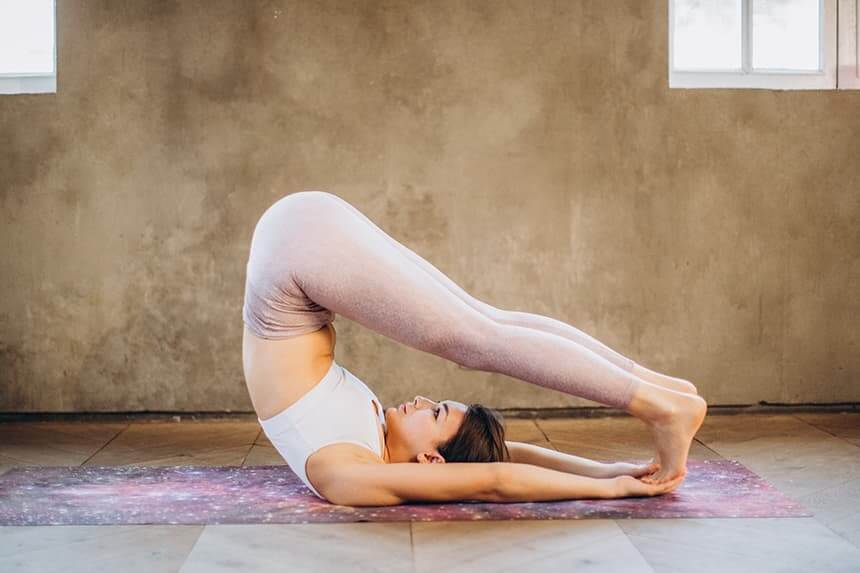
1.   Develop Lesson Plans and Structure

Coming up with the dance lesson plan. tips for new dance teachers
Photo by Unseen Studio on Unsplash

Effective and productive teaching requires structure and goal-shaped lessons. To keep your students engaged, organize your classes with clear objectives:

  • Warm-ups to prepare their bodies,
  • Stretching to enhance flexibility,
  • Strength exercises to build endurance,
  • Technique and skill-building drills to refine their skills,
  • Choreography sessions to nurture their creativity,
  • The last one, but a very important one that many skip, cool-down routines to conclude the class and cool the muscles to prevent injuries.

Consider structuring your music repertoire by minutes to align with your class structure. Tailoring music selections to different class phases can contribute to the overall experience.

That would mean creating a music list that follows your class objectives that we mentioned above. For example, use higher BPM (beats per minute) tracks for energetic warm-ups, match the tempo with the strength exercises and choose slower BPMs for cool-down sessions.

Teacher tip: ensure the music is suitable for all ages by using censored versions to maintain professionalism. That is how you show respect for your students and their families, and you will get the same back.

Using this guidance, the little ones will feel that they are having fun while actually learning, and the big ones will feel that they are learning while having fun. Progress is guaranteed.

2.   Master Your Craft

As a new dance teacher, it’s essential to continually improve your dance skills. Stay dedicated to your training, attend workshops and practice regularly to stay in form, not just physically but mentally as well. This commitment involves the development of your teaching skills.

Good teachers need to work on themselves so they can make an impact on their students. It is important to excel in your chosen dance style, but don’t limit yourself. Broaden your dance knowledge by learning various dance styles, from classical ballet to urban dances and contemporary styles.

Also, you can embrace opportunities to draw inspiration from other art forms and sports.

That means that Martial Arts like Capoeira or Taekwondo, or maybe Parkour or even Football can make some new insights into your new creative dance endeavours.

Shaping your style will be the result of your input and you have a broad variety of options and possibilities. This versatility will make you a more appealing and intriguing teacher.

3.   Seek Professional Advice and Learn Continuously

Let’s assume that you will never stop learning as a dance teacher and that you will attend workshops and conferences, and network with other dance educators to gain new knowledge.

Being an exceptional dance teacher is a commitment to lifelong learning.

When attending dancers tailored workshops, be proactive and seek advice from other dance teachers, because, these could be golden tips. Their insights will help develop your new teaching strategies but also you will find inspiration for your classes.

Additionally, consider exploring educational fields beyond dance, such as child psychology to understand the cognitive and emotional needs of your students. And of course, Google, YouTube, and the Internet are free educational tools that you shouldn’t ignore. By consistently expanding your knowledge and seeking wisdom from those who have walked this path before you, you will evolve into a more innovative and proficient dance educator.

4.   Create Different Learning Styles

teaching with different learning styles - tips for new dance teachers
Photo by Ksenia Chernaya on Pexels

Recognize that each student learns differently and be adaptable to employ several learning styles. That is the key to effective teaching and instruction.

Learn about the individual approach versus the group approach and how and when to apply each. Expand your teaching methods to meet the needs of your students, considering that not every student is a visual learner. Some may comprehend more auditory or kinaesthetic concepts. Teaching dance to different age groups, such as babies, toddlers, junior or seniors all makes a big difference too – so this article gives some considerations and techniques you can use.

Besides dance workshops, consider yoga and pilates classes to enhance your own physical awareness. A good foundation would be to expand knowledge about anatomy, physiology, kinesiology and nutrition which will further enrich your teaching. Be open to exploring some pedagogy or psychology classes and courses to absorb emotional aspects of learning for an inclusive teaching environment.

5.   Improve Communication Skills

In continuation of the previous point, by attending classes you should develop effective communication, and that is the key to successful teaching. Enrolling in communication classes could be on your list to educate yourself and equip you with valuable techniques.

It is a common thing that dance teachers use “dancer language” when counting, pointing and making cues on music beats. If you have been dancing for a while, you probably know what we are talking about. The “5, 6, 7, and Boom, Ka, Ti Ki Ti Ki, Ta! Hey!” is unique jargon that involves counting and cueing with movements to the beat of the music.

This language expression is an essential tool for stimulating and evoking wanted emotional responses, and you don’t have to change that. But, if you want to build up your dance language you can always further enhance your communication by mapping these cues to their corresponding musical beats, meaning, renaming the “Boom” with the belonging number. This approach proves especially useful when working with children and beginners using simple music samples. When music and choreography catch a higher level or greater speed, usually there is a need to use the “Dance language” to express these accents.

Also, musicality classes will be of great help in your understanding the music, its application in dance, and transferring knowledge. Actively listen to your students and give space for student’s questions and concerns. This is how you will build authority and how to be loud without being loud.

6.   Create a Positive Environment

Teaching dance tips - creating a supporting learning environment
Photo by Gustavo Fring via Pexels

Design a welcoming atmosphere in your dance studio, and encourage a supportive community that inspires growth. Build trust with your students and their families by providing them the opportunity to ask questions, propose ideas and assist in the operations of your dance studio, such as costumes, transport or even sponsorships and donations.

This collaborative approach can lighten your and your colleague’s load and strengthen your dance community. You wouldn’t believe how much dancers moms and dads love to be involved in helping around and supporting. Your dance community can have only benefits of this kind of functioning because it fosters a sense of belonging and growth.

Furthermore, implementing constructive feedback mechanisms not only backs student progress but also empowers them to take an active role in their own learning journey. Incorporate engaging games and activities into your classes that encourage students to give and receive feedback constructively and provide each other support in order to progress.

Important notice, patience is crucial when working with children. Younger teachers are usually more strict and set high expectations due to their inexperience. Often, they are not aware of how long it takes to get to the final result while honing the technique. Setting a high bar can motivate kids to achieve more and progress faster, but it is important to strike a balance to prevent burnout and not result in the opposite effect of giving up.

Fostering a supportive community that thrives in collaboration and respect will contribute to a positive environment that nurtures growth and achievement.

7.   Focus on Students Technique and Encourage Self-expression

As a teacher, your role is to enable your students to unlock their full potential. Strong technical foundations are crucial when dancers build their skills. Dedicate time to teach proper technique, alignment, posture and precision.

A solid technical base will help your students not only to progress but also to prevent injuries that will ensure their longevity in dance. Dance is a powerful form of self-expression, and it is vital to encourage your students to cultivate their creativity and uniqueness.

While respecting the fundamentals of the dance styles they are learning or gravitating to, provide them opportunities for personal expression.

Encourage them to infuse individuality into their movements and allow them to develop a sense of ownership over their dance journey. This blend of technique and self-expression is the essence of a dancer’s artistic growth. You are not only shaping the proficient dancers but also nurturing the artists in them where they discover their unique stories and voices as dancers.

8.   The Vital Link: Technique and Injury Prevention in Dance

Stetching in dance lass to avoid injury - tips for new dance teachers
Photo by Pavel Danilyuk via Pexels

Emphasizing the profound connection between technique and injury prevention is a significant aspect and your responsibility in your dance teaching. It is your job to instill a deep understanding of how proper technique acts as a protective shield for dancer’s bodies.

React fast when dancers expose themselves to the risk of injury by flawed technique. Improper posture or overexertion can strain muscles, ligaments and tendons leading to chronic injuries. Fractures and injuries are sadly too common in the dance world. Stress fractures, sprains, and strains are all too common in the world of dance when proper technique is neglected.

A big part of teaching should contain communicating how to distribute forces evenly throughout their bodies so they can move efficiently. This minimizes the strains on vulnerable areas, such as ankles, knees, and back. By implementing a workout that is concentrated on muscle balance and strength you will raise healthy and strong dancers. Teach about engaging in proactive self-care routines like stretching, conditioning, and rest to build their resilience. Empower students to dance safely to ensure their long and joyful careers in the art of movement.

By adequate teaching, you’re not only enhancing their ability to progress but also safeguarding their physical well-being.

9.   Install Your Own Flavor

To make potentially “boring” parts of the class, such as exercising and technique drills, more interesting, you can introduce your students to games and goal-oriented activities. Also, a controlled dose of competition is always welcome and can motivate students while making learning fun. Infuse unique teaching styles into your classes to differentiate the classes from other dance schools, especially when teaching more traditional dances like ballet or folk dances. You can still adhere to the traditional ways of teaching while finding innovations to make your classes enjoyable and engaging. Here are some examples:

  • Try to integrate a story not only into the choreography but in classes which will be followed by the structure of your training.
  • Be updated on trends! The dance world evolves constantly. Stay informed about current dance trends, music, and choreography to keep your teaching fresh and appealing to your students. That is how you can inspire your students effectively.
  • Change every few months, or every year, your teaching styles by adding something new that you learned while educating yourself.

10.  Simplify Your Life: Automate and Delegate for a Healthier You

Happy leaders – happy followers, means healthy and unburdened teacher who have grateful and successful students. This one will help prevent you from burnout and preserve your own health. It is very important to rationalize your capacity and responsibilities.

One effective way is by automating various aspects of your dance business. This includes preparing template messages, such as notices for parents regarding costumes, rehearsal schedules, and final performances. Automation relieves the administrative burden, giving you more time to focus on your primary role as a dance teacher and guaranteeing better time management.

Moreover, kids love to work! It is not child labor, and there will be no problems if you give some of your tasks to your children. They can help with tasks like rearranging chairs or preparing the dance studio for the upcoming class. Younger students can even help by maintaining attendance lists. You can have your studio running like a successful company in which everybody participates and are an important part of the studio.

Involving your students in the running of the studio can be both educational and helpful while instilling a sense of responsibility and teamwork.

As we already mentioned, friends and families are often willing to contribute their time and support to take on some of your tasks. Sometimes is hard to delegate but when you master this it will take your coaching to the next level that is beneficial for everyone. This collaborative approach will allow you to focus on what you do best – teaching dance.


In Summary:

Remember that dedication and continuous learning are your most valuable assets. Mastering your craft is an ongoing process and you should never stop improving your skills. Cultivate a unique repertoire that sets you apart as a teacher and brings only benefits to your diverse student’s needs.

As a dance teacher, you have the power to inspire and shape the next generation of dancers.

Embrace this fulfilling journey and stay committed to your growth. Your impact on student’s lives will be immeasurable, and the joy of witnessing their progress will be one of the most rewarding things of your dance teaching.


We hope you enjoyed our tips for new dance teachers. We wish you the very best of luck and would love to hear about your experiences.
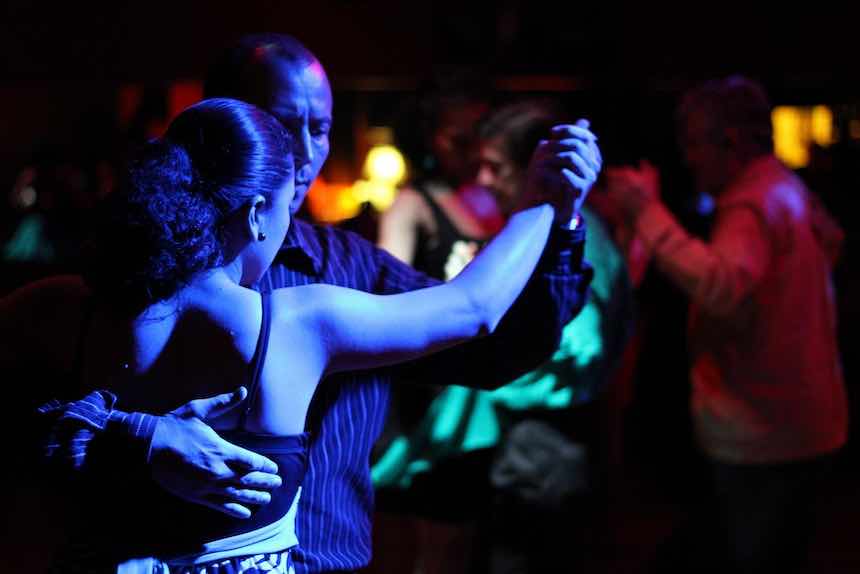
Milonga Dance: The uptempo relative of the Argentine Tango

Milonga dance celebrates Argentine Culture. A ballroom dance sharing many characteristics with the better known Argentine tango and considered to be the forerunner to Tango. A fluidity gives dancers the opportunity to express the vibrant energy and flirtatious spirit often associated with the milonga music. This is a known for its playfulness and joy – as well as its complicated, intricate steps and movements.

Are you looking to find out more about the techniques and music of Milonga, its similarities and differences with Argentine Tango? Well read on!

couple dancing the milonga in an evening
Image by Luis Fernando from Pixabay

History and origins of Milonga dance

The origin of the milonga dance is closely tied to the Afro-Argentine community. We’ll cover more about this in the ‘language’ section below – as it is an African word.

This period seems to have been less covered but we across this quote from Professor or Art History at Yale, Robert Farris Thompson, who noted “Tango started black, and milonga, the dance preceding it, even more so”.

In terms of its more widely covered origins, we trace back to The Río de la Plata, separating the cities of Montevideo and Buenos Aires – port cities, leading to ‘the pampas’ cattle ranches, as well as mining areas of the Andes. Because of this geography, international influence and nature of work, in the1870’s to 1900’s, the area had an influx of gauchos (cowboys), sailors, soldiers, stablemen – the lower classes of society.

Milonga was mainly danced by who mixed various global folk dances and dance at brothels and parlours, beginning as a walking dance and incorporating more sexualized movements, often ahead of the other activities taking place at these locations.

Hence milonga was frowned upon by the upper classes of Argentine society, to the point that you actually needed a permit to run dance around the city!

However, by the late 1870s, composers and singers began creating milonga songs, which contributed to its popularity and widespread adoption throughout Argentina.

By the early 1900s, milonga and tango became socially acceptable, even reaching craze status in fashionable European circles by 1915. It is believed that this started, in part, through wealthy families sending their sons on a coming of age, ‘grand tour’ to Europe.

There  were events and gatherings, at which these travellers would share their dance the tango, vals (waltz), and milonga, began to attract a wider audience. These events, initially spreading through then beyond Paris to gain more popularity across Europe and in the mainstream.

During this period, there were also a number of European contributions to the Milonga. These include:

  • The waltz, adding to to Milonga’s rotating movements and elegant flow.
  • The polka helping shape Milonga’s rhythm and high energy.
  • The mazurka, adding further sentimentality and drama

As milonga gained popularity, it started to merge with other dance styles like the Cuban habanera and flamenco, ultimately evolving to develop the Argentine tango that is known today.

Milonga is still celebrated, danced in classes, clubs and dancehalls around the world.

How to dance milonga

Getting the rhythm

First we need to get a grasp for the basic Milonga rhythm. It uses an upbeat 2/4 rhythm, with quick, syncopated steps. Listening to Milonga music and tapping your foot or hand to the beat is one way to get familiar with the rhythm ahead of taking any steps.

Next, focus on mastering the basic Milonga step patterns.

These include

  • the salida (the basic walking step)

In this video, Ana Padron from Tangoforall.com says “think of a Salida as the period (or ‘full-stop’) at the end of a sentence. You can also see the steps described here

  • the back ocho – steps that form a figure eight on the floor


  • the forward ocho


Milonga often incorporates fun, theatrical elements like small lifts, jumps and kicks. On mastering the basic steps, dancers can start exploring these more advanced moves. Remember to keep your movements careful and controlled to avoid disrupting your partner or other dancers.

Partnership

The lead and follow dancers working in harmony is what creates a smooth, connected dance experience to the rhythm. Good communication between partners, and signalling movements using the leader’s chest, arms, weight shifts and body movements to signal show clear intention to the follower. Followers need to be attentive and responsive to these subtle cues.

Posture

A Milonga posture is upright. You ensure that your chest is slightly forward, and weight over the balls of your feet, with knees are slightly bent. The embrace in Milonga is often very close – similar to Argentine Tango.

Dance styles and techniques

The two primary dance styles within milonga are Milonga Lisa and Milonga con Traspie.

Milonga Lisa

Milonga Lisa, sees the dancer make steps on every beat, displaying smooth and continuous movements. It’s good for beginners to familiarize themselves with milonga dance, using simple moves

Milonga con Traspie

A more advance dance. Milonga con Traspie is more syncopated and intricate. Rhythmic changes, include shifting weight from one foot to the other and back again in double time, or three steps in two beats. This gives the dance energy, as do the additional techniques:

  • Quebradas are breaks in the dance pattern where the couple momentarily pause or uses a different rhythm before resuming their dance.
  • Cortes, are brief interruptions in the movement, here dancers can showcase creativity and skills in improvisation.
Milonga dancers in competition
Photo by PreIllunination Seth on Unsplash

Similarities and differences between Milonga and Tango

Similarities between milonga and tango

Milonga and tango are both Argentine dances. They share a deep cultural and historical bond as they both originated from the The Río de la Plata area

Differences between milonga and tango

Music & tempo: Milonga is danced at a much faster tempo than tango, following a 2/4 rhythm. Tango is slower and more deliberate allows dancers to interpret the music through pauses, slow and quick movements and includes a variety of melody.

Movements: Milonga dance has faster, sharper and more flowing movements, with a more relaxed posture.

Embrace: Milonga dancing maintains a tighter embrace than tango, to support the faster, more intricate footwork required.

Milonga Music

Milonga music typically includes various instruments that are essential to its unique sound:

  • Bandoneon: An often used, type of concertina. It’s similar to an accordion.
  • Piano: providing harmony and syncopation.Often used in Milonga.
  • Violin: adding and emotion to the music, playing both melodic and rhythmic parts
  • Double Bass: a foundation for the music, adding depth and anchoring the melodic instrument
  • Guitars showcase the dance’s connection to traditional Argentine and Uruguayan folk music

Musical Influences

The origins of milonga music can be traced back to a combination of musical genres and influences. This includes:

  • Habanera, a Cuban dance rhythm that found its way to Buenos Aires in the late 19th century
  • The vals (waltz) contributed to the development of the milonga style with its flowing and graceful melodic elements.

Famous Composers & Contributors to Milonga Music

Great musicians and composers have been central to the development of Milonga music and the dance style more broadly. Some of the most well-known contributors include:

  • Ástor Piazzolla: A revolutionary Argentine composer.
  • Carlos Gardel: Known as the “King of Tango,” but also very influential on the development of milonga music
  • Aníbal Troilo: A significant composer, bandleader and bandoneon player bandleader during mid-20th century.
  • Villoldo: known as the father of tango

Some others who made considerable contributions to the music include: Rodolfo Biagi, Edgardo Donato, Gabino Ezeiza, Juan D’Arienzo, Angel Vargas, and Roberto Firpo.

Some of the individuals notable in the transition from Milonga to Tango include: Francisco Canaro, Lucio Demare, Pedro Laurenz, and Domingo Federico. Carlos Di Sarli is famed for mastering both styles.


Milonga etiquette for the dance floor

Off to your first Milonga, fear not, here’s some tips to get started.

  • Go with or arrange to meet a friend or partner. It will be much more fun to have someone to dance with. Once you become more familiar, you will be more likely to have opportunities to meet with other dancers.
  • Instead of asking a stranger to dance and the potential for embarrassment this creates, in Milonga, use eye contact (“mirada” as in ‘mirror’) is made with a potential partner. If this is held, a slight nod of the head “cabaco” is made and, if returned, the leader will walk the follower to the dance floor.
  • Dress to impress, think more fancy restaurant than club. Some events are more casual but as a rule you’re dressing up.
  • Firstly, understanding the flow of the dance floor is essential, so you can enter the dance floor safely. Dancers follow the “ Ronda”, an imaginary line of dance by moving counter-clockwise around the room, allowing everyone to enjoy the space without causing disruptions. Ensure any approaching leader has seen you before moving into and maintaining space on the dance floor.
  • During a Milonga, the music is organized in tandas, which typically consist of three to four tangos from the same genre or orchestra. It is considered proper to dance with the same partner for the entire tanda.
  • At the end of each tanda, a short musical break called a ‘cortina’ provides an opportunity for dancers to change partners, rest or socialize.
  • Leaders should be aware of their partner’s comfort, avoiding excessive force or uncomfortable body positions.
  • If its getting hot and sweaty, bringing a change of outfits, like shirts for men and extra (but not overpowering) perfumes, mints and deodorants can be a good idea – after all, you’re up very close in a Milonga embrace!
  • Thank your partner after each dance.

Famous Milonga Dancers

Want to see great examples of Milonga in action? Checkout these amazing dancers:

  • Miguel Zotto and Daiana Guspero are prominent figures in the world of milonga dance.
  • Angel Coria and Claudia Sortino are another example of celebrated milonga dancers. They are known for infusing their routines with humor and joy.
  • Dani Garcia and Luna Palacios have significantly contributed to the milonga dance scene.

Milonga Meaning

As a word itself, Milonga has African origins, meaning ‘argument’ / ‘issue’ in Kimbundu or ‘lines of dancers’ in Ki-Kongo. Milonga is also a term with multiple meanings in the context of Argentine culture and dance.

Musical genre:

As a musical genre: “Milonga is an excited habanera.” Often the music accompanying the dance, with a related history.

Milonga dance:

As we’ve spent the last few minutes describing, dancers perform the milonga with smooth and gliding movements, intricate footwork and rhythm.

Milonga event:

Milonga is also a word describing a social event, where people dance. The styles danced also include the Argentine tango and vals. Attendees, known as milongueros, enjoy a night of dancing and socializing. Often the events are a relaxed and social affair with a sense of community.


Related articles:

Spanish dancers performing

10 Classical Spanish Dances

Spanish Dances article by Tanya, a dancer who lives in Spain. The warm, cheerful, and picturesque streets of Spain contain many wonders for anyone who wants to visit them. There is a very rich and ...
Conga line dancing

Conga Line: How to Conga at parties in 3 steps

Conga lines have long been a favorite for parties and social gatherings, helping break the ice and getting that party vibe going. If you’ve never experienced a Conga Line, it’s good fun. In this article  ...
couple dancing the milonga in an evening

Milonga Dance: The uptempo relative of the Argentine Tango

Milonga dance celebrates Argentine Culture. A ballroom dance sharing many characteristics with the better known Argentine tango and considered to be the forerunner to Tango. A fluidity gives dancers the opportunity to express the vibrant ...
Ballet feet exercise. Ballerinas feet warming up stretching

Ballet foot exercises

10 Ballet Foot Exercises: Warm-up, Boost Your Technique and Foot Strength Foot exercises are an essential part of a ballet dancer’s training as they provide important strength and technique benefits. Developing strong and flexible feet ...
Male and Female doing a Tango dance before a crowd. Photo by Preillumination SeTh on Unsplash

Tango Dance

Tango Dance is a passionate and expressive form of dance that originated in Argentina in the late 19th century. It is characterized by its close embrace, intricate footwork, and dramatic flair. Tango Dance is known ...
Crowd gathered gor a parade with samba dancers in full costume

Samba Dance

The Samba is a Brazilian dance that has become popular all over the world. It is characterized by its lively and energetic steps and is often performed to music with a strong beat. The origins ...

Why not check out our article on Conga lines too.

Ballet foot exercises

10 Ballet Foot Exercises: Warm-up, Boost Your Technique and Foot Strength

Foot exercises are an essential part of a ballet dancer’s training as they provide important strength and technique benefits. Developing strong and flexible feet is a big part of the groundwork you lay as a dancer. Given the exceptionally demanding nature of ballet, appropriate foot exercises help prevent injuries, maintain correct technique, and contribute to achieving the desired aesthetic lines on stage.

After all, dancers’ feet are so central to everyday life as well as to our art that we want to keep them in great shape. In a previous article, we covered some of the injuries that affect ballet dancers’ feet and legs including sprains, strains, and stress fractures. In this article, we’ll cover warm-ups and exercises that you may wish to consider adding to your routine. Remember, if you are experiencing pain, make sure to seek medical advice and let your teacher know – it’s always better to catch potential problems early.

Ballet feet exercise. Ballerinas feet warming up stretching
Photo by Astrid Schaffner on Upsplash

Warm-Up Ballet Foot Exercises

Most dance classes will start by warming up your feet (and the rest of your body). It’s a great way to help prevent injuries. Repeating these exercises as part of a “cool down” at the end of dance class/training can also be very beneficial.

Ankle Circles

Let’s start with a simple warm-up for the ankles. Either sitting or standing, move your ankles in a circular fashion, one ankle at a time, clockwise for 5-10 circles, then change direction to counter-clockwise. Repeat on the other side.

Tennis Ball Circles

Take a tennis ball and roll it under your toes and the balls of your feet in circles as demonstrated in this video:

You can also use products such as foot rollers in a similar way and some dancers report that they have given them relief from various foot conditions. If you need a foot roller, take a look at this one.

Toe Points and Foot Flexes

This classic exercise really helps  warm up and stretch the muscles in your feet, right to the ends of your toes. This can be done either sitting down or standing up.

First, press your toes toward the floor, pointing your feet, and hold the position for 5-10 seconds.

Then switch to flexing your entire foot up toward your body and hold this position for another 5-10 seconds.

Foot Rolls

Next, warm up your arches by lifting your heels off the ground and rolling onto the balls of your feet, one foot at a time, and holding it for 2-3 seconds, as shown in this video. Complete around 5 sets of these.

Strength Training Exercises for Ballet Feet

Now that your feet are warmed up, we move on to ballet foot exercises to strengthen the muscles around the feet and ankles, assisting with both stability and flexibility.

Towel Scrunches

Towel scrunches

Try this standing up. Use your toes to grip and pull the towel closer to you, “scrunching” it up each time and repeating until the towel is pulled all the way toward you. A variation of this is picking up and moving a small ball or similar object with your toes.

Alternatively, in this video, professional ballerina Nikki White shows us the 5 steps to towel scrunches in a sitting position, as well as “reverse towels scrunches” and the “grab and pull”. Ignore the cover image – the video should play fine.

The Ball exercise:

This is a popular strengthening exercise and goes beyond foot strength, helping to develop calf strength and flexibility. First place a ball (or a similar round object) between your ankles. Use controlled sets of lifting and lowering the heels.

TheraBand Resistance

TheraBand exercises are a form of resistance training for the foot, with the bands available in different levels of resistance. With the Theraband wrapped around the foot, there is a wide selection of movements and exercises available. This video shows a great one to start with:

Don’t yet have a theraband? No problem! Check out here.

Domed Foot Presses

Domed foot presses are a great way to activate and strengthen the muscles of the foot. The exercise can be performed effectively by following the steps below:

Place the foot flat on a solid surface. Lift the arch of the foot as high off the floor as possible without bending the toes.

Maintaining healthy feet as a ballet dancer

Nobody wants an injury, so look after your feet – and the rest of your body. We’ve covered a lot in this guide. Here are a few recaps and wider considerations:

1.     Warm Up and Stretch

Never skip warming up your feet as part of your overall warm-up program. We’ve covered a few suitable exercises today including ankle circles, tennis ball circles, toe points and flexes and foot rolls. Equally, remember to perform a “cool down” at the end of your class or training.

2.     Strengthen Foot and Ankle Muscles

We’ve looked at a variety of ways to help build strength including towel scrunches, domed foot presses, the ball exercise and TheraBand resistance training.

3.     Proper technique

A common thread through all these tried and tested techniques featured above (and in dancing generally) is using the right technique. Performing exercises with poor form can have serious consequences, so really pay attention to following the techniques and alignments demonstrated in the videos.

4.     Suitable Footwear

In our guide to the best pointe shoes, we cover some important considerations such as getting the right fit and level of support depending on your specific foot type and ballet experience. Wearing comfy, supportive shoes (i.e. not high heels) outside of dance class, like trainers or Birkenstocks, is a rule many dancers live by.

5.     Gradual Progression

As with any sport, but especially one as physically demanding as ballet, avoid injury by building gradually up to more strength, flexibility and advanced movements. Going too hard, too fast, is counter-productive and likely to cause injury.

6.     Listen to Your Body

Your intuition about those early warning signs your body gives you is important. Listen to this and get help when you’re unsure. Early intervention can prevent more severe injuries from developing.

7.     Get expert help

If you experience any pain or discomfort during or after dancing or exercising, tell your family, dance teacher, doctor, or professional specialising in dance injury. They’re there to help and want the best for you.

That’s it. We hope you’ve found these ballet foot exercises and techniques useful. We wish you happy, healthy dancing!


Other related articles about Ballet:

Disclaimer: We hope you find his guide helpful but please remember that all information, guidance, or advice provided on this site is for informational and educational purposes only and used at your own risk.

Coaching of each move in dance class is often the best way to learn. Improper execution of exercises can cause health problems. Consult your healthcare provider if you are having problems with your feet or are looking to make changes to your exercise regime.

Students learning to ballet dance - beginners moves

Ballet Moves for Beginners

Are you dreaming about a career as a ballerina or just want to try classical dance for yourself? These simple (ha-ha) ballet moves for beginners will help you understand what ballet is and is it ...
Ballet feet exercise. Ballerinas feet warming up stretching

Ballet foot exercises

10 Ballet Foot Exercises: Warm-up, Boost Your Technique and Foot Strength Foot exercises are an essential part of a ballet dancer’s training as they provide important strength and technique benefits. Developing strong and flexible feet ...

Cover photo by Astrid Schaffner on Unsplash.

This article was originally written by our editor Emma, checked and contributed to by Almiria Wilhelm.

Dance Hairstyles: For Competitions and Classes

Dance hairstyles are part of the show! This article will give you inspiration and for new styles and pointers in doing them.
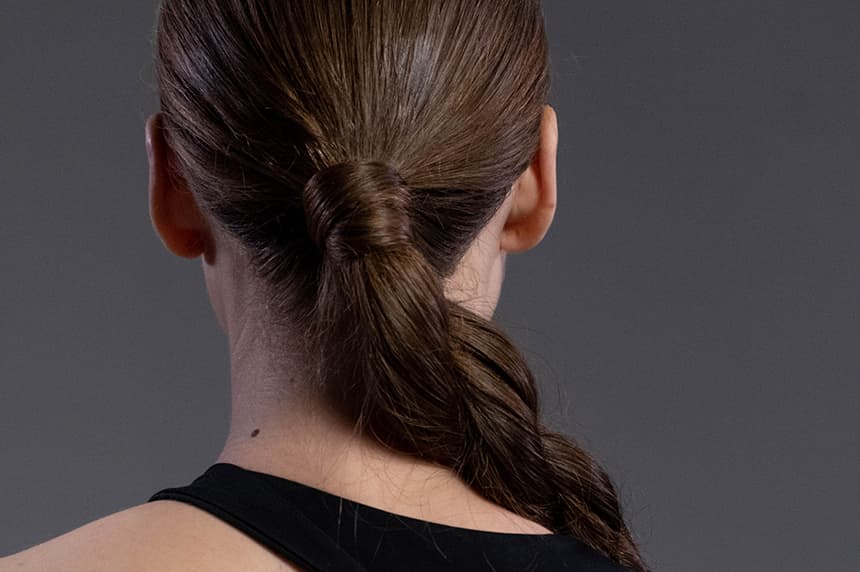
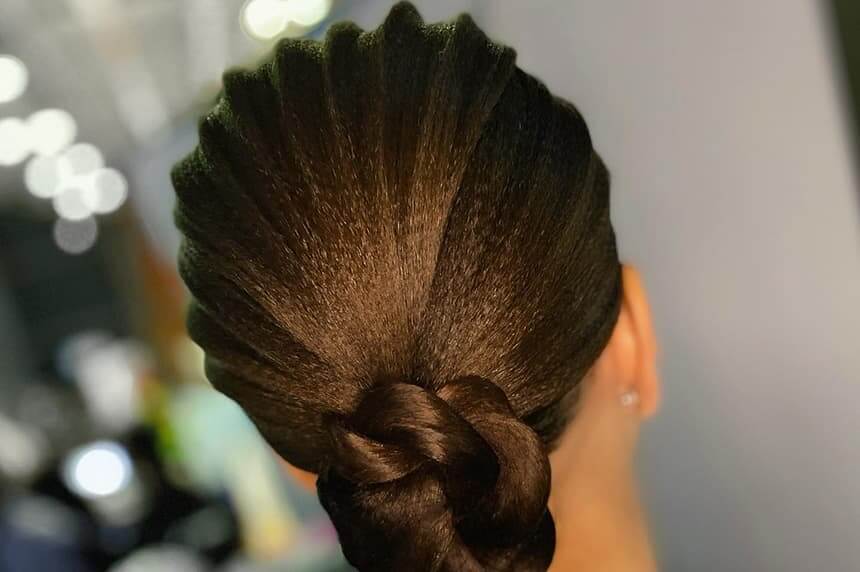
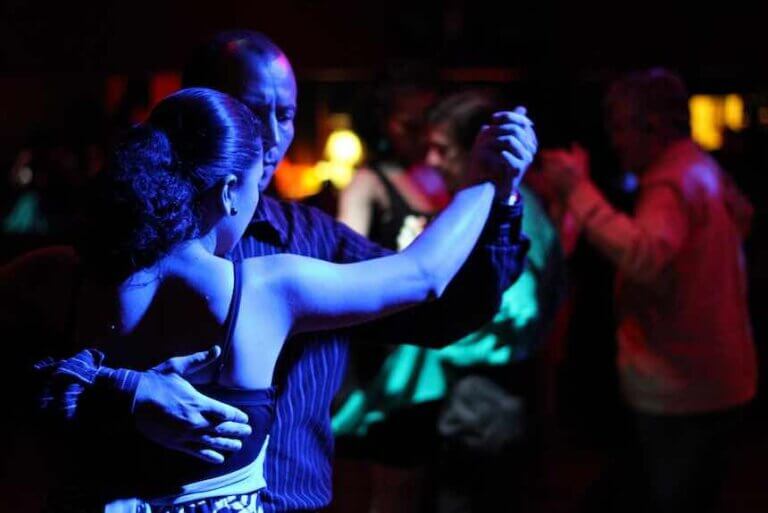
The dance floor is very demanding. Including our hairstyles. This demand applies both to the rules of dance competitions, and the ability to best portray yourself for each dance style. A suitable and comfortable hairstyle is very important for the quality of your dance and performance.  Then let’s not forget there are different requirements for costumes and hairstyles for different styles of dance. For example, ballroom dancing competition rules require slicked-back hair.
This article will provide you with some suggestions on hairstyles that will work well with your hair and costumes. Many of these can be done in a hurry, so don’t worry about spending a lot of time on them.

Twisted Bun

The bun is a classic dance hairstyle, which is suitable for ballet classes and for other styles of dance. Let’s see how you can diversify this hairstyle for dance competitions and classes.

This is a pretty and easy updo that looks great for many different dance styles. But when it comes to ballroom dance competitions this hairstyle is the most popular there. No wonder – it’s easy to do, and it looks more beautiful and original than a usual bun.

Pull the hair into a ponytail. Choose your own height of ponytail. Separate the hair into three parts. Lightly gel each strand to make it easier to twist. Then slowly twist it around itself.

The more you twist the strand, the less voluminous the bun will be. Then you can twist the strand around the ponytail and secure it with a bobby pin. Do the same with the rest of the strands. The more pins the better! It is hard to be very specific here since everyone’s hair is different. But it’s important that the bun holds very firmly during the dance!

Pass the Ponytail

You’ll need hairspray, a comb, an elastic band, and a couple of minutes for this procedure. This style works well with most kinds of costumes and performances, including jazz, ballroom (if your hair is not too long and thick), contemporary, disco, and so on.

Separate all of your hair into a high ponytail and a lock of hair at the base of the ponytail. Pull the hair back to make a single ponytail in the middle of your head. Secure with an elastic. Separate one of the locks and wrap it around the elastic securing the ponytail. Secure it with a bobby pin. This will cover up your hairband and give a more finished look to your hairstyle.

Dance Hairstyles.

Photo by cottonbro studio on Pexels

French Twist

The French twist is a classic hairstyle that is perfect for any dance competition. It is a very simple style to do, and it will make you look very elegant.

To do the French twist, start by gathering all of your hair into a high ponytail. Then, take the ponytail and twist it around itself until it forms a tight coil. Secure the coil with a hairpin. Then, take the remaining hair and wrap it around the coil until it is completely covered. Secure with additional hairpins.

Bantu Knots

Bantu knots are small, twisted, decorative hairstyles that can be created on natural hair. They are named after the Bantu people of Africa, who are known for their elaborate and creative hairstyles. Bantu knots can be created on any type of natural hair, including curly and kinky hair. They are a great way to add texture and volume to your hair, and they can be worn in a variety of styles.

Batu Knots, young stylish lady wearing sunglasses
Photo by Chidimma peace on Pexels

Separate all of your hair into two symmetrical parts. Then separate your hair into more parts depending on how many Bantu knots you want to twist. Take a strand from the first section and twist it into a rod shape by rolling the hair around your finger. Secure the tip of the Bantu knot with a bobby pin. Do this to all of your hair in each section. This is a cool hairstyle idea for hip-hop, breakdance, or other street dance styles. You can also braid Bantu knots if you are a disco dancer. Well, why not!

Low Chignon

A low chignon hairstyle is a bun style where the hair is gathered low on the back of the head. This style is often used for formal occasions because it is both elegant and formal. This hairstyle is also often used for dance competitions because it stays in place and does not move around a lot. This is important because when you are dancing, you do not want your hair to be in your face or flying around.

To do a low chignon hairstyle, start by gathering your hair into a low ponytail. Next, twist the hair around the ponytail holder to form a bun. Tuck any loose hair underneath the bun and secure it with pins. Finally, spray the hairstyle with hairspray to hold it in place.

Dutch Braid

A dutch braid is a type of braid that is formed by crossing the middle section of hair over the top section and then crossing the left section of hair over the newly-formed middle section. The right section of hair is then brought over the new left section. This process is repeated until the braid is completed. As the dutch braid is elegant and stylish, it stays in place well, it is a popular hairstyle for dance competitions.

Fishtail Braid

A fishtail braid hairstyle is a type of braid that is created by crossing two sections of hair over each other and then weaving them together. The braid starts as a normal french braid and once you reach the end, you flip it upside down and weave the two sections together.

A fishtail braid hairstyle is often used for a casual look, but can also be styled into a more formal hairdo. You can make your fishtail braid as long or short as you want, but it’s usually worn halfway down your back. This hairstyle is fairly easy to do on yourself, but it can be difficult to get the hang of at first.

The fishtail braid is a versatile style that can be worn for many occasions, including dance competitions. It’s a good option because it’s not too formal or too casual, and it can be styled in many different ways. You can make your fishtail braid as tight or loose as you want, and you can add accessories to make it look more special. If you’re looking for a dance competition hairstyle that is easy to do and looks good on everyone, the fishtail braid is a great choice.

Small Curls

A striking choice for the competition is the hairstyle with goffer curls. It creates the illusion of a beautiful wave in the style. The size of the curls and their density depends on the choice of tool attachment. Hairstyles with crimped curls look chic and make the dancers stand out from the crowd.

Ballroom Dance Hairstyle.

Mixed Dance Hairstyles

Finally of course there is the option to simply mix-and-match some of these styles and techniques together to create something beautiful that works for you! Give it a go!

Hair Accessories – keep your hair in shape!

It would be amiss of us to cover hair styles and not touch on hair accessories to support these. Hair accessories are great for adding to our overall appearance whilst providing some control of our hair. Which accessory you choose will depend on your hair style, the type of performance you‘re in and of course, on your dance costume.

Hair Scrunchies: A dancers’ favorite because they do not pull or tug on your hair but still hold it in place. You will see scrunchies a lot in contemporary and jazz performances. If you are into other more ‘formal’ dances and want to wear scrunchies, try sequined or embellished ones to add sparkle to your routine.

Hair Clips & Bobby Pins: Hair clips and bobby pins can take hairstyling to the next level. If you want precision in your hairstyle, you need these little heroes. Whilst not associated with a specific dance style they are well suited for dance styles like ballet and ballroom, which require keeping hair strands in their perfect place.

Hairbands: They typically come as both elastic and non-elastic varieties.

  • Elastic headbands are best for high-energy performances like hip-hop and contemporary dance. These headbands keep hair in place and also give you the confidence to pull off a dance move flawlessly.
  • Non-elastic and decorative headbands have more elegance & are good additions for the likes of ballet.

Hair Extensions: The length and volume options on hair extensions are perfect for creating numerous stunning hairstyles. Any dancer can wear hair extensions, but these are a must for contemporary and ballroom dance where the hair can accentuate the flow of movements.

Hair Bows: A cute addition for any young dancer!

Fascinators: Fascinators bring an association of sophistication, especially in formal settings. Fascinators can help you appear effortlessly gorgeous.

Hair Nets: Hair nets are absolutely necessary in the dance world where a sleek look is imperative, like in classical ballet. These nearly invisible nets secure the hair in place while preventing hair flyaways and giving you the confidence to perform complicated moves.

Flower Clips:  Flower clips are one of my favorites for adding femininity and elegance to your hairstyle. They are an oh-so-gorgeous addition to hair add grace and beauty, especially to hula and contemporary dance performances.

Rhinestone or Gemstone Hair Accessories: If you crave a bit of sparkle on stage, rhinestone or gemstone hairpins, clips, or tiaras are the way to go. These accessories look mesmerizing when they catch the stage lights. An extra touch of glamour, helping you stand out from the crowd.

Final Words on dance hairstyles:

There are many different types of dance hairstyles that can be worn during competitions or classes. Some of the most popular hairstyles include the twisted bun and the pass the ponytail. These hairstyles are easy to do and they stay in place, but you can style them differently if you want your dance hairstyle to be more unique.

Another great option is the Bantu knot. For a formal look, try a low chignon or fishtail braid; both styles look elegant and will stay in place. You can also style your hair into an updo if you want to keep it away from your face and neck, but you still want to look stylish. If you’re looking for a new dance hairstyle that is special and easy to do, try one of the hairstyles above!


Take a look at these other related dance tips articles:

Hyperbolic Stretching

Hyperbolic Stretching

Hyperbolic stretching is a new type of stretching from Alex Larsson. It’s been getting a lot of coverage lately on various websites, but it’s also been met with skeptics. Let’s review the facts and help you understand both sides better.

What Exactly Is Hyperbolic Stretching?

What exactly is hyperbolic Stretching?

According to the official website, hyperbolic stretching is a new type of stretching that focuses on the tendons and ligaments to improve flexibility.

The basis behind Hyperbolic stretching “is based upon the discovery that, contrary to what was previously thought, tendons and ligaments are not rigid tissues but actually very elastic.”

Main Points of Hyperbolic Stretching Technique

  • 4 pieces of training a week
  • Duration – 1-month minimum
  • The time you need – around 8 minutes a day
  • Available for any age
  • There are two separate programs for men and women. According to the program, and some old research, it is believed that there are differences between stretching and its effectiveness for women and men. Therefore, the programs have been chosen with these features in mind.
  • 60-day money-back guarantee
  • The program includes 21 exercise videos.

How Much Does It Cost?


How Much Does It Cost?

You’ll get lifetime access to video workouts for only $27. No additional fees or commissions.

Hyperbolic Stretching Review

Hyperbolic Stretching Review.

The program consists of six different content blocks.

  1. Complete side splits video series. This part of the course explains how to stretch for the most difficult splits. The videos will help you relax and open your hips to maximize your performance.
  2. Complete front splits video series. This is where you work on stretching the hamstrings and hip flexors.
  3. Dynamic flexibility and stretching. Dynamic stretching is useful for athletes and dancers because it helps increase the range of motion and speed of movement of the legs.
  4. Complete upper body stretching. The flexibility of the shoulders, chest, arm muscles, and upper back is just as important as the flexibility of the lower body. This video segment will tell you how to do it more effectively.
  5. Pike mastery & front bending. The important part of quality stretching is to work on the lower back and the back of the thighs. The girdle, glutes, and hamstrings require a special approach. But as a result of stretching them, you will be able to fully bend over your legs and reach positions that you could not achieve before.
  6. Easy bridge & back bending. This video unit will help strengthen your shoulder and abdominal muscles so you can easily do the bridge.

How Does Hyperbolic Stretching Work?

According to hyperbolic’s official website, the method of stretching is designed to improve flexibility by slowly-but-surely elongating muscle/tendon tissues, increasing their elasticity before trying to lengthen them. This prevents injuries and helps muscles get back into shape faster.

It does this through a three-step process:

  1. Slow Tissue Preload: This step involves a slow tensing of the muscle before extending it to its full length. Through a series of controlled repetitions, you slowly work up to lengthening your muscles so they can be stretched comfortably.Hyperbolic stretching uses this technique in conjunction with what is called “polarized stretching.” This means that during the elongation, you minimize the muscle’s cross-sectional area by pulling the muscle and cutaneous ligaments apart.
  2. Active Extension: In this step, you use a controlled force to slowly increase your extended length until you reach (and hold) your maximum natural range of motion. This dissipates any tension developed during stretching that was not released through slow tissue preload.This is the main reason why hyperbolic stretch advocates recommend doing this type of stretching at least four times a week for 8 minutes each time.
  3. Muscle Relaxation: Once your muscles are totally elongated, they’re maintained at their maximum length by contracting your antagonist’s muscles. Since the effects of relaxation occur much faster than other stretching methods, this step is very important for hyperbolic stretching. The best way to do this would be through proprioceptive neuromuscular facilitation (PNF) stretch because it allows you to contract and relax specific muscle groups in order to further extend your range of motion.Hyperbolic stretching also uses a technique called “active pause elongation,” a slower version of the active extension that may well be the most important aspect of this type of stretching. This enables your muscle to focus on its elastic capabilities as you gradually increase your flexibility.The creator, Alex Larsson, believes that if done right, there’s no limit to how flexible you can become.

Interested? Take a look here at the official site.

Who Is Alex Larsson?

Who Is Alex Larsson?

He is professional flexibility and core strength expert as well as a specialist in hyperbolic stretching.

He began experimenting with his technique after he had a complete neuro-muscular shutdown in his lower back, hips, and thighs. His mobility was so restricted that he couldn’t even stand up from his chair. He realized that most stretching programs were ineffective in achieving long-term flexibility and decided to do something about it after researching tendon elasticity and the physiology of lengthening muscles during a stretch. He spent years researching the science of stretching, exercise, and physical fitness in order to recover from this event.

What Are The Benefits of Hyperbolic Stretching?

According to the hyperbolicstretching.com, there are several benefits to using their technique:

  • Maximum Range of Motion: The goal of every stretch should be full range of motion (ROM) in all directions. Hyperbolic stretching is believed to maximize your body’s natural ROM because it encompasses the entire tendon and not just the muscle itself.
  • Injury Prevention: Since the idea is to elongate tissues over time, you can minimize injuries before they even happen because you are conditioning yourself for upcoming activities that may involve strenuous movement or awkward postures.
  • Correct Posture: This method works best if it’s done immediately after a workout routine, which is why it’s considered a recovery method. It helps to restore your normal posture by lengthening the connective tissue throughout your entire body, especially in the lower back and neck regions.
  • Less Stress On Joints: This type of stretching is very helpful because you are not overloading any one joint while trying to stretch muscles that are connected to that joint.
  • It’s A More Efficient Way of Stretching: Many people don’t realize that stretching during a workout can actually reduce your performance and may cause you to feel sore the next day as well as weak muscles. Hyperbolic stretching, on the other hand, reduces these effects because it increases flexibility with less effort.
  • Enhance the dancing skills and dynamic elasticity – a key for a professional dancer. Therefore, effective stretching that is affordable and takes a little time becomes a great option for dancers who are practicing anyway.
  • It improves the blood circulation throughout your entire body, which is beneficial in so many ways including better sleep quality and reduced soreness after workouts.
  • Beyond that, it’s a well-known fact that stretching before an intense workout is beneficial to your performance so you can consider using this type of stretching as part of your warmup routine if you want to reduce the risk of injury and increase ROM.
  • The main reason why people love to use the hyperbolic stretching technique is that there are many ways to customize it, depending on your ability level. You can also change the positioning of your body so that you’ll feel less tension in certain areas.
  • Back relief and decompression. Hyperbolic stretching is a great way to stretch and release your body’s pressure points. Stretching is vitally important for your body, but most people only stretch the largest muscle groups without ever considering all of their connective tissue. Hyperbolic stretching covers this by attacking muscles fibers with everything from lengthening to relaxation. The technique has even been shown to be helpful for people who suffer from chronic back pain or compressed discs in their spine!

Who Should do Hyperbolic Stretching?

This technique is ideal for people of all ages, especially those who are more active or have some sort of injury because it will allow them to recover faster. People who use this type of stretching are usually athletes, dancers, yoga enthusiasts, crossfitters, martial artists, and anyone else who wants an efficient way to improve flexibility.

Most people who try this type of stretching for the first time do it as a part of a physical therapy process because, unlike comparative exercises, hyperbolic stretching is believed to increase your ROM by an average of 12% compared to other methods.

The only limitation is that you’ll have to be patient in order to experience its full benefits because it takes a while to complete the exercises. However, you can test out this technique by doing a few of the stretches in your free time and seeing if you notice any changes in your flexibility levels.

You will need to be disciplined and do the stretches consistently if you want to experience the best results.

How Do You Use Hyperbolic Stretching?

It’s pretty easy to use this technique; all you have to do is stretch in the following manner, paying attention to proper form and breathing patterns.

You can use this method as your primary method of stretching. However, if you expect to lose weight or burn calories with these workouts, you should add hyperbolic stretching as a supplement to strength or other core workouts.

Athletes, dancers, and yogis use hyperbolic stretching as an adjunct to their core skills.

The Bottom Line

If you’re an athlete or anyone else who wants to increase flexibility while reducing the risk of injury, hyperbolic stretching is a good option for you because it’s known to reduce soreness and joint pain. The different positions that you’ll be in during these stretches will allow you to target problem areas that other exercises don’t address. If you love yoga, this is a great alternative because you can combine the breathing techniques from both practices for even more effective results.

It might take a while for you to achieve your desired results, but it’s totally worth it because this type of stretching is a proven method of increasing flexibility and range of motion. If you’re not a fan of long workouts, that’s OK because you can do hyperbolic stretching for around 8 minutes at least 4 times a week during a month and you’ll see the great results anyway.

Related articles:

couple dancing the milonga in an evening

Milonga Dance: The uptempo relative of the Argentine Tango

Milonga dance celebrates Argentine Culture. A ballroom dance sharing many characteristics with the better known Argentine tango and considered to be the forerunner to Tango. A fluidity gives dancers the opportunity to express the vibrant ...
Ballet feet exercise. Ballerinas feet warming up stretching

Ballet foot exercises

10 Ballet Foot Exercises: Warm-up, Boost Your Technique and Foot Strength Foot exercises are an essential part of a ballet dancer’s training as they provide important strength and technique benefits. Developing strong and flexible feet ...
Image of a lady stretching on an athletics track

Hyperbolic Stretching

Hyperbolic Stretching Hyperbolic stretching is a new type of stretching from Alex Larsson. It's been getting a lot of coverage lately on various websites, but it's also been met with skeptics. Let's review the facts ...
Exercises for stretching the back. Image of dancer on a rooftop

Exercises for Stretching the Back

Let's look at exercises for stretching the back. Flexibility for a dancer is just as important as strength. It helps to avoid injuries, to move with more amplitude, and to feel your body and its ...
Plow exercise for your back. Image of dancer stretching

Stretching Routine for Dancers

A stretching routine for dancers helps to prevent injuries and prepare the body for the load. We will tell you in detail about the various benefits of stretching for dancers. And then we offer some ...
Stretching to Lose Weight.

How does stretching help you lose weight?

There's no point in questioning the benefits of stretching to the body. A flexible body is a sign of his youth. But as for stretching to lose weight, how effective will that be? For many, ...

12 Types of Swing Dance

What is swing dance? Swing dancing is a type of partner dance performed mostly to swing music. The focus is on musicality, improvisation, and personal expression.

There are many ways to classify swing dances. Most of the following types of swing dance are derived from traditional dances, such as the Lindy Hop (which was done in ballrooms during swing music’s heyday), East Coast Swing (typically danced socially to slower music), Balboa (a fast-paced solo dance mainly done in California).

There are many places that offer swing lessons and dances, from the local dance studio to your very own backyard! All you need is a good mood and comfortable swing dancing shoes, and you can get a powerful energy boost at the party!

A photo of a couple at night, swing dancing, being cheered by a crowd circled around them
Cover photo by louiscrusoe on Flickr

What are the main features of swing dance?

All types of swing dance are characterized by the following features:

  • Pivoting is a key dance move used in many swing dances. This typically involves leading a one- or two-step turn.
  • Swing dance may be danced in the open position or closed position (with dancers facing each other). In the open position, the leader usually has the follower’s right hand in his left hand. In the closed position, the dancers may be connected at either or both sides, so that they have their arms around each other. Although some types of swing dance are characterized by a more close position.
  • It includes Charleston elements such as “kicks”, “licks”, and hip motions. Some types of swing are danced to faster tempos than other forms, depending on the style.
  • The presence of acrobatic elements.
  • All forms of swing are characterized by a syncopated (shortened) rhythm, typical of African-American and West African music and dance, and with jazz dance of the jazz era. The swing style typically includes “triplet steps” on every beat, meaning that the first step is made on a triplet boundary and typically uses a ball-change footwork pattern for this reason. A triplet is a set of three beats in which the first two are strong or accented and the third is weak or unaccented.
  • Many swing dances are characterized by very fast movements and footwork.
  • Swing music has a characteristic “swing” feel. It also typically includes triplet rhythms. The rhythm may be accented either on one or three beats of the measure.
  • Also, an important part of the swing is improvisation, the way you feel the music and embody it through your body.
  • Another feature of swing dance is that swing dancers from different localities and groups often bring their own features and characteristics to it. Swing actively absorbed and absorbs local features, even different clubs, DJs and coaches contributed to the swing dance their vision of dance compositions. Hence – the emergence of a large number of different types of swing dance.

What are the Main Types of Swing Dance?

We take a look at 12 types of swing dance which has risen to popularity:

The Lindy Hop

Lindy Hop is known for its fast and athletic style. It is a mix of Charleston, breakaway, and the Shim Sham. Lindy Hop dance is considered the most developed and most complex form of swing. The peculiarity of the lindy hop is the ability to improvise and the rhythmic flexibility, as well as the ability to perform to any jazz or blues music.

East Coast Swing Dancing

The east coast swing was developed from the Jitterbug. A swing dance that was popular when Lindy Hop was in full swing, the East Coast Swing is much more gentle than other styles. It’s characterized by high energy movement and smooth footwork.

East coast swing is the round, rotating dance that has many wraps, tunnels, and turns. The advantage of East Coast Swing was that it can be performed to slow jazz and blues, as well as to fiery rock and roll. East Coast Swing is danced on a 6-stroke rhythm, but sometimes it is performed on an 8-stroke as a lindy hop or a Charleston.

Since this is fast swing dance, the steps should be small and easy.

The popularity of East Coast Swing is due to its simple structure, uncomplicated movements, and uncomplicated footwork.

West Coast Swing (Western Swing)

The West Coast Swing was invented in the 1990s by dancers who wanted something more energetic than Balboa but slower than Lindy Hop. West Coast Swing is considered the most elegant dance. In fact, watching this flowing dance, one can hardly find any resemblance to its parent, the Lindy Hop.

West Coast Swing dance involves moving partners along the line. In most cases, each combination begins with the steps of the lady. Moves forward are made on the counts of “one” and “two”. The anchor step completes all the basic figures more often and logically.

Among the interesting things, West Coast Swing has shattered notions of full partner lead, as is typical of most other swing dance styles. Here the partnership is divided 50-50. Each partner is free to express himself in the dance, the main thing is to listen to the music and to each other. Thus, in West Coast Swing, in contrast to other swing dances, there are more opportunities for the partner to improvise and really create together on the dance floor.

Because of the freedom for improvisation and movement, West Coast Swing is a lot of fun during classes and lends itself to quick learning. Already after a few lessons, you will learn how to connect with a partner and work in a tight frame.

By the way, in 1988, West Coast Swing becomes the official dance of the state of California.

Balboa

The home of the Balboa dance is considered the Balboa Peninsula in California. The social dance of Balboa is good because it does not require special skills and training, you can learn it at any age, the movements are quite simple, but it is beautiful to look at.

The main feature of this dance is the rapid movement of the feet and the close contact between partners. The dance is performed too fast jazz music, the tempo is 180 to 320 beats per minute. But despite the almost crazy rhythm, it does not require a lot of tension, because all the movements are small. You can also dance to slow music, then you will have more time to perform complex movements.

Balboa is a dance built on improvisation. This dance is directed more inward to the couple than outward. And the compactness of Balboa movements allows you to save strength. The torsos of the partners touch each other so that no light can be seen between them.

Charleston

The Charleston evolved from the Lindy Hop in Harlem in 1932. It has a jazzier look that comes from swing music still in its heyday. You can find older clips of this dancing in movies like Hellzapoppin, which was the first movie to fully feature swing dance.

The musical size is 4/4. The tempo is fast. Performed in pairs, briskly and loosely, with small movements around the hall. The dance is characterized by sharp syncopated steps and sweeps on the balls of feet. The energetic arm movements and characteristic turns of feet are the main features of this dance. The Charleston is danced both in pairs and solo. Hands move freely and energetically.

It has certain features of ballroom choreography, namely, foxtrot, with the difference that Charleston has a limited nature of movement and is performed mostly on the spot. By the way, Charleston is considered one of the forerunners of the Quickstep ballroom dance.

Jitterbug

A partner swing dance, often done with a man and a lady, where the dancers rotate around each other. It evolved from Lindy Hop and is usually done at a faster pace.

It can be easily recognized by the leaps performed by the pair. The jitterbug includes in its variety of movements a variety of acrobatic elements, tumbling, splits, swing jumps, and spins.

Jazz

Another modern style, Jazz is a smooth and gentle swing dance. This style is beautiful to watch. It’s a very popular swing dance in social dances because it doesn’t require a lot of training and preparation, but it looks fantastic.

The basic movements are performed on the spot, with a smooth changeover from one part to another. The dance is characterized by syncopated steps and high kicks.

As an “open” system, jazz dance refers to the means of expression of other systems and directions of dance, incorporating the achievements discovered by modern dance, classical dance, folk choreography, and other directions of dance art. As a result, the process of merging the main schools of modern choreography began and a new artistic phenomenon appeared: modern jazz dance.

St Louis Shag

Six counts, closed position, bouncing steps – and you’re dancing the Carolina shag! A modern American swing dance, St Louis Shag was invented in the 1980s as a speedier variant of its East Coast Swing forerunner. The name comes from a popular stomp, where the dancer taps their foot to the music.

Boogie-Woogie

Boogie-woogie is a European interpretation of Swing. The feature of this dance was the dancer’s ability to show movements on relaxed, yet resilient legs.

The rhythm of this dance is 4/4. It’s a very emotional, and free dance for a couple or in a group. This is the most popular swing variation at the present time. This is a bright, fiery couple dance, with fun music and an appropriate mood.

Blues

The Blues is very expressive and beautiful to watch. It’s performed at a slower pace, but it looks effortless. This dance is great for social dancing because you can really feel the music while you’re dancing.

The blues is the slowest of the swing dances. It is willingly performed when the dance floor is small or when you need a break from the jerky, nervous rhythms of other dances.

The musical size is 4/4. The tempo is slow, with 20 beats per minute. All fractions of the bar are accented. Performed in pairs, in the closed position, with moving around the hall. The dance is characterized by the alternation of the fast and slow steps and the light chorus when changing the legs.

Savoy Style Lindy Hop

This dance came from Harlem in the 1930s when jazz was at its peak. The Savoy, one of the most famous dance halls, was home to this style of swing dancing. This is the type of Lindy Hop that people think of when they hear the name “Swing Dance.”

Jive

Today the jive is an obligatory dance of the competitive Latin ballroom dance program. Its main feature, in addition to the high rise of the knees in the steps, is a characteristic swing movement of the hips and body as a whole.

The dance is fast and energetic, requires a lot of energy. The musical size is 4/4, the tempo is 44 beats per minute.

Swing Dance History

The word “swing” was first used in 1911 to describe the dance Texas Tommy, when the partner “unwinds” the partner, which is reflected in the name “swing”.

Swing dancing was popularized in the late 1920s and 1930s. It came from jazz music. The birthplace of swing is considered New York City. Here, in Harlem, the funniest parties were born, where dancing helped to forget about all problems. The legendary Savoy Club occupied an entire block, and hundreds of dancers came there every day to party to live music. Everyone was allowed in, as long as they knew how to dance.

Swing was first danced to big band music and later evolved into various new styles with the influence of rock n’ roll and other types of music. There are many swing dances, such as Lindy Hop, Balboa, East Coast Swing, West Coast Swing, Jitterbug, and Triple swing, etc. But all of them, in some way or another, come from the original swing.

From the 20s of the 20th century, the dance spread to America and Europe, actively absorbing the national features of the country in which it was performed. Therefore, in today’s world of dance, there are many types of swing dance – from slow jazz compositions to fast ones.

Final Words

Today swing is America’s leading social dance. It is loved for its awesome, easy atmosphere and fun. It’s a great dance style to learn if you want something fun and energetic. Plus, it’s a great way to meet new people. So whether the type of of swing dance you choose, you’ll get the best mood of jazz party with like-minded people.

And pay attention: swing dance world is very strong and friendly, it is really unifying kind of class, which gives a lot of acquaintances and bright impressions. So let’s dance swing!


Other related articles to swing dance:

Teaching dance tips - creating a supporting learning environment

10 Tips for New Dance Teachers

To help you with dance teaching in those early steps of your career, this article outlines some tips for new dance teachers. A few handy pointers which I've learned along the way ...
Image of lady with her hairstyle prepared for dancing in a flamenco competition

Dance Hairstyles: For Competitions and Classes

Dance hairstyles are part of the show! This article will give you inspiration and for new styles and pointers in doing them. The dance floor is very demanding. Including our hairstyles. This demand applies both ...
A photo of a couple at night, swing dancing, being cheered by a crowd circled around them

12 Types of Swing Dance

What is swing dance? Swing dancing is a type of partner dance performed mostly to swing music. The focus is on musicality, improvisation, and personal expression. There are many ways to classify swing dances. Most ...
Benefits of dancing. Image of the word dance in green against a wooden illuminated background

12 Benefits of Dancing

Dancing is one of the most popular types of physical activities, which among other things gives a good mood and brings pleasure. That’s why dancing is an ideal activity for those who are bored just ...
Burning Calories Dancing. A lady dancer stepping out of bed onto the scales.

Burning Calories Dancing

Dancing is a good cardio load. This activity corresponds to a fat-burning cardio zone (60-80% of your maximum heart rate). Burning calories dancing is a great way to lose a couple of extra pounds. The ...
How to become a better dancer? Photo of a ballet dancer spinning

How to Become a Better Dancer

The profession of a dancer requires constantly working to become a better dancer. Whether you are a professional dancer or a student in a dance class or dance college, you will always have to improve ...

12 Benefits of Dancing

Dancing is one of the most popular types of physical activities, which among other things gives a good mood and brings pleasure. That’s why dancing is an ideal activity for those who are bored just to do sports. Below we will talk about other benefits of dancing for your health, psychological state, and social life.

1. Health: Greatest benefits of dancing

Dancing, like any other physical activity, has a positive effect on health. Dance movements improve blood circulation, rejuvenate the body. It directly affects the state of internal organs. Regular training reduces the risk of cardiovascular disease and colds. Dancing helps to raise the so-called “good” cholesterol (HDL) level and reduces the number of “bad” cholesterol (LDL).

Besides dancing helps to strengthen bones and as a result, prevents osteoporosis.

2. Dance benefits flexibility

Stretching to Lose Weight.
Development of flexibility and amplitude of movements is one of the ways of development for any dancer, regardless of the style of dancing. Most dancing lessons begin with a warm-up, which includes several stretching exercises. We can talk a lot about the benefits of flexibility and stretching, but here are its main advantages: improving body mobility, preventing injuries to feet, joints and muscles, improving blood circulation, the improvement of coordination of movements.

3. Strength is a dancing benefit

Persons who dance train all muscle groups. The body of the dancer and his muscles grow evenly and proportionally, which in turn affects the figure. Dancers’ muscles do not become as voluminous and embossed as, for example, weightlifters, but they have great strength and endurance. Just look at the so strong ballet dancers!

4. Keeping fit through dance

Keeping fit because of dancing.Photo by Pixabay on Pexels
During the dance, calories are burned. The more intensive and faster the dance moves, the more calories are burned. Therefore, if you tend to be full, the dance will help you spend time pleasantly while remaining in a good fit. In addition, many studies have proven that dancing helps control fat consumption.

5. Endurance training

Endurance is the ability of muscles to work harder for longer periods of time without fatigue. Dancing is a long time aerobic exercise, which also trains endurance.

6. Good memory

Of course, dances improve memory, as dancers have to memorize many different choreographies and do it quickly. Attending a lot of masterclasses, staging dances for performances, training new movements, and their techniques – all this requires constant concentration of attention and memory development.

7. Fighting the bad mood

It has been proved that movements to music contribute to the production of serotonin (the hormone of happiness), reduce stress levels, get rid of emotional tension.

8. Creative skills and thinking development

By dancing, you develop not only the body but also creative thinking. Moreover, improvisation is one of the most important parts of dancing classes. It also helps you to think outside the box and go beyond standard thinking. Improvisation also helps to go beyond the comfort zone, which also positively influences the level and ways of thinking and creative activity.

9. Beautiful gait and smooth posture

Great posture.
Choreography is impossible without grace in movements, which is grafted in the first lessons and over time becomes part of life. That is why dancers most often have a very smooth posture and a beautiful gait.

10. Good balance and coordination of movements

Performing some dance moves requires a high degree of coordination of movements and balance.

11. Communication and new contacts

You meet many new interesting and creative people in training. This is especially useful for children who are actively acquiring communication skills and are in the socialization phase.

12. Enhanced self-esteem

It is believed that dancing helps a person to reveal themselves, to express their feelings, to become more graceful and plastic. As a result, a person becomes more confident in himself, and this confidence is transferred not only to dance activities but also to everyday life.

Choreography and its benefits.

So, if you are looking for some physical activity that will help you to be more healthy and feel better, you should try dancing. The benefits of pole dancing, ballroom, classical dance, or street dances are numerous.


Other related dance tips articles:

Teaching dance tips - creating a supporting learning environment

10 Tips for New Dance Teachers

To help you with dance teaching in those early steps of your career, this article outlines some tips for new dance teachers. A few handy pointers which I've learned along the way ...
couple dancing the milonga in an evening

Milonga Dance: The uptempo relative of the Argentine Tango

Milonga dance celebrates Argentine Culture. A ballroom dance sharing many characteristics with the better known Argentine tango and considered to be the forerunner to Tango. A fluidity gives dancers the opportunity to express the vibrant ...
Ballet feet exercise. Ballerinas feet warming up stretching

Ballet foot exercises

10 Ballet Foot Exercises: Warm-up, Boost Your Technique and Foot Strength Foot exercises are an essential part of a ballet dancer’s training as they provide important strength and technique benefits. Developing strong and flexible feet ...
Image of lady with her hairstyle prepared for dancing in a flamenco competition

Dance Hairstyles: For Competitions and Classes

Dance hairstyles are part of the show! This article will give you inspiration and for new styles and pointers in doing them. The dance floor is very demanding. Including our hairstyles. This demand applies both ...
Image of a lady stretching on an athletics track

Hyperbolic Stretching

Hyperbolic Stretching Hyperbolic stretching is a new type of stretching from Alex Larsson. It's been getting a lot of coverage lately on various websites, but it's also been met with skeptics. Let's review the facts ...
A photo of a couple at night, swing dancing, being cheered by a crowd circled around them

12 Types of Swing Dance

What is swing dance? Swing dancing is a type of partner dance performed mostly to swing music. The focus is on musicality, improvisation, and personal expression. There are many ways to classify swing dances. Most ...

You may also be interested in the benefits of pole dancing

Exercises for Stretching the Back

Let’s look at exercises for stretching the back. Flexibility for a dancer is just as important as strength. It helps to avoid injuries, to move with more amplitude, and to feel your body and its possibilities better. But in addition to the cherished splits, the concept of flexibility also means developed and soft back muscles. Most exercises for stretching the back are not easy. But if you do it regularly and effectively, you will be incredibly satisfied and surprised at the result! The flexible back gives ease of movement, relieves pain, and helps in everyday life.

Well, after we tried to convince you of the usefulness of exercises for back stretching, let’s start directly to the training.

Exercises for stretching the back. Image of dancer on a rooftop
Photo by Photo by Jana Muller on Upsplash

Training Rules

Always follow these rules to ensure that the result does not take too long:

  • Exercise daily.
  • Before stretching, do an intense workout.
  • Perform all stretching exercises smoothly, relax your muscles as much as possible.
  • Exercise in comfortable clothes.
  • Start stretching with a small amplitude so that there are no injuries.
  • Watch your breathing: breath evenly and deeply.

Warm-up before stretching

It’s important to warm up before doing exercises to stretch your back to help prevent injury and improve flexibility. If you’re planning a separate stretching session, start with some joint-warming exercises to get your body moving. So first do some exercises:

  1. Join-warming: include twist joints, tilt, and swivel the body.
  2. 5-7 minutes cardio: This can include activities like jogging, jumping jacks, “rock-climbing,” or jumping rope.

Once you’ve warmed up, you can then begin stretching.

Exercises for stretching the back

1. Sphinx posture

It is a basic and one of the most popular asanas in yoga, it is also called Ardha Bhujangasana.

Photo of young lady doing the Spinx position to stretch her back as a dancer
Photo by fizkes on Shutterstock

Technique. It’s done by lying on your stomach. Extend your arms in front of you parallel to each other. Shoulders down and open neck. First, place your head on the floor and relax your back, buttocks, and legs.

With a breath tighten your abs, raise your torso and pull your arms up, bending at the elbows. Find a comfortable position in which the lumbar spine will feel comfortable. The abdomen should be pressed tightly to the floor and the chest should be torn from the mat to the limit of the lower ribs. The top of your head reaches up.

Your main task is to divert tension into the area of the shoulder blades and at the same time relax the lower back and relax the neck. Pull the shoulders down from the neck, pushing your hands off the floor. Feel the tension in the middle part of the back, focus on the inner sensations.

2. Cobra position

This and previous postures effectively develop flexibility and eliminate pain in the lower back. The cobra is a more advanced version of the sphinx posture. The technique is almost the same as in the previous exercise, but you need to put your palms, not your elbows, on the floor, and then straighten your elbows by raising the body up.

Cobra back stretch for dance and exercise
Photo by Ketut Subiyanto on Pexels

If you need to complicate the exercise, remaining in the position of the cobra, bend your knees, and at the same time bend in the back, moving your head back. Pull the toes to the back of the head, deflecting the back as much as possible.

3. Superman

This exercise is not only for flexibility but also for the strength of back muscles. You need to lie down on your stomach and then raise your arms and legs simultaneously. In this position are at least 10 accounts, slowly lower your legs and arms to the floor. After rest, you can repeat one more cycle. Do not throw your head, look directly in front of you, focusing on the muscles and breathing. With this exercise, you will strengthen your back muscles!


4. Forward Bend

Sit on the floor. Align your knees in front of you. Lean forward gradually until you put your face on your knees and touch your toes with your hands.

The same can be done with wide-leg positions. Sitting on the floor, spread your legs wide, lean forward, and you can also try tilting the sides in turn to each leg.

Photo by Marta Wave via Pexels


5. Kneeling tilts

Kneel down so that you have a right angle between your tibia and thighs. Then gently stretch back without any sudden movements or jerks. If you have difficulty, first try to guide your hands through the bottom by touching the heels. As the exercise becomes more difficult, try to bend, leading your hands through the top, which is without support.

Kneeing tilt stretch, 3 people, 2 men and a lady doing this in the studio. In the photo you can see the form of the starting position
Photo by Mikhail Nilov via Pexels


6. Bow position

Lie on your abdomen, resting on your palms or forearms. Keep your hands behind your back and bend your knees at the same time. The heels should point upwards. Wrap your arms around your ankles and bend as much as possible in your back without throwing your head back. Pull the legs towards the back of the head with your socks so that the result is a pose that looks like a stretched bow.

Dancer stretching back in the bow position
Photo by Elina Fairytale on Pexels

7. Gymnastic bridge

Of course, almost the main back stretching exercise is the bridge. It is excellent for both beginners and advanced, and also helps to relax the shoulder muscles.

Gymnastics bridge stretch - in this image demonstrated by a girl in her front room
Photo by Gustavo Fring on Pexels

Lie on your back and place your palms on both sides of your head, turning them inside out. Bend your legs and raise your pelvis up, straightening your arms. Try to stretch your legs at the knees, and hands at the elbows so that the arch in the back resembles a real semicircular bridge. Standing in the bridge position, try to carry your weight on your hands, slightly leveling your legs in your knees.

Complication: exit to the bridge from standing position. To learn this, try near the wall first. Stand close to the wall, lean back, and find the wall with your hands. “Walk” the wall with your hands downwards until you reach the floor. In the same way, return to the standing position. When you feel that you have enough strength to do the exercise without help, try to move away from the wall carefully.

8. Exercise Plow

Exercise is performed while lying on your back, arms and legs are extended along the body. Slowly raise your legs up, perpendicular to the floor. When the legs are upright, pull the toes towards you. Then slowly lower your legs behind your head, and grab your toes with your fingers. Keep your knees level. In this position, you need to stay at least for a minute. Then you can return to the starting position, avoiding sudden movements, and take a few deep breaths.

Plow exercise for your back.Photo by Elina Fairytale on Pexels 

The exercise has a complicated continuation. Try bending your knees and laying them near your ears. Not everyone can do it, but all in good time! Perform our complex regularly and you’ll precisely achieve this level of stretching!

9. Cat & Camel

Stand on all fours (table position) with your hands exactly under the shoulder joints and your hips under the pelvic bones. Then arch your back up toward the ceiling and tighten (or brace) your abdominals, drop your chest toward the floor and lift your head slightly, imitating the cat. When arching rise up your chin, and when bending – lower your head down. Work at maximum amplitude but at a slow pace to avoid pain.

10. Twisting from a table pose

While staying in the table position, move the weight on one hand and place the second hand on the floor perpendicular to the body. So, you put the body weight on the scapula and hand, gently lift the second hand up, turning the head and body after it. Look up in the palm of your hand or forward. Perform extremely gently and slowly, without jerking so as not to damage the shoulder. This exercise develops flexibility of the upper back, strengthens arms and shoulders, improves balance and coordination.

Twisting from a table pose. Back stretching for dancers
Photo by Fizkes on istockphoto

After training recovery

After training, you should do exercises to relax back muscles, such as rolls. Sit on the floor, bend your knees, hug your legs with your hands. In this position, your back should be as if hunched. Gently begin to roll onto your back and back to a sitting position. If you have pain in the spine, lay a rug or a soft towel under your back. Do 10 of these rollings.

At the very end of the stretch, be sure to make an embryo pose. Stand on all fours and put the pelvis on its heels, stretching your arms out in front of you. The head touches the floor, the back is straight. In this position, relax all the muscles of the back, shoulders, arms. Lie down in the fetal position for at least a minute. Then stretch your arms along the torso without pulling them forward. You can turn your head to relax your neck. This position maximizes stress relief from the spine and gently stretches it.

Embrion pose.

That’s it! Congratulations! You have performed a full range of exercises for back stretching. Performing these exercises regularly, over time you will feel exactly how much easier this or that exercise is given to you. Also, your back will hurt less and it will be easier for you to perform different tilts in everyday life.

We wish you a flexible back and a healthy body!


Other articles related to stretching:

couple dancing the milonga in an evening

Milonga Dance: The uptempo relative of the Argentine Tango

Milonga dance celebrates Argentine Culture. A ballroom dance sharing many characteristics with the better known Argentine tango and considered to be the forerunner to Tango. A fluidity gives dancers the opportunity to express the vibrant ...
Ballet feet exercise. Ballerinas feet warming up stretching

Ballet foot exercises

10 Ballet Foot Exercises: Warm-up, Boost Your Technique and Foot Strength Foot exercises are an essential part of a ballet dancer’s training as they provide important strength and technique benefits. Developing strong and flexible feet ...
Image of a lady stretching on an athletics track

Hyperbolic Stretching

Hyperbolic Stretching Hyperbolic stretching is a new type of stretching from Alex Larsson. It's been getting a lot of coverage lately on various websites, but it's also been met with skeptics. Let's review the facts ...
Exercises for stretching the back. Image of dancer on a rooftop

Exercises for Stretching the Back

Let's look at exercises for stretching the back. Flexibility for a dancer is just as important as strength. It helps to avoid injuries, to move with more amplitude, and to feel your body and its ...
Plow exercise for your back. Image of dancer stretching

Stretching Routine for Dancers

A stretching routine for dancers helps to prevent injuries and prepare the body for the load. We will tell you in detail about the various benefits of stretching for dancers. And then we offer some ...
Stretching to Lose Weight.

How does stretching help you lose weight?

There's no point in questioning the benefits of stretching to the body. A flexible body is a sign of his youth. But as for stretching to lose weight, how effective will that be? For many, ...

Stretching Routine for Dancers

A stretching routine for dancers helps to prevent injuries and prepare the body for the load. We will tell you in detail about the various benefits of stretching for dancers. And then we offer some effective videos of a stretching routine for dancers.
Plow exercise for your back. Image of dancer stretching
Photo by Elina Fairytale on Pexels
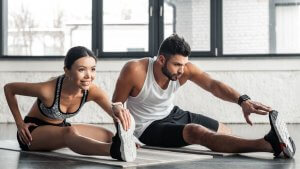
Important!

When stretching, pay attention to all muscle groups in your body. Neglecting one muscle can lead to clamp formation and general asymmetry.

Why do dancers need stretching?

  • Stretching is the ability of joints to make movements of the maximum possible amplitude, for this it is necessary to improve the elasticity of muscles and ligaments. The higher the elasticity of muscles and tissues, the greater the amplitude of the movements performed, and vice versa: if the muscles are enslaved, the amplitude will be less.
  • Stretching also plays a huge role in the prevention of various kinds of injuries, reducing the risk of damage to ligaments and muscles. Stretching the back is a good example
  • When a dancer pays attention to stretching, the muscles are easier to bear the load and also recover more quickly.
  • Additional possibilities in choreography: the ability to perform more complex dance elements.
  • The body of the dancer becomes more mobile.
  • The ability to relax the body, cleverly manage it.
  • Learning choreography becomes faster and easier because a flexible body acquires a motor skill.
  • Improve the ability to do moves like the splits.

Grace and plasticity, flexibility, and mobility – all these qualities can be developed by performing the simplest stretching exercises. Let’s get started with the workout!

Important!

Remember to warm-up well before stretching!

Full body stretching routines


Stretching routines for splits


Stretching routines for back


Types of stretching:

  • static;
  • slowly;
  • pair;
  • dynamic;
  • ballistic.

Static Stretching involves very slow and smooth exercises, where you need to take a certain pose and hold it for 10-30 seconds. Stretched muscles can be strained periodically or continuously. Actually, this is the classic stretching, from which this type of fitness originates, it is also the most effective for stretching and strengthening muscles.

Slow stretching is good for warming up, it runs at a very slow pace and provides stretching to maximum length.

Pair stretching is performed with a partner who acts as a counter to your stretching.

Dynamic Stretching is slow (by no means sharp) spring movements, at the end of the exercise you have to hold on to the extreme point of stretching for a few seconds.

Ballistic stretching, or, more simply, swing, is an active type of load. With ballistic stretching, it is necessary to do swings with arms and legs, as well as bend and unbend the body with great speed and amplitude. In this type of stretching lengthening of certain muscle groups is short-lived and lasts exactly as long as the swing or bend.

So, Dear dancers, do not neglect stretching to dance better, more amplitude, more plastic!

Related stretching articles:

couple dancing the milonga in an evening

Milonga Dance: The uptempo relative of the Argentine Tango

Milonga dance celebrates Argentine Culture. A ballroom dance sharing many characteristics with the better known Argentine tango and considered to be the forerunner to Tango. A fluidity gives dancers the opportunity to express the vibrant ...
Ballet feet exercise. Ballerinas feet warming up stretching

Ballet foot exercises

10 Ballet Foot Exercises: Warm-up, Boost Your Technique and Foot Strength Foot exercises are an essential part of a ballet dancer’s training as they provide important strength and technique benefits. Developing strong and flexible feet ...
Image of a lady stretching on an athletics track

Hyperbolic Stretching

Hyperbolic Stretching Hyperbolic stretching is a new type of stretching from Alex Larsson. It's been getting a lot of coverage lately on various websites, but it's also been met with skeptics. Let's review the facts ...
Exercises for stretching the back. Image of dancer on a rooftop

Exercises for Stretching the Back

Let's look at exercises for stretching the back. Flexibility for a dancer is just as important as strength. It helps to avoid injuries, to move with more amplitude, and to feel your body and its ...
Plow exercise for your back. Image of dancer stretching

Stretching Routine for Dancers

A stretching routine for dancers helps to prevent injuries and prepare the body for the load. We will tell you in detail about the various benefits of stretching for dancers. And then we offer some ...
Stretching to Lose Weight.

How does stretching help you lose weight?

There's no point in questioning the benefits of stretching to the body. A flexible body is a sign of his youth. But as for stretching to lose weight, how effective will that be? For many, ...

How does stretching help you lose weight?

There’s no point in questioning the benefits of stretching to the body. A flexible body is a sign of his youth. But as for stretching to lose weight, how effective will that be?

For many, Stretching is not only a way to brag about doing the splits, but also a way to keep yourself in shape and even to lose weight. Stretching exercises do indeed nourish the muscles with oxygen, as a result of which the blood circulation is activated, more useful substances enter the body tissues and metabolism is improved. As a result, you can even lose some pound weight.

Since not every stretching workout is energy-intensive enough to lose enough calories, let’s work out how and in what cases it is effective for weight loss.

Stretching to Lose Weight.
Image by Ryan McGuire from Pixabay
Important!

Stretching is a set of exercises aimed at stretching the muscles and ligaments and as a result of improving the flexibility of the whole body.

How many calories are spent on a stretching training session?

An hour of stretching routines for dancers consumes an average of 150-200 calories, which of course is much less than an hour of dancing or strength training.

So from a calorie perspective, there are many types of activities that you could be doing to burn more calories during an hour of training. For example, some of the top ones (based on an 11 stone individual as reported by the Sun) by calories per hour are:

  • Boxing (800)
  • Squash (748)
  • Rowing (740)
  • Running (700)
  • Swimming (680)
  • Team sports (614)
  • Cycling (604)

Stretching has a number of positive side effects that indirectly affect muscle calorie consumption and body quality in general. Among them:

  • increasing the amplitude of movement of the stretched muscle, which means it starts to use more energy when functioning;
  • keeping our muscles more limber and looser which ultimately means you might perform better when you do your formal training;
  • muscles become more prominent;
  • decreasing stress hormones;
  • muscle tone is improved.

These are the main reasons why stretching is recommended for all athletes who train in weightlifting.

So what about weight loss? – it’s fair to ask.

Stretching training alone is not good enough for a significant weight loss. But you can combine different types of activities to get a good weight loss or choose alternative workouts that include stretching exercises.

A combination of gym and stretching exercises

– works doubly well for weight loss. If you are engaged in strength training and your goal is to lose weight, try to add some days of stretching to your training schedule, or at least stretch your muscles out after weightlifting.

Dynamic stretching

This is when you do a repeated controlled motion to stretch that muscle group. Some pros of dynamic stretching are that it warms up your body temperature, increases your heart rate and your blood flow, so it’s really good for warming up your muscles.

This type of activity also helps with the speed of your nerve impulses. It helps increase your range of motion before activity. It’s really important to remember not to be too vigorous with your dynamic stretches especially if you are a beginner or if you’re covering from injury. For dynamic stretching, the control is key.

So all of these factors mean that dynamic stretching is something like cardio training and in that way, it helps you to lose your weight and look good.

Here are some useful and effective dynamic workouts we’ve found on YouTube for you:


Energetic warming up exercises

Before any physical activity, including stretching, a warm-up is required. Your body must be prepared in order not to “tear” and not to injure the muscles. Often group training sessions on the stretching are built in such a way that warming-up is the most tempo-intensive and energy-intensive part.

That is, due to the intensity of the warm-up increases and, in general, calorie consumption throughout the workout, which means it is easier to create a calorie deficit and as a result lose weight.

Important!

To lose weight, you need to follow simple rules of proper nutrition. Because the main thing that helps us lose weight is a calorie shortage.

Efficiency for Beginners

If you are new to the sport and have never trained before, stretching is likely to be an effective way to lose weight for you, and in the first few months, you will be able to lose from 4 to 9 pounds. This is due to an increase in calorie intake because it’s could be enough to do such kind of activity to lose weight for a body unused to sports.

Examples of Stretching Exercises

You can use any of the exercises available on youtube and on Instagram. We have picked out some of our favorite ones:

  • Routine for the Inflexible and beginners:
  • Middle splits stretching:
  • Side Splits:
  • Back flexibility stretches:
Important!

Stretching is a quite injury activity. If you train on your own, please be careful: be sure to warm up the body, do exercises without sharp jerks and without using physical strength, breathe deeply, and do not try to achieve quick results. Flexibility requires patience and regularity in training.

Alternative workouts

You can find many other ways to lose weight that are focused on stretching the muscles but not only on that. There are different kinds of yoga, body ballet, pole dance, bar class. All of these exercises will help you with stretching muscles and losing weight. And these ways are not only very effective but also very interesting and include learning many other skills.

Alternative stretching workouts to lose weight.

Conclusions

To sum up, stretching is not a primary weight-loss activity. It’s something that helps your overall health and will help all the other things that you’re doing with your diet and your exercise. So that’s not to say that certain kinds of exercises that are very stretching focused aren’t phenom for weight loss. That’s examples like yoga or pilates or bar class – those things can really help weight loss but that’s not static stretching, these are dynamic motions that you happen to be stretching but your quads are also burning, you’re activating your core and you’re burning more calories than during static stretching class.

But! It needs to say, that stretching helps you to lose weight indirectly because It gets your body stronger.

Also, stretching can help to lose weight effectively if you are a beginner and you’ve never done any sports activities


Other articles relating to stretching:

couple dancing the milonga in an evening

Milonga Dance: The uptempo relative of the Argentine Tango

Milonga dance celebrates Argentine Culture. A ballroom dance sharing many characteristics with the better known Argentine tango and considered to be the forerunner to Tango. A fluidity gives dancers the opportunity to express the vibrant ...
Ballet feet exercise. Ballerinas feet warming up stretching

Ballet foot exercises

10 Ballet Foot Exercises: Warm-up, Boost Your Technique and Foot Strength Foot exercises are an essential part of a ballet dancer’s training as they provide important strength and technique benefits. Developing strong and flexible feet ...
Image of a lady stretching on an athletics track

Hyperbolic Stretching

Hyperbolic Stretching Hyperbolic stretching is a new type of stretching from Alex Larsson. It's been getting a lot of coverage lately on various websites, but it's also been met with skeptics. Let's review the facts ...


Cover image by Ryan McGuire on Pixabay


Burning Calories Dancing

Dancing is a good cardio load. This activity corresponds to a fat-burning cardio zone (60-80% of your maximum heart rate). Burning calories dancing is a great way to lose a couple of extra pounds.
Burning Calories Dancing. A lady dancer stepping out of bed onto the scales.
Photo by alan KO on Unsplash

The amount of calories burned depends on your age, weight and metabolic level.

That is, how many calories an average person spends an hour doing this or that dance.

All data below are based on estimates for a girl weighing approximately 155 pounds. But once again, let us remind you that everything depends not only on weight but also height, age, metabolic level, intensity of training.

Ballet – from 450 to 500 kcal/hour

Ballet is in first place in terms of calorie consumption. With various classic pas, you can burn about 500 calories or even more.

If you are not a professional dancer, try the relatively young direction of classical dance – body ballet. In such classes, you will be taught a basic ballet pas, put even posture, show how to work near the ballet barre.

Hip Hop — from 400 to 500 kcal/hour

Hip-hop and generally street dances such as dancehall, breakdancing, krump are usually very rhythmic and fast, which means it’s a great cardio load. The main elements and techniques of hip-hop are “rocking” body, jumping, falling, spinning and light acrobatic movements. This dance includes a wide range of movements of the whole body, which puts it quite high on the calorie scale. Depending on the intensity of your workout, you can spend up to 500 calories per hour.

Zumba — from 400 to 500 kcal/hour

Zumba is a dance fitness program that combines fitness exercises and movements from Latin American dances.

If your main goal in dancing is to lose weight, then Zumba is the perfect fit for you. It’s both fun and effective, and group dancing is not boring thanks to the fiery Latin rhythms of music. You can even try practicing zumba at home. But don’t forget to buy comfortable sneakers for zumba classes!

Latina – from 300 to 400 kcal/hour

Depending on whether you are a sports ballroom dancer or a social Latino dancer, there will be different calorie consumption and efficiency. But on average you can burn up to 400 calories per hour of active samba or salsa training.

Pole Dance – to 400 kcal/hour

Pole Dance combines cardio load, stretching exercises and at the same time power training. The main load is on the abs, back, and arms. Not as many calories can be burned for weight loss during a pole dance training as during a more rhythmic dance. However, you should take into account that sport pole dance is a serious power load, which develops your muscles, thus helping to increase muscle mass and, accordingly, increase the consumption of calories.

Contemporary — to 400 kcal/hour

Contemporary is a dance direction, consisting of many different techniques and styles. It is based on classical dance and art nouveau – modern dance. Despite the seeming lightness and airiness of movements, dance contemporary burns a lot of calories, gives enough load on the muscles and body.

The heavier you are, the more you spend compared to a lighter colleague. According to Harvard Medical School, if you weigh about 133 pounds, you’ll burn about 5.5 kcal per minute while dancing at a moderate pace. A person weighing 155 pounds kilograms will spend 7 kcal per minute or 420 kcal per hour.

Create a calorie shortage

Physical activity alone may not be enough to feel the full effect of dance training. In order to lose weight while dancing, it is advisable to contact a nutritionist, who will perform the necessary calculations and make a suitable menu taking into account all needs.

Advantages of Dancing for Slimming

Besides the fact that dancing produces plasticity and helps us lose weight, it has a lot of other advantages. Among them are the following:

  • The whole body works during training. By dancing, you develop all muscle fibers evenly, so rest assured that your body will look as proportionate as possible.
  • Dancing improves coordination – it helps a lot in everyday life.
  • Dance training makes you more flexible. Many dream of being able to do splits or a bridge. Dancing is a great opportunity to learn it all.
  • Choreography increases self-confidence.
  • Aerobic loads are a prevention of osteoporosis, a positive effect on the cardiovascular and respiratory systems.
  • Dancing develops a sense of balance and a sense of self in space.
  • Dancing also works well as art therapy. Sometimes it is difficult for a person to express his emotions and feelings in words, to say it out loud, to tell someone else. So the narrative goes through movements and music.

FAQ

How many calories do you burn when you dance?

It depends on what type of dance do you choose. But on average you can burn between 300 and 700 kilocalories per hour of dancing practice.

Which type of dance burns the most calories?

Hip hop and ballet burn the most calories in an hour of training. The Zumba Fitness Dance is also effective for weight loss.

How long do you have to dance to burn 1000 calories?

A person who weighs 155 pounds needs about two hours of high-intensity training to burn 1,000 calories while dancing.

Is dancing good for weight loss?

Dancing is good for weight loss.


Some other dance tips you might enjoy:

Teaching dance tips - creating a supporting learning environment

10 Tips for New Dance Teachers

To help you with dance teaching in those early steps of your career, this article outlines some tips for new dance teachers. A few handy pointers which I've learned along the way ...
couple dancing the milonga in an evening

Milonga Dance: The uptempo relative of the Argentine Tango

Milonga dance celebrates Argentine Culture. A ballroom dance sharing many characteristics with the better known Argentine tango and considered to be the forerunner to Tango. A fluidity gives dancers the opportunity to express the vibrant ...
Ballet feet exercise. Ballerinas feet warming up stretching

Ballet foot exercises

10 Ballet Foot Exercises: Warm-up, Boost Your Technique and Foot Strength Foot exercises are an essential part of a ballet dancer’s training as they provide important strength and technique benefits. Developing strong and flexible feet ...
Image of lady with her hairstyle prepared for dancing in a flamenco competition

Dance Hairstyles: For Competitions and Classes

Dance hairstyles are part of the show! This article will give you inspiration and for new styles and pointers in doing them. The dance floor is very demanding. Including our hairstyles. This demand applies both ...
Image of a lady stretching on an athletics track

Hyperbolic Stretching

Hyperbolic Stretching Hyperbolic stretching is a new type of stretching from Alex Larsson. It's been getting a lot of coverage lately on various websites, but it's also been met with skeptics. Let's review the facts ...
A photo of a couple at night, swing dancing, being cheered by a crowd circled around them

12 Types of Swing Dance

What is swing dance? Swing dancing is a type of partner dance performed mostly to swing music. The focus is on musicality, improvisation, and personal expression. There are many ways to classify swing dances. Most ...


Sources and External Resources


How to Become a Better Dancer

The profession of a dancer requires constantly working to become a better dancer. Whether you are a professional dancer or a student in a dance class or dance college, you will always have to improve your skills. So what do you have always to do to become a better and better dancer every day? We’ll tell you some tips in the article below.
How to be a better dancer? Photo of a ballet dancer spinning
Cover photo by piqsels

Watch the other dancers dance.

Watch the video of others dancing. Pay attention to detail, plasticity, choreography. Over time it will diversify your dance vocabulary and may even help to form individual and special plasticity. Also, paying attention to other dancers, you develop your own dance taste and ideas about the world of dancing.

Shoot yourself on video.

Without seeing yourself from the outside, it will be difficult for you to evaluate your progress and technique. Also, be sure to practice in front of the mirror. But even better, videotape yourself periodically. From the outside, you can often see what can be improved in the technique of a particular movement.

Practice often to become a better dancer.

Frequent and regular training is the key to your progress. Don’t be overworked, but work out every day as much as you can. If you can’t dance in the studio every day, then dance at home on days free from studio training. No room? Practice separate movements. Look for an opportunity, not an excuse. This quality is definitely useful for you if you want to be a successful and professional dancer.

Attend the masterclasses.

To learn from a good choreographer or dancer who came to your city is an opportunity that is simply not to be lost. Usually, these masterclasses give you much more than a few months of regular training. This is because top dancers and choreographers with a lot of experience come to the masterclasses.

Try training with different coaches.

In addition to masterclasses, try classes with different coaches. Everyone has a different approach to teaching, different style, and plasticity. This variety is sure to benefit your body.

Set specific goals.

It’s cool that you want to be better than you are. But it’s not very effective if you don’t set specific goals. Such a goal can be a victory or a prize in competitions, participation in battles, appearances in public, getting a job in ballet, organizing your group of dancers, etc. Goals may also be short-term, such as learning to spin on your head if you are a b-boy, or learning the attitude (the main pose of ballet) if you’re a ballet dancer. In this way, you will be able to track your progress, and achieving your goals will inspire you to win even more.

Take part in competitions and battles.

Dancing in public is a completely different feeling than in a training class. Performances train artistry, the ability to express emotion in dance, as well as tell a story with your body. Competitions and battles bring up a sporting spirit and competitive enthusiasm.

Communicate with other dancers.

Sharing experiences, the opportunity to train together, an objective view from the outside – all these are the benefits of communicating with other dancers. Yes, sometimes you may meet an adversary who will not be sincere with you because of competition or other selfish feelings. But in most cases, the dancers around you can help you became better every day, and you can help them in this too.

Find people from whom you can get quality feedback.

Ask your coach for advice, ask him what you are doing right and what you are not. In addition to coaches, you can talk to friends and family, even if they have nothing to do with dancing. You will at least get a boost of motivation and support from them.

Give 100% in training.

Take ALL from every training. Be serious, listen carefully to what the coach says. Repeat the movements after the coach over and over again, because the more practice you have, the faster the result will be. Why come to the training if you do not plan to do everything you can on it?

Keep the body toned.

It’s a set of actions – work out, eat the right food and sleep enough. All this will make your body always ready for exercise, strong and healthy. Every day it works hard to be better for you. Do something for your body in return – make sure that your body is nourished with quality micro- and macronutrients, and that you recover sufficiently while you sleep. It’s also a big plus for you if you keep your muscles toned by training in the gym or jogging if necessary.

Balancing food & exercise - Portrait of a healthy woman with vegetables and dumbbells promoting a healthy fitness and eating lifestyle
Photo by warrengoldswain


Ignore the haters, but don’t be seduced by compliments.

Negative in this field of activity can not be avoided, it is important – do not pay attention to him. Constructive criticism from professionals and experienced specialists, of course, is important. But if we are talking about envious people, then you should not be upset about their opinion. As for praise and compliments, they are, of course, very pleasant. But the main thing is not to stop at what has been achieved.

Do not ignore fatigue, pain, or even minor injuries.

Take care of your body and make sure it’s healthy. If you feel pain in any part of your body, do not ignore it. Tell your trainer, or see a doctor immediately. Any injuries, even the mildest, can lead to serious and severe consequences.

Don’t compare yourself to others.

Nobody’s born a dancer. Yes, some people are more inclined to learn, some people learn easier or faster, some people have good ears, then they get rhythm quicker but nobody’s born with coordination. That’s a skill that has to be developed.

Do not give up!

This is one of the most important tips for all dancers, both beginners, and professionals. Never give up, no matter what. Take challenges with pride, and also be confident in yourself. And you will succeed!

Some other articles on popular dance related tips:

Teaching dance tips - creating a supporting learning environment

10 Tips for New Dance Teachers

To help you with dance teaching in those early steps of your career, this article outlines some tips for new dance teachers. A few handy pointers which I've learned along the way ...
couple dancing the milonga in an evening

Milonga Dance: The uptempo relative of the Argentine Tango

Milonga dance celebrates Argentine Culture. A ballroom dance sharing many characteristics with the better known Argentine tango and considered to be the forerunner to Tango. A fluidity gives dancers the opportunity to express the vibrant ...
Ballet feet exercise. Ballerinas feet warming up stretching

Ballet foot exercises

10 Ballet Foot Exercises: Warm-up, Boost Your Technique and Foot Strength Foot exercises are an essential part of a ballet dancer’s training as they provide important strength and technique benefits. Developing strong and flexible feet ...
Image of lady with her hairstyle prepared for dancing in a flamenco competition

Dance Hairstyles: For Competitions and Classes

Dance hairstyles are part of the show! This article will give you inspiration and for new styles and pointers in doing them. The dance floor is very demanding. Including our hairstyles. This demand applies both ...
Image of a lady stretching on an athletics track

Hyperbolic Stretching

Hyperbolic Stretching Hyperbolic stretching is a new type of stretching from Alex Larsson. It's been getting a lot of coverage lately on various websites, but it's also been met with skeptics. Let's review the facts ...
A photo of a couple at night, swing dancing, being cheered by a crowd circled around them

12 Types of Swing Dance

What is swing dance? Swing dancing is a type of partner dance performed mostly to swing music. The focus is on musicality, improvisation, and personal expression. There are many ways to classify swing dances. Most ...


How to do the splits? Step-by-Step Instructions Without Hurting Yourself

The myth that stretching is painful, scares away many people from any attempt to do splits. In fact, strong pain is an obstacle to relaxing your muscles and ligaments, which means it is an obstacle to stretching progress. But also, severe pain is a risk of sprains and other injuries. When working on a stretch, stretching to a medium level of discomfort and no more is sufficient. In this article we’ll explore how to do the splits and some tips to get you stated.

The next misconception – good flexibility can only be achieved in childhood. Of course, in childhood, muscles and ligaments are more flexible. But this does not mean that in adulthood, you can not do splits. All in your hands, you just might need a little more time.

Every day stretching.

The main thing in stretching training is regularity. You should not stretch daily. The optimal variant is 3-4 stretching trainings per week lasting 20-40 minutes.

Theory

Before you start training directly, you must understand that neither muscles, ligaments nor tendons are physically stretched. We can increase the distance between our attachment points only by changing the muscles’ tonus. Our task is to change the tone of the muscle fiber, not to make it longer. If we understand this, it becomes clear that there is no point in physically stretching the muscle trying to physically push it. We need to influence the brain, whose task is to protect the body from injury. Therefore it is necessary to do all exercises for heating and stretching without strong painful sensations. Do all the exercises on breathing.

Myotatic reflex in stretching.

The task of ligaments is to fix and limit certain movements in the joints. That is, they do not stretch at all, just like the tendons.

To make a stretch as effective as possible without the risk of injury, we suggest doing the following:

  • Breathe deep while doing the exercise. This will give the brain an extra signal and it will switch to breathing a little, thus relaxing the muscle that we are pulling.
  • Tighten the antagonist muscle. For example, when you stretch the right longitudinal split, try pulling the sock of your right leg on yourself (the tension under the knee will increase), then strain the front thigh of your right leg (the knee is even more level), and then breathe deeply. In this position, you will feel the tension in the body switches from the stretched muscle to other parts of the body.
  • If you don’t have enough strength to stretch, you can ask for help. But! You don’t have to ask to be laid down or pulled with great effort. It’s enough for your assistant to just guide you by his hands. For example, when you do the right split, it is enough for your assistant to direct the hips with his hands to a level position. Then the tension in the area of the front thigh of the hind leg will increase.

Practice

In this article, we will offer you several exercises that you can alternate on different training days, or do the whole complex on each training session.

Before stretching – be sure to warm up. You need to prepare your muscles for such a load. You can try warming up like this.

Preparatory exercises for longitudinal split

To do the right or left split, you need to warm up the back of the hip and the hamstrings.

Sit on the floor, stretch your legs forward, tilt into a fold. IMPORTANT: do not round your back, stretch with a flat back. When we stretch with a rounded back, the back is not the back of the hip or the hamstrings.

Forward bend stretch - image of young lady doing this in front room, head touching her knees
Photo by Marta Wave via Pexels

The more actively the feet are stretched on themselves, the more the hamstrings are stretched. Do the exercise for about a minute statically. Then do 10 active tilts with even back, touching the feet with your hands.

Then we bend one leg on the passe. Pull the bent knee to the floor. We stretch out the hand of the same name with the bent leg upwards and go diagonally to the flat leg. That is, we stretch a little in a twist.

What exactly is hyperbolic Stretching? An athletic young man and lady stretching in the gym
Photo by VitalikRadko on Lightfield Studios

Do the same thing on the other leg.

Doing the stretching exercises you can stretch in a static position or a little “wobble”. But! Swinging should be as soft as possible and accompanied by correct breathing: do a small effort to exhale and relax on inhalation.

In addition to the patellar ligaments, we should stretch the front thigh surface. This is the most clogged area of the legs, because even when walking these muscles strain. A variety of forward impacts on both legs are well suited for this purpose:

Lunging stretch by women in a dance studio
Photo by Elina Fairytale on Unsplash
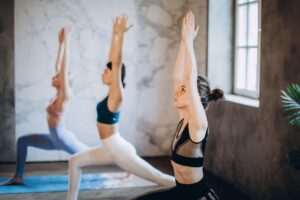
  • put the right foot forward with the foot turned outward, keep the angle of the front knee at least 90 degrees;
  • we put the foot of the back (left) leg on a rise;
  • watch your posture – it must be flat, the blades must be together;
  • watch out for hips and shoulders – do not turn your hip to the side, and shoulders – be sure to keep it straight;
  • if it’s easy for you in this position, put your hands on the lower back and press the left thigh down slightly with your hands, you’ll feel exactly how the front surface of the left leg is stretched;
  • after – try to bend them back leg in the knee and pull it up with the same hand, you should feel it stretching in the front thigh area of the back leg.

After the preparatory exercises, try to sit on the longitudinal right twine. Remember to breathe deeply and relax.

Repeat the same on the second leg.
Preparation exercises for transverse split

Butterfly

Butterfly stretch - man doing the stretches outside
Photo by Scott Broom on Unsplash
Sit down evenly, conveniently place pelvic bones on the mat, bend the legs in the knees and spread the knees to the sides with a straight back. Foot are kept together. Sitting in this position (and always with a flat back) try with effort to open the knees to the side to the floor. Do such 10 pushes with the knees. Then put our hands back behind the lower back and do 10 more such knees movements. Try to do everything smoothly and without sharp movements.

Frog

As a preparatory movement you can make two variations of the frog: lying on the back and on the stomach.

The frog on the back will be suitable for those who have an assistant. Lie on the back, press the lower back to the floor and do not lift it while doing the exercise. Then bend your legs in your knees, putting your feet together. Spread your knees apart. A person who helps you can push your knees and thighs slightly to the side. Then move your feet a little further, i.e. make a corner in your hips a little more, and stretch in this position again. This is a static exercise, smooth, no need to do any jiggling or jerking.

If you stretch alone, try the frog on your stomach. We sit as if on a cross twine, but with bent knees, shoulders and chest serve a little forward, hands in front, if it turns out – hands on the forearms.

In this position, you can also make small smooth rolls back and forth. Then try to roll your hips back a little, screw your coccyx in and be in this position for another 10 counts.

Then smoothly align one leg and do rolling to back and forth. Change the legs and roll again.

After these preparatory exercises, try to sit on a transverse split and stretch it more.


Common mistakes when stretching splits

Mistake №1. When you stretch a longitudinal split, keep your hips level. Very often the hip of the hind leg turns to the side and does not let us stretch the twine to the end. Pay close attention to this during all the exercises for stretching longitudinal twine.

Mistake №2. Performance of preparatory exercises with a round back. Do not forget to straighten your back all the time. Smooth posture will ensure the most effective tension exactly where you need it. A round back does not allow you to exercise effectively enough.

Mistake №3. No warm-up of the muscles. Warm up your body before stretching practice. Do joint gymnastics, squats, plank. Unheated stretching is very traumatic!

Mistake №4 – to stretch out without strength training. Bark and leg muscles, which are in good tone, will be a great bonus for your stretching. Periodically make different curls on the press, plié squats, plank. Tonus in your muscles will help you achieve better stretching results.

FAQ

Can everybody do a transverse split?

There is an opinion that some people cannot do a transverse split because of the structure of the hip joint. Indeed, we are all different, and physiologically as well. It happens that it is much harder for some people to do the transverse split, but it does not mean that you can not do the split in principle. It’s just that you’ll need more time for that. For this, you will need to work actively on developing and opening the hip joint.

How do you do the splits in one day?

The main rule of stretching – do not try to do a split in one day. Stretching should be moderate and uniform, without jerks and strong painful feelings. Otherwise, you risk getting injured in ligaments. And it hurts and you will have to recover from this injury for a long time.

How to do the splits in a month?

How quickly you can do the splits depends on your level of training, genetics, intensity, and quality of training. In general, doing a split in a month is real. But we recommend not to chase for speed. It is better to reach the goal slower, but confidently and without injury. So you can not just do the split, but to be in it painlessly for a few minutes.

How do guys do the splits?

In stretching, it is more appropriate to consider the physiological specificity of the body rather than based on gender. As a general rule, stretching exercises are equally difficult for girls and boys. It’s just that guys often have more clogged muscles and it leads to difficulties with stretching.


Here’s some more articles about stretching:

couple dancing the milonga in an evening

Milonga Dance: The uptempo relative of the Argentine Tango

Milonga dance celebrates Argentine Culture. A ballroom dance sharing many characteristics with the better known Argentine tango and considered to be the forerunner to Tango. A fluidity gives dancers the opportunity to express the vibrant ...
Ballet feet exercise. Ballerinas feet warming up stretching

Ballet foot exercises

10 Ballet Foot Exercises: Warm-up, Boost Your Technique and Foot Strength Foot exercises are an essential part of a ballet dancer’s training as they provide important strength and technique benefits. Developing strong and flexible feet ...
Image of a lady stretching on an athletics track

Hyperbolic Stretching

Hyperbolic Stretching Hyperbolic stretching is a new type of stretching from Alex Larsson. It's been getting a lot of coverage lately on various websites, but it's also been met with skeptics. Let's review the facts ...


Cover photo: Photo by The Lazy Artist Gallery on Pexels

Top 13 Best Movies about Dancing

Let’s take a look at our 13 favourite movies about dancing:
    • Step Up (1-6 parts)

Step up – the legendary six films about dancing, after which many teenagers went looking for dance schools in order to learn how to move and dance, like Tyler from the first and second parts of the film.

Step Up with Channing Tatum.

The first part (2006) is about a young man, Tyler, for whom the main thing in life is street dance. After one of the street dancing adventures (Tyler and his friends snuck into the local art school), the police detained Tyler. As a result, the court ordered him to community service at the school. During this time Tyler’s life began to change dramatically.

There is an interesting plot, a lot of music and dancing Channing Tatum. There is also a love story and unexpected plot twists. And most importantly, the film perfectly captures the atmosphere of the streets and street dances. Step Up is mandatory for all dance lovers to watch.

The second part is no less entertaining because it tells us about Tyler’s sister. It is in this movie appears all the favorite hero Moose, who played Adam Sevani. All events take place according to the laws of the genre, but from this film does not become boring. It is filled with special effects, cool dances and dancers, and good music.

Step Up 2 The Streets.

We recommend that you view at least the first 4 parts of Step Up. The movie will give you a lot of fun if you like dancing, especially in street directions.

    • Dirty Dancing (1987)

Dirty Dancing.

Dance classics, the absolute must-have in the list of films about dance. Chic Patrick Swayze and gentle Jennifer Grey is a legendary duo that amazes with sincerity.

The film tells about the romantic union of two completely different people, representatives of different estates. And this union became possible only through music and dance.

There is also the second part – Dirty Dancing: Havana Nights (2004). The stories are not related to each other, but the plots are similar in many ways. It’s a kind of fresh look at the usual plot. We recommend you to watch both parts.

    • Honey (2003)

A classic story about a young girl who works hard and dreams of opening her own dance school. During the day – she goes to castings of dancers, teaches dance to children, and at night – we work as a bartender in a nightclub. There, her dance is noticed one day, and it changes her whole life.

Jessica Alba, starring, looks very organic. You believe in her and you empathize with her. The story is very sincere and kind, so we recommend watching it not only for a good time but also for motivation.

    • Magic Mike (2012) + Magic Mike XXL (2015)

If you haven’t had enough Channing Tatum in Step Up, make sure you watch Magic Mike. Besides Tatum, featured Oscar bearer Matthew McConaughey and promising young actor Alex Pettifer starred in Magic Mike. During the day Mike works on a construction site and puts tiles, and at night becomes the object of lust of all visitors to the club “Kings of Tampa”.

Magis Mike XXL.

A relaxing comedy about the life of strippers is great for watching at the weekend.

    • Battle of the Year (2013)

Battle of The Year.

The film tells about how the American team is preparing for the most important dance competitions of the world scale. Teams from all countries compete for the main prize – the title of the best dance team in the world, the title of Kings of the dance floor.

    • StreetDance (2010)

Street dance film movie

StreetDance – a youth melodrama about the participants of the dance tournament. Participants of the dance group “Jay 20” live dancing and even got the right to perform in the final championship of England on street dance. But the way to victory is not so easy and the team is waiting for many obstacles.

The film focuses on a mixture of styles: the first part of street dance and ballet, the second part of the film – street dance and Latina.

The film has three parts in total.

    • La danseuse (2016)

La danseuse.

The painting about the discoverer of art nouveau in the dance Loi Fuller – attracts emotional, musical, and choreographic background. On the one hand, the drama “La danseuse” tells about a strong woman, who since childhood used to overcome resistance, looking for ways to self-fulfillment, hard to work to realize themselves. On the other hand – the story of Loi Fuller – is the tragedy of a man who did not know happiness in life and was not endowed with the deserved glory after death. And yet this woman can serve as an example of a selfless attitude to a favorite cause. But the fame of a dancer in the art nouveau style went to a student Fuller Isadora Duncan.

Interesting biographical drama with a deep philosophical meaning. Be sure to watch if you dance in modern dance directions.

    • Dancer (2016)

The documentary is dedicated to one of the most famous and talented artists of contemporary ballet – Sergei Polunin. Having managed to reach the top of his dancing career by the age of 19, at the age of 25 Polunin begins to think seriously about changing his life path. Acquaintance with dubious personalities and drug abuse leads to failures, but Sergei’s talent continues to fascinate the public, and specialists read the dancer a bright and fast career, putting him on a par with such ballet stars as Mikhail Baryshnikov and Rudolf Nureyev.

    • Burlesque (2010)

Burlesque.

Starring the musical is charming Christina Aguilera and Cher. The plot tells of a young talented girl Ali, who comes to Los Angeles to conquer the scene burlesque club. She is talented and purposeful. The musical was created especially for the actor’s debut of Christina Aguilera.

It is an interesting story about the struggle for success in the dance industry.

    • Fame (2009)

A film-musical about the New York School of Art. Every student has dreams of popularity, but the road to glory is complicated and thorny. This film is about whether students can overcome all the difficulties on their way to come to a cherished desire.

    • Black Swan (2010)

Black Swan.

The Black Swan is a modern story about ballet dancer Nina (played by Natalie Portman), whose life is changing as she gets the main role in Swan Lake. The film shows well the daily hard work of ballet dancers, tells about the strained relations between parents and children-dancers. The life of the main character is inseparable from her professional activities because ballet and getting her starring role in the legendary ballet production – became the meaning of her life.

Black Swan should please not only fans of classical dance, but also those who love drama stories about self-reflection, which sometimes leads to schizophrenic tendencies.

    • Shall We Dance? (2004)

Shall We Dance?

A romantic comedy with Richard Gere and Jennifer Lopez tells how dancing helps save a person from everyday routine and diversify his life.

It’s a touching melodrama with great actors and an interesting story. It’s a good movie to watch in the evening.

    • Take the lead (2006)

Take the Lead.

The painting tells about the confrontation between a teacher of classical tango dance and teenagers – representatives of youth hip-hop culture. Hold Rhythm – an elegant, deep, and high-quality film about dance and not only. In addition to good performances, it also shows the complex relationship between people. The protagonist acts as a kind of model, carrying the teachings not only dance but also the rules of conduct in life, regardless of position and status.

Although Dance is certainly the main theme of the movie. Each dance, especially the tango, is shown in this film very professionally and competently.

This is our TOP-13 movies about dancing.

Have a look at some more dance tips:

Teaching dance tips - creating a supporting learning environment

10 Tips for New Dance Teachers

To help you with dance teaching in those early steps of your career, this article outlines some tips for new dance teachers. A few handy pointers which I've learned along the way ...
couple dancing the milonga in an evening

Milonga Dance: The uptempo relative of the Argentine Tango

Milonga dance celebrates Argentine Culture. A ballroom dance sharing many characteristics with the better known Argentine tango and considered to be the forerunner to Tango. A fluidity gives dancers the opportunity to express the vibrant ...
Ballet feet exercise. Ballerinas feet warming up stretching

Ballet foot exercises

10 Ballet Foot Exercises: Warm-up, Boost Your Technique and Foot Strength Foot exercises are an essential part of a ballet dancer’s training as they provide important strength and technique benefits. Developing strong and flexible feet ...
Image of lady with her hairstyle prepared for dancing in a flamenco competition

Dance Hairstyles: For Competitions and Classes

Dance hairstyles are part of the show! This article will give you inspiration and for new styles and pointers in doing them. The dance floor is very demanding. Including our hairstyles. This demand applies both ...
Image of a lady stretching on an athletics track

Hyperbolic Stretching

Hyperbolic Stretching Hyperbolic stretching is a new type of stretching from Alex Larsson. It's been getting a lot of coverage lately on various websites, but it's also been met with skeptics. Let's review the facts ...
A photo of a couple at night, swing dancing, being cheered by a crowd circled around them

12 Types of Swing Dance

What is swing dance? Swing dancing is a type of partner dance performed mostly to swing music. The focus is on musicality, improvisation, and personal expression. There are many ways to classify swing dances. Most ...

Zumba at Home: Simple Courses to Help you Train at Home

Dancing is a great way to keep the body in good shape. Zumba is dance fitness, during which not only muscles but also endurance are trained.

While some people like to go to group classes, others can choose to do Zumba at home. It is comfortable for those who do not want to do in front of other people or do not have time to visit the fitness room. Moreover, for this, you will not even need any equipment. So, put on your zumba shoes and let’s go!

Image of people doing a Zumba class
Photo by Gabin Vallet on Unsplash

Best ways to do Zumba at home:

YouTube Videos

Even if you are a beginner, you can find many videos on YouTube explaining the basic steps and movements Zumba.

And we’ve also prepared 5 ZUMBA training to the best hits:

    • DESPACITO – Zumba with Meta
    • Bandera – Claudia Leitte
    • Dura – Daddy Yankee
    • Havana – Camila Cabello
    • Boom Boom Pow – The Black Eyed Peas

DVD

You can purchase zumba training video courses. On the Internet, there are many video programs for different levels of training. It costs about $ 10 per disc or program.

DVD Zumba training for weight loss.

Zumba dance app

Here are some application options for your phone:

  • Dance Workout Videos: Reduce Belly Fat For Women
  • Zumba Dance for Beginners
  • Weight Loss dance aerobic

So why did the zumba win the hearts of many girls and men who dream of a tightened body? The main distinctive feature of zumba is that despite the high intensity of training, they are fun and enjoyable. That is you really dance! And at the same time, you burn calories and rock your muscles. Thus, the workout becomes a fun fitness party, where everyone dances and trains as a pleasure! Even if you workout at home.

FAQ

Why does a zumba help you lose weight and be toned?

The program of a Zumba is based on increasing and decreasing the heart rate in combination. This helps not to get tired long enough while providing a significant aerobic load on the whole body. That is, during such a workout most muscles of the bodywork with an intense rhythm over a long period of time – usually, it is 1 hour of training. The constant change of rhythms allows you to keep up the pace without getting tired.

Is Zumba suitable for beginners?

Zumba is good for beginners. There are different levels of Zumba, including the Basic level, which is designed for beginners. Combining fun Latin rhythms with intense, yet uncomplicated, moves will quickly turn you into a Zumba fan.

Can Zumba be done at home?

Yes, with the help of training videos and applications, you can easily learn zumba at home and on your own if you do not have time to go to group training.

Is Zumba a good way to lose belly fat?

All kinds of zumba are ruthless to calories. If you exercise intensively and put on training (ie, work the whole body, in full amplitude), you can burn up to 1000-1200 calories in one session. By burning subcutaneous fat in the whole body, you will get rid of fat on the stomach.

How much weight can you lose in a month with Zumba?

If you’re a beginner and do Zumba three times a week for a month, you can lose 3-5 kg of weight as a result!

Best Zumba Dance Music

  • Daddy Yankee – Gasolina
  • Luis Fonsi (ft. Daddy Yankee) – Despacito
  • Inna – Yalla
  • Shakira – La La La
  • Daddy Yankee – Dura
  • Don Omar – Danza Kuduro
  • Ariana Grande feat Nicki Minaj – Side to Side
  • Wisin & Yandel Ft. Jennifer Lopez – Follow The Leader
  • Don Omar – Hasta Que Salga El Sol
  • Ricky Martin – Drop it on me
  • Ricky Martin – La Mordidita ft. Yotuel
  • Enrique Iglesias – Bailando ft. Descemer Bueno, Gente De Zona


Cover photo by Photo by Gabin Vallet on Unsplash.

How to choose a dance school?

How to choose a dance school can be confusing for those wishing to start. The difficulty lies in the abundance of choice and lack of experience. We have collected useful expert advice on how not to make the wrong choice when choosing a dance school for yourself or for your child.

Before you make your choice, think about your goals: whether you want to dance as a hobby or plan to achieve professionalism and a certain level of training. In the first case – remove the schools that prepare professional dancers, in the second – pay special attention to them. In any case, the following tips will help you make the right choice.

Learn more about the teaching staff and their qualifications

Dance coach – a person who will directly and continuously interact with you or your child and a person who should show you how to become a very good dancer.

Dance Classes Online top 9 Reviews. People dancing in-sync for an online class exercise
Photo by dragon images on Shutterstock

He has to:

  1. be qualified and experienced enough to teach;
  2. have regalia and achievements in the dance field;
  3. be able to present information in a clear and comprehensible manner.

It’s very important who exactly is going to teach you. It has to be a professional who has a “from and to” style. In the end, in many ways, you will adopt his plasticity and style of dancing.

The sympathy that arises on an emotional level is also important. If you like your coach, you will train and learn with more pleasure and enthusiasm.

It’s a good idea to visit different trainers sometimes to have a variety of styles.

Does the studio participate in dance competitions?

It is important not only to improve your skills but also to practice them in competitive scenes. This greatly increases the level of a dancer, develops artistic skills, hardens and gives an idea of the level of other dancers. If a school takes its students to competitions, it indicates its desire to grow them into professionals.

History of ballroom dance. A ballroom dancing couple in competition
Photo by Cinematics on Pexels

Even more serious (but not obligatory) criterion of choice – the organization of own competitions.

Student level

The dynamics of progress and a good level of training for those students who have been studying for more than a year or two is an indicator of high-quality teaching and the seriousness of such a dance studio. Try to see if there are successful graduates who have become successful in their dance direction.

Dancing hall

An important criterion is the gym that you will be training. Availability of free space, mirrors, quality flooring, ballet lathe (in the case of ballet school) – mandatory criteria for selection. A good advantage will be ventilation, airing or air conditioning of the room (all the dance groups are training in the hall in a row).

Light bright dance studio. Choosing a dance school
Image by curtishammondtwo on Flikrr

Trial lesson

Many dance studios have a free trial lesson, which will make a lot of things clear for you. Try it until you find something that suits your criteria and needs.

How far are you ready to go?

It is desirable not to choose a studio that is just nearby but does not meet the criteria described above. Behind quality training, it is worthwhile to drive longer and further. This time will pay off your level of dance training in the future.

Atmosphere

The feeling of inspiration and desire to create arises in a positive and pleasant atmosphere. It is created by the attitude to everything: to training, to dance, to other dance schools, the relationship between students and coaches. Training becomes even more important and enjoyable if the studio creates a family or friendly atmosphere.

Pick a dance school for a child

Students learning to ballet dance - beginners moves
Photo by cottonbro-studio on Pexels


When choosing a studio for your child, parents should follow the following tips:

  1. at least the first few sessions, ask to be present (if possible);
  2. listen carefully to your child about how they have been trained, and pay attention to their mood after the dance class;
  3. pay special attention to the choice of the trainer: he or she should be able to get along with the children and explain the dance technique to them in a language they can understand;
  4. perhaps you have a dance class in school.

Dance and have fun!


Other related dance tips:

Teaching dance tips - creating a supporting learning environment

10 Tips for New Dance Teachers

To help you with dance teaching in those early steps of your career, this article outlines some tips for new dance teachers. A few handy pointers which I've learned along the way ...
couple dancing the milonga in an evening

Milonga Dance: The uptempo relative of the Argentine Tango

Milonga dance celebrates Argentine Culture. A ballroom dance sharing many characteristics with the better known Argentine tango and considered to be the forerunner to Tango. A fluidity gives dancers the opportunity to express the vibrant ...
Ballet feet exercise. Ballerinas feet warming up stretching

Ballet foot exercises

10 Ballet Foot Exercises: Warm-up, Boost Your Technique and Foot Strength Foot exercises are an essential part of a ballet dancer’s training as they provide important strength and technique benefits. Developing strong and flexible feet ...
Image of lady with her hairstyle prepared for dancing in a flamenco competition

Dance Hairstyles: For Competitions and Classes

Dance hairstyles are part of the show! This article will give you inspiration and for new styles and pointers in doing them. The dance floor is very demanding. Including our hairstyles. This demand applies both ...
Image of a lady stretching on an athletics track

Hyperbolic Stretching

Hyperbolic Stretching Hyperbolic stretching is a new type of stretching from Alex Larsson. It's been getting a lot of coverage lately on various websites, but it's also been met with skeptics. Let's review the facts ...
A photo of a couple at night, swing dancing, being cheered by a crowd circled around them

12 Types of Swing Dance

What is swing dance? Swing dancing is a type of partner dance performed mostly to swing music. The focus is on musicality, improvisation, and personal expression. There are many ways to classify swing dances. Most ...


Cover photo by Photo by cottonbro studio on Pexels

How to make money as a dancer? Full earnings options guide

If you want to know how to make money as a dancer, this guide is for you.

As you can see from our list below, there are many ways to make money as a dancer.

There are all kinds of jobs in dance that pay well, and some pay better than others. Some of these jobs are seasonal and others are permanent.

It is also important to know what you can and can’t do, your strengths and weakness parts. This guide will give you all the information you need to know.

How to make money as a dancer. A dancer stretching out.
photo by Augustas Cetkauskas on istock

What you need to know before you get started

If you are only thinking about whether you can connect your life with dancing, not only as a hobby but also professionally, you need to know a few things.

First of all, no matter what others would tell you, earning by dancing is possible.

There is an opinion that dancing is only a hobby. From our guide, you will learn many options for earning dancing and make sure that this is not always the case.
Why not always?
Because in order to earn by dancing, you need to realize that a dancer must have certain skills and professionalism.

To make money dancing, you need to be a professional in your field. As in any field of activity. Understand are you willing to work on yourself to reach new heights in the dance industry. And if you decide that dancing is your life, then this guide is for you!


Do you want to get paid to dance, but don’t know where to start?

A few people have made a name for themselves dancing on a stage. It’s amazing. You get to travel the world, meet some amazing people, and learn a lot in the process. But, if you can get started and you’re willing to work hard, you could earn an amazing amount of money dancing.

Ways of making money by a dancer

To go abroad to work as a dancer on a cruise ship/club

On the Internet, you can find many vacancies related to dance shows on cruise ships. Often, dancers are required in clubs in Asia. This is a popular way to earn money for beginners who want to gain experience and are ready to leave for a long time from their country.

Dancers on cruise lines.

A cruise ship contract can be paid in the amount of $900 per week on average. Moreover, most often, contracts imply the availability of paid housing and meals. During work, you also travel constantly and can see many countries and meet many interesting people.

To get such a job, you need to go through a casting. Castings are held online and offline. If the company announced an online casting, you need to shoot a video of your dances, where you show what you are capable of. Then submit the video in response to the vacancy. It is quite simple and does not take much time.

Image of cameraman capturing a ballet film / movie
Photo by Kal Visuals on Unsplash

Some companies organize castings offline. You will need to register for it and arrive at the appointed time at the specified place in order to dance to the jury commission.

The most popular requirements for candidates:

  • High level of commitment, energy and stamina.
  • Adequate experience in the dance industry is desirable.
  • Talent, natural charisma and artistic instinct.
  • Excellent understanding of service and customer focus.
  • Professional training in different kinds of dancing: in ballet, modern dance, ballroom dance, jazz dance and so on.
  • Distinctive musical and rhythmic sensibilities.
  • Age from 21 years.

Participation in dance competitions (including television)

How many popular and familiar dancers who became famous thanks to, for example, the SYTYCD show. Such shows are a great opportunity not only to become famous in the industry and earn winnings in the amount of several hundred thousand dollars but also to gain new knowledge in the master classes of the project.

History of ballroom dance. A ballroom dancing couple in competition
Photo by Cinematics on Pexels

We leave some links for you where you can learn more about the conditions of castings:

But it’s not necessary to go to a television format show. You can search for competitions with prize pools, as well as auditions for various talent contests.

Participation in the filming of films and videos

Dancers can also work in ballet with stars, act in films and music videos. Work in the ballet with the star includes not only concerts but also constant traveling on tours and participation in the filming of music videos.

You can search for auditions on the site https://www.backstage.com/casting, using convenient filters.

Work in theater ballet, dance shows, dance groups, professional shows

In addition to television and star ballets, there are theater ballets. If you are a man of art, a good dancer and performer, and also have good acting skills, you can try yourself on the stage of the theater.

Images of dancers on stage - moving to the best choreography, inspired by talented choreographers
Photo by ketan rajput on Unsplash

This can be a drama theatre with a ballet troupe, or a specialized ballet theater. There are also modern dance theatres, experimental and others. For example ALVIN AILEY AMERICAN DANCE THEATRE, ABT, American Dance Theatre of Long Island.

Professional shows. You can get paid to perform at various professional dance shows, such as the San Francisco Ballet, and at the Kennedy Center.


Ways to make money on teaching and by workshops

Private lessons and workshops

You can teach how to dance, or you can be a private instructor who knows a lot about dance and can teach kids or adults how to dance. This is one way to earn some extra cash by giving classes on the weekends at your local mall or a local gym.

Dancing class of ballet dancers on stage
Photo by ALEXANDRE DINAUT on Unsplash

Some people say that the biggest moneymaker is private lessons.

Opening of a dance school

If you have entrepreneurial skills, you can open your own dance school. Typically, dancers begin their journey with private dance classes, then recruit more and more students. When there are a lot of students, it’s time to think about renting a dance hall on an ongoing basis and hiring dance teachers besides you.

Light bright dance studio. Choosing a dance school
Image by curtishammondtwo on Flikrr


On this path, the main thing to remember is that business requires time not only for teaching but also for operational work. You will need new employees, such as an accountant, administrator, several trainers. It will be necessary to constantly take care of renting a dance class, finding new students, marketing, profit, etc.

But at the same time, a sense of pride in your students will not make you doubt the choice of a profession and how to earn money.

Work as a choreographer and participate in productions of dance shows, theaters, wedding dances

If you feel in yourself a talent for staging dance numbers, you can become a choreographer of ballet, dance troupe, choreographer of wedding dances, etc.

How to earn money dancing online

The blog

You can start a dance blog and monetize it using Google AdSense or an affiliate-marketing. A blog can be started both on a personal website, for example, on the WordPress platform, and on social networks. Make it fun to read, share your experiences, communicate with your audience. Personal brand development is now in fashion.

YouTube account

As you have probably guessed by now, YouTube is a very popular channel for video sharing. There are lots of tutorials that explain how to make money from this channel, so if you want to get started, you have to watch them.

YouTube blogging.

With the help of YouTube, you can also make money from advertising. Open your channel, shoot videos about dancing, your dance numbers, tips for beginner dancers. Try to make videos with high engagement on your channel. For watching ads at the beginning of the YouTube video, you will receive money. By gaining a certain number of subscribers and an active audience, you can get advertising contracts, for example, with brands of dancewear or shoes, with various dance schools, etc.

Common tips for Dancers

  1. Get an agent. Get your name out there by sending out your auditions on auditions.com, and if you’re a local to Vegas, send out the showings on the door at your place of work. You will have to pay them to run your showings, but it’s a cheap way to show the world you’re a professional.
  2. Don’t give up when you don’t get cast. Just because you’re not getting a gig doesn’t mean it can’t be yours! This is not a death sentence, and you should not give up on your dream just because of a missed opportunity.
  3. Know your dance style. Don’t go in and try to replicate another person’s style when you are a different size, age, or shape. There are plenty of videos on YouTube of the same dancer, and if you want to be a pro dancer, learn the style that makes you happy and comfortable.
  4. Practice your moves on stage (in your own home or in a studio) and perform them to your favorite music.
  5. To make a few hundred bucks or a couple of thousand a week it’s not a hard task. The best way to do this is to just dance and not focus on your career in general. It doesn’t need to be that busy, just focus on your body, and that’s it, if you’re good enough you’ll be able to make some money with just that.

FAQ

How do ballet dancers make money?

Ballet dancers most often work in theatres. They perform classical performances, such as Carmen Suite, Swan Lake, Sleeping Beauty, etc. Ballet companies often tour and make good money on it.

How to make money as a hip hop dancer?

Hip-hop dancers can earn by participating in dance battles, giving private hip-hop lessons, master classes. They are also in demand in the industry of show business, because often in music videos and at concerts of stars it is hip-hop dancing.

How much money can you make as a dancer?

It depends on what level of training you are a dancer. Beginners can not earn much. A professional dancer on average earns 40-90 thousand dollars a year. World-famous dancers – hundreds of thousands of dollars a year. But history knows examples when world ballet stars earned millions of dollars.

I want to dance professionally. How to start?

Choose a dance school that has already graduate good professional dancers or a public institution with a direction in choreography. Try yourself in different styles and choose the one you like best. Train 3-5 times a week. Feel free to ask the teacher about how you do it, what you can do better.
Start taking individual dance lessons. This is much more effective than group training.