West Coast Vs East Cost Swing

Wondering what the difference between the West Coast and East Coast swing styles might be? Then let us tell you all about swing.

Swing dance is an energetic and bustling genre that has a rich history, rooted in the vibrant music and dance culture from the roaring 20’s to the 40’s. Swing is known because of its dynamic movements and infectious rhythms, and encompasses a very diverse range of styles, each on with its unique flair and cultural influence.

Of course, both West Coast and East Cost fall under the category of Swing Dance. Nonetheless, this dance has a myriad of distinct styles (over 10), and there’s four of them that had direct influences on West and East swing. Let’s take a closer look at each:

  • Lindy Hop: This dance originated during the 30’s, and is known due to its high-energy nature. It features very “athletic” and acrobatic fast steps, and generally leaves all spectators in awe. You won’t be indifferent to it, and that’s for sure!
  • Shag: It came around during the 20s, and became widespread during the 30’s. It has a Jazzy spirit and is danced to up-tempo.
  • Balboa: This dance is performed in a closed position and originated during a time with very strict social codes and limited dancing spaces. It doesn’t feature turns and spins, and there’s a constant connection maintained between the dancers’ chests.
  • Lindy Charleston: This style bears a resemblance to the Charleston dance of the 20’s. It encompasses various positions, including the jockey, side-by-side, hand-to-hand and tandem. All adding depth and versatility to this classic dance style.
THE BEST SWING DANCE SHOES - image of people swing dancing, men and ladies
Photo by stevecoleimages on iStockphoto

So… what’s the difference?

To differentiate them, we need to know each one. Let’s start with East Coast Swing, which is also known as Jitterbug.

East Coast Swing:

As its name implies, this swing has its origin mainly in the east coast, and is distinguished by its association with jazz music and big bands. Its also related to the vibrant New York City scene of the 40’s.

This style emerged from the Lindy Hop, which was the popular and predominant dance style of that moment. East Coast was a response to the huge demand of dance studios for a more mainstream, approachable, and structured version of Lindy Hop (because, as you might imagine, not everyone was able to perform such an acrobatic dance at almost inhuman speeds), so East Coast Swing was designed for beginners.

Here, the fast melodies of rock and big bands dominate. This swing uses rock steps and has a nice energy, which makes it a good bet for beginners, and, in a certain way, it positions it as a standard dance. Here’s some nice examples…


West Coast Swing:

Now for West Coast (or Western) Swing, which originated in California. It’s important to note that this style is performed in a groove, and is considered a slower dance than the East swing.

Musically, west coast prefers slow rock, as well as blues rhythms. It can also favor country music at times. This swing can be seen as more sensual when compared to its counterpart and emerged when the Lindy Hop dance started to decline.

In social dances, it’s common to find people fusing elements of both styles, making a mixture of East Coast and West Coast dance. This video showcases some really fun examples.

The tempo

As a general “rule”, East coast Swing is danced to a fast tempo (between a BPM of 136 and 144), as follows its energetic nature and musical preference. In the contemporaneous American Rhythm of this swing, dancers also perform to the gleeful and vivacious pop music.

As for West Coast Swing, its enchanting aspects include that it is very versatile when it comes to choosing music. This dance style adapts itself gracefully to a myriad of music genres that go from the sensual hug of slow blues to the contemporaneous vibes form hip-hop, the melodious harmonies of pop, music from the 40’s and even the twang of country.

The tempo for this style varies greatly, but it oscillates in a BPM of 90-120 range. One of the hallmarks of West Coast Swing is its strong emphasis on dancing in sync with the music, a quality that plays a key role in winning West Coast Swing dance competitions.

Achieving this synchrony involves embodying the lyrics of the songs, skillfully combining dance moves with musical pauses, and harmonizing body movements with rhythmic beats.

A West Coast dancer must prove a ‘dance chameleon’, adapting their style to the musical context and passing easily from sensual and slow, to energetic rhythms.

The Basic Steps

In essence, East Coast Swing revolves around a dynamic interplay of rock steps and triple steps. What really defines East Coast Swing is its inherent sense of rhythm, characterized by a lively bounce, graceful ups and downs, and a captivating cadence.

Dancers infuse this style with an infectious burst of energy, accentuated by energetic shakes and kicks of the legs and feet, along with the mesmerizing swaying of the hips in a pendulum motion. Lifting the knees between steps is a testament to the exuberance of the dance and synchronizes perfectly with the vibrant energy of the accompanying music.

The foundation of West Coast Swing is its fundamental footwork, characterized by a rhythmic sequence of walk, walk, triple step, and triple step. It is important to note that within this sequence, the final triple step has a special designation as the “Anchor Step”.

What distinguishes West Coast Swing is its fluid and sophisticated style, marked by a deep emphasis on partner connection, a keen sense of musicality, and precision footwork.

Wrapping it up…

Both East Coast Swing and West Coast Swing have carved out a niche as enjoyable and sociable dances, often gracing the dance floors of weddings, parties, and lively bars. I enthusiastically encourage anyone to venture into the world of both dance styles – do you have a preference between the two and, if so, what attracts you to them? We’d love to hear from you.


Majorette Dance: Moves, Dancing Styles and 200+ year History

Majorette Dance:

In this article, we twist and twirl through everything majorette. Things like what makes a great majorette dance, core moves, how to get started as a majorette and how to join or form a dance team.

So without further ado, let’s kick-on…

Majorette dance
Majorette dancers preparing with the band in 1970’s Sweden. Photo by Annie-Spratt on Unsplash

What is a majorette?

Simple question you’d think but actually there’s so much variation out there. We thought it might help to go back to this definition from the Cambridge English Dictionary:

What is a majorette?

a young woman or girl who wears a uniform and makes a pattern of movements with a baton (= stick) by turning it and throwing it into the air, as part of a group of girls who do this or as the leader of a musical group

Today, there are many styles of majorettes, as this type of dance has evolved. Many for instance will regularly not have batons, in performances for example, but we’ll dig into that later.

Majorette Characteristics, Moves and Techniques

Choreography

Majorette dancing has real flair.

Often the choreography is weaving a mixture of sharp synchronized moves, stunts and work with props (usually batons, flags and pom poms), to a background of upbeat music and bright outfits. Pulling this off takes extensive team training.

Marching & ‘high stepping’

Often accompanying marching bands during parades, majorettes entertain the crowds. So marching techniques are a cornerstone of many majorette performances.

The exact style of majorette marching followed rally depends on the style or origin of the routine. Generally, across all styles, the majorette will dancers maintain a solid upright posture. Each step will typically be to a consistent marching really emphasising the rhythm and co-ordination of the group, embellished by fast, energetic high kicks.

In this video AbbyTwirls provides an overview of a marching style and how to learn majorette marching – syncing leg and baton timing.

Baton twirling

As with marching, baton twirling can consist of lots of moves including:

  • Baton spins
  • Flourish
  • Baton throws
  • Finger twirls
  • Palm spins

Then you can add twirls, additional batons, juggling and even use fire batons, like this great fire baton routine.

In this video, you can learn a basic baton spin exercise to get started.

HBCU Style Moves

An exciting, versatile style of from Historically Black Colleges and Universities (HBCUs) in the United States, with a fresh take on majorette routines. A couple of the more common moves:

J-setting:

A high-stepping, energetic style set that utilizes call and response between dancers. This was made popular by the Jackson State University Prancing J-Settes. ‘Bucking’ is a signature J-setting move. These are powerful body and arm thrusts. It may be accompanies by J-Settes marching techniques known as the ‘J-Sette Walk’ ‘Salt and Pepper’ or ‘Tip Toe’ to name but a few.

Port de bras:

Another but more graceful arm movements. This time made famous in majorettes by the Southern University Dancing Dolls.

History of Majorette Dance

Pre-1800’s Germany:

Majorettes have been around even before 1800. Originally known as Tanzmariechen (translating as ‘Dance Marys’) in German or Dansmarietjes in Dutch.

Originally the Tanzmariechen were a group of ‘camp followers’ of the large German army, who would provide goods and services for the soldiers. This increasingly became more regulated over time but the wives of the soldiers did create entertainment for the soldiers. This included a parody of the battling forces, dressed in male, military attire. This video gives a more modern take on these traditions but keeps a taste of the military influences.

The 1900’s Europe:

With the increase of dance styles such as ballet and input of dance groups such as the revue girls and the Tiller girls the parades and postwar carnivals  of the Tanzmariechen evolved. These dance troops had costumers closer to those we associate with majorettes today. There was more emphasis on the performance, femininity and athleticism than the parody the Tanzmariechen started with, and is still key to German and European carnivals today.

Majorettes in the USA:

Today, much of the world associates ‘Majorettes’ more instinctively to American parades and sports shows. In the 1960s, young majorettes and dance troupes in America began to embellish the majorette performances with their own culture and styles.

As an interesting side note on majorette dance history, we also came across this really interesting guide from 1953, a University thesis capturing many of the core majorette techniques and detailing how to complete each. Worth a little look if you’re curious and have a few minutes.

HBCU Majorettes:

A style of majorettes developed with the performance art of historically black colleges (HBCUs), blending in elements of gymnastics, jazz, hip-hop and African dance.

Majorettes continued to front marching bands but came instrumental to representing their colleges, universities and sports teams, similar to cheerleading squads.

  • Southern University (featured in Beyoncé’s 2018 Coachella performance )
  • Alcorn State University (incorporating elements of jazz-ballet and hip-hop dance)
  • The Dancing Dolls of Jackson, Mississippi (covered in the TV series “Bring It!” and known for their fierce call-out dance battles)

It is from this style that Tik-Tok dance challenges have brought mass attention to majorettes more recently, with challenges like the ‘No love challenge’, ‘let it whip challenge’ and ‘her way challenge’.

Majorette FAQ:

Do boys and men majorette dance?

Traditionally majorettes has been for girls and women but that could be slowly changing. A US show about a group of men ‘The Prancing Elites’, who pursue their love of majorette dance helped to highlight the issue. Today, it’s also much easier to find groups including boys into their majorettes. Eventually this may feed the higher tier groups and championships to a greater extent. I you love dance, we say go for it!

How do you become a majorette dancer?

To become a majorette dancer:

1. Give it a try: As we’ve seen in this article, in todays world of YouTube and online dance classes you don’t even need to have joined a majorette group to know if it’s something that appeals and to get the basics down. So test out those dance moves, marches and baton twirls.

2. Join a majorette team: It’s a group performance, so if you’re serious about becoming a majorette dancer, have a look what groups are near you. Go along and try them out.

3. Attend competitions and workshops. Like all sports, there our competitions right up to world championships for majorettes. Participating in these can give real focus to your group to help you improve and develop collectively, as well as individually as a dancer.

4. Continued practice and dedication to master both the moves and routines.

How to Start a Majorette Dance Team?

If accessing a majorette dance team isn’t easy in your area, for your age group, you can always start one up yourself.

1.     Establish a vision for the team, the age range, skill level, what might be your style and how seriously will you take it.

2.     Recruit members for your team. Advertise and hold auditions in partnership with local schools, dance studios or community groups.

3.     Set a clear time and location for regular practice space. Possibly a local dance studio or hall. Have a ‘code of conduct’ emphasising the importance of prompt, regular training.

4.     Find a qualified advisor or coach to guide your team who knows the Majorette dance rules and guidelines. They will help develop a practice schedule, routines, and give instruction on mastering the majorette techniques and routines.

If you found this article interesting, have a look at other dances from around the world:

THE BEST SWING DANCE SHOES - image of people swing dancing, men and ladies

West Coast Vs East Cost Swing

Wondering what the difference between the West Coast and East Coast swing styles might be? Then let us tell you all about swing. Swing dance ...
Spanish dancers performing

10 Classical Spanish Dances

Spanish Dances article by Tanya, a dancer who lives in Spain. The warm, cheerful, and picturesque streets of Spain contain many wonders for anyone who ...
Majorette dancing band

Majorette Dance: Moves, Dancing Styles and 200+ year History

Majorette Dance: In this article, we twist and twirl through everything majorette. Things like what makes a great majorette dance, core moves, how to get ...

Cover image by  Eduard Egorov from Paxabay.

History of Tap Dancing (from 1828)

History of tap dancing:
Tap dance is a type of dance that is performed by tapping one’s shoes on the ground as fast as possible, with rhythm and music. Tap dancers can be found performing in many genres including jazz, tap dancing competitions, Broadway tap shows, musical theatre productions, and modern pop culture performances such as those seen on MTV or America’s Got Talent. This article explores this energetic dance style with examples of great dancing.
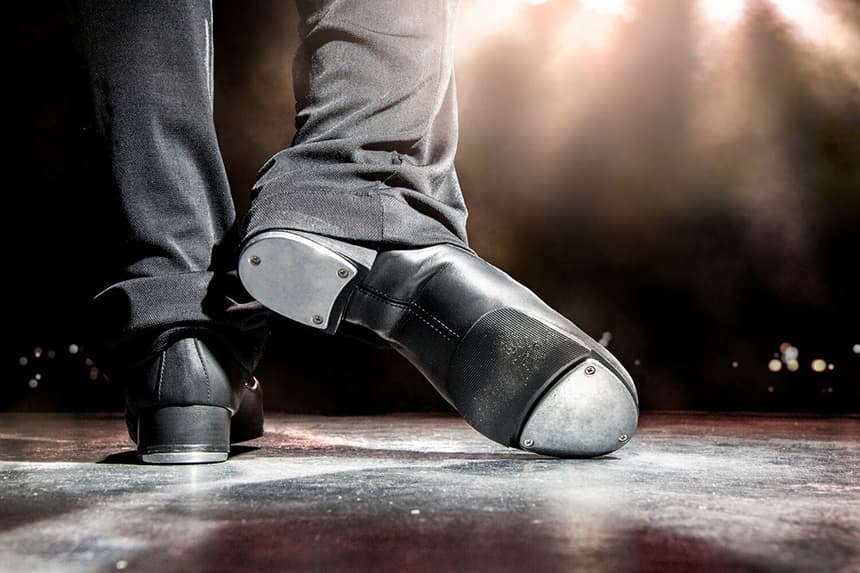
Tap dancing on stage, seeing the metal plates on the dancers shoes as he begins to tap
Photo by Josh Blake on Istockphoto.

The history of tap dancing is a history of American culture. It tells us about America’s past, present, and future. While few people know about tap dancing today, tap dance has come to symbolize the cultural diversity that makes this country great. So who first started tap dancing, we suggest you learn from this article.

Note! The tap dancer and musician are one person – his shoes are lined with special plates (usually metal), and therefore the best tap shoes make a resonant clatter at the slightest touch on the floor.

Where Did Tap Dance Originate?

Tap dance has been around since the early 19th century. It originated in New Orleans and was a popular form of entertainment for Americans. Tap dancing was first recorded in 1828 as “the act or art of dancing on tiptoe.” The word “tap” comes from the sound made by slapping shoes against the ground, which dancers would do to keep time with music played at social gatherings where people danced for amusement. But it took a full 100 years before the genre became popular on a national scale.

Origin Theories and First Information

In general, there are different theories of the origin and origin of the steppe. But all of them in one way or another come to a common denominator in that the earliest examples of tap dance did not originate on the stage, but rather were social dances among slave communities. Though the origins of tap can be traced to the ritual dances of the Indians. Their movements during rituals do resemble in some ways the rhythm of tap dance.

Tap dance initially appeared in a more standard shape during the early 1800s, when a new dance was created as a result of combining Irish jigs and African-American rhythms.

In 1830, a famous Irish dancer, who performed under the pseudonym of Papa Rice, showed the public the new dance. He combined the jig with some elements of African rhythms, in particular borrowed certain movements of the legs, shoulders, and arms. Papa Rice was greeted with applause – thus the tap dance that thrilled America was born.

Tap Dancing Active Promotion

Tap dancing became popular after 100 years when in 1920, wooden and leather soles were replaced by modern shoes with padded metal plates on the toe and heel. Tap dance became a commercialized urban art. It also attracted the attention of the media and movie directors who began to hire tap dancers in films. In 1926, a famous singer and dancer gave his first recital in New York. His name was Fred Astaire, and he was the most famous tap dancer ever, who combined his incredible technique with showmanship and elegance. He and his sister, Adele, brought tap dancing to the mainstream in the 1930s and 1940s with movies like “Top Hat” and “Swing Time”.

In 1930, Hollywood included tap dancing in many of its films. This genre reached its peak during the 1940s with such stars as Bill Robinson (Bill “Bojangles” Robinson) and Gene Kelly.

The postwar period in the history of tap dancing

The postwar period is considered a golden time for the development of tap dancing. With the war behind us, you can relax and enjoy the cast of musicals performing tap. The names of Fred Astaire, Gene Kelly, and Jinder Rogers are still on the billboards, and the great tap dancers never stop beating out the clear rhythm, turning dance into art.

In the early ’50s, tap-dancing continued to be popular but its appeal gradually diminished.

Revival

In the ’60s and ’80s, the steppe began to revive again thanks to the revival of the fashion for old musicals. And at the beginning of the 80s tap dance returned to the cinema screens: there were films with the great dancer Gregory Hines. At the same time a lot of different groups and schools dealing with this kind of dance were founded; international festivals and competitions were held. All this led to the U.S. Congress in 1989, declaring May 25 – Day Step, which is now celebrated by enthusiasts around the world.

Today

Though tap dancing is not as popular today as it once was, it has left an indelible mark on American culture. Tap dance represents the diversity that makes America great and continues to inspire new generations of dancers. While the origins of tap dance are shrouded in mystery, we can be sure that this unique form of dance will continue to delight audiences for years to come.


Related articles:

THE BEST SWING DANCE SHOES - image of people swing dancing, men and ladies

West Coast Vs East Cost Swing

Wondering what the difference between the West Coast and East Coast swing styles might be? Then let us tell you all about swing. Swing dance is an energetic and bustling genre that has a rich ...
Spanish dancers performing

10 Classical Spanish Dances

Spanish Dances article by Tanya, a dancer who lives in Spain. The warm, cheerful, and picturesque streets of Spain contain many wonders for anyone who wants to visit them. There is a very rich and ...
Image of Shiva statue, with symbolic circle. History of dance.

History of Dancing

Dancing through time to the rhythm of humanity Have you ever found yourself swaying to the rhythm of your favorite song, or to any song playing on the radio while doing chores around the house ...
Majorette dancing band

Majorette Dance: Moves, Dancing Styles and 200+ year History

Majorette Dance: In this article, we twist and twirl through everything majorette. Things like what makes a great majorette dance, core moves, how to get started as a majorette and how to join or form ...
Tap dancing on stage, seeing the metal plates on the dancers shoes as he begins to tap

History of Tap Dancing (from 1828)

History of tap dancing: Tap dance is a type of dance that is performed by tapping one's shoes on the ground as fast as possible, with rhythm and music. Tap dancers can be found performing ...
Tap shoes - a man on sitting down, so you can see the sole of his tap shoes

Tap Shoes

Choosing the Best Tap Shoes - 2023 Review Tap shoes are one of the most important accessories in any tap dancer’s wardrobe. The tap dance shoes can make all the difference to your performance and ...

Tap Shoes

Choosing the Best Tap Shoes – 2023 Review

Tap shoes are one of the most important accessories in any tap dancer’s wardrobe. The tap dance shoes can make all the difference to your performance and comfort on stage. Unfortunately, it’s not always easy to know which pair is best for you! If you want a quality shoe that will last (and look fabulous), then read our guide below before making your purchase. We’ll be happy to give our opinion on these products based off what we’ve learned about it so far.

The Results:

Spoiler: Miller & Ben Tap Shoes are the best combination of comfort, style and sound quality. Yes, they are more expensive than the mid-market price, but truly believe you deserve to feel comfortable in your feet and get the most out of every tap.


Miller & Ben Tap Shoes – 5 Reasons Why You Should Buy This Tap Shoes

Miller & Ben Tap Shoes – 5 Reasons Why You Should Buy This Tap Shoes.

The Miller & Ben Tap Shoes Triple Threat is the best tap shoes for advanced tappers and excellent for any avid tap dancer. These professional leather tap shoes have been designed by Avi Miller and Ofer Ben – world known Tap teachers and performers.

They use a full compressed wood heel for protection and a triple layer of leather at the front to provide a very durable sole. It has a triple layer front left only on the sole, giving it durability for competitive dancers who are often standing-dancing on their toes. The shoe is made from quality leather that lasts up to six months of constant use or five times a week. The shoe comes with taps installed in them, which reduce the cost of ownership.

The tap shoe has a 35 European size, which is equivalent to a US shoe size 5 – 12. The upper part of the shoes are made out of leather, while the sole has three layers in front only with compressed wood on top where your heel rests. The heels measure 1 ½ inches or 38 mm in height, which is perfect for any level of dancer.

Whether you are training or making an entrance on stage, these tap shoe covers keep you looking sleek and stylish without sacrificing the quality of their audio. These shoes bring together the form and function so that they never need to be considered separately again. Miller & Ben Tap Shoes Triple Threat designed for those with a passion for this particular sound. This is an excellent choice for anyone looking for high-quality leather tap shoes that are all-leather with no stitching in the front, for both men and women. But the shoe is not intended for beginners but rather for an experienced dancer.

Pros:
  • Made from quality leather (upper – leather; sole – leather, triple layer front only)
  • Unisex professional tap shoes
  • Designed by world known tap teachers and performers
  • The shoe comes with taps installed in them
  • Heel – Compressed Wood & Leather
  • The tap sounds loud and clear
  • Lasts up to six months of constant use or five times a week
Cons:
  • Expensive

Bloch Womens Jason Samuels Smith Tap Shoe Review

Bloch Womens Jason Samuels Smith Tap Shoe Review.

Bloch Dance Womens Jason Samuels Smith Professional Leather Tap Shoe is a top of the line product from Bloch that ensures durability, comfort and longevity. These shoes are carefully engineered to allow you to perform at a professional level with a small amount of effort!

With leather soles and painstakingly hand-stitched straps, these shoes will have you tap-dancing for years without worrying about replacements or breaks in time. Canvas lining ensuring long lasting use! The inside feels soft and luxurious on your foot with a specially engineered metal bonding procedure that ensures the screws which hold the taps will not loosen without modification by the dancer. They are designed to make full contact with a flat surface with the tap plate.

The sounds on these are beautiful and very clear and loud. These ones are heavier then normal shoes so it took a class or two of adjustment, but the taps are more crisp and louder. They seem to be more stable for toe stands. There are two colors: white and black.

Bloch Jason Samuels Smith Tap Shoes are one of the best investments you can make in your dance career.

Pros:
  • Sizes are available to fit most types of feet
  • Promotes long lasting use
  • Very supportive
  • Two colors
  • Durable and comfortable
  • The sounds are clear and loud
Cons:
  • Someone finds them a little uncomfortable to tap dance in at first

Capezio Women’s Flex Master Tap Shoe – Best Tap Shoes for Wide Feet

Capezio Women's Flex Master Tap Shoe.

The Capezio Women’s Flex Master Tap Shoe is a very popular shoe. It has excellent features that will help you do your best at tap dancing. The Capezio Tap Shoe is a professional, high-quality tap shoes. Made from top-quality materials including leather uppers and poron insole, this shoe provides the support you need to take your dancing career to the next level.

The top benefits of this product are its high-quality leather upper, split sole shoes design for flexibility, foot articulation and ease of toe stands, moisture absorbent microfiber lining, Poron® memory pad insole provides shock absorption and will never flatten out, folded edges padded collar and Achilles notch for comfort strong toe box. Toe box is ideal for those who want to operate at higher difficulty levels. This shoe also comes with Tele Tone® heel taps mounted on a fiberboard on top of a 3/4″ plastic heel and Tele Tone® toe taps mounted on a leather forepart with a fiberboard to produce a deeper resonating sound.

Capezio Women’s Flex Master Tap Shoes are a great choice for beginner tap dancers who want shoes that will provide them with all the flexibility, foot articulation, and ease of toe stands they need to master this difficult tap dance form. These shoes are made of high quality leather material with moisture absorbent microfiber lining which is also designed to help shock absorption.

The Capezio Tap Shoe is a good entry level shoe if you’re looking for something flexible.

Pros:
  • High quality leather upper
  • The sole is built for easier toe stands, flexibility, and foot articulation
  • Microfiber lining that absorbs moisture
  • The shock-absorbing insole will never flatten out
  • Folding edges, a cushioned collar, and an Achilles notch for added comfort
  • Two colors: black and caramel
  • Strong toe box
Cons:
  • Narrow width
  • The heel is rather long

Bloch Women’s Chloé and Maud – Dance Shoe

Bloch Women's Chloé and Maud Dance Shoe.

The Chloé and Maud Lace up Tap Shoe is a super flexible, comfortable and stylish tap dance shoe to keep you dancing and tapping away smoothly. This shoe is for tap dancers at all levels, who are looking for a comfortable and supportive shoe that has the best audio engineering on the market. They give a rich tone in the toe and deep tone in the heel for contrast

The outsole of this show features high metal content with an intense chrome look, giving you an unparalleled sound when the heel hits the floor. The cushioned insole adds cushioning so that you can start off on your feet right away – no more sore feet or blisters! It also has removable Chloé & Maud enamel ♥ lace holders positioned front and center to make your style shine every time!

Soft leather upper enables better durability which makes it last through any tough or long practicing session. The plush textured fabric lining offers incomparable comfort. Cushioned insole gives shock absorption to protect joints from impact.

The incredible style of these shoes cannot be ignored. The exquisite oxfords combined with the heart-shaped charm will be the perfect accent to your look on stage. This women’s dance shoes offer an unrivalled comfort that will have you syncopating without missing a beat! Bloch Women’s Chloé and Maud Dance Shoe combines style with performance features that will have you looking great as well as feeling great!

Pros:
  • Extremely comfortable
  • Featuring the Bloch Mega tap with a huge metal content and superb audio engineering
  • A rich tone in the toe and deep tone in the heel
  • Comes with a removable Chloe and Maud heart shaped charm
  • Soft leather upper, cushioned insole and plush textile lining
  • Stylish
Cons:
  • The taps a little heavy at times
  • It’s hard to size

Bloch Women’s Tap-Flex Slip On Tap Shoe

Bloch Women's Tap-Flex Slip On Tap Shoe.

Bloch Dance Womens Slip-on Flexible Tap Shoes are split sole tap shoe with leather upper and an elasticized instep piece. They are designed for optimal performance, comfort and durability. The tap shoes feature a leather upper with elasticized instep piece that slips onto your foot. Also, leather upper offers durability, breathability, and perfect fit. This shoe features non-slip pro balance rubber pad, strong heel counter, full Kashmir lining for comfort and reduced moisture to keep feet fresh.

These tap shoes come notched at the collar of the heel to alleviate pressure on Achilles tendon. Strong heel counter helps provide stability when lifting the heels during tap routines or turning around quickly. Bloch Slip-on Tap Shoes are your go-to tap shoes.

Bloch Dance Womens Slip-on Flexible Tap Shoes are for people who want a long lasting pair of tap shoes that will give them the most comfort and support. Whether they teach tap dance, perform in a dance company, or just love dancing recreationally – these shoes are perfect for any level of dancer.

You’ll stay with the slip-on style if don’t wanna fiddle around with laces. These are super comfortable, fit like a glove and sound excellent. They are very flexible and shaped so nicely to foot. The shoes have a nice quality sound, and at a great price for Blochs.

Pros:
  • Allows for freedom of movement with support
  • Nice sound
  • Leather upper with elasticized instep piece
  • Great price for Blochs
  • Greater cushioning is provided
Cons:
  • Stretching from wearing

Theatricals Adult Lace Up Tap Shoes T9500

Theatricals Adult Lace Up Tap Shoes T9500.

This best selling low heel, PU upper tap shoe has a canvas bind for support and long lasting wear.

Theatricals tap shoes are a great way to make your feet light up with each step. The materials this shoe is made from consist of pu leather, rubber sole, and screws in taps which have a sound board. The different aspects of the shoe include heel counter, non-skid rubber patch for safety, and cushioned sock lining for comfort. Comfortable sock lining provides extra padding to make sure even those longer classes go by faster without any pain due to rubbing against the wrong material.

This style runs 1in by heel height with women ordering same or half size larger than street shoe sizes while men order 2 sizes larger then their regular size. These are very reasonably priced especially when you consider that they offer beginners an opportunity to start learning without breaking the bank – which is not something many other manufacturers can say about themselves! At this price point you can not find another heels this high quality. This shoe is a great option for beginners and seasoned professionals alike.

Pros:
  • Best price
  • Full-sole lace-up tap shoe with an Oxford style
  • Taps have a sound board
  • Unisex
  • Cushioned socks lining
Cons:
  • These are not natural leather, accordingly, the material may not be breathing enough

Buying Guide

Buying Guide for tap shoes.
Photo by Fabian Schneider on Unsplash

Materials

There are many differences between leathers. First of all, tap shoes should be made of leather and hold well on the foot. There are also leather substitutes, but the life of your shoes depends directly on the material. You should also know that high-quality leather shoes cost more than those that are made of pu.

Triple Stacked Heel

1 to 2 inches is the standard value for the heel. To produce a good bass sound, the heel must be massive and the heel block must be large, at least for men. In general, heels are a very important point when choosing shoes. They consist of two plates: the lower one is thin and flat, and the upper one is thicker and a little concave. A small space is left between the plates, which gives a castanet effect and, accordingly, a better sound. Professional blocking plates are made of metal. The experts advise: if you choose cheap shoes, make sure to get high-quality heels.

The tap is where the sound is produced by the special pads. The nature of the sound depends on the quality, material and mounting pads. High requirements are imposed on the alloy from which the shoes are made.

The sole

The sole must be thick, thick, and made of quality compressed leather. This affects how the sole will hold up in the future, after a few months of use.

Make sure they fit properly

Sizing accuracy is one of the most important criteria. The shoes should fit perfectly on the foot. They should not be too large or too small – if they are, it may lead to blisters. To find the right size when buying your tap shoes, carefully read the size chart from the MANUFACTURER. Since these are not regular street shoes, they may not be the same size as these. Moreover, each manufacturer’s sizing chart may also be different. Measure the length of your foot to find the appropriate size, and pay attention to the width.

Note, natural leather stretches a bit over time.

How much do I need to spend?

Tap shoes come in many different price ranges; prices usually depend on their materials and design as well as whether they are brand new or pre-owned. For example, a new pair of Capezio tap shoes could cost over $100 while an older model of the same shoe will cost around $60.

Now, major manufacturers like Capezio make “economy” tap shoes in polyurethane, which is faux leather. They are the most affordable. Natural leather models are naturally more expensive.

Which Brand is The Best?

Miller & Ben Tap Shoes, Capezio, Bloch, Grishko and Sansha all make quality tap shoes. Some people prefer one brand over another and some dancers swear by a certain brand because they feel the exact brand provides extra support or allows them to achieve more advanced steps. There’s a lot of talk about the best tap dance shoes. That all depends on what you like and who your teacher is.

Final Words

Whether you’re serious about tapping or just beginner tap dancer, it’s important to get the right pair of shoes. Tap shoes are a versatile, affordable option for both beginners and seasoned professionals alike. The price ranges depend on the materials used in their construction as well as whether they are new or pre-owned.

However, it’s important to keep in mind that lower priced models may not be constructed of high quality material while higher end models may come at an expensive cost. If you’re looking for a less pricey option, consider faux leather or polyurethane tap shoes by major manufacturers like Capezio who offer “economy” options with comparable durability and sound quality to natural leather tap shoes. Tap Shoes can make your dancing more comfortable if you get the right fit!


FAQ

What are tap shoes?

What are tap shoes?

Tap shoes are a pair of musical shoes that can be used to produce a tapping sound in time with a percussion instrument. Tap shoes have a metal plate at the toe, and one or more percussions or cleats on the sole.

“Tap dance” is a form of dance characterized by quick, rhythmically accentuated steps with taps rather than steps from the ball of the dancer’s foot.