
Ballet foot exercises

10 Ballet Foot Exercises: Warm-up, Boost Your Technique and Foot Strength

Foot exercises are an essential part of a ballet dancer’s training as they provide important strength and technique benefits. Developing strong and flexible feet is a big part of the groundwork you lay as a dancer. Given the exceptionally demanding nature of ballet, appropriate foot exercises help prevent injuries, maintain correct technique, and contribute to achieving the desired aesthetic lines on stage.

After all, dancers’ feet are so central to everyday life as well as to our art that we want to keep them in great shape. In a previous article, we covered some of the injuries that affect ballet dancers’ feet and legs including sprains, strains, and stress fractures. In this article, we’ll cover warm-ups and exercises that you may wish to consider adding to your routine. Remember, if you are experiencing pain, make sure to seek medical advice and let your teacher know – it’s always better to catch potential problems early.

Ballet feet exercise. Ballerinas feet warming up stretching
Photo by Astrid Schaffner on Upsplash

Warm-Up Ballet Foot Exercises

Most dance classes will start by warming up your feet (and the rest of your body). It’s a great way to help prevent injuries. Repeating these exercises as part of a “cool down” at the end of dance class/training can also be very beneficial.

Ankle Circles

Let’s start with a simple warm-up for the ankles. Either sitting or standing, move your ankles in a circular fashion, one ankle at a time, clockwise for 5-10 circles, then change direction to counter-clockwise. Repeat on the other side.

Tennis Ball Circles

Take a tennis ball and roll it under your toes and the balls of your feet in circles as demonstrated in this video:

You can also use products such as foot rollers in a similar way and some dancers report that they have given them relief from various foot conditions. If you need a foot roller, take a look at this one.

Toe Points and Foot Flexes

This classic exercise really helps  warm up and stretch the muscles in your feet, right to the ends of your toes. This can be done either sitting down or standing up.

First, press your toes toward the floor, pointing your feet, and hold the position for 5-10 seconds.

Then switch to flexing your entire foot up toward your body and hold this position for another 5-10 seconds.

Foot Rolls

Next, warm up your arches by lifting your heels off the ground and rolling onto the balls of your feet, one foot at a time, and holding it for 2-3 seconds, as shown in this video. Complete around 5 sets of these.

Strength Training Exercises for Ballet Feet

Now that your feet are warmed up, we move on to ballet foot exercises to strengthen the muscles around the feet and ankles, assisting with both stability and flexibility.

Towel Scrunches

Towel scrunches

Try this standing up. Use your toes to grip and pull the towel closer to you, “scrunching” it up each time and repeating until the towel is pulled all the way toward you. A variation of this is picking up and moving a small ball or similar object with your toes.

Alternatively, in this video, professional ballerina Nikki White shows us the 5 steps to towel scrunches in a sitting position, as well as “reverse towels scrunches” and the “grab and pull”. Ignore the cover image – the video should play fine.

The Ball exercise:

This is a popular strengthening exercise and goes beyond foot strength, helping to develop calf strength and flexibility. First place a ball (or a similar round object) between your ankles. Use controlled sets of lifting and lowering the heels.

TheraBand Resistance

TheraBand exercises are a form of resistance training for the foot, with the bands available in different levels of resistance. With the Theraband wrapped around the foot, there is a wide selection of movements and exercises available. This video shows a great one to start with:

Don’t yet have a theraband? No problem! Check out here.

Domed Foot Presses

Domed foot presses are a great way to activate and strengthen the muscles of the foot. The exercise can be performed effectively by following the steps below:

Place the foot flat on a solid surface. Lift the arch of the foot as high off the floor as possible without bending the toes.

Maintaining healthy feet as a ballet dancer

Nobody wants an injury, so look after your feet – and the rest of your body. We’ve covered a lot in this guide. Here are a few recaps and wider considerations:

1.     Warm Up and Stretch

Never skip warming up your feet as part of your overall warm-up program. We’ve covered a few suitable exercises today including ankle circles, tennis ball circles, toe points and flexes and foot rolls. Equally, remember to perform a “cool down” at the end of your class or training.

2.     Strengthen Foot and Ankle Muscles

We’ve looked at a variety of ways to help build strength including towel scrunches, domed foot presses, the ball exercise and TheraBand resistance training.

3.     Proper technique

A common thread through all these tried and tested techniques featured above (and in dancing generally) is using the right technique. Performing exercises with poor form can have serious consequences, so really pay attention to following the techniques and alignments demonstrated in the videos.

4.     Suitable Footwear

In our guide to the best pointe shoes, we cover some important considerations such as getting the right fit and level of support depending on your specific foot type and ballet experience. Wearing comfy, supportive shoes (i.e. not high heels) outside of dance class, like trainers or Birkenstocks, is a rule many dancers live by.

5.     Gradual Progression

As with any sport, but especially one as physically demanding as ballet, avoid injury by building gradually up to more strength, flexibility and advanced movements. Going too hard, too fast, is counter-productive and likely to cause injury.

6.     Listen to Your Body

Your intuition about those early warning signs your body gives you is important. Listen to this and get help when you’re unsure. Early intervention can prevent more severe injuries from developing.

7.     Get expert help

If you experience any pain or discomfort during or after dancing or exercising, tell your family, dance teacher, doctor, or professional specialising in dance injury. They’re there to help and want the best for you.

That’s it. We hope you’ve found these ballet foot exercises and techniques useful. We wish you happy, healthy dancing!


Other related articles about Ballet:

Disclaimer: We hope you find his guide helpful but please remember that all information, guidance, or advice provided on this site is for informational and educational purposes only and used at your own risk.

Coaching of each move in dance class is often the best way to learn. Improper execution of exercises can cause health problems. Consult your healthcare provider if you are having problems with your feet or are looking to make changes to your exercise regime.

Students learning to ballet dance - beginners moves

Ballet Moves for Beginners

Are you dreaming about a career as a ballerina or just want to try classical dance for yourself? These simple (ha-ha) ballet moves for beginners will help you understand what ballet is and is it ...
Ballet feet exercise. Ballerinas feet warming up stretching

Ballet foot exercises

10 Ballet Foot Exercises: Warm-up, Boost Your Technique and Foot Strength Foot exercises are an essential part of a ballet dancer’s training as they provide important strength and technique benefits. Developing strong and flexible feet ...

Cover photo by Astrid Schaffner on Unsplash.

This article was originally written by our editor Emma, checked and contributed to by Almiria Wilhelm.
Ballerina Feet: Ballet & Foot Health

If you’ve ever seen ballet or you’re a ballet dancer yourself, you’ll know how graceful dancers’ movements can be. But, of course, becoming a professional ballet dancer takes a LOT of hard work and dedication. In addition to practicing many hours every day, dancers also need to take care of their feet. because they are essential tools for performing their art. Foot training for dancers begins on the first day of class and continues throughout their dance career.

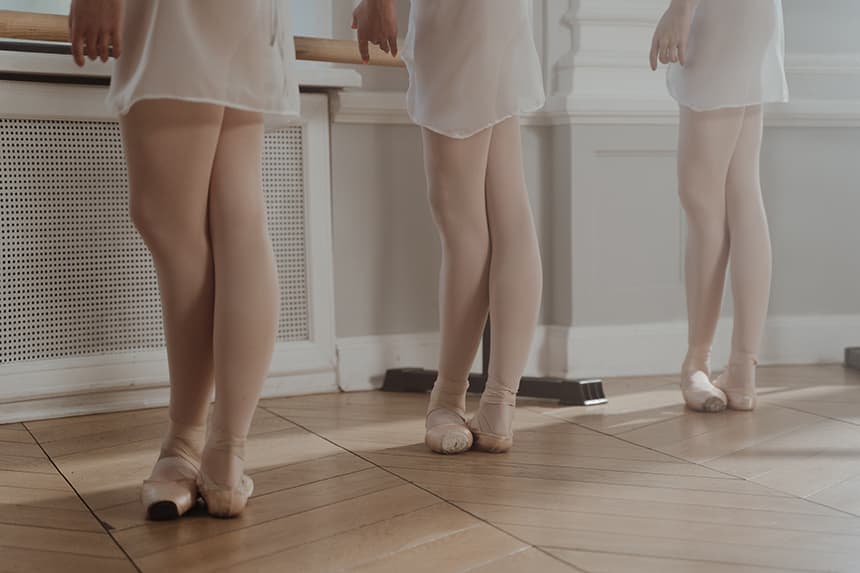
Ballerinas Feet. 3 ballet dancers stretching
Photo by cottonbro studio on Pexels

The effects of ballet on dancers’ feet

The human foot is a complex structure made up of 26 bones, 33 joints, muscles, tendons, and ligaments. This intricate design allows the foot to support the body’s weight and absorb shock when we walk or run. When we put our feet through repetitive motions, such as those required in ballet, we can put stress on these structures and cause injuries.

Dancers are especially susceptible to foot injuries because practice with such frequency. On top of this, baller dancers typically wear shoes that provide limited support and cushioning. Pointe shoes, for example, are designed to allow dancers to dance on their toes but offer little protection from the impact of landing from jumps and other movements. As a result, ballet dancers often suffer from injuries to the bones and joints of their feet.

Despite these risks, ballet can be a healthy activity for your feet if you take some precautions:

  1. First, it’s important to choose the right ballet shoes. Make sure that you are fitted by a professional ballet shoe fitter even for soft ballet shoes. The wrong fit (too large or too tight) can affect your technique and cause injury.
  2. You can also ask your dance instructor for recommendations. As you become more experienced, may need to get pointe shoes. But be sure to buy them from a reputable store with a professional pointe shoe fitter and break them in slowly to avoid injury.
  3. It’s really important to warm up before dancing and stretch afterwards. This will help reduce your risk of injury.

If you start experiencing pain in your feet, be sure to speak to your dance teacher and see a doctor right away.

Is ballet harmful for your feet?

While it’s true that ballet dancers often suffer from foot injuries, these injuries are usually due to overuse or poorly fitted shoes. With the right precautions, you can avoid these injuries and enjoy a healthy career in ballet. Dancers who take care of their feet and warm up properly are less likely to experience injuries.

Typical dance-related foot and leg injuries

The intense physical activity in ballet puts a lot of stress on dancers’ feet and legs. As a result, they can get injured. These are some common injuries:

  1. Achilles tendonitis: an inflammation of the Achilles tendon, which is the large tendon that connects the calf muscle to the heel bone.
  2. Shin splints: pain in the lower leg, usually along the shinbone, as a result of overusing your lower leg muscles.
  3. Stress fractures: tiny cracks in the bones that can occur from overuse or repetitive impact.
  4. Plantar fasciitis: inflammation of the plantar fascia, which is a thick band of tissue that runs across the bottom of the foot. Typically, this causes pain and swelling at the base of the heel and the arch of the foot.
  5. Neuromas: the partial or complete disruption of a nerve can be caused by over-stretching. You may feel a burning or tingling sensation as well as numbness and spasms.
  6. Ankle sprains: these occur when the ligaments that support the ankle are stretched or torn.
  7. Blisters and bunions are also common among dancers. Like all injuries, they should be given proper attention because they can turn into something more serious if untreated.


Prevention is better than cure and the best way to avoid foot problems is to take proper care of your feet. This means wearing the right shoes, warming up, strengthening and stretching your feet regularly, and keeping your feet clean and dry. It’s also important to see a podiatrist on a regular basis so that any problems can be caught early and treated quickly.

Remember! If you experience any pain or discomfort in your feet or legs, it’s important to see a doctor right away. These problems can often be resolved with simple treatments but if they’re ignored, they can lead to more serious injuries.

What pointe shoes are best to protect your feet?

The best way to protect your feet while dancing is to choose the right shoes. All ballet dancers need well-fitting flat ballet shoes and many will require pointe shoes as well. There are many different types of pointe shoes on the market and it’s important to find a pair that fits correctly and provides the right support for your feet. It is essential to have ballet shoes fitted by a professional fitter, especially when buying pointe shoes. Your fitter will take into consideration your foot shape, your experience level and any special requirements you may have. You may need to try several different pairs before they find the perfect brand and style for your feet. Your fitter will also recommend appropriate protection for your feet such as toe pads, toe spacers, additional elastics, etc.

Pointe shoes need to be “broken in” before you wear them for a performance. Your fitter or dance teacher can show you how to break in your shoes. Take note that while many shoes require the back or shank to be softened, some newer brands have carbon fibre shanks that should not be “broken in” or softened. The process of getting your shoes performance-ready can take several weeks and it’s important to do it gradually so that you don’t injure your feet. Once your shoes are broken in, they should be comfortable and provide support while you’re dancing.

To protect against the strains of “ballet feet” or “ballerina feet” and choose the right pair of shoes for ballet, you should read the list of the best pointe shoes here. You’ll find a detailed guide on choosing the right pointe shoes for you.

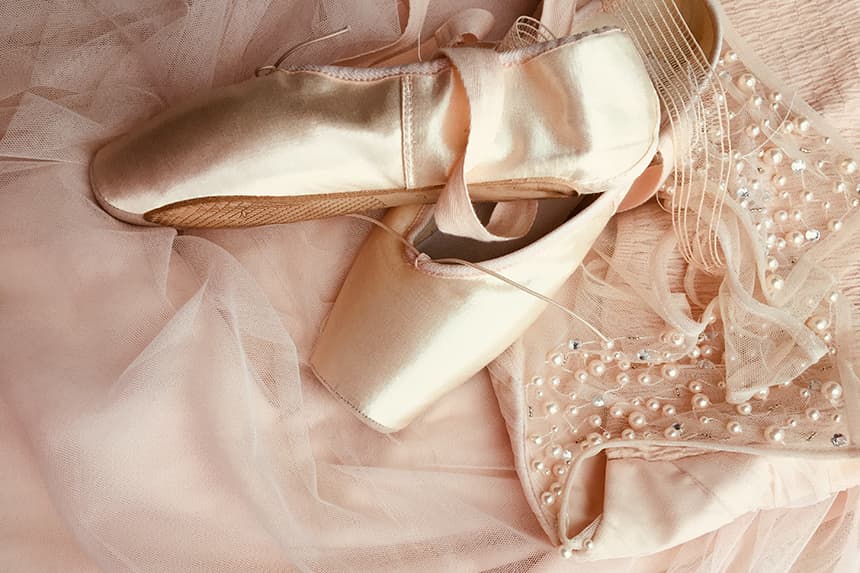
Ballet feet.
Photo by Merve Sehirli Nasir on Unsplash


How foot type of foot affects your dance/ballet career

The type of foot a dancer has can affect their career in several ways:

  • Dancers with high arches may be more susceptible to injuries.
  • Dancers with flat feet may have trouble with pointe work.
  • Dancers with wide feet may have difficulty finding shoes that fit well.

It’s important to consult your dance teacher or coach to determine what type of feet you have and how to keep them strong and healthy. They can also help you find the right shoes and make sure you’re performing ballet exercises correctly.

While the type of foot a dancer has can affect their career, it’s important to remember that everyone is different. Some dancers with high arches will never experience an injury and some dancers with flat feet will excel at pointe work. Ultimately, it’s up to the individual dancer to find what works best for them.

Enjoy dancing and look after your ballet feet

Now that you know more about how ballet affects your feet, you can take steps to protect them. Dance is a beautiful art form that can be enjoyed by people of all ages and abilities. While there are some risks associated with ballet, these can be minimized by taking proper precautions. With the right shoes and regular exercise, you can enjoy dancing. If you experience any pain or problems with your feet, be sure to consult a doctor so that you can continue dancing for years to come.


Related articles to ballerina and ballet:

Students learning to ballet dance - beginners moves

Ballet Moves for Beginners

Are you dreaming about a career as a ballerina or just want to try classical dance for yourself? These simple (ha-ha) ballet moves for beginners will help you understand what ballet is and is it ...
Ballet feet exercise. Ballerinas feet warming up stretching

Ballet foot exercises

10 Ballet Foot Exercises: Warm-up, Boost Your Technique and Foot Strength Foot exercises are an essential part of a ballet dancer’s training as they provide important strength and technique benefits. Developing strong and flexible feet ...

This article was originally published by dancesbibles admin. Almiria Wilhelm contributed to this article.

Types of ballet

Ballet is a relatively young art form compared to other forms of classical dance, but its popularity exploded in the nineteenth, twentieth and twenty-first centuries and it remains one of the most loved forms of dance today. There are several styles of ballet, which this article will delve into.

The final product that the audience sees when they go to watch a ballet is the final stage of a long process. Ballet is a prepared performance with carefully thought-out movement sequences. Some ballets tell a story, while others simply illustrate a theme or have no theme. To create a successful ballet, dance, music, painting, drama, and the visual arts come together to craft a coordinated performance that creates apparently effortless magic for the audience once the curtain lifts.

What types of ballet are there?

Ballet and classical choreography are classified based on different criteria. We will look at the main ballet styles, genres, and techniques in detail below.

Styles of Ballet

The most common classifications for different styles of ballet are based on their characteristics and time of origin.

Classical Ballet

Classical ballet is the original and foundational ballet style. When people say the word “ballet”, they usually mean the classical form.

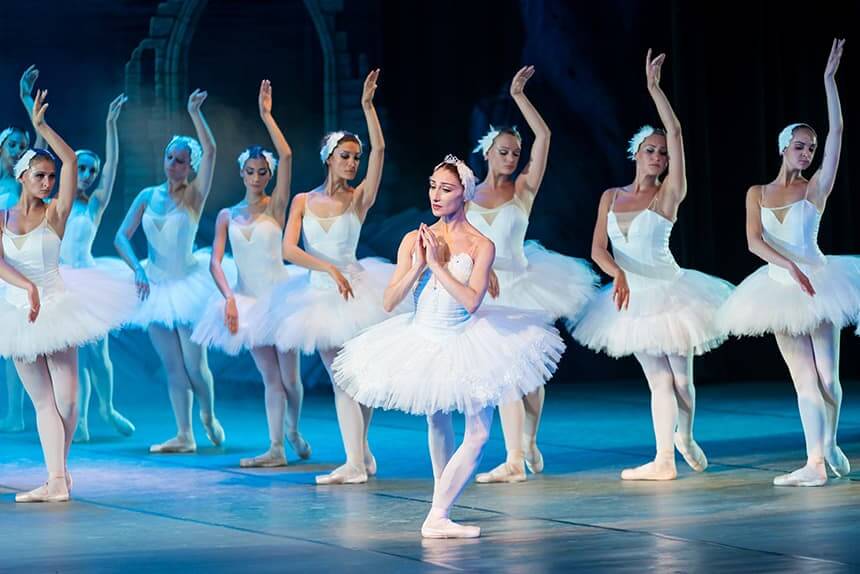
Classical Ballet Type.

Photo by Pixabay on Pexels

Characteristics of classical ballet:

  • The observance of specific positions of the legs, arms, body, and head, and the principle of “turn out” (the outward rotation of the legs from the hip).
  • Strict adherence to rules, techniques, and traditions associated with classical ballet
  • Strict traditional training techniques
  • In classical ballet, women usually wear special hard shoes known as pointe shoes that allow them to dance on their toes.
  • The movements in classical ballet tend to geometrical clarity
  • In classical ballet performances, dancers tell a story through choreography, gestures, and facial expressions (although there are also classic ballet productions without a plot).
  • Classical ballet is performed to music by classical composers such as Tchaikovsky.

Examples of classical ballet are Swan Lake, The Nutcracker, and Sleeping Beauty.

Different styles of classical ballet vary somewhat geographically. Different ballet schools and teaching traditions developed in, for example, France, Russia, Denmark and Italy. While, today, some of these differences are no longer as marked, each school still has its own characteristics, traditional techniques and ballet “stars”.

Romantic Ballet

Romantic ballet emerged during the Romantic era, when European, and later American, culture began to reflect on the self-worth of man and his place in nature.

Romantic type of ballet dances.

Photo by Pixabay on Pexels

Romantic ballet is characterized by:

  • Focus on the drama and emotionality of the stories being told
  • The appearance of original music
  • The increased role of music, which helped create the dramaturgy and gave figurative musical characteristics to the characters
  • Opposing the real world to the world of exoticism and fantasy (hence the spread of the mystical women image)
  • Keeping the strictness form and traditions of classical choreography
  • The airiness of movement
  • Pointe shoes and short white tutus appear
  • The cult of the ballerina as a central part of the performance and star ballet dancers appear
  • Active development and use of theatrical special effects (in particular, gaslighting)

The brightest examples are Sylphide and Giselle.

Note!

You can also read the piece about Ballet History here.


Neoclassical ballet

Neoclassical ballet became widespread precisely in the United States, where it was possible to depart from the classical rules and create a completely unique dance.

Image of neoclassical ballet
Image Public domain, via Wikimedia Commons

Apollo Musaget is generally considered to be the first neoclassical ballet, and the legendary choreographer George Balanchine is the pioneer of the style. Another huge influence was Isadora Duncan and her free, easy and rule-free dance. After such daring oppositions to the classical form of dance, other popular bold, original and innovative dancers, choreographers, and directors emerged.

Neoclassical dance is characterized by:

  • Classical technique enriched with free movements and experimental techniques.
  • Deviations from strictly classical technique and movement patterns
  • A shift of focus from the plot to the dancer’s skill
  • Complex choreographic elements
  • Neoclassical performances often lack scenery and are characterised by a move away from sumptuous and colorful costumes in favor of simple and minimalist styles.
  • Significant reduction in the length of performances

The austere, clear, noble, and transparent form of neoclassical ballet is epitomised in Apollo Musaget and subsequently in other neoclassical ballets. The classical dance vocabulary, purged of decoration in terms of plot, design, emotion, and gestures, became the new ideal.

Modern ballet

Modern ballet differs from other types of ballet in its bolder costumes and free dance interpretation. Modern ballet does away with tutus and pointe shoes; they are typically replaced by loose, elongated garments to create an airy, sophisticated look. Many dancers go on stage barefoot.

Photo of modern ballet dancing on stage, colourful and fast
Photo by Ahmad Odeh on Unsplash

Modern ballet is characterised by:

  • The use of gymnastic and acrobatics elements
  • The blurring of genre boundaries
  • New, original interpretations of classical ballets
  • Rejection of the main “pillars” of classical ballet such as the use of strict arm and leg positions and “turn out”.
  • A freedom of feelings and ideas and a departure from conservatism
  • The movements are based on the natural plasticity of the body
  • Experimentality and symbolism
  • Scenic effects

Inspiration for modern ballet can be taken from a huge range of sources including national dances and new trends in other dance styles. Many directors try to make the audience look at classical dance from a different angle and new readings of classics are welcomed.

Ballet Teaching Methods

The rigorous physical preparation of the dancer’s body is foundational to all styles of ballet. Ballet dancers’ training is based on scientific research and a historically established system of rules. The main methods of ballet training are Vaganova, Cecchetti, the Royal Academy of Dance, the French School, Balanchine, and Bournonville. Principles like set arm and leg positions and the use of turn are used in all styles and it can be tricky for untrained observers to distinguish between the styles. There are, however, significant differences between these teaching methodologies.

The Vaganova Method

This widespread and prestigious method was developed in Russia by Agrippina Vaganova in the early twentieth century. Vaganova was able to take the best from the French, Italian, and Russian schools as well as the teachings of the iconic choreographer Marius Petipa. The style has gained a reputation for the strictness of the training and the ethereal grace and elegance of its graduates.

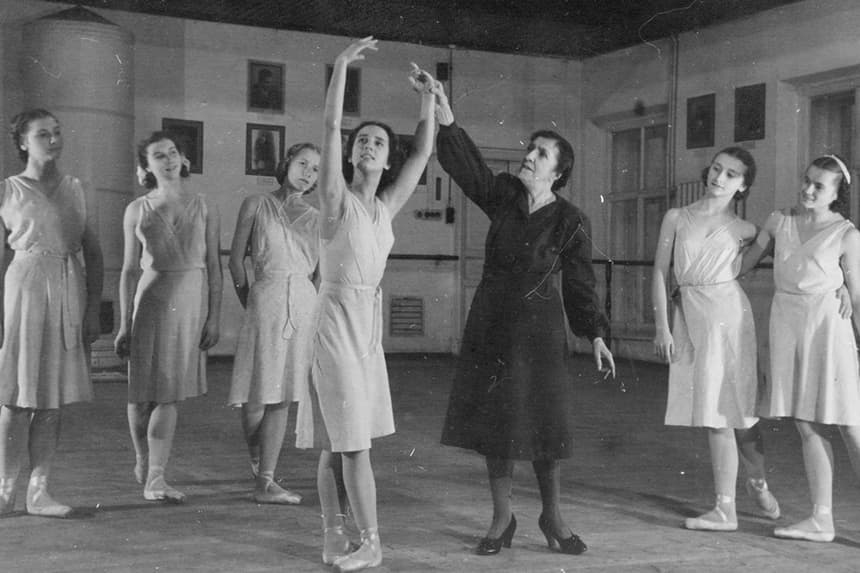
Agripina Vaganova with her students, training according to the Vaganova method.

The main principle of Vaganova’s pedagogical activity was the search for clean movement without unnecessary embellishment or carelessness and the desire to achieve great expressiveness of movements. Among the principles Vaganova brought into the process of training ballet dancers, it is worth mentioning the following:

  • Back positioning that allows the body to loosen up and become more expressive.
  • The positioning of the head and the direction of the gaze, which follows the movements of the arms and the body.
  • The dual role of arm movements: to create a spiritualized image and to support the dancer’s technique.

The teachers and judges at classical dance competitions still pay close attention to compliance with the principles and requirements of Vaganova technique.

The Cecchetti Method

Cecchetti’s pedagogical practice occupied a special place in ballet in the late 19th and early 20th centuries. Cecchetti, having learned a great deal from Russian ballet masters, synthesized the best qualities of the two different dance schools in his teachings.

Enrico Cecchetti method.

The pedagogical method he developed specifically for Russian pupils was distinguished by its clear systematization: he worked out a certain series of combinations for both adagio and allegro for each day of the week.

Cecchetti’s teaching principles had certain advantages. His method teaches solid skills for dynamic turns, steady poses, and clear tempos. Movements of arms, trunk, and legs acquire confidence and expression. Cecchetti’s class was rigorous, physically demanding, and developed breathing and leg strength (especially the feet).

French School

Bournonville’s technique is still part of Danish ballet practice. It appeared in European theatres as early as the nineteenth century, but August Bournonville’s ballets only became widely known outside of Denmark after World War II.

August Burnonville’s choreography is instantly recognizable. The illusion of weightless lightness is the main thing that the choreographer has brought to classical dance. The method requires the dancer to perform the most difficult movements as if they were so easy, in contrast to the French and Russian traditions, which highlight technically difficult steps.

Bournonville method

Bournonville’s technique is still part of Danish ballet practice. It appeared in European theatres as early as the nineteenth century, but August Bournonville’s ballets only became widely known outside of Denmark after World War II.

August Burnonville’s choreography is instantly recognizable. The illusion of weightless lightness is the main thing that the choreographer has brought to classical dance. The method requires the dancer to perform the most difficult movements as if they were so easy, in contrast to the French and Russian traditions, which highlight technically difficult steps.

The Royal Academy of Dance method

The English methodology of teaching classical dance evolved to spread this art form throughout England. The main feature of the methodology is the idea that by learning simple steps accurately and cleanly enough, it will be easier for the dancer to learn more complex and technical things later on. Accordingly, this school assumes slow and very careful teaching of simple steps, gradually increasing the level of complexity.

Balanchine method

The Balanchine method is used at the School of American Ballet (a school associated with ballet in New York City) and focuses on very fast movements combined with more open use of the upper body.

Balanchine’s method is characterized by intense speed, deep layers, and a strong emphasis on lines. The method has many hand positions and excellent and dramatic choreography. Balanchine-method hand positions (often referred to as “Balanchine hands”) tend to be more open, less curved, and often “broken” at the wrist. The arabesque positions tend to be uneven, with an open hip facing the audience to achieve the illusion of a higher arabesque line.

Kroon, Ron / Anefo, CC BY-SA 3.0 NL by Wikimedia Commons

Today, all of these techniques exist interdependently or in various combinations in ballet schools around the world. As a result of constant training, ballet dancers acquire an aesthetically beautiful positioning, strong muscles, flexible ligaments, and a confident command of the body.


Related articles:

Arabian dance in the nutcracker

The “Arabian” Dance in The Nutcracker

Christmas is around the corner, and if you are a Ballet enthusiast like me, you probably know that The Nutcracker recital has come to almost every city around the world. If you need to become ...
Ballet feet exercise. Ballerinas feet warming up stretching

Ballet foot exercises

10 Ballet Foot Exercises: Warm-up, Boost Your Technique and Foot Strength Foot exercises are an essential part of a ballet dancer’s training as they provide important strength and technique benefits. Developing strong and flexible feet ...
Ballerinas Feet. 3 ballet dancers stretching

Ballerina Feet: Ballet & Foot Health

If you’ve ever seen ballet or you’re a ballet dancer yourself, you’ll know how graceful dancers’ movements can be. But, of course, becoming a professional ballet dancer takes a LOT of hard work and dedication ...
Images of dancers on stage - moving to the best choreography, inspired by talented choreographers

The 9 Greatest Choreographers of the 20th century

This article see the DanceBible team pick some of the 20th century's (and all times!) greatest Choreographers, taking a historical slant via some very great and distinct contributions, which together help to describe the formation ...
Best bags for dancers. A girl carrying a bag on her shoulder whilst walking along.

Best dance bags

Best Dance Bags 2023 - Ultimate guide and review When you go to dance class or competitions, you probably take a lot of gear with you? Of course, dancers need a lot of space in ...
Classical Ballet. Ballerinas on stage with raised arms

Types of ballet

Ballet is a relatively young art form compared to other forms of classical dance, but its popularity exploded in the nineteenth, twentieth and twenty-first centuries and it remains one of the most loved forms of ...


Cover image  by vladislav83 on pixabay

This article was originally written by Emma but has been updated and contributed to by dance teacher Almiria Wilhelm.