
Ballet is a relatively young art form compared to other forms of classical dance, but its popularity exploded in the nineteenth, twentieth and twenty-first centuries and it remains one of the most loved forms of dance today. There are several styles of ballet, which this article will delve into.
The final product that the audience sees when they go to watch a ballet is the final stage of a long process. Ballet is a prepared performance with carefully thought-out movement sequences. Some ballets tell a story, while others simply illustrate a theme or have no theme. To create a successful ballet, dance, music, painting, drama, and the visual arts come together to craft a coordinated performance that creates apparently effortless magic for the audience once the curtain lifts.
What types of ballet are there?
Ballet and classical choreography are classified based on different criteria. We will look at the main ballet styles, genres, and techniques in detail below.
Styles of Ballet
The most common classifications for different styles of ballet are based on their characteristics and time of origin.
Classical Ballet
Classical ballet is the original and foundational ballet style. When people say the word “ballet”, they usually mean the classical form.
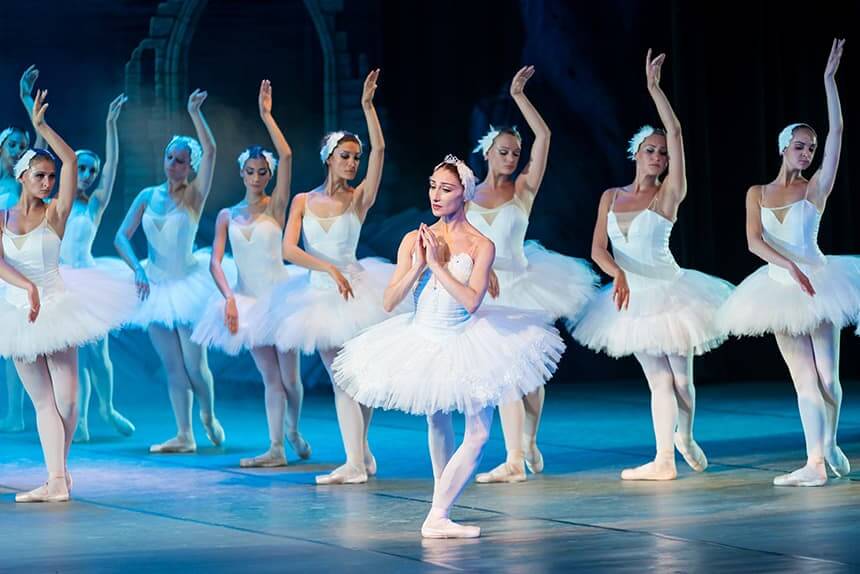
Photo by Pixabay on Pexels
Characteristics of classical ballet:
- The observance of specific positions of the legs, arms, body, and head, and the principle of “turn out” (the outward rotation of the legs from the hip).
- Strict adherence to rules, techniques, and traditions associated with classical ballet
- Strict traditional training techniques
- In classical ballet, women usually wear special hard shoes known as pointe shoes that allow them to dance on their toes.
- The movements in classical ballet tend to geometrical clarity
- In classical ballet performances, dancers tell a story through choreography, gestures, and facial expressions (although there are also classic ballet productions without a plot).
- Classical ballet is performed to music by classical composers such as Tchaikovsky.
Examples of classical ballet are Swan Lake, The Nutcracker, and Sleeping Beauty.
Different styles of classical ballet vary somewhat geographically. Different ballet schools and teaching traditions developed in, for example, France, Russia, Denmark and Italy. While, today, some of these differences are no longer as marked, each school still has its own characteristics, traditional techniques and ballet “stars”.
Romantic Ballet
Romantic ballet emerged during the Romantic era, when European, and later American, culture began to reflect on the self-worth of man and his place in nature.

Photo by Pixabay on Pexels
Romantic ballet is characterized by:
- Focus on the drama and emotionality of the stories being told
- The appearance of original music
- The increased role of music, which helped create the dramaturgy and gave figurative musical characteristics to the characters
- Opposing the real world to the world of exoticism and fantasy (hence the spread of the mystical women image)
- Keeping the strictness form and traditions of classical choreography
- The airiness of movement
- Pointe shoes and short white tutus appear
- The cult of the ballerina as a central part of the performance and star ballet dancers appear
- Active development and use of theatrical special effects (in particular, gaslighting)
The brightest examples are Sylphide and Giselle.
You can also read the piece about Ballet History here.
Neoclassical ballet
Neoclassical ballet became widespread precisely in the United States, where it was possible to depart from the classical rules and create a completely unique dance.

Apollo Musaget is generally considered to be the first neoclassical ballet, and the legendary choreographer George Balanchine is the pioneer of the style. Another huge influence was Isadora Duncan and her free, easy and rule-free dance. After such daring oppositions to the classical form of dance, other popular bold, original and innovative dancers, choreographers, and directors emerged.
Neoclassical dance is characterized by:
- Classical technique enriched with free movements and experimental techniques.
- Deviations from strictly classical technique and movement patterns
- A shift of focus from the plot to the dancer’s skill
- Complex choreographic elements
- Neoclassical performances often lack scenery and are characterised by a move away from sumptuous and colorful costumes in favor of simple and minimalist styles.
- Significant reduction in the length of performances
The austere, clear, noble, and transparent form of neoclassical ballet is epitomised in Apollo Musaget and subsequently in other neoclassical ballets. The classical dance vocabulary, purged of decoration in terms of plot, design, emotion, and gestures, became the new ideal.
Modern ballet
Modern ballet differs from other types of ballet in its bolder costumes and free dance interpretation. Modern ballet does away with tutus and pointe shoes; they are typically replaced by loose, elongated garments to create an airy, sophisticated look. Many dancers go on stage barefoot.

Modern ballet is characterised by:
- The use of gymnastic and acrobatics elements
- The blurring of genre boundaries
- New, original interpretations of classical ballets
- Rejection of the main “pillars” of classical ballet such as the use of strict arm and leg positions and “turn out”.
- A freedom of feelings and ideas and a departure from conservatism
- The movements are based on the natural plasticity of the body
- Experimentality and symbolism
- Scenic effects
Inspiration for modern ballet can be taken from a huge range of sources including national dances and new trends in other dance styles. Many directors try to make the audience look at classical dance from a different angle and new readings of classics are welcomed.
Ballet Teaching Methods
The rigorous physical preparation of the dancer’s body is foundational to all styles of ballet. Ballet dancers’ training is based on scientific research and a historically established system of rules. The main methods of ballet training are Vaganova, Cecchetti, the Royal Academy of Dance, the French School, Balanchine, and Bournonville. Principles like set arm and leg positions and the use of turn are used in all styles and it can be tricky for untrained observers to distinguish between the styles. There are, however, significant differences between these teaching methodologies.
The Vaganova Method
This widespread and prestigious method was developed in Russia by Agrippina Vaganova in the early twentieth century. Vaganova was able to take the best from the French, Italian, and Russian schools as well as the teachings of the iconic choreographer Marius Petipa. The style has gained a reputation for the strictness of the training and the ethereal grace and elegance of its graduates.
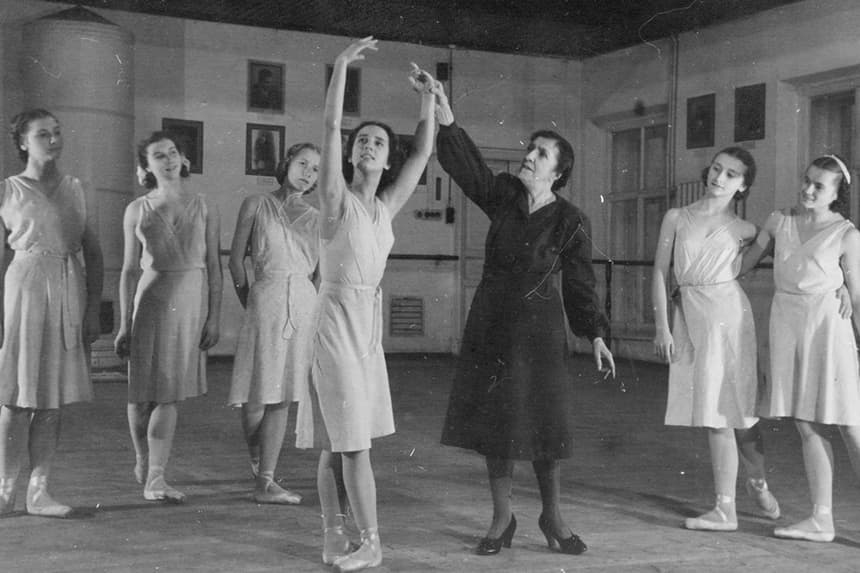
The main principle of Vaganova’s pedagogical activity was the search for clean movement without unnecessary embellishment or carelessness and the desire to achieve great expressiveness of movements. Among the principles Vaganova brought into the process of training ballet dancers, it is worth mentioning the following:
- Back positioning that allows the body to loosen up and become more expressive.
- The positioning of the head and the direction of the gaze, which follows the movements of the arms and the body.
- The dual role of arm movements: to create a spiritualized image and to support the dancer’s technique.
The teachers and judges at classical dance competitions still pay close attention to compliance with the principles and requirements of Vaganova technique.
The Cecchetti Method
Cecchetti’s pedagogical practice occupied a special place in ballet in the late 19th and early 20th centuries. Cecchetti, having learned a great deal from Russian ballet masters, synthesized the best qualities of the two different dance schools in his teachings.

The pedagogical method he developed specifically for Russian pupils was distinguished by its clear systematization: he worked out a certain series of combinations for both adagio and allegro for each day of the week.
Cecchetti’s teaching principles had certain advantages. His method teaches solid skills for dynamic turns, steady poses, and clear tempos. Movements of arms, trunk, and legs acquire confidence and expression. Cecchetti’s class was rigorous, physically demanding, and developed breathing and leg strength (especially the feet).
French School
Bournonville’s technique is still part of Danish ballet practice. It appeared in European theatres as early as the nineteenth century, but August Bournonville’s ballets only became widely known outside of Denmark after World War II.
August Burnonville’s choreography is instantly recognizable. The illusion of weightless lightness is the main thing that the choreographer has brought to classical dance. The method requires the dancer to perform the most difficult movements as if they were so easy, in contrast to the French and Russian traditions, which highlight technically difficult steps.
Bournonville method
Bournonville’s technique is still part of Danish ballet practice. It appeared in European theatres as early as the nineteenth century, but August Bournonville’s ballets only became widely known outside of Denmark after World War II.
August Burnonville’s choreography is instantly recognizable. The illusion of weightless lightness is the main thing that the choreographer has brought to classical dance. The method requires the dancer to perform the most difficult movements as if they were so easy, in contrast to the French and Russian traditions, which highlight technically difficult steps.
The Royal Academy of Dance method
The English methodology of teaching classical dance evolved to spread this art form throughout England. The main feature of the methodology is the idea that by learning simple steps accurately and cleanly enough, it will be easier for the dancer to learn more complex and technical things later on. Accordingly, this school assumes slow and very careful teaching of simple steps, gradually increasing the level of complexity.
Balanchine method
The Balanchine method is used at the School of American Ballet (a school associated with ballet in New York City) and focuses on very fast movements combined with more open use of the upper body.
Balanchine’s method is characterized by intense speed, deep layers, and a strong emphasis on lines. The method has many hand positions and excellent and dramatic choreography. Balanchine-method hand positions (often referred to as “Balanchine hands”) tend to be more open, less curved, and often “broken” at the wrist. The arabesque positions tend to be uneven, with an open hip facing the audience to achieve the illusion of a higher arabesque line.

Today, all of these techniques exist interdependently or in various combinations in ballet schools around the world. As a result of constant training, ballet dancers acquire an aesthetically beautiful positioning, strong muscles, flexible ligaments, and a confident command of the body.
Related articles:

The “Arabian” Dance in The Nutcracker
Ballerina Feet: Ballet & Foot Health
The 9 Greatest Choreographers of the 20th century
Cover image by vladislav83 on pixabay
This article was originally written by Emma but has been updated and contributed to by dance teacher Almiria Wilhelm.
- About the Author
- Latest Posts
Almiria Wilhelm is a ballet teacher with twenty years’ experience training dancers of all ages to become professional. She started dancing at the age of five and in addition to ballet, she also trained in flamenco, Argentine tango, ballroom, latin, salsa and more styles. Almiria speaks several languages and also works as a translator (because it’s tough to pay the bills with dance). She has lived on 3 different continents and visited upwards of 30 countries.